Go-kart frames are a natural fit for powder coating. The tubular steel construction that forms the chassis of most racing and recreational karts is the perfect substrate — electrically conductive, dimensionally stable at curing temperatures, and sized to fit easily into standard powder coating ovens. Whether you are building a competitive racing kart, restoring a vintage fun kart, or finishing a custom off-road buggy, powder coating delivers a professional, durable finish that protects the frame and looks great on the track or trail.
Consumer
Powder Coating for Go-Kart Frames: Racing, Recreational, Safety, and Custom Colors
Sundial Powder Coating·April 22, 2026·8 min
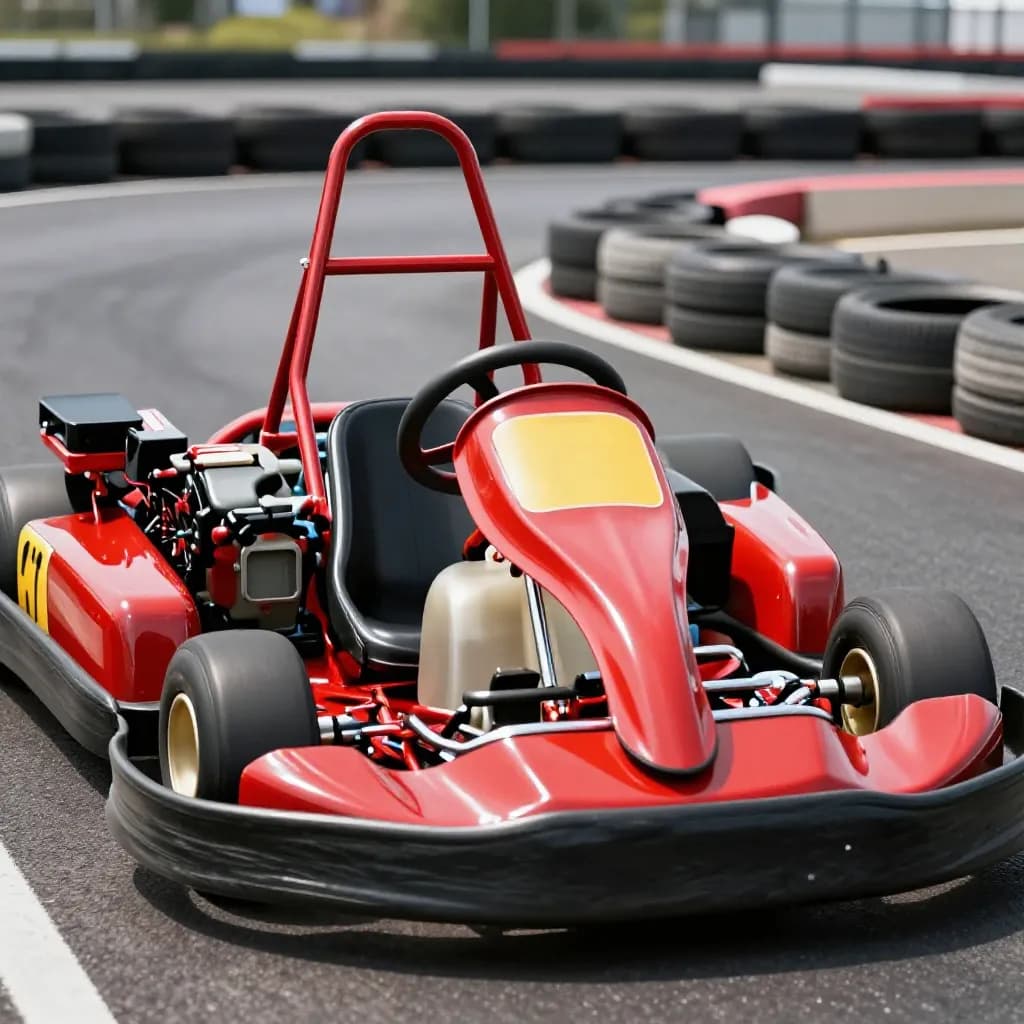
The go-kart community has embraced powder coating as the standard finishing method for frames, replacing the rattle-can spray paint and brush-on enamel that were once common in garage-built karts. The difference in quality is immediately apparent — a powder-coated frame has a smooth, uniform finish with consistent color and gloss that simply cannot be achieved with aerosol paint. The coating is also dramatically more durable, resisting the chips, scratches, and abrasion that kart frames endure from track debris, curbing contact, and general handling.
Ready to Start Your Project?
From one-off customs to 15,000-part production runs — get precise pricing in 24 hours.
On This Page
Powder Coating Is Ideal for Go-Kart Frames
For racing karts, powder coating offers the additional benefit of a consistent, measurable film thickness that adds minimal and predictable weight to the chassis. This matters in competitive classes where weight is closely regulated and every gram counts. The ability to specify exact colors also allows teams to maintain consistent branding across multiple chassis and seasons.
Racing Karts: Weight, Rules, and Performance
In competitive karting, the frame finish must balance appearance and protection with strict weight considerations. Racing kart chassis typically weigh between 15 and 30 kilograms depending on the class, and the coating adds approximately 200 to 400 grams to the bare frame weight. While this is a small percentage of the total chassis weight, competitive racers are aware of every gram and may specify thinner coating applications to minimize weight addition.
Many karting sanctioning bodies have rules regarding frame finishes, primarily related to safety and identification. Frames must be finished in a way that prevents corrosion and maintains structural visibility — inspectors need to be able to see the frame tubes clearly to check for cracks, bends, and damage. Powder coating in solid colors meets these requirements while providing superior protection compared to paint. Some series require specific frame colors or markings for class identification, which powder coating can accommodate precisely.
For sprint karts that compete on paved tracks, a standard polyester powder coating at 50 to 70 microns provides adequate protection without excessive weight. The coating needs to resist rubber buildup from tire marbles, fuel and oil splashes, and the occasional curb strike. For endurance racing karts that run longer sessions, a slightly thicker application provides better long-term durability. Dirt oval karts face the most demanding conditions, with constant exposure to abrasive dirt, mud, and debris that wears through thin coatings quickly.
Recreational and Off-Road Karts
Recreational go-karts and off-road buggies have different coating requirements than racing karts. Weight is less critical, so a thicker, more protective coating can be applied without concern for competitive disadvantage. These karts often operate in harsher environments — dirt trails, gravel paths, and backyard tracks — where the coating faces more abrasion and moisture exposure than a paved racing circuit would produce.
For off-road karts and buggies, a polyester or hybrid powder coating at 70 to 100 microns provides excellent protection against the rocks, dirt, and debris these machines encounter. Textured finishes are a practical choice for off-road karts because they hide the scratches and scuffs that are inevitable in rough terrain use. A wrinkle or sand texture in black or a dark color maintains its appearance through seasons of hard use that would leave a glossy finish looking worn.
Backyard and rental karts benefit from powder coating's resistance to the abuse these machines endure from inexperienced drivers. Bumping, scraping, and rough handling are part of the fun, and a thick powder coating absorbs this punishment far better than thin paint. Rental kart operators particularly appreciate the low maintenance requirements of powder coating — the frames can be pressure washed after each session and maintain their appearance without frequent repainting.
Safety Considerations for Kart Frame Coating
Safety is paramount in karting, and the frame finish plays a role in maintaining the structural integrity of the chassis. Powder coating does not affect the mechanical properties of the steel tubing — the curing temperature of 180 to 200 degrees Celsius is well below the tempering temperature of the steel alloys used in kart frames, so there is no risk of weakening the frame during the coating process.
One important safety consideration is the ability to inspect the frame for damage. Cracks, bends, and deformation in frame tubes must be visible during pre-race technical inspection. Powder coating in solid, lighter colors makes crack detection easier than dark or textured finishes that can hide hairline cracks. Some racing organizations recommend or require lighter frame colors for this reason. If a dark color is used, regular close inspection under good lighting is essential to catch developing cracks before they become dangerous.
Weld inspection is another safety-related coating consideration. All welds on a kart frame should be thoroughly inspected before coating, as the powder will cover any defects and make them invisible. Cracked welds, incomplete penetration, and porosity should be repaired before the frame is blasted and coated. After coating, any impact that might have damaged a weld should prompt careful inspection — removing a small area of coating to examine a suspect weld is a worthwhile precaution that could prevent a serious failure on track.
Custom Colors and Team Branding
One of the most exciting aspects of powder coating for kart owners is the ability to create a unique, eye-catching chassis that stands out on the grid. The full spectrum of powder coating colors is available for kart frames, from conservative black and silver to vibrant reds, blues, greens, and yellows. Metallic finishes add sparkle and depth that catch the light as the kart moves around the track, and fluorescent colors provide maximum visibility.
Team branding through consistent frame colors is common in competitive karting. A team running multiple chassis can have all frames coated in identical colors, creating a unified appearance that reinforces team identity. Logos and graphics can be applied as vinyl decals over the powder coating, or for a more permanent solution, applied between a base coat and a clear topcoat so the graphics are sealed beneath a protective clear layer.
Two-tone and multi-color schemes are achievable through masking and multiple coating passes. A common approach is to coat the main frame rails in one color and the bumper tubes, nerf bars, and accessories in a contrasting color. This creates visual definition and highlights the frame's geometry. For show karts and display builds, elaborate multi-color schemes with fades, stripes, and accent colors are possible, though the additional masking and coating passes add complexity and time to the process.
Preparation and Process for Kart Frames
Preparing a go-kart frame for powder coating follows the same principles as any tubular steel fabrication, with a few kart-specific considerations. The frame should be completely stripped of all components — engine, axle, steering column, seat, pedals, and all hardware. Old paint or coating is removed through abrasive blasting, which also cleans weld joints and creates the surface profile needed for powder adhesion.
Masking requirements for kart frames include the kingpin bores, axle bearing housings, engine mounting surfaces, and any precision-fit areas where coating thickness would affect component fitment. Steering shaft bushings and bearing seats must be protected to maintain proper clearances. Threaded holes for seat mounts, bumper mounts, and accessory brackets should be plugged with high-temperature silicone plugs.
The relatively small size of kart frames makes them easy to handle in the coating process, and most frames can be coated in a single session. The frame is hung from hooks or placed on a rotating fixture that allows the coater to access all surfaces. After electrostatic powder application, the frame is cured in the oven for the specified time and temperature. Once cooled, the masking is removed, threaded holes are chased, and the frame is ready for reassembly. The entire process from disassembly to reassembly can typically be completed in a few days.
Maintaining and Refreshing Kart Frame Coatings
Go-kart frames accumulate wear from racing contact, track debris, and handling during transport and maintenance. Regular inspection and prompt touch-up of any coating damage keeps the frame protected and looking its best. After each race day, wash the frame with mild soap and water to remove rubber buildup, fuel residue, and track debris. Avoid using aggressive solvents or abrasive cleaners that can damage the coating.
For racing karts, the areas that wear fastest are typically the bumper tubes and nerf bars that contact other karts and track barriers, the underside of the frame where it contacts the track surface during spinouts, and the areas around the engine and chain where oil and fuel splashes occur. Keeping these areas clean and touching up chips promptly prevents corrosion from gaining a foothold.
When the frame coating has accumulated enough wear to warrant a full refresh, the process is straightforward. The old coating is stripped through abrasive blasting, any corrosion or damage is repaired, and a fresh coat of powder is applied. Many competitive kart racers refresh their frame coating annually or every other season to maintain a sharp appearance and ensure the frame is thoroughly inspected during the stripping process. This regular refresh cycle also provides an opportunity to change colors or update the team's visual identity for a new season.
Frequently Asked Questions
Does powder coating add significant weight to a racing kart?
Powder coating adds approximately 200 to 400 grams to a typical racing kart frame, depending on frame size and coating thickness. This is a small fraction of the total chassis weight and can be offset by ballast adjustments in weight-regulated classes. The durability benefits far outweigh the minimal weight addition for most competitors.
Can powder coating weaken a go-kart frame?
No. The curing temperature of 180 to 200 degrees Celsius is well below the tempering temperature of the steel alloys used in kart frames. The coating process does not affect the mechanical properties or structural integrity of the frame tubing or weld joints.
What color is best for racing kart frame inspection?
Lighter colors like white, silver, and light gray make it easier to spot cracks and damage during technical inspection. Dark colors and heavy textures can hide hairline cracks. If a dark color is preferred for aesthetics, regular close inspection under good lighting is recommended to catch developing damage.
How often should a racing kart frame be recoated?
Competitive racing karts typically benefit from recoating every one to two seasons, depending on the level of use and racing conditions. Recreational karts used less intensively may go three to five years between recoating. Regular touch-up of chips and scratches extends the interval between full recoats.
Can I powder coat a kart frame at home?
Home powder coating of kart frames is possible with a consumer-grade powder coating gun and a sufficiently large oven. The main challenge is oven size — the frame must fit entirely inside the oven for proper curing. Some hobbyists build custom ovens from insulated panels for this purpose. Professional coating typically produces more consistent results.
Ready to Start Your Project?
From one-off customs to 15,000-part production runs — get precise pricing in 24 hours.