Fire pits have become a centerpiece of outdoor living. From simple backyard steel rings to elaborate custom-built stone and metal installations, the fire pit gathering spot is now as essential to many homeowners as the patio itself. And with that investment comes a collection of accessories — cooking grates, spark screens, fire tools, log holders, and decorative surrounds — that need to look good and last through seasons of heat exposure and weather.
Consumer
Powder Coating for Fire Pit Accessories: Heat-Resistant Finishes for Grates, Screens, and Tools
Sundial Powder Coating·April 23, 2026·8 min
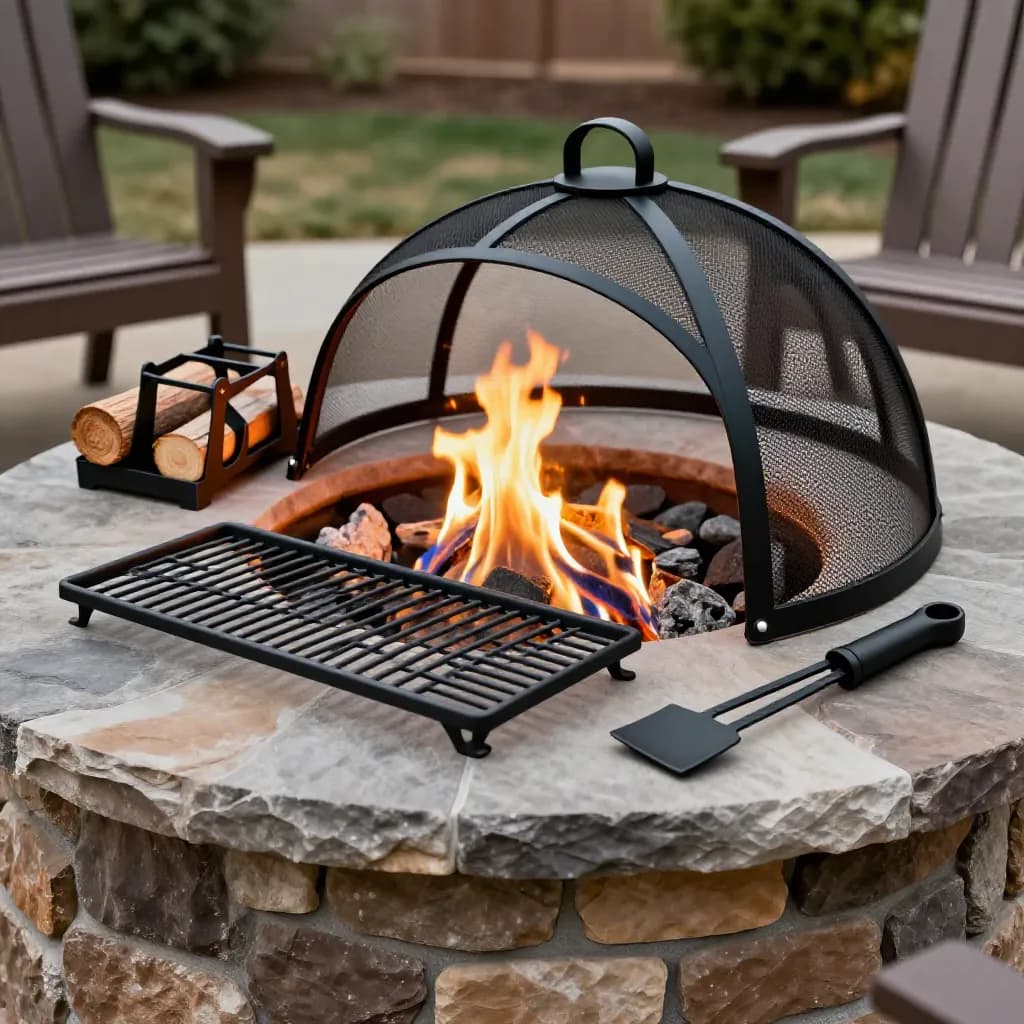
The challenge with fire pit accessories is the dual assault of high temperatures and outdoor elements. A cooking grate might see temperatures above 300 degrees Celsius during use, then sit in rain and humidity between fires. A spark screen faces radiant heat on one side and morning dew on the other. Standard paint fails quickly under these conditions, blistering from heat and flaking from moisture cycling.
Ready to Start Your Project?
From one-off customs to 15,000-part production runs — get precise pricing in 24 hours.
On This Page
Fire Pit Culture and the Need for Durable Finishes
Powder coating, specifically high-temperature formulations, addresses both challenges. Heat-resistant powder coatings are engineered to withstand sustained temperatures that would destroy conventional finishes, while also providing the corrosion resistance needed for outdoor exposure. The result is accessories that maintain their appearance and protection through years of regular use around the fire.
Understanding High-Temperature Powder Coatings
Not all powder coatings are created equal when it comes to heat resistance. Standard polyester and epoxy-polyester powders are rated for continuous exposure up to about 150 to 200 degrees Celsius — adequate for many applications but insufficient for fire pit accessories that experience direct flame proximity or intense radiant heat.
High-temperature powder coatings use specialized silicone-based or ceramic-modified chemistries that withstand continuous temperatures of 300 to 600 degrees Celsius, depending on the formulation. These coatings cure differently than standard powders and maintain their integrity at temperatures that would cause conventional coatings to blister, discolor, or burn off entirely.
The trade-off with high-temperature powders is a more limited color palette. While standard powders are available in virtually any color, high-temp formulations are typically offered in black, silver, grey, and a handful of other colors. This is a chemistry limitation — the pigments and resins that survive extreme heat are inherently more restricted than those used in standard formulations. For most fire pit accessories, this limited palette is not a problem, as black and dark metallic finishes are the most popular choices anyway.
It is important to match the coating specification to the actual temperatures the accessory will experience. A decorative fire pit surround that sits two feet from the flames has very different thermal requirements than a cooking grate that sits directly over the coals. Over-specifying wastes money, while under-specifying leads to premature coating failure.
Coating Fire Pit Grates and Cooking Surfaces
Cooking grates are the most thermally demanding fire pit accessories. They sit directly over the fire, experience rapid temperature changes when cold food is placed on a hot surface, and must withstand repeated cleaning with brushes and scrapers. The coating on a fire pit cooking grate needs to handle all of this while remaining safe for food contact.
High-temperature silicone-based powder coatings rated for 500 degrees Celsius or higher are the standard choice for cooking grates. These coatings are applied to steel or cast iron grates and cured at elevated temperatures to develop their full heat resistance. Once cured, they provide a durable, non-flaking surface that protects the metal from rust and makes cleaning easier.
Food safety is a critical consideration. Any coating that contacts food must be formulated with food-safe materials and must not release harmful compounds when heated. Reputable high-temperature powder coatings designed for grill and cooking applications are formulated to meet food contact safety requirements. Always confirm with your coater that the specific powder being used is rated for food contact at the temperatures your grate will experience.
Seasoning a powder-coated grate before first use is recommended, similar to seasoning cast iron cookware. A light application of high-smoke-point cooking oil, heated gradually to the grate's operating temperature, helps condition the surface and improves food release. This initial seasoning also helps the coating develop its final appearance, as some high-temp powders undergo a slight color shift during their first few heat cycles.
Spark Screens and Safety Accessories
Spark screens serve a critical safety function, containing embers and sparks that could otherwise land on nearby surfaces, furniture, or people. These screens are typically made from steel mesh or expanded metal framed in steel or iron, and they experience significant radiant heat during use. A quality powder coat finish keeps them looking sharp while maintaining their structural integrity through repeated heating cycles.
The mesh portion of a spark screen presents a coating challenge. Fine mesh can become clogged if powder is applied too heavily, reducing airflow and visibility through the screen. Skilled coaters apply a thin, controlled coat to mesh screens, ensuring each wire is covered without bridging the gaps between wires. The electrostatic charge actually helps here, as it encourages powder to wrap around individual wires rather than spanning across openings.
Frames and handles on spark screens benefit from slightly thicker coatings for durability and a more substantial feel. The frame is the part you handle most often, so chip resistance and a comfortable grip are important. Textured finishes on handles provide better grip and hide fingerprints and minor wear marks.
Fire pit tool sets — pokers, tongs, shovels, and log lifters — face similar thermal and handling demands. The business end of each tool sees direct flame contact, while the handle end needs to remain cool and comfortable to grip. High-temperature coating on the working end and a standard or textured coating on the handle end is a practical approach, though many coaters apply the high-temp formulation to the entire tool for simplicity.
Decorative Fire Pit Elements
Beyond functional accessories, many fire pit setups include decorative elements that benefit from powder coating. Custom fire pit rings, decorative surrounds, log holders, firewood racks, and ornamental screens all contribute to the aesthetic of the fire pit area and all face outdoor exposure even when the fire is not lit.
Decorative elements that do not experience direct flame contact or extreme radiant heat can often be finished with standard outdoor-grade polyester powders rather than high-temperature formulations. A firewood rack positioned several feet from the fire pit, for example, will never see temperatures above ambient outdoor conditions and can be coated in any color or finish from the full powder coating palette.
This opens up significant design possibilities. A custom fire pit surround can be finished in a textured bronze that complements the patio stone, while a decorative screen might feature a matte black finish with laser-cut patterns. Log holders can be coated in rustic hammertone finishes that evoke a traditional blacksmith aesthetic, or in clean modern colors that match contemporary outdoor furniture.
The key is understanding the thermal zones around your fire pit. Items within about 30 centimeters of the flame or firebox need high-temperature coatings. Items 30 to 60 centimeters away may need moderate heat resistance. Items beyond 60 centimeters typically experience only ambient temperatures and can use standard outdoor powders. Mapping these zones helps you and your coater select the right coating for each accessory.
Preparation and Application for Fire Pit Parts
Surface preparation for fire pit accessories follows the same principles as any powder coating job, with a few additional considerations related to heat exposure. All rust, scale, old paint, and surface contamination must be removed completely. For used accessories that have been through many fires, this often means aggressive media blasting to remove baked-on carbon, creosote, and heat-scale deposits.
Cast iron parts — common in fire pit grates and decorative elements — require special attention during preparation. Cast iron is porous and can absorb oils and moisture during use. These contaminants can outgas during the curing process, causing bubbles, pinholes, or adhesion failures in the finished coating. A pre-bake cycle, where the cast iron is heated in the oven before coating to drive out absorbed contaminants, is standard practice for used cast iron parts.
New steel parts are more straightforward but still need thorough degreasing and pretreatment. Mill scale — the dark oxide layer on new hot-rolled steel — must be removed by blasting, as powder will not adhere reliably to mill scale. After blasting, a phosphate or iron phosphate pretreatment provides the adhesion and corrosion resistance foundation that the powder coat builds upon.
Application technique matters more with high-temperature powders than with standard formulations. Many high-temp powders have different flow and charging characteristics, and they may require adjusted gun settings for optimal coverage. Cure schedules also differ — some high-temp powders require higher cure temperatures or longer cure times than standard powders, and the coating may not reach its full heat resistance until it has been through its first few heating cycles in actual use.
Maintaining Powder-Coated Fire Pit Accessories
Regular maintenance extends the life of powder-coated fire pit accessories significantly. After each fire, allow accessories to cool completely before cleaning. Brush off loose ash and debris with a soft-bristle brush, and wipe down surfaces with a damp cloth. For cooking grates, a grill brush can be used while the grate is still warm to remove food residue, but avoid wire brushes on the powder-coated surface as they can scratch the finish.
Between uses, store accessories in a dry location or use a fire pit cover to protect them from rain and moisture. While powder coating provides excellent corrosion resistance, standing water on horizontal surfaces — particularly on grates and screens — can eventually work into any minor coating imperfections and initiate rust. Keeping accessories dry between uses prevents this.
Seasonal inspection is worthwhile, especially at the start and end of the outdoor fire season. Look for chips, scratches, or areas where the coating has been compromised by heat or mechanical damage. Small touch-ups with high-temperature spray paint can protect exposed metal until the accessory can be professionally recoated if needed.
Over time, high-temperature coatings may develop a slight patina or color shift from repeated heat cycling. This is normal and does not indicate coating failure. The coating continues to protect the metal even as its appearance evolves. Many fire pit enthusiasts appreciate this natural aging, as it gives accessories a seasoned, well-used character that complements the fire pit experience.
Frequently Asked Questions
Can regular powder coating withstand fire pit temperatures?
Standard powder coatings are rated for about 150 to 200 degrees Celsius and will fail near direct flame. Fire pit accessories that experience high heat need specialized high-temperature powder coatings rated for 300 to 600 degrees Celsius, depending on their proximity to the fire.
Is powder coating on cooking grates food safe?
High-temperature powder coatings specifically formulated for grill and cooking applications are designed to meet food contact safety requirements. Always confirm with your coater that the powder being used is rated for food contact at the temperatures your grate will experience.
What colors are available for high-temperature powder coating?
High-temperature formulations have a more limited color palette than standard powders, typically offering black, silver, grey, and a few metallic options. Decorative accessories that do not experience extreme heat can use the full range of standard powder coating colors.
How long does powder coating last on fire pit accessories?
With proper high-temperature formulations and good maintenance, powder-coated fire pit accessories typically last five to ten years of regular seasonal use. Cooking grates that see the most intense heat may need recoating sooner than decorative elements positioned farther from the flames.
Can used fire pit accessories be stripped and recoated?
Yes. Old coatings, rust, and baked-on carbon can be removed through media blasting, and the parts can be recoated with fresh powder. Cast iron parts may need a pre-bake cycle to drive out absorbed oils before the new coating is applied.
Ready to Start Your Project?
From one-off customs to 15,000-part production runs — get precise pricing in 24 hours.