Electric scooters have become a defining feature of urban transportation, with millions of units deployed across cities worldwide for both personal ownership and shared fleet operations. These compact vehicles face a uniquely punishing combination of environmental stresses that make finish quality a critical factor in both longevity and rider confidence. Unlike bicycles or motorcycles that may spend significant time garaged, e-scooters are routinely left outdoors, ridden through rain, splashed by road spray, and exposed to UV radiation for extended periods.
Consumer
Powder Coating for Electric Scooters: Protecting Frames, Batteries, and Urban Mobility Hardware
Sundial Powder Coating·April 23, 2026·12 min
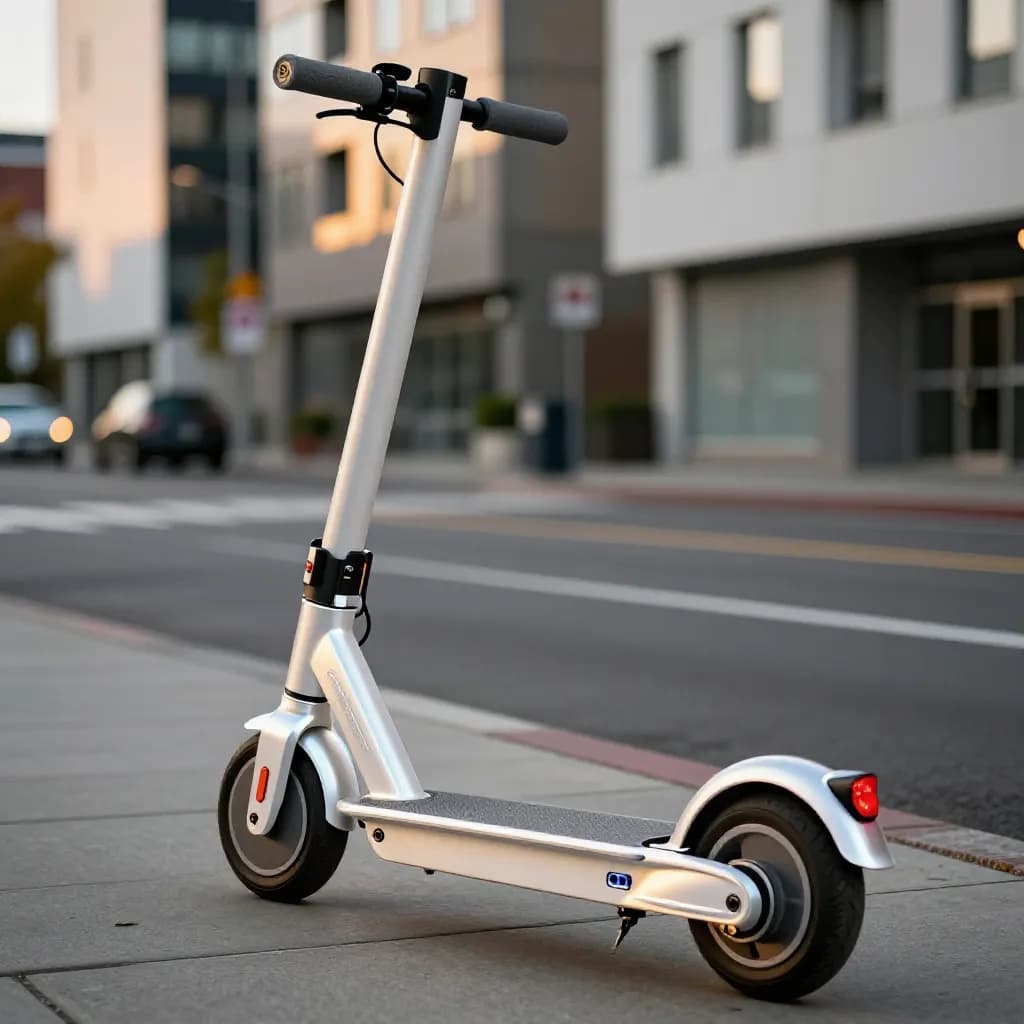
The typical e-scooter frame is constructed from aluminum alloy — most commonly 6061-T6 or 6082-T6 — chosen for its strength-to-weight ratio. While aluminum resists red rust, it is highly susceptible to white oxidation corrosion, pitting, and galvanic corrosion where dissimilar metals meet at fastener points, hinge mechanisms, and motor mounts. A high-quality powder coating provides the primary barrier against all of these degradation pathways.
Ready to Start Your Project?
From one-off customs to 15,000-part production runs — get precise pricing in 24 hours.
On This Page
Why Electric Scooters Need Specialized Powder Coating
Powder coating is particularly well-suited to e-scooter applications because it delivers a dense, uniform film at 60-80 microns that resists chipping from kicked-up gravel, scratching from lock cables, and abrasion from folding mechanisms. The thermoset chemistry of cured powder creates a crosslinked polymer network that outperforms air-dried liquid paints in hardness, flexibility, and chemical resistance — all properties that matter when a scooter encounters road salt, cleaning chemicals, and the general grime of city streets.
For fleet operators running shared scooter programs, coating durability directly impacts operational economics. A scooter that looks worn and corroded after six months of deployment undermines brand perception and accelerates replacement cycles. Properly specified powder coating extends the visual and structural service life of fleet scooters, reducing refurbishment frequency and keeping units in revenue service longer.
Frame Geometry and Coating Access Challenges
Electric scooter frames present specific challenges for powder coating applicators that differ from conventional tube-frame structures. The typical e-scooter uses a deck-and-stem architecture with a flat platform, a folding hinge mechanism, a steering column, and integrated mounting points for motors, batteries, and electronics. Many modern designs incorporate hydroformed or stamped aluminum sections with internal cavities, tight radii, and recessed features that complicate electrostatic powder deposition.
The folding mechanism is a particular concern. Most e-scooters fold at a hinge point where the steering column meets the deck, and this area experiences high mechanical stress during use. Powder coating must achieve full coverage and adhesion in the hinge recess without building up excessive film thickness that would interfere with the folding action or latch engagement. Applicators typically mask the hinge pivot surfaces and latch contact points, coating up to but not over the mechanical interfaces.
The deck underside presents another access challenge. Battery compartments, motor wiring channels, and mounting boss recesses create Faraday cage effects where electrostatic powder struggles to penetrate. Skilled applicators address this by adjusting gun voltage, using tribo-charging guns for recessed areas, or applying manual touch-up passes with reduced air pressure to push powder into cavities without causing blowback.
Internal surfaces of the steering column tube also require attention. Road spray and condensation can enter through the handlebar clamp area and migrate downward, causing internal corrosion that weakens the column over time. Best practice is to coat internal tube surfaces with a thin film using lance-style nozzles or to apply a supplementary internal corrosion inhibitor before final assembly. The goal is complete environmental isolation of the aluminum substrate from moisture and salt exposure.
Battery Enclosure Coating Requirements
The battery enclosure is arguably the most critical component to protect on any electric scooter. Lithium-ion battery packs are sensitive to moisture ingress, which can cause cell degradation, internal short circuits, and in extreme cases, thermal runaway events. The powder coating on a battery enclosure serves as both a corrosion barrier and a contributing element of the overall ingress protection strategy.
Most e-scooter battery enclosures are rated to IP54 or IP65, meaning they must resist dust ingress and water spray or low-pressure jets. The powder coating contributes to this rating by sealing the external surfaces of the enclosure against moisture wicking along the substrate surface. However, the coating alone does not provide the IP rating — gaskets, sealed connectors, and proper drainage design are equally important. What the coating does is prevent the enclosure material itself from becoming a corrosion pathway that could compromise gasket seating surfaces over time.
For battery enclosures, coating selection should prioritize adhesion and flexibility over hardness. The enclosure experiences thermal cycling as the battery charges and discharges, with surface temperature swings of 20-40 degrees Celsius during heavy use. A rigid, brittle coating may microcrack under repeated thermal cycling, creating pathways for moisture ingress. Polyester-based powder coatings with good elongation properties — typically 3-5 millimeters on a conical mandrel test — handle this thermal movement without cracking.
Color selection for battery enclosures also has functional implications. Dark colors absorb more solar radiation, raising battery temperature during outdoor parking. For scooters deployed in hot climates, lighter enclosure colors or heat-reflective pigment formulations can reduce solar heat gain by 10-15 degrees Celsius compared to standard black, extending battery cycle life and reducing the risk of thermal management system overload.
Lightweight Coating Strategies for Performance
Weight is a primary design constraint for electric scooters, where every gram affects range, acceleration, portability, and rider experience. A typical e-scooter weighs between 12 and 18 kilograms, and manufacturers invest heavily in lightweight materials and optimized structures to minimize mass. The powder coating specification must respect this weight sensitivity while still delivering adequate protection.
Standard industrial powder coating film builds of 80-120 microns are unnecessarily heavy for e-scooter applications. A more appropriate specification targets 50-70 microns on external surfaces and 30-40 microns on internal or protected surfaces. At these film builds, the total coating weight on a typical scooter frame is approximately 80-120 grams — a modest contribution to overall mass that delivers substantial protective value.
Thin-film powder coating formulations have been developed specifically for weight-sensitive applications. These powders use finer particle size distributions, typically with a D50 of 25-30 microns compared to 35-40 microns for standard powders, enabling smooth, uniform films at lower thicknesses. The finer particles also improve coverage of edges and corners, which is important on the sharp-radius features common in stamped and extruded scooter components.
Another weight-saving strategy involves selective coating — applying full-thickness powder only to exposed surfaces that face environmental attack, while using thinner films or alternative protection methods on concealed surfaces. For example, the deck top surface that bears rider weight and foot abrasion needs a robust 60-70 micron coating, while the underside surfaces protected by the battery enclosure may only need 30-40 microns. This selective approach can reduce total coating weight by 20-30 percent without compromising durability where it matters most.
Some manufacturers are also exploring hybrid approaches that combine a thin powder coating base with a supplementary ceramic or graphene-enhanced topcoat for high-wear areas, achieving superior abrasion resistance at lower total film thickness.
Urban Durability: Salt, Chemicals, and Impact Resistance
Urban environments subject electric scooters to a chemical and mechanical assault that would challenge any coating system. Road salt during winter months is the most aggressive chemical threat, with sodium chloride and calcium chloride solutions attacking aluminum through any coating defect. But salt is only part of the picture — scooters also encounter de-icing fluids, vehicle exhaust residues, spilled beverages, cleaning solvents used by fleet operators, and the general chemical cocktail of city street runoff.
A properly specified powder coating resists all of these exposures. The crosslinked thermoset film is inherently resistant to most common chemicals, and salt spray testing per ASTM B117 provides a standardized measure of corrosion protection. For e-scooter applications, a minimum of 500 hours salt spray resistance is recommended, with 1000 hours preferred for fleet vehicles that will see multiple winter seasons. Achieving these ratings requires not just good powder selection but excellent pretreatment — chromate-free conversion coatings or zirconium-based treatments on aluminum provide the adhesion foundation that makes long-term salt resistance possible.
Impact resistance is equally important in the urban context. Scooters get knocked over, kicked, dropped during folding, and struck by other vehicles in parking areas. The powder coating must absorb these impacts without chipping or cracking, which would expose the substrate to corrosion. Impact resistance is measured by reverse and direct impact tests per ASTM D2794, with e-scooter coatings typically requiring a minimum of 80 inch-pounds direct impact resistance.
Edge coverage deserves special attention for urban durability. Sharp edges on stamped components, cut tube ends, and machined surfaces are natural weak points where powder coating thins due to electrostatic repulsion effects. Proper edge preparation — radiusing sharp edges to a minimum of 0.5 millimeters — combined with appropriate powder formulation ensures adequate film build on these vulnerable features.
Color, Branding, and Fleet Identity
For shared e-scooter fleet operators, powder coating color is a critical brand asset. Companies like Lime, Bird, Tier, and Voi have built instant brand recognition through distinctive scooter colors — bright green, black, turquoise, and coral respectively. The powder coating must deliver precise, consistent color matching across production batches and maintain that color accuracy through years of outdoor exposure.
Color consistency in powder coating is managed through careful formulation control and batch-to-batch quality verification using spectrophotometric measurement. Fleet operators typically specify color tolerances of Delta E less than 1.0 for new production, ensuring that scooters manufactured months apart are visually indistinguishable when deployed side by side. This level of consistency is achievable with powder coating but requires disciplined process control from the powder manufacturer and applicator.
UV stability is the primary threat to color retention in outdoor service. Standard polyester powder coatings offer good UV resistance, retaining color and gloss for 3-5 years of continuous outdoor exposure. For fleet scooters with expected service lives of 2-3 years, standard polyester formulations are typically adequate. However, premium personal scooters marketed on aesthetics may benefit from super-durable polyester formulations that extend color retention to 7-10 years.
Beyond solid colors, powder coating enables a range of special effects that scooter brands use for product differentiation. Metallic finishes, textured coatings that hide minor scratches, and matte effects are all achievable. Some manufacturers use dual-coat systems with a colored base coat and a clear topcoat for enhanced depth and scratch resistance. The clear topcoat also provides an additional UV barrier that extends the life of the color coat beneath it.
For fleet operators, the ability to refurbish and recoat scooters in updated brand colors is an additional advantage of powder coating. When a company rebrands or refreshes its color scheme, existing frames can be stripped and recoated rather than scrapped, supporting both sustainability goals and fleet economics.
Pretreatment Protocols for Aluminum Scooter Frames
The performance of any powder coating system is fundamentally dependent on the quality of substrate pretreatment. For aluminum e-scooter frames, pretreatment serves two essential functions: it removes surface contaminants that would prevent adhesion, and it creates a conversion coating layer that chemically bonds to both the aluminum and the powder, forming a bridge that anchors the entire coating system.
The standard pretreatment sequence for aluminum scooter frames begins with alkaline cleaning to remove oils, greases, and forming lubricants from the manufacturing process. This is followed by an acid etch or deoxidizer step that removes the natural aluminum oxide layer and any surface impurities, creating a clean, chemically active surface. The critical conversion coating step then deposits a thin layer of chromium-free chemistry — typically zirconium or titanium-based — that provides both adhesion promotion and a secondary corrosion barrier.
Chrome-free pretreatment has become the industry standard for consumer products, driven by both regulatory requirements and consumer expectations around hazardous substance avoidance. Modern zirconium-based conversion coatings deliver performance comparable to traditional chromate treatments, achieving 500-1000 hours of salt spray resistance when combined with quality powder coatings. The conversion coating weight is typically 20-40 milligrams per square meter, forming a nanoscale layer that is invisible to the eye but critical to coating system performance.
Rinse water quality in the pretreatment process directly affects coating adhesion and appearance. Deionized water with conductivity below 30 microsiemens per centimeter should be used for final rinse stages to prevent mineral deposits that can cause adhesion failures or surface defects. For scooter frames with complex geometries, adequate drainage time between stages is essential to prevent chemical carryover that can contaminate subsequent baths and compromise conversion coating quality.
Quality Testing and Durability Verification
Ensuring that powder-coated e-scooter components will survive real-world urban service requires a comprehensive testing protocol that goes beyond basic appearance inspection. The testing program should validate coating thickness, adhesion, flexibility, impact resistance, chemical resistance, and accelerated weathering performance before production coating begins.
Film thickness measurement using magnetic or eddy current gauges is the most fundamental quality check. Measurements should be taken at multiple points on each component — a minimum of five readings per part — with particular attention to recessed areas, edges, and the folding mechanism zone. Thickness should fall within the specified range at all measurement points, with no individual reading below the minimum specification.
Adhesion testing per ASTM D3359 using the cross-hatch tape pull method verifies that the coating is properly bonded to the pretreated substrate. A rating of 5B — no coating removal — is the expected result for a properly processed part. Any adhesion failure indicates a pretreatment deficiency that must be corrected before production proceeds. For critical components like battery enclosures, adhesion testing should be performed on every production batch.
Accelerated weathering testing using QUV or xenon arc chambers simulates years of outdoor exposure in compressed timeframes. A minimum of 1000 hours of QUV-A exposure per ASTM G154 is recommended for e-scooter coatings, with evaluation of gloss retention, color change, chalking, and any signs of film degradation. Results should show less than 50 percent gloss loss and Delta E color change below 3.0 to confirm adequate outdoor durability.
Fleet operators should also conduct field validation by monitoring a sample of coated scooters through actual service conditions, documenting coating condition at regular intervals. This real-world data provides the most reliable prediction of long-term coating performance and helps calibrate accelerated test requirements for future production.
Frequently Asked Questions
Can you powder coat an electric scooter frame?
Yes. Most e-scooter frames are made from aluminum alloy, which is an excellent substrate for powder coating. The frame must be fully disassembled, removing all electronics, batteries, motors, and wiring before coating. Proper aluminum pretreatment with chromate-free conversion coating ensures strong adhesion and corrosion resistance.
How much weight does powder coating add to an electric scooter?
At recommended film builds of 50-70 microns, powder coating adds approximately 80-120 grams to a typical e-scooter frame. This is a negligible addition to a vehicle weighing 12-18 kilograms and is far outweighed by the corrosion protection and durability benefits the coating provides.
What powder coating type is best for e-scooters?
Polyester powder coatings are the standard choice for electric scooters, offering excellent UV resistance, flexibility, and chemical resistance. For premium applications or hot climates, super-durable polyester formulations provide extended color and gloss retention. Epoxy-polyester hybrids can be used for battery enclosures where UV exposure is limited but chemical resistance is critical.
Does powder coating protect e-scooter battery enclosures from water?
Powder coating provides an important moisture barrier on battery enclosure surfaces, but it is only one element of the overall ingress protection system. Gaskets, sealed connectors, and proper drainage design work together with the coating to achieve IP54 or IP65 ratings. The coating prevents substrate corrosion that could compromise gasket seating surfaces over time.
How long does powder coating last on a shared fleet scooter?
With proper pretreatment and a quality polyester powder coating at 60-70 microns, the finish should maintain acceptable appearance and protection for 2-4 years of fleet service. High-wear areas like the deck surface and folding mechanism may show wear sooner, but the corrosion protection remains effective even after cosmetic degradation begins.
Ready to Start Your Project?
From one-off customs to 15,000-part production runs — get precise pricing in 24 hours.