Electric bicycles represent one of the fastest-growing segments in personal transportation, and their frames present finishing challenges that go well beyond traditional bicycle coating. An e-bike frame must accommodate integrated battery compartments, motor mounting interfaces, sensor wiring channels, and electronic controller housings — all while maintaining the aesthetic standards that consumers expect from a premium bicycle. Powder coating is the dominant finishing technology for e-bike frames, but the complexity of these frames demands careful specification and application technique.
Consumer
Powder Coating for E-Bike Frames: Battery Integration, Motor Mounts, and Custom Finishes
Sundial Powder Coating·April 23, 2026·13 min
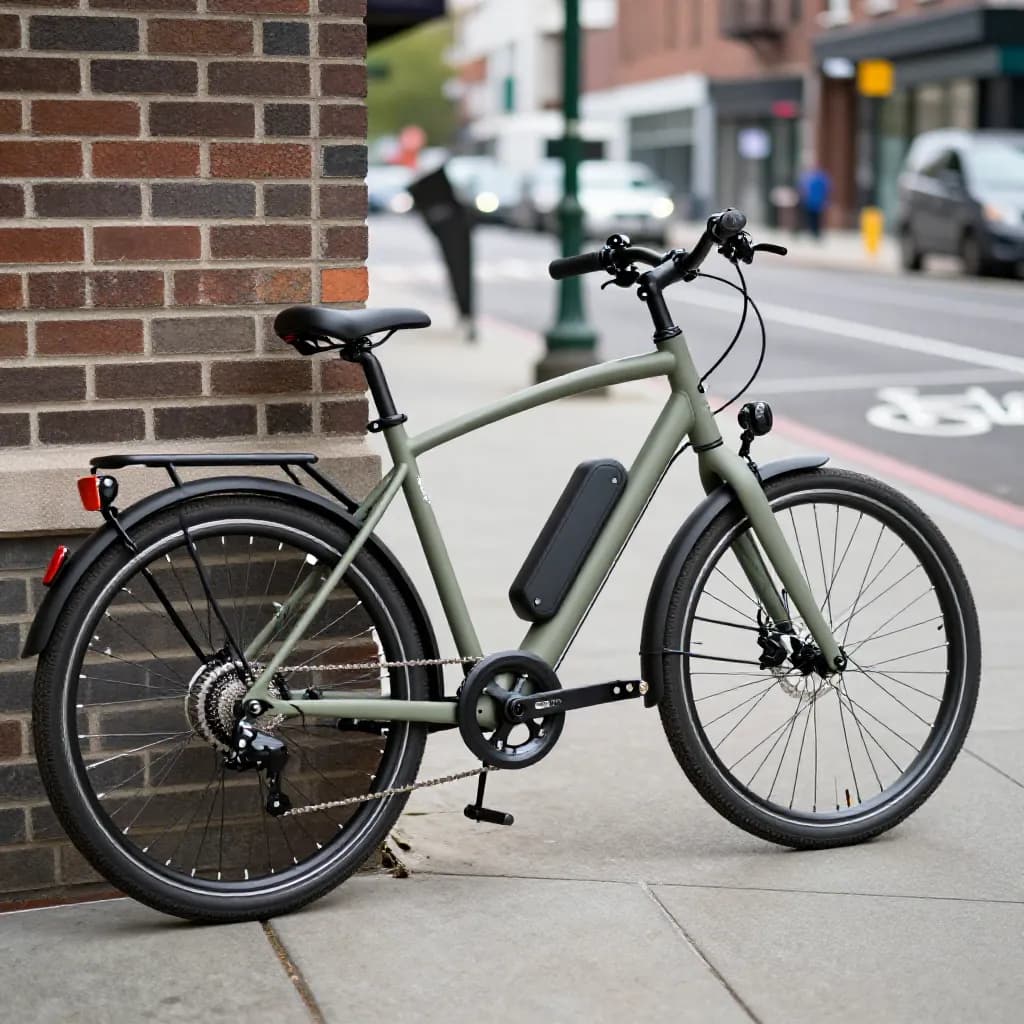
The fundamental difference between coating a traditional bicycle frame and an e-bike frame lies in the number of critical interfaces. A conventional bicycle frame has relatively simple tube-to-tube joints and a few threaded bosses. An e-bike frame adds battery cavity surfaces, motor mount faces, speed sensor locations, wiring entry and exit points, display mount areas, and charging port surrounds. Each of these interfaces requires specific masking, tolerance management, or post-coating machining to ensure proper component fit and electrical connectivity.
Ready to Start Your Project?
From one-off customs to 15,000-part production runs — get precise pricing in 24 hours.
On This Page
The Unique Demands of E-Bike Frame Finishing
Material selection adds another layer of complexity. While traditional bicycles predominantly use steel or aluminum, e-bike frames increasingly incorporate mixed materials — aluminum main frames with carbon fiber battery covers, magnesium motor housings, and steel reinforcement plates at high-stress points. Each material requires different pretreatment chemistry and may respond differently to the same curing temperature, making the coating process more demanding than single-material frames.
The weight penalty of powder coating is a consideration for e-bikes, though less critical than for unpowered bicycles. A typical e-bike frame coating adds 150-250 grams depending on frame size and film build, which is a small fraction of the 2-4 kilogram battery weight. Nevertheless, manufacturers still optimize coating thickness to minimize unnecessary mass, particularly on performance-oriented e-mountain bikes and e-road bikes where every gram affects handling and climbing efficiency.
Battery Compartment Integration and Coating Strategy
The integrated battery compartment is the defining feature of modern e-bike frame design, and it creates the most complex coating challenge. Most mid-range and premium e-bikes now use downtube-integrated batteries that slide into a cavity machined or formed into the frame's downtube. The interior surfaces of this cavity, the battery contact rails, the latch mechanism interfaces, and the sealing surfaces all require careful consideration during the coating process.
Interior cavity surfaces present a classic Faraday cage challenge for electrostatic powder application. The deep, narrow battery compartment resists powder penetration, and achieving uniform coverage on internal walls requires specialized technique. Many applicators use tribo-charging guns with extended lance nozzles to reach into the cavity, as tribo-charged powder is less affected by Faraday cage effects than corona-charged powder. Film build targets for internal surfaces are typically lower than external — 30-50 microns is adequate for corrosion protection in a semi-enclosed environment.
Battery contact rails and electrical connection points must be masked before coating to maintain electrical conductivity. These surfaces are typically machined aluminum that makes direct contact with the battery pack's terminals or guide rails. Even a thin layer of powder coating — which is an electrical insulator — would prevent proper electrical contact and could cause charging failures or intermittent power delivery. Precision masking using custom silicone plugs or high-temperature masking tape is essential for these areas.
The battery cavity sealing surface is equally critical. Where the battery cover or the battery pack itself seats against the frame, the surface must be flat and dimensionally accurate to maintain weather sealing. Powder coating adds 50-70 microns to this surface, which must be accounted for in the frame design tolerances. Some manufacturers specify a reduced film build of 30-40 microns on sealing surfaces, while others machine the sealing surface after coating to achieve precise dimensional control.
Motor Mount Protection and Thermal Considerations
E-bike motor mounts experience a combination of mechanical stress, heat generation, and environmental exposure that makes coating specification critical. Mid-drive motors mount at the bottom bracket area, transmitting significant torque through the frame interface. Hub motors mount at the rear dropout, applying both torque and radial loads. In both cases, the coating at the motor mount interface must withstand these forces without delaminating or allowing fretting corrosion between the motor housing and the frame.
Motor mount faces are typically masked during powder coating to maintain precise dimensional tolerances and ensure metal-to-metal contact between the motor and frame. This direct contact is important for both structural integrity and heat transfer — the frame acts as a heat sink for the motor, and a layer of insulating powder coating between the motor and frame would impede thermal dissipation. However, the areas immediately surrounding the motor mount should be coated to prevent corrosion at the transition zone where the motor housing meets the frame.
Thermal considerations extend beyond the motor mount itself. Mid-drive motors can generate surface temperatures of 80-100 degrees Celsius during sustained climbing efforts, and this heat conducts into the surrounding frame material. The powder coating in the motor mount vicinity must tolerate these elevated temperatures without softening, discoloring, or losing adhesion. Standard polyester powder coatings are rated for continuous service at 120-150 degrees Celsius, providing adequate margin for motor heat. However, dark-colored coatings in the motor area may show more visible heat-related discoloration over time than lighter colors.
For e-bikes with external motor mounting systems — common on conversion kits and some cargo bike designs — the motor clamp or bracket area requires a coating with high compressive strength to resist crushing under clamp pressure. Textured powder coatings can actually benefit these applications by providing a micro-rough surface that improves clamp grip and reduces the tendency for the motor bracket to rotate under torque loads.
Cable Routing, Sensor Integration, and Masking Strategy
Modern e-bikes route motor cables, sensor wires, brake lines, and shift cables internally through the frame tubes, and the powder coating process must accommodate this internal routing architecture. Cable entry and exit ports — typically located at the head tube, downtube, chainstay, and seatstay — require masking to maintain proper dimensions for cable guides and grommets. Oversized ports can allow water ingress, while undersized ports from excessive coating buildup can pinch cables and cause shifting or braking problems.
Speed sensors and their corresponding magnet mounting locations require particular attention. Most e-bike systems use a speed sensor mounted on the chainstay or seatstay that reads a magnet attached to the wheel hub or brake rotor. The sensor mounting surface must be flat and at the correct distance from the magnet path. Powder coating thickness on the sensor mount area directly affects the air gap between sensor and magnet, and excessive film build can push the sensor out of reading range. A maximum film build of 40-50 microns on sensor mounting surfaces is typically specified.
Torque sensors integrated into the bottom bracket area present similar challenges. These sensors measure pedaling force to modulate motor assistance, and their mounting interfaces require precise dimensional control. The coating strategy for torque sensor areas usually involves complete masking of the sensor pocket and contact surfaces, with coating applied only to the surrounding frame surfaces for corrosion protection.
The overall masking strategy for an e-bike frame is significantly more complex than for a traditional bicycle. A standard bicycle frame might require 10-15 masking points, while an e-bike frame can require 30-50 individual masks including battery contacts, motor mounts, sensor surfaces, cable ports, threaded bosses, bearing seats, and electrical connector locations. This masking complexity increases labor time and requires detailed masking maps that are specific to each frame model. Many e-bike manufacturers provide their coating partners with detailed masking specifications and custom masking fixtures to ensure consistency across production runs.
Custom Colors and Consumer Personalization
The e-bike market has matured beyond utilitarian transportation into a lifestyle product category where aesthetics drive purchasing decisions. Custom powder coating colors have become a significant differentiator for both manufacturers and aftermarket customizers, with consumers willing to invest in unique finishes that reflect personal style. The powder coating industry's ability to deliver virtually unlimited color options makes it the ideal finishing technology for this market.
Manufacturer color palettes for e-bikes have expanded dramatically. Where early e-bikes were available in three or four standard colors, current model ranges often offer eight to twelve color options including metallics, mattes, and textured finishes. Some premium brands offer custom color programs where buyers can specify any RAL, Pantone, or NCS color reference, with the frame coated to order. This mass customization capability is enabled by powder coating's relatively quick color change process — a well-equipped coating line can switch colors in 15-30 minutes, making small-batch custom orders economically viable.
Multi-color and graphic designs add another dimension to e-bike personalization. Two-tone color schemes — such as a contrasting color on the downtube battery cover versus the main frame — are achieved through sequential coating with intermediate masking. More complex graphics use a combination of powder coating for the base color and digital printing or vinyl decals for detailed logos and patterns, with a clear powder topcoat to protect the graphics and unify the surface finish.
Matte finishes have become particularly popular in the e-bike segment, driven by trends in the broader cycling industry. Matte powder coatings achieve their low-gloss appearance through controlled surface texture at the microscopic level, typically measuring 10-25 gloss units at 60 degrees compared to 80-95 for high-gloss finishes. While visually striking, matte finishes require different care than gloss — they show fingerprints and scuffs more readily and cannot be polished to remove minor scratches. Manufacturers should communicate these care differences to consumers to manage expectations.
Pretreatment for Mixed-Material E-Bike Frames
E-bike frames increasingly use multiple materials in their construction, and each material requires appropriate pretreatment chemistry for optimal powder coating adhesion. The most common combination is an aluminum main frame with steel reinforcement inserts at high-stress points such as the motor mount, head tube, and dropout areas. Some designs also incorporate magnesium components for weight reduction or carbon fiber elements for battery covers and chainstay protectors.
Aluminum sections require alkaline cleaning followed by acid etching and a chromate-free conversion coating — typically zirconium or titanium-based chemistry. Steel inserts in the same frame need iron phosphate or zinc phosphate conversion coating for optimal adhesion and corrosion protection. The challenge is that these two pretreatment chemistries are not fully compatible in a single-stage process. The most common solution is a multi-metal pretreatment system based on zirconium chemistry that provides acceptable performance on both aluminum and steel, though it may not achieve the peak performance of dedicated single-metal treatments on either substrate.
Galvanic corrosion at aluminum-to-steel junctions is a significant concern that pretreatment and coating must address together. Where dissimilar metals are in contact, the more active metal — aluminum in this case — will corrode preferentially in the presence of an electrolyte such as road spray or condensation. The powder coating provides the primary barrier against electrolyte contact, but any coating defect at a bimetallic junction will initiate accelerated corrosion. Best practice is to apply a supplementary sealant or isolation compound at aluminum-steel interfaces before coating, providing a secondary barrier if the powder coating is breached.
Carbon fiber components present a different challenge entirely. Carbon fiber cannot be powder coated using standard electrostatic application because it is not sufficiently conductive for electrostatic attraction, and the curing temperatures of 180-200 degrees Celsius can damage the epoxy matrix of the composite. Carbon fiber e-bike components are typically finished with liquid clear coat or left in natural carbon weave appearance, with the powder-coated metal frame designed to complement the carbon aesthetic.
Durability Testing for E-Bike Applications
E-bike frames endure a more demanding service environment than traditional bicycles due to higher average speeds, greater vehicle weight, and the additional stresses imposed by motor torque and battery mass. The powder coating specification must account for these elevated demands through appropriate testing protocols that simulate real-world e-bike service conditions.
Salt spray testing per ASTM B117 is the baseline corrosion resistance test, with e-bike frames typically requiring a minimum of 750 hours without blistering, delamination, or creep from scribed lines. Frames intended for year-round commuting in northern climates where road salt is prevalent should target 1000 hours or more. These salt spray requirements are more demanding than typical bicycle specifications because e-bikes are more likely to be ridden in adverse weather conditions — the motor assistance makes riding in rain and cold more practical, increasing salt and moisture exposure.
Mechanical durability testing should include impact resistance per ASTM D2794, with a minimum of 80 inch-pounds direct impact to simulate stone strikes and minor crashes. Flexibility testing using a conical mandrel bend per ASTM D522 verifies that the coating can accommodate frame flex during riding without cracking — this is particularly important at chainstay and seatstay junctions where frame deflection is greatest.
Abrasion resistance testing simulates the wear patterns specific to e-bikes. Lock cable rub on the top tube, shoe contact on the chainstay, and battery insertion and removal wear on the downtube cavity are all real-world abrasion scenarios. Taber abrasion testing per ASTM D4060 using CS-17 wheels provides a standardized measure, with e-bike coatings typically specified to lose no more than 100 milligrams per 1000 cycles.
Accelerated weathering using QUV-A or xenon arc exposure validates UV resistance and color stability. A minimum of 1500 hours of QUV-A exposure is recommended for e-bike coatings, with acceptance criteria of less than 50 percent gloss retention loss and Delta E color change below 3.0. These requirements ensure that the finish maintains its appearance through several years of outdoor use.
Production Considerations and Quality Control
Powder coating e-bike frames at production scale requires careful process design to manage the complexity of masking, the variety of frame geometries, and the quality expectations of the cycling market. Unlike commodity metal finishing where minor cosmetic imperfections may be acceptable, bicycle consumers scrutinize finish quality closely, and visible defects such as orange peel, runs, thin spots, or masking lines are grounds for rejection.
Production line design for e-bike frames typically uses an overhead conveyor system with frames hung from custom fixtures that provide access to all surfaces while protecting threaded bosses and bearing seats. The conveyor speed must balance throughput requirements against the time needed for adequate powder deposition on complex frame geometries — typical line speeds for e-bike frames are 2-4 meters per minute, slower than flat panel coating lines but necessary for complete coverage.
Automatic powder application using reciprocating guns handles the majority of the frame surface, but manual touch-up stations are essential for e-bike frames. The battery cavity, motor mount area, cable port surrounds, and other recessed features require skilled manual application to achieve specified film builds. Many production facilities use a combination of automatic guns for the main frame surfaces and dedicated manual stations for complex areas.
Quality control checkpoints should be integrated throughout the process. Incoming frame inspection verifies that substrates are free of defects, properly welded, and dimensionally correct before pretreatment. Post-pretreatment inspection confirms conversion coating weight and coverage using test panels processed alongside production frames. Post-cure inspection includes film thickness measurement at a minimum of eight points per frame, adhesion testing on sample parts, and visual inspection under controlled lighting for cosmetic defects. Statistical process control charting of film thickness data helps identify process drift before it produces out-of-specification parts.
Color verification using a spectrophotometer should be performed at the start of each production run and at regular intervals throughout. The instrument measures color coordinates and calculates Delta E values against the approved color standard, ensuring batch-to-batch consistency that meets the manufacturer's specifications.
Frequently Asked Questions
Can you powder coat an e-bike frame with the battery compartment?
Yes, but the battery compartment requires specialized technique. Internal cavity surfaces need tribo-charging guns with lance nozzles for penetration, battery contact rails must be masked to maintain electrical conductivity, and sealing surfaces need controlled film thickness. Many applicators use custom masking fixtures specific to each e-bike frame model.
Does powder coating interfere with e-bike motor mounting?
Motor mount faces are masked during coating to maintain dimensional tolerances and metal-to-metal contact for heat transfer. The surrounding areas are coated for corrosion protection. Standard polyester powder coatings tolerate the 80-100 degree Celsius temperatures generated by mid-drive motors during sustained use.
What colors are available for powder-coated e-bike frames?
Virtually any color is available, including the full RAL Classic range, Pantone matching, metallics, mattes, and textured finishes. Many manufacturers offer 8-12 standard colors, and some premium brands provide custom color-to-order programs. Multi-color schemes and graphic designs are also achievable through sequential coating with masking.
How does powder coating handle internal cable routing on e-bikes?
Cable entry and exit ports are masked to maintain proper dimensions for cable guides and grommets. Internal frame surfaces receive a thinner coating of 30-50 microns to prevent cable pinching while still providing corrosion protection. Speed sensor and torque sensor mounting surfaces require precise film thickness control to maintain proper air gaps.
Is powder coating durable enough for e-mountain bikes?
Yes. Properly specified polyester powder coating at 60-80 microns provides excellent resistance to stone impacts, branch scratches, and mud abrasion common in off-road riding. E-mountain bike frames should target minimum 80 inch-pounds impact resistance and 750 hours salt spray performance. Textured finishes can help hide minor trail damage.
Ready to Start Your Project?
From one-off customs to 15,000-part production runs — get precise pricing in 24 hours.