Door hardware is one of the most frequently touched and visually prominent elements in any building. Handles, knobs, levers, hinges, lock sets, and kick plates are used dozens or hundreds of times daily, and their finish must withstand constant contact while maintaining an attractive appearance. Powder coating has become a preferred finishing method for architectural door hardware because it delivers the wear resistance, color consistency, and design flexibility that these high-touch components demand.
Consumer
Powder Coating for Door Hardware: Handles, Hinges, Locks, Kick Plates, and Architectural Finishes
Sundial Powder Coating·April 22, 2026·9 min
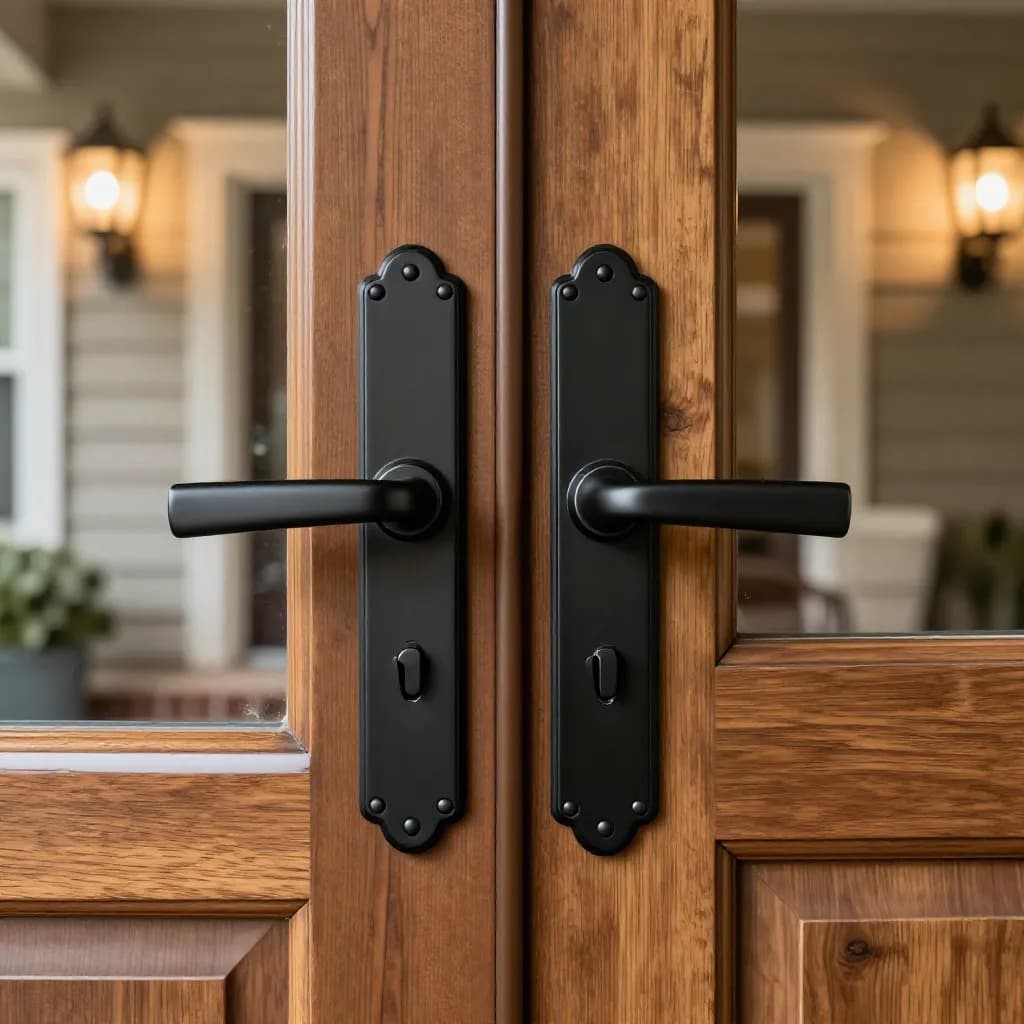
The traditional finishes for door hardware — chrome plating, brass plating, and anodizing — remain popular, but powder coating offers advantages that these methods cannot match. The color range is virtually unlimited, allowing hardware to be finished in any shade rather than being limited to the standard metallic tones of plating. The coating is applied in a single step without the multiple chemical baths required for plating, making it more environmentally friendly. And the thick, bonded film provides excellent resistance to the scratching, fingerprinting, and wear that door hardware endures.
Ready to Start Your Project?
From one-off customs to 15,000-part production runs — get precise pricing in 24 hours.
On This Page
Powder Coating Elevates Door Hardware
For architects, designers, and homeowners, powder coating opens up possibilities for hardware customization that were previously impractical or prohibitively expensive. Matching hardware to a specific color scheme, creating a consistent finish across different hardware types from different manufacturers, or restoring vintage hardware to a contemporary finish are all straightforward with powder coating.
Handles, Knobs, and Lever Sets
Door handles and lever sets are the most visible and frequently contacted pieces of door hardware, making their finish critically important for both aesthetics and durability. Powder coating these components requires attention to the specific wear patterns they experience — the grip area of a lever handle, the contact surface of a knob, and the area around the keyhole all receive concentrated wear from daily use.
For handles and levers, a hard polyester or polyester-epoxy hybrid powder provides the best wear resistance. The coating should be applied at a consistent 50 to 70 microns to provide adequate protection without affecting the feel or fit of the hardware. Thicker coatings can make handles feel bulky and may interfere with the precise fit of lever mechanisms in their rosettes or escutcheons.
The finish choice for handles significantly affects their practical performance. Matte and satin finishes hide fingerprints and minor scratches far better than high-gloss finishes, making them the practical choice for high-traffic doors. Textured finishes provide additional grip and scratch concealment but may not suit the aesthetic of refined architectural hardware. For commercial applications where hundreds of people use the same door daily, a satin polyester finish in a medium tone provides the best balance of appearance, durability, and maintenance.
Hinges: Function and Finish
Door hinges are often overlooked in the finishing process, but mismatched or corroded hinges detract from the overall appearance of a door installation. Powder coating hinges allows them to be matched to the handles, kick plates, and other hardware for a coordinated look. The process is straightforward for most hinge types, though some functional considerations must be addressed.
The primary concern with powder coating hinges is maintaining proper function. The pin bore and pin must remain free of coating to allow smooth operation. Coating buildup in the knuckle joints can cause the hinge to bind or operate stiffly. The solution is careful masking of the pin bore and knuckle interior surfaces before coating, or disassembling the hinge and coating only the leaves while leaving the pin and knuckle interiors bare.
For butt hinges, the leaves can be separated from the pin and coated individually. After coating, the pin is reinstalled with a light application of lubricant. Continuous hinges and piano hinges are more challenging because the interlocking knuckles cannot be easily separated. These hinges are best coated in the open position with the knuckle area masked, or coated on the visible leaf surfaces only. Spring hinges and self-closing hinges should have their spring mechanisms removed or protected before coating, as the curing temperature can affect spring temper.
Lock Sets and Security Hardware
Lock sets, deadbolts, and security hardware can be powder coated to match other door hardware, but the internal mechanisms require careful protection during the coating process. The lock cylinder, latch mechanism, and any spring-loaded components must be completely removed before the housing goes through the coating process. Only the exterior trim pieces — the escutcheon plates, thumb turns, and decorative housings — should be coated.
The precision fit of lock components means that even small amounts of coating in the wrong places can prevent proper function. Cylinder bores must be masked to maintain the exact diameter needed for the lock cylinder to seat and operate correctly. Latch bolt openings must remain clear for smooth operation. Screw holes should be masked or chased after coating to ensure proper fastener engagement.
For high-security applications, the coating must not interfere with the lock's security rating. UL-listed and ANSI-graded lock sets have been tested and certified with specific finishes, and modifying the finish could technically void the certification. In practice, powder coating the exterior trim pieces does not affect the lock's security performance, but building owners and specifiers should be aware of this consideration for code-compliance purposes. Consulting with the lock manufacturer about refinishing is advisable for commercial and institutional applications.
Kick Plates and Push Plates
Kick plates and push plates are designed to protect door surfaces from foot traffic and hand contact, and they take more abuse than any other piece of door hardware. These plates are constantly scuffed by shoes, bumped by carts and equipment, and cleaned with aggressive commercial cleaning products. The finish must be exceptionally durable to maintain its appearance under these conditions.
Powder coating is an excellent choice for kick plates because the thick, hard film resists the scuffing and scratching that these components endure. A polyester powder at 70 to 90 microns provides a robust coating that stands up to heavy foot traffic. Textured finishes are particularly practical for kick plates — a fine sand or leather texture hides scuff marks and maintains a clean appearance far longer than a smooth finish that shows every mark.
Stainless steel kick plates are common in commercial applications, and while stainless steel does not require coating for corrosion protection, powder coating allows these plates to be finished in colors that match the door hardware and architectural scheme. Coating stainless steel requires proper surface preparation — the passive oxide layer must be abraded through blasting or sanding to provide mechanical adhesion for the powder. A bonding primer designed for stainless steel substrates improves adhesion and ensures the coating remains firmly attached under the heavy wear these components experience.
Architectural Finish Standards and Matching
In architectural applications, door hardware finishes must coordinate with a broader design palette that includes window frames, curtain wall mullions, handrails, and other metal elements throughout the building. Powder coating enables this coordination by offering precise color matching across different hardware types and manufacturers. A single custom color can be applied to handles, hinges, kick plates, and accessories from different sources, creating a unified appearance that would be impossible with factory-standard finishes.
The architectural hardware industry uses standardized finish designations — such as US10B (oil-rubbed bronze), US26D (satin chrome), and US32D (satin stainless) — that define specific appearances. Powder coating can replicate most of these standard finishes, allowing coated hardware to coordinate with plated or anodized components in the same installation. The match is typically close enough for components that are not directly adjacent, though side-by-side comparison may reveal subtle differences between powder-coated and plated finishes.
For large commercial projects, powder coating offers the advantage of batch consistency. All hardware for a project can be coated in a single production run, ensuring perfect color and finish matching across hundreds or thousands of pieces. This level of consistency is difficult to achieve with plating processes, where bath chemistry variations can cause subtle color shifts between batches. Powder coating's digital color matching and controlled application process deliver the repeatability that large architectural projects require.
Restoration of Vintage and Antique Hardware
Vintage and antique door hardware often features beautiful craftsmanship in cast brass, bronze, or iron that has been obscured by decades of paint, tarnish, or corrosion. Powder coating provides a way to restore these pieces to functional beauty while providing modern durability. The thick, uniform coating protects the restored hardware from future degradation while showcasing the original design details.
The restoration process begins with careful removal of the hardware from the door, noting the position and orientation of each piece. Old paint is stripped through chemical stripping or careful abrasive blasting. For delicate cast pieces with fine detail, glass bead blasting at low pressure preserves the original surface texture without eroding sharp edges and decorative elements. Heavier blasting media like aluminum oxide is appropriate for robust iron hardware but may be too aggressive for fine brass castings.
Color selection for restored hardware depends on the desired aesthetic. Coating in a color that approximates the original finish — such as an antique brass or oil-rubbed bronze powder — maintains the vintage character of the piece. Alternatively, coating in a contemporary color like matte black or satin nickel updates the hardware to suit a modern interior while preserving the original form and craftsmanship. Either approach gives the hardware a fresh start with a finish that will last for decades of daily use.
Frequently Asked Questions
Will powder coating wear off door handles from daily use?
Quality powder coating on door handles is highly wear-resistant and will maintain its appearance through years of daily use. Matte and satin finishes show wear less than high-gloss finishes. In extremely high-traffic commercial applications, some wear may become visible after several years, but the coating significantly outlasts liquid paint finishes.
Can you powder coat a door lock without affecting its function?
Yes, but only the exterior trim pieces should be coated. The lock cylinder, latch mechanism, and all internal components must be removed before coating. Cylinder bores and latch openings must be masked to maintain proper dimensions. The lock is reassembled after coating with all internal components reinstalled.
How do you match powder-coated hardware to existing finishes?
Powder coating shops can match virtually any color or finish using spectrophotometer color matching. Bring a sample of the existing finish — a hinge, a paint chip, or even a photograph — and the shop can formulate a custom powder that closely replicates the color and sheen. Metallic and textured finishes can also be matched.
Is powder coating suitable for exterior door hardware?
Yes. Powder coating provides excellent weather resistance for exterior door hardware. A super-durable polyester formulation resists UV fading and chalking for seven to ten years. For coastal environments, a two-coat system with an epoxy primer provides additional corrosion protection against salt air exposure.
Can brass door hardware be powder coated?
Yes. Brass hardware can be powder coated after proper surface preparation. The brass surface must be abraded through blasting to remove the smooth oxide layer and create mechanical adhesion for the powder. The original brass color will be completely covered, making this ideal for changing the hardware's appearance to a different finish.
Ready to Start Your Project?
From one-off customs to 15,000-part production runs — get precise pricing in 24 hours.