Dog crates, pet gates, kennel panels, and exercise pens are among the most demanding consumer products for any coating to endure. Dogs chew, scratch, and paw at metal surfaces with surprising force and persistence. The finish must withstand this abuse while remaining safe for an animal that will inevitably lick, mouth, and bite the coated surfaces. Powder coating meets both of these requirements better than any alternative finish, which is why it has become the standard coating for quality pet containment products.
Consumer
Powder Coating for Dog Crates and Pet Gates: Non-Toxic, Chew-Resistant, and Easy to Clean
Sundial Powder Coating·April 22, 2026·8 min
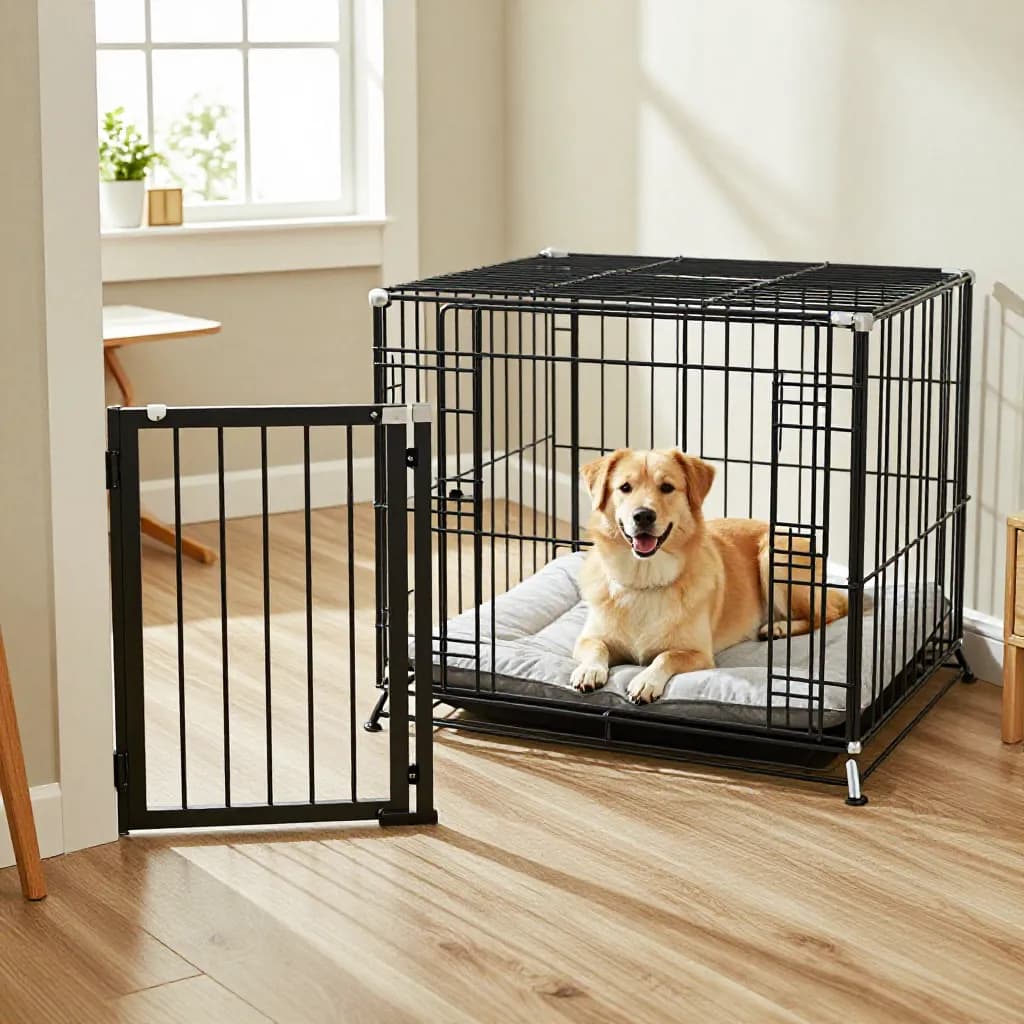
The durability advantage of powder coating over liquid paint on pet products is dramatic. A thin spray paint finish on a dog crate can be scratched through by a determined dog in a single afternoon, exposing bare metal that can rust and create sharp edges. Powder coating's thick, hard, well-adhered film resists scratching and chewing far more effectively, maintaining its integrity through months and years of daily use by even the most energetic dogs.
Ready to Start Your Project?
From one-off customs to 15,000-part production runs — get precise pricing in 24 hours.
On This Page
Why Powder Coating Is the Best Finish for Pet Products
Beyond durability, powder coating provides a smooth, non-porous surface that is easy to clean and sanitize — an essential quality for products that contain animals. Dog crates and gates accumulate hair, drool, food residue, and the occasional accident, and the ability to wipe these surfaces clean quickly and thoroughly is important for both hygiene and odor control. Powder coating's smooth surface does not absorb liquids or odors, making cleanup straightforward.
Non-Toxic Safety for Pets
The safety of the coating is the primary concern for any product that a pet will contact with its mouth. Dogs routinely lick, chew, and mouth the bars of their crates and gates, and any coating on these surfaces must be non-toxic when ingested in the small quantities that result from normal mouthing behavior. Powder coating, once fully cured, meets this safety requirement.
Cured powder coatings are thermosetting polymers that have undergone a complete chemical cross-linking reaction during the curing process. This cross-linking creates a stable, inert film that does not break down under normal conditions and does not release harmful chemicals. The coating does not contain lead, cadmium, or other heavy metals that were historically found in some paint formulations. Modern powder coatings are formulated to comply with consumer product safety standards, including restrictions on hazardous substances.
For pet product manufacturers and custom fabricators who want the highest level of assurance, powder coatings that meet FDA 21 CFR 175.300 for food-contact applications are available. While pet products are not technically food-contact items, using a food-contact-compliant coating provides an extra margin of safety for products that animals will mouth and chew. These formulations use resins and pigments that have been tested and approved for direct food contact, ensuring they are safe even under the most conservative interpretation of pet safety requirements.
Chew Resistance and Durability Testing
Chew resistance is the defining performance requirement for powder coating on dog crates and pet gates. Dogs — particularly puppies, anxious dogs, and breeds with strong jaws — can exert remarkable force on crate bars and gate frames. The coating must resist this mechanical abuse without chipping, flaking, or peeling in ways that could create sharp edges or produce coating fragments that the dog might ingest.
Powder coating's resistance to chewing comes from its combination of hardness, flexibility, and adhesion. The coating is hard enough to resist surface scratching from teeth and claws, flexible enough to absorb impact without cracking, and bonded tightly enough to the metal substrate that it does not peel away in sheets when damaged. When a dog does manage to wear through the coating at a specific point, the damage tends to be localized rather than spreading, because the surrounding coating remains firmly adhered.
The wire gauge and bar diameter of the crate or gate also affect how well the coating holds up to chewing. Thicker bars provide more surface area for the coating to grip and are harder for dogs to get their teeth around. Thin wire crates with small-diameter bars are more vulnerable to coating damage because dogs can grip the bars more easily and concentrate their chewing force on a smaller area. For heavy chewers, crates with thicker bars and a robust powder coating provide the best combination of containment security and coating longevity.
Easy Cleaning and Hygiene
Keeping pet containment products clean is essential for the health of the animal and the comfort of the household. Dog crates accumulate hair, drool, food particles, and occasionally urine or feces that must be cleaned promptly and thoroughly. Powder coating's smooth, non-porous surface makes this cleaning process quick and effective.
For routine cleaning, wiping down the crate or gate with a damp cloth and mild soap removes hair, drool, and light soiling. For more thorough cleaning, the entire crate can be sprayed with a pet-safe disinfectant and wiped or rinsed clean. Powder coating resists common pet cleaning products, including enzymatic cleaners designed to break down organic stains and odors, dilute bleach solutions, and commercial kennel disinfectants.
The non-porous nature of powder coating is particularly important for odor control. Unlike bare metal or porous paint finishes that can absorb urine and other organic fluids, powder coating prevents these substances from penetrating the surface. This means that thorough surface cleaning actually removes the source of odors rather than just masking them. For multi-pet households and breeding or boarding operations where crates are used by different animals, this cleanability is essential for preventing the transfer of odors, bacteria, and potential pathogens between animals.
Custom Sizing and Color Options
One of the advantages of having dog crates and pet gates custom fabricated and powder coated is the ability to specify exact dimensions and colors that suit the home and the pet. Standard retail crates come in fixed sizes that may not fit a specific space or breed perfectly. Custom fabrication allows the crate to be sized precisely for the dog and the location — fitting into an alcove, matching the height of a countertop, or providing extra width for a broad-chested breed.
Color options for custom pet products go far beyond the standard black and white available in retail crates. Powder coating allows the crate or gate to be finished in any color, enabling it to blend with the home's decor rather than standing out as an eyesore. A crate finished in the same color as the room's furniture becomes a design element rather than a utilitarian necessity. Popular choices include matte black for modern interiors, white for bright and airy spaces, and warm metallics like bronze and brass-tone for traditional homes.
For pet businesses — boarding facilities, veterinary clinics, grooming salons, and doggy daycares — custom powder-coated kennel systems in branded colors create a professional, cohesive appearance that reinforces the business identity. Color-coding different kennel sizes or areas with different powder coating colors adds both visual organization and aesthetic appeal to the facility.
Gate and Barrier Applications
Pet gates and barriers present slightly different coating challenges than crates. Gates are typically mounted in doorways or at the top and bottom of stairs, where they must withstand the force of dogs pushing against them while maintaining a finish that complements the home's interior. The mounting hardware and latch mechanisms must function smoothly after coating, and the gate must look attractive in a prominent household location.
Pressure-mounted gates rely on friction between the gate frame and the doorway walls, and the coating on the contact pads affects this friction. Rubber or silicone contact pads should be removed before coating and reinstalled afterward. Hardware-mounted gates use screws or bolts that attach to the wall or door frame — these mounting points should be masked during coating to ensure proper fit and secure attachment.
The latch mechanism is the most critical functional element of a pet gate, and coating must not interfere with its operation. Latch components should be masked or the coating should be carefully applied to avoid buildup in the latch engagement surfaces. After coating, the latch should be tested to ensure it opens and closes smoothly and locks securely. A gate that does not latch properly is a safety hazard, particularly for gates at the top of stairs where a failure could result in a dog falling.
Maintenance and Longevity of Pet Product Coatings
The longevity of powder coating on pet products depends largely on the behavior of the animal using the product. A calm, well-adjusted dog that uses its crate as a comfortable den may never cause significant coating wear. An anxious dog that chews and scratches at the crate bars during every confinement can wear through even the best coating in a matter of months. Understanding this range of outcomes helps set realistic expectations.
For dogs that are moderate chewers, powder coating on a quality crate typically lasts three to five years before showing significant wear at the most-contacted areas — usually the door bars and the bars at nose height. Touching up these wear areas with a pet-safe touch-up paint extends the coating's functional life and prevents corrosion at the exposed metal. For heavy chewers, more frequent touch-up or periodic recoating may be necessary.
Regular inspection of the coating is important for pet safety. Check for any areas where the coating has been chewed or scratched through to bare metal, as exposed steel can develop sharp edges from corrosion that could injure the dog's mouth or paws. Smooth any rough spots with fine sandpaper and apply touch-up coating. Also check for any loose coating flakes that a dog might ingest — while cured powder coating is non-toxic, ingesting large flakes is not desirable. Removing any loose material and touching up the area keeps the product safe and functional.
Frequently Asked Questions
Is powder coating safe if my dog chews on the crate bars?
Yes. Fully cured powder coating is a stable, inert polymer that does not contain lead, cadmium, or other harmful heavy metals. The small amounts of coating that a dog might ingest through normal mouthing and chewing are not toxic. For maximum assurance, FDA food-contact-compliant powder coatings are available for pet product applications.
How long does powder coating last on a dog crate?
For moderate chewers, powder coating on a quality crate typically lasts three to five years before showing significant wear at high-contact areas. Calm dogs may see the coating last much longer. Heavy chewers can wear through the coating more quickly. Regular touch-up of worn areas extends the coating's functional life.
Can I powder coat an existing wire dog crate?
Yes, though the crate must be completely disassembled — removing the tray, door, latches, and any plastic components — before coating. The wire panels are then stripped, blasted, and coated. The curing temperature will destroy any plastic parts, so these must be removed and reinstalled after coating.
What cleaning products are safe on powder-coated pet products?
Powder coating resists most common pet cleaning products, including enzymatic cleaners, dilute bleach solutions, and commercial kennel disinfectants. Avoid undiluted bleach, strong acids, and abrasive scrubbers. Mild soap and water are sufficient for routine cleaning, with pet-safe disinfectants for periodic deep cleaning.
Can powder coating prevent a dog from escaping a crate?
Powder coating does not affect the structural strength of the crate — escape prevention depends on the crate's construction, wire gauge, and latch security. However, the smooth, hard surface of powder coating makes it more difficult for dogs to grip and bend bars compared to bare metal, which can provide a modest additional deterrent against escape attempts.
Ready to Start Your Project?
From one-off customs to 15,000-part production runs — get precise pricing in 24 hours.