Curtain rods and hardware are one of those interior design details that most people settle for rather than choose. The standard retail options — brushed nickel, oil-rubbed bronze, matte black, and antique brass — cover the basics but leave designers and homeowners with limited choices when a specific color or finish is needed to complete a room's vision.
Consumer
Powder Coating for Curtain Rods and Hardware: Custom Interior Design Finishes
Sundial Powder Coating·April 23, 2026·7 min
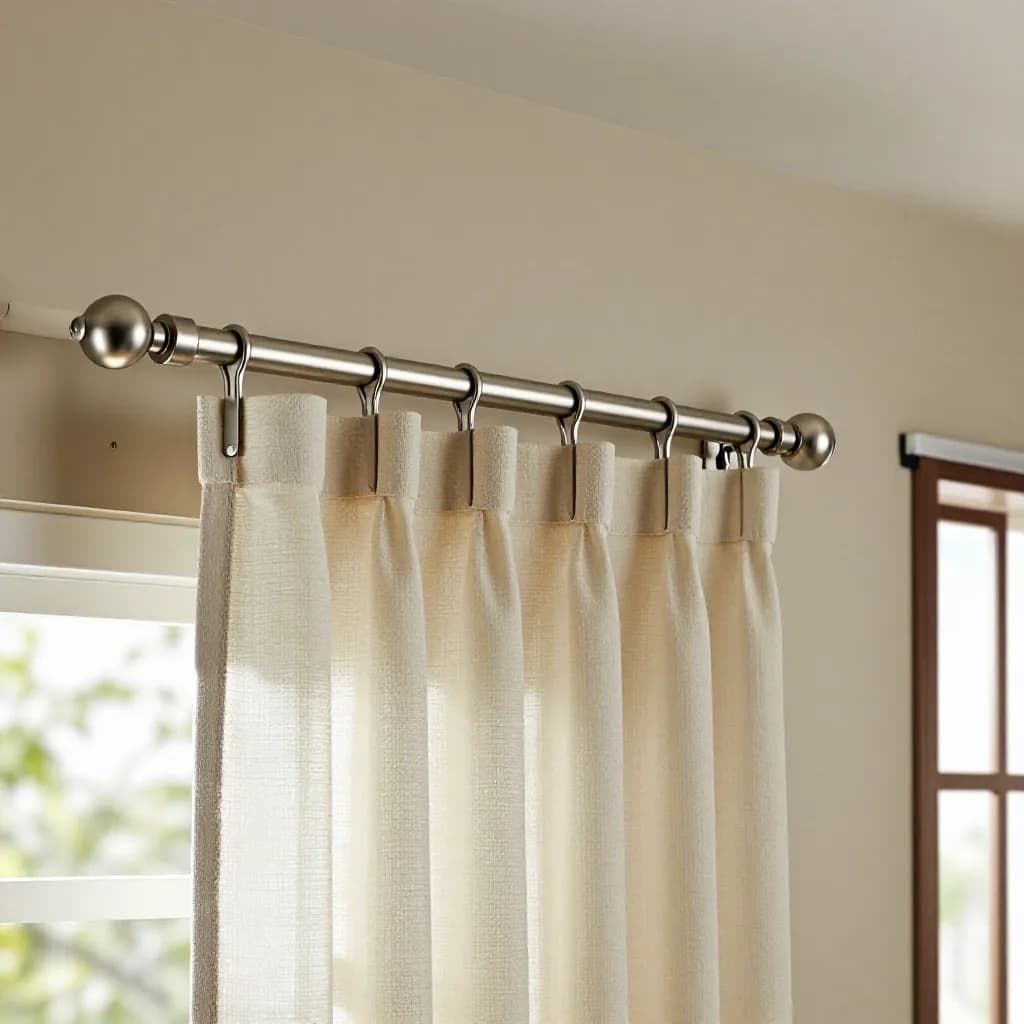
Powder coating changes this equation entirely. Any metal curtain rod, bracket, ring, or finial can be finished in virtually any color, texture, or effect. Want a curtain rod that matches the exact sage green of your accent wall? Done. Need hardware in a specific metallic tone that coordinates with your light fixtures? Powder coating can match it precisely. The limitation shifts from what is available on the shelf to what you can imagine.
Ready to Start Your Project?
From one-off customs to 15,000-part production runs — get precise pricing in 24 hours.
On This Page
Beyond Off-the-Shelf Curtain Hardware
This customization is particularly valuable for interior designers working on high-end residential projects, boutique hotels, and commercial spaces where every detail is specified to create a cohesive design narrative. Custom powder-coated curtain hardware becomes an intentional design element rather than a compromise, contributing to the overall aesthetic rather than merely blending in.
Rods, Brackets, and Rings: Coating Each Component
A complete curtain hardware set includes several components, each with its own coating considerations. The rod itself is typically a steel or aluminum tube ranging from 16 to 35 millimeters in diameter. Its long, cylindrical shape is ideal for powder coating — the smooth surface accepts powder evenly, and the simple geometry avoids the Faraday cage issues that plague more complex parts.
Brackets are the structural components that mount the rod to the wall or ceiling. They come in various designs — simple L-brackets, decorative scrollwork, ceiling-mount flanges, and adjustable projection brackets. More complex bracket designs with tight curves and recessed areas require careful coating technique to ensure complete coverage in all areas. The mounting holes in brackets should be drilled before coating and masked during the process to ensure clean screw engagement.
Curtain rings and clips slide along the rod and must move freely after coating. The inside diameter of the ring must accommodate the rod diameter plus the coating thickness on both the ring interior and the rod exterior. For standard-sized hardware, this is rarely an issue, but for tight-fitting rings on smaller-diameter rods, the added coating thickness could cause binding. Discuss ring and rod compatibility with your coater to ensure smooth operation after finishing.
Finials — the decorative end caps on curtain rods — are often the most visually prominent hardware component. These can be coated to match the rod or finished in a contrasting color or texture for visual interest. Threaded finial connections should be masked to maintain proper fit.
Matching Existing Interior Finishes
One of the most common reasons homeowners and designers seek custom powder-coated curtain hardware is to match existing finishes in the room. Door handles, light fixtures, cabinet hardware, and furniture frames all establish a metallic finish vocabulary in a space, and curtain hardware that does not match can feel like an afterthought.
Powder coating can replicate virtually any metallic finish. Brushed stainless, polished chrome, antique brass, aged copper, and wrought iron effects are all achievable with the right powder selection and application technique. Bring a sample of the finish you want to match — a cabinet pull, a light fixture plate, or even a paint chip — and your coater can select or custom-blend a powder that matches closely.
For non-metallic color matching, the process is even more straightforward. Any RAL, Pantone, or custom color reference can be matched in powder form. This allows curtain hardware to coordinate with wall colors, fabric tones, or any other design element in the room. The ability to match any color precisely is a significant advantage over the limited palette of retail curtain hardware.
Matte and satin finishes are the most popular for interior curtain hardware, as they complement most decor styles without creating distracting reflections. High-gloss finishes can work in modern, minimalist spaces but tend to show fingerprints and dust more readily. Textured finishes add visual interest and hide minor handling marks, making them practical for frequently adjusted curtain hardware.
Custom Lengths and Fabricated Hardware
Standard curtain rods come in fixed lengths that often require awkward joins or unsightly gaps for non-standard window widths. Custom fabrication combined with powder coating solves this problem, producing single-piece rods cut to the exact length needed for any window or wall span.
Custom-length rods are straightforward to produce. Steel or aluminum tubing is cut to the specified length, ends are finished or fitted with finial threads, and the complete rod is powder coated as a single piece. The result is a seamless rod with no visible joints, finished in exactly the color and texture specified. For wide windows or wall-to-wall installations, this seamless appearance is a significant upgrade over joined standard-length rods.
Custom brackets can be fabricated to match specific projection depths, ceiling heights, or mounting conditions. A room with unusually deep window reveals, for example, might need brackets with extra projection to clear the reveal and allow curtains to stack fully open. Custom-fabricated brackets coated to match the rod create a cohesive, purpose-built hardware set.
For bay windows, curved walls, and other non-standard geometries, custom-bent rods can be fabricated and powder coated. Steel tubing can be bent to follow the contour of a bay window, creating a smooth, continuous curtain track that follows the architecture. Powder coating the bent rod after fabrication ensures complete coverage including the stressed areas at each bend.
Durability and Daily Use Performance
Curtain hardware is handled daily — curtains are opened and closed, rings slide along rods, and brackets bear the weight of heavy drapes. The finish on this hardware needs to withstand this regular use without degrading, chipping, or wearing through to bare metal.
Powder coating's hardness and adhesion make it well suited to the mechanical demands of curtain hardware. Rings sliding along a coated rod create friction that would quickly wear through paint, but powder coating's thermoset film resists this abrasion effectively. Over years of daily use, some polishing at the ring contact points is normal, but the coating maintains its integrity and appearance far longer than painted alternatives.
The weight-bearing capacity of brackets is not affected by powder coating. The coating adds negligible weight and does not reduce the structural strength of the bracket. Heavy drapes, blackout curtains, and layered window treatments can all be supported by properly designed brackets regardless of the coating applied.
For rooms with high humidity — bathrooms, kitchens, and enclosed porches — powder coating provides corrosion protection that prevents the rust staining common with poorly finished curtain hardware. The sealed powder coat surface blocks moisture from reaching the metal substrate, eliminating the brown rust streaks that can develop on walls below corroding brackets.
Cleaning powder-coated curtain hardware is simple. A soft cloth removes dust, and a damp cloth with mild soap handles fingerprints and grime. The finish does not require polishing, waxing, or any special maintenance products — a significant advantage over plated finishes that can tarnish or require regular polishing to maintain their appearance.
Commercial and Hospitality Applications
Hotels, restaurants, event venues, and commercial offices often require curtain hardware in specific brand colors or design themes that are not available in standard retail lines. Powder coating provides the customization these projects demand while delivering the durability needed for commercial environments.
Hospitality projects typically involve large quantities of identical hardware — dozens or hundreds of matching rod sets for guest rooms, conference rooms, or dining areas. Powder coating's batch processing capability ensures perfect color consistency across large orders, which is critical when hardware will be installed side by side in identical rooms. A color variation between rooms would be immediately noticeable and unacceptable in a quality hospitality setting.
Commercial durability requirements exceed residential standards. Hotel curtain hardware is operated by thousands of different guests, cleaned by housekeeping staff, and expected to maintain its appearance for years between renovation cycles. Powder coating's resistance to cleaning chemicals, handling wear, and humidity makes it the practical choice for these demanding environments.
For theatrical and event venues, curtain hardware may need to support heavy stage curtains, blackout drapes, or acoustic panels. Custom-fabricated heavy-duty brackets and oversized rods can be powder coated to match the venue's interior design while providing the structural capacity needed for these specialized applications. The coating adds a finished appearance to what might otherwise look like industrial hardware.
Frequently Asked Questions
Can powder-coated curtain rings slide smoothly on a powder-coated rod?
Yes, though the fit should be verified. The coating adds thickness to both the ring interior and rod exterior, so ensure the ring inside diameter accommodates the coated rod diameter. For standard-sized hardware, this is rarely an issue. Smooth or satin finishes provide the best sliding action.
Can powder coating match my existing door handles and light fixtures?
In most cases, yes. Bring a sample of the finish you want to match, and your coater can select or custom-blend a powder that closely replicates it. Metallic, brushed, matte, and textured effects can all be matched to coordinate with existing hardware in the room.
Is powder coating durable enough for heavy curtains?
Yes. Powder coating does not reduce the structural strength of brackets or rods. The coating withstands the weight of heavy drapes and the daily friction of rings sliding along the rod. Some polishing at high-contact points is normal over years of use, but the finish maintains its integrity.
Can curtain rods be powder coated in custom lengths?
Yes. Custom-length rods are cut from steel or aluminum tubing, finished with end details or finial threads, and powder coated as a single seamless piece. This eliminates the visible joints required when connecting standard-length rods for non-standard window widths.
How do I clean powder-coated curtain hardware?
A soft cloth removes dust, and a damp cloth with mild soap handles fingerprints and grime. No polishing, waxing, or special maintenance products are needed. Avoid abrasive cleaners or steel wool, which can scratch the finish.
Ready to Start Your Project?
From one-off customs to 15,000-part production runs — get precise pricing in 24 hours.