Carabiners have transcended their climbing origins to become ubiquitous everyday accessories. From keychains and bag clips to gear organization and fashion accessories, the simple spring-gate clip has found a home in pockets, on backpacks, and in toolkits worldwide. And while climbing-rated carabiners are engineered for life-safety applications, the vast majority of carabiners sold today are decorative or utility-grade hardware used for non-load-bearing purposes.
Consumer
Powder Coating for Carabiner Hardware: Custom Finishes for Decorative and Keychain Use
Sundial Powder Coating·April 23, 2026·7 min
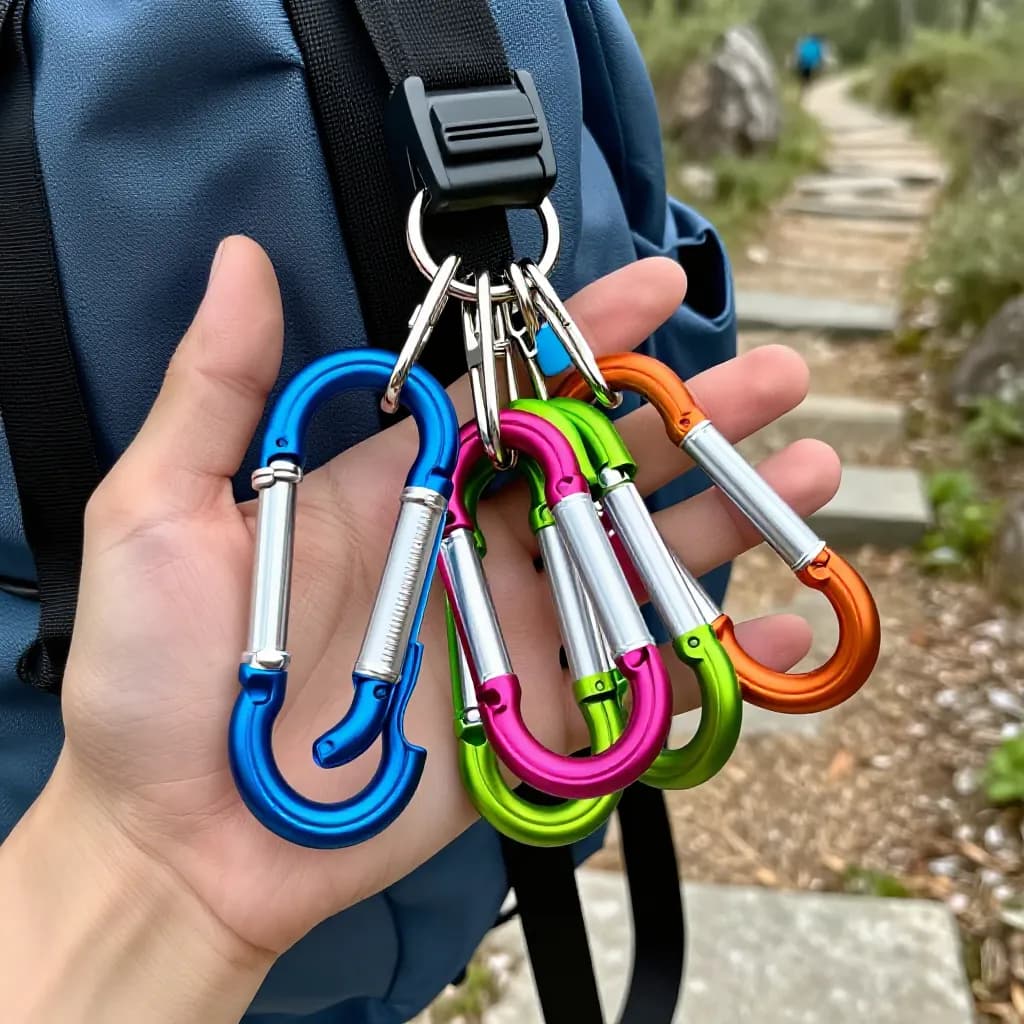
This decorative and utility market is where powder coating thrives. Custom colors, unique textures, and branded finishes transform generic aluminum or steel carabiners into distinctive accessories that reflect personal style or corporate identity. A matte black carabiner on a keychain makes a different statement than a bright orange one, and powder coating makes both possible with a finish that lasts.
Ready to Start Your Project?
From one-off customs to 15,000-part production runs — get precise pricing in 24 hours.
On This Page
Carabiners Beyond the Climbing Wall
The appeal extends to small businesses and promotional products. Custom powder-coated carabiners with company colors or branded finishes serve as memorable giveaways, retail accessories, and gear attachments. The durability of powder coating ensures these items maintain their appearance through daily use, keeping the brand visible and the finish intact long after a printed logo would have worn away.
Critical Safety Disclaimer: Non-Load-Bearing Only
Before discussing powder coating techniques for carabiners, a critical safety point must be addressed. Powder coating should never be applied to carabiners intended for climbing, fall protection, or any life-safety application. Certified climbing carabiners are engineered, tested, and rated as complete systems — altering the finish voids the certification and can compromise the structural integrity of the hardware.
The powder coating process involves heating the carabiner to curing temperatures of approximately 200 degrees Celsius. This heat exposure can alter the temper of aluminum alloys used in climbing carabiners, potentially reducing their strength below rated values. Even if the strength reduction is small, it introduces an unknown variable into a life-safety system where unknowns are unacceptable.
Additionally, powder coating adds thickness to the gate and body surfaces that can affect gate clearance, locking mechanism function, and rope compatibility. These dimensional changes may seem minor but can have serious consequences in a fall scenario where the carabiner must perform exactly as designed.
This article focuses exclusively on decorative, utility, and keychain carabiners that are not used for climbing or fall protection. If you need colored climbing carabiners, purchase them from manufacturers who apply color during the original manufacturing process with full testing and certification of the finished product.
Choosing Carabiners for Powder Coating
The best candidates for powder coating are utility-grade aluminum and steel carabiners designed for non-load-bearing applications. These are widely available in various sizes, from small keychain clips to larger gear-organizing carabiners. Look for carabiners with smooth surfaces, clean gate action, and no existing coatings that would need to be stripped.
Aluminum carabiners are the most popular substrate for powder coating. They are lightweight, take powder well, and are available in a wide range of sizes and styles. The aluminum alloys used in utility carabiners are generally less sensitive to heat treatment changes than the high-strength alloys used in climbing hardware, though this is irrelevant for non-load-bearing applications.
Steel carabiners offer a heavier, more substantial feel and are common in larger utility sizes. They accept powder coating readily and benefit from the corrosion protection it provides. For outdoor use on gear bags, tool belts, and equipment organization, powder-coated steel carabiners offer excellent durability.
Wire gate and solid gate styles both work well with powder coating, though solid gate carabiners are easier to coat evenly. Wire gates have thin cross-sections that can be challenging to coat uniformly, and the spring mechanism may need attention to ensure smooth operation after coating. For the best results with minimal complications, solid gate carabiners are the simpler choice.
Coating Process for Small Hardware
Carabiners are small parts, and coating them requires the same attention to detail as any precision small-component work. The process begins with cleaning and degreasing to remove any manufacturing oils, handling residue, or existing surface treatments. For bare aluminum carabiners, a light abrasive blast or chemical etch provides the surface profile needed for strong powder adhesion.
The gate mechanism is the primary masking concern. The hinge point and spring mechanism must operate freely after coating, so these areas need protection during the coating process. The gate contact surfaces — where the gate meets the body when closed — should also be masked to ensure the gate closes fully and latches properly. A carabiner that does not close completely after coating has lost its basic functionality.
Hanging carabiners for coating is straightforward — they can be hung from their own gates on a wire rack, or suspended from hooks through the gate opening. The contact point where the hanging fixture touches the carabiner will have a small uncoated spot, so position this contact point in the least visible location.
For batch coating of multiple carabiners — common for promotional orders or retail production — consistent fixturing ensures uniform results across all pieces. A simple wire rack that holds carabiners at consistent spacing and orientation allows the coater to apply powder evenly to the entire batch in a single pass.
Color and Branding Possibilities
Powder coating transforms generic carabiners into branded, personalized accessories. The full spectrum of powder coating colors is available, from subtle earth tones to vibrant primaries to metallic and specialty effects. For personal use, the choice is purely aesthetic — pick the color that appeals to you or coordinates with your gear.
For businesses and organizations, powder-coated carabiners serve as effective promotional items and branded accessories. Company colors applied as powder coat create a durable, professional finish that outlasts printed or pad-printed logos. Combined with laser engraving after coating — which cuts through the powder to reveal the contrasting metal underneath — branded carabiners become distinctive, long-lasting promotional products.
Color coding is a practical application for gear organization. Outdoor guides, event coordinators, and equipment managers use color-coded carabiners to organize gear by type, group, or function. Powder coating provides a permanent color identification that does not wear off or fade like tape or paint markers. A set of carabiners in red, blue, green, and yellow provides instant visual identification that speeds up gear sorting and distribution.
Multi-color effects are possible through masking, though the small size of carabiners limits the complexity of multi-color designs. A two-tone finish — such as a black body with a contrasting colored gate — is achievable and creates a distinctive look. More complex patterns are better achieved through other methods like dip coating or hydrographic printing over a powder coat base.
Durability and Everyday Carry Performance
Keychain carabiners endure constant abuse. They jingle against keys, rub against pocket fabric, get squeezed by hands dozens of times a day, and occasionally get dropped on hard surfaces. The finish needs to survive all of this while maintaining its color and appearance.
Powder coating handles keychain duty well. The thermoset film resists the scratching and chipping that quickly destroys spray paint or thin anodizing on budget carabiners. The gate area — which sees the most mechanical stress from repeated opening and closing — maintains its finish through thousands of cycles, though some wear at the gate contact point is normal over time.
For carabiners used on backpacks, gear bags, and tool belts, the coating faces additional challenges from UV exposure and weather. Outdoor-grade polyester powders resist fading and chalking from sun exposure, keeping colors vibrant through seasons of outdoor use. The sealed powder coat surface also prevents moisture from reaching the metal, eliminating the corrosion that plagues bare or poorly finished hardware in humid environments.
The tactile quality of powder coating is an underappreciated benefit for everyday carry items. A smooth powder coat feels pleasant in the hand — warmer and more inviting than bare metal or anodized aluminum. Textured finishes add grip that makes the carabiner easier to operate with one hand or while wearing gloves. These subtle tactile improvements enhance the daily user experience in ways that are felt more than seen.
Frequently Asked Questions
Can I powder coat a climbing carabiner?
No. Powder coating should never be applied to carabiners intended for climbing or fall protection. The curing heat can alter the metal's temper, and the added thickness can affect gate function. Only coat decorative, utility, and keychain carabiners that are not used for life-safety applications.
Will powder coating affect the gate mechanism?
It can if the gate mechanism is not properly masked. The hinge point, spring mechanism, and gate contact surfaces should be masked during coating to ensure the gate operates smoothly and closes fully after the powder is cured.
What is the best powder coating color for keychain carabiners?
That depends on personal preference and intended use. Matte black and dark metallic finishes are popular for their versatility. For visibility and gear identification, bright colors like orange, red, and blue stand out. For promotional use, matching company brand colors creates a professional, cohesive look.
How durable is powder coating on a keychain carabiner?
Powder coating is significantly more durable than spray paint or thin anodizing on budget carabiners. It resists scratching, chipping, and fading through daily keychain use. Some wear at high-contact points like the gate is normal over time, but the overall finish maintains its appearance for years.
Can powder-coated carabiners be laser engraved?
Yes. Laser engraving after powder coating cuts through the colored powder layer to reveal the contrasting metal underneath, creating a permanent, high-contrast mark. This technique is popular for branding, personalization, and identification marking on custom carabiners.
Ready to Start Your Project?
From one-off customs to 15,000-part production runs — get precise pricing in 24 hours.