Camping and outdoor gear operates in the most uncontrolled environments imaginable. A camp stove sits on rocky ground in rain and wind. A lantern hangs from a tree branch in freezing temperatures. A folding chair endures UV exposure at 3000 meters altitude. A cooler rides in a truck bed through desert heat. These products must perform reliably in conditions that range from tropical humidity to alpine cold, from coastal salt air to dusty desert winds.
Consumer
Powder Coating for Camping and Outdoor Gear: Weather-Tough Finishes for Adventure Equipment
Sundial Powder Coating·April 22, 2026·11 min
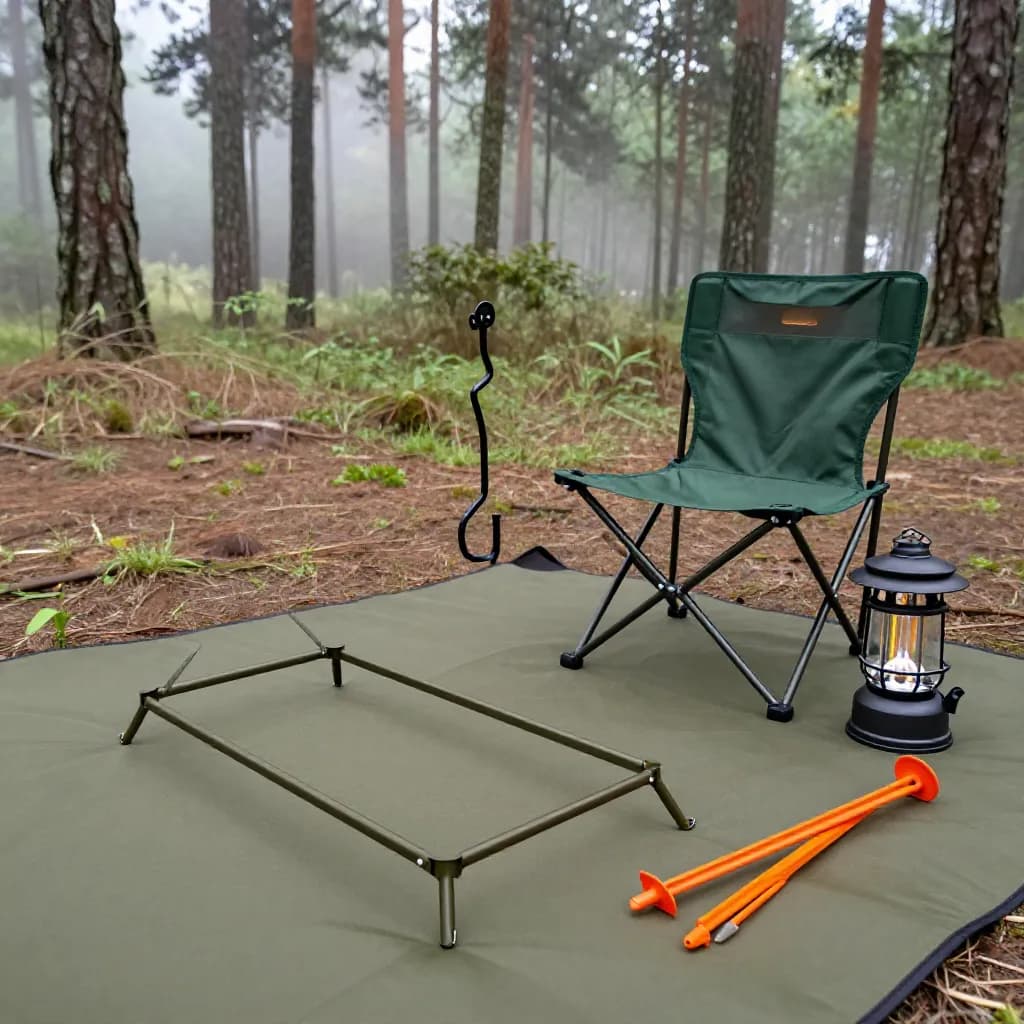
The coating on outdoor gear is not merely cosmetic — it is a critical functional component that protects the metal substrate from corrosion, provides thermal management for heat-generating products, and maintains the product's appearance and brand identity through seasons of hard use. A failed coating means a rusted stove, a corroded lantern, or a chair that stains clothing — all of which destroy consumer confidence and brand reputation.
Ready to Start Your Project?
From one-off customs to 15,000-part production runs — get precise pricing in 24 hours.
On This Page
Outdoor Gear Demands Coatings That Perform in the Wild
Powder coating has become the standard finish for metal outdoor gear because it delivers the combination of weather resistance, mechanical toughness, and aesthetic quality that this demanding market requires. Major outdoor brands including Coleman, Camp Chef, Weber, Yeti, and Snow Peak specify powder coating for their metal products, recognizing that the coating's performance directly impacts product reviews, warranty claims, and brand perception.
The outdoor gear market is also highly weight-sensitive, particularly for backpacking and hiking equipment. Powder coating's ability to achieve full protection at 50-80 microns — thinner than many liquid paint systems that require multiple coats — contributes to weight optimization without sacrificing durability.
High-Temperature Powder Coatings for Camp Stoves and Fire Pits
Camp stoves, fire pits, portable grills, and lanterns generate significant heat during operation, requiring powder coatings that maintain their integrity at elevated temperatures. Standard powder coatings begin to degrade above 200°C, well below the surface temperatures reached by combustion-heated outdoor products.
Silicone-modified polyester powder coatings are the standard chemistry for outdoor cooking and heating equipment. These formulations incorporate silicone resin at 30-50% of the binder system, providing continuous heat resistance up to 300-350°C and intermittent resistance to 400°C. The silicone component maintains film integrity and adhesion at temperatures that would cause standard polyester coatings to crack, peel, and discolor.
For products that reach even higher temperatures — direct-flame surfaces on camp stoves and fire pit bowls — silicone-based high-temperature powder coatings rated to 500-600°C are specified. These formulations use predominantly silicone resin with ceramic pigments (typically iron oxide, manganese oxide, or mixed metal oxides) that maintain color stability at extreme temperatures. The available color range is limited to blacks, greys, and earth tones due to the thermal stability requirements of the pigment system.
High-temperature powder coatings require a different cure and conditioning process than standard formulations. Initial cure at 200-250°C cross-links the organic components of the binder. A subsequent high-temperature conditioning cycle — gradually ramping to the coating's rated service temperature — completes the silicone cross-linking and drives off volatile by-products that would otherwise cause odor and smoke during first use. This conditioning cycle is critical for consumer products because smoke and odor from an unconditioned coating create a negative first-use experience.
The pretreatment for high-temperature applications differs from standard processes. Phosphate conversion coatings decompose above 250°C, so they provide no long-term benefit on high-temperature surfaces. Abrasive blasting to create mechanical adhesion, followed by a high-temperature-compatible wash primer, is the preferred pretreatment for surfaces that will exceed 250°C in service.
UV and Weather Resistance for All-Season Outdoor Use
Outdoor gear is exposed to UV radiation levels that far exceed indoor or even automotive applications. At high altitude, UV intensity increases approximately 10% per 1000 meters of elevation gain. In equatorial regions, annual UV dose is 2-3 times that of temperate latitudes. Reflective surfaces like snow and water amplify UV exposure further. The powder coating on outdoor gear must withstand this intense UV environment without chalking, fading, or losing mechanical properties.
Superdurable polyester powder coatings are specified for outdoor gear components that are not exposed to high temperatures. These formulations use UV-stabilized polyester resins with high HALS (hindered amine light stabilizer) and UVA (UV absorber) loading to protect the polymer matrix from photodegradation. Superdurable polyester maintains acceptable appearance for 5-10 years of outdoor exposure, depending on UV intensity and the specific color.
Color selection significantly affects UV durability. Organic pigments (used in bright reds, oranges, yellows, and some blues) are inherently less UV-stable than inorganic pigments (used in earth tones, blacks, and whites). Outdoor gear in bright colors requires premium UV-resistant organic pigments and higher stabilizer loading to achieve acceptable fade resistance. Some colors — particularly certain reds and oranges — remain challenging for long-term outdoor UV resistance and may require customer education about expected color evolution over time.
Moisture resistance is equally important for outdoor gear that is used in rain, stored in humid conditions, and subjected to condensation from temperature changes. The powder coating must prevent moisture penetration to the steel or aluminum substrate, particularly at edges, fastener holes, and areas of mechanical wear. Salt spray resistance per ASTM B117 of 500-1000 hours is a typical specification for outdoor gear, with higher requirements for products marketed for coastal or marine-adjacent use.
Freeze-thaw cycling is a specific concern for outdoor gear used in cold climates. Water that penetrates coating defects can freeze and expand, propagating the defect and accelerating coating failure. Flexible powder coating formulations with low glass transition temperatures (Tg below -10°C) maintain film integrity through freeze-thaw cycles without cracking.
Scratch and Abrasion Resistance for Field Conditions
Outdoor gear is subjected to abrasion and impact that would be considered abuse in any other product category. Gear is thrown into truck beds, dragged across rocky ground, stacked with other equipment, and used as improvised work surfaces. The powder coating must survive this treatment without exposing the substrate to corrosion.
Pencil hardness of 2H-3H is the minimum specification for outdoor gear powder coatings, providing resistance to scratching from rocks, gravel, and other abrasive surfaces. Higher hardness ratings (3H-4H) are specified for products like camp stove legs and cooler feet that are in direct contact with abrasive ground surfaces.
Impact resistance is critical for products that are dropped, bumped, and stacked during transport and use. Direct impact resistance of 80-120 inch-pounds per ASTM D2794 ensures that the coating absorbs impact energy without chipping or cracking. Reverse impact resistance of 40-60 inch-pounds protects against deformation from the opposite side, such as when a loaded cooler is set down on an uneven surface.
Taber abrasion resistance per ASTM D4060 quantifies the coating's resistance to surface wear. Outdoor gear coatings should achieve weight loss below 50 mg per 1000 cycles with CS-17 wheels, indicating good long-term resistance to the rubbing and sliding contact that occurs during normal use and transport.
Textured finishes are widely specified for outdoor gear because they provide practical benefits beyond aesthetics. A fine to medium texture hides minor scratches and scuffs that would be highly visible on smooth gloss finishes, maintaining the product's appearance through seasons of use. Texture also improves grip on handles and surfaces that users contact with wet or gloved hands, enhancing safety and usability in field conditions.
For products that are nested or stacked during storage and transport — folding chairs, cookware sets, stacking coolers — the coating must resist the concentrated contact stress at stacking points. Anti-mar additives (typically PTFE or wax-based) reduce the coefficient of friction between stacked surfaces, preventing the scuffing and marking that occurs when coated surfaces slide against each other.
Lightweight Substrates and Coating Optimization
Weight is a critical design parameter for outdoor gear, particularly for backpacking and hiking equipment where every gram matters. Powder coating must be optimized to provide maximum protection at minimum weight, which requires careful attention to substrate selection, film thickness, and coating chemistry.
Aluminum alloys are the preferred substrate for weight-sensitive outdoor gear. 6061-T6 and 5052-H32 are the most common alloys, offering good strength-to-weight ratios and excellent corrosion resistance. Powder coating on aluminum serves primarily as a decorative and UV-protective finish rather than a corrosion barrier, since the aluminum's natural oxide layer provides inherent corrosion resistance. This allows thinner film specifications — 40-60 microns versus 60-80 microns on steel — reducing coating weight without compromising performance.
Chromate-free pretreatment for aluminum outdoor gear uses zirconium or titanium-based conversion coatings that comply with REACH and RoHS regulations. These pretreatments provide excellent adhesion promotion and enhance the aluminum's natural corrosion resistance. The pretreatment process must be carefully controlled to avoid over-etching the aluminum surface, which can reduce substrate strength in thin-walled components.
Thin-film powder coating technology enables film thicknesses of 30-50 microns while maintaining full coverage and protection. These formulations use finer particle size distributions (D50 of 20-30 micrometers versus 35-45 micrometers for standard powders) and optimized flow and leveling additives to achieve smooth, uniform films at reduced thickness. The weight savings from thin-film coating can be significant on products with large surface areas relative to their mass.
For the lightest possible coating system, UV-cure powder coatings offer an alternative approach. These formulations cure under ultraviolet light rather than thermal energy, enabling cure at temperatures as low as 100-120°C. The lower cure temperature allows the use of thinner aluminum alloys and heat-sensitive substrates that would distort or lose temper at standard powder coating cure temperatures. UV-cure powder coatings are particularly relevant for lightweight camp furniture frames and trekking pole components.
Food Contact and Safety Considerations
Many outdoor gear products — camp stoves, cookware, coolers, water containers, and food storage — come into direct or indirect contact with food and beverages. The powder coating on these products must be safe for food contact and comply with applicable regulations.
FDA 21 CFR 175.300 governs coatings for food contact surfaces in the United States. Powder coatings intended for food contact must meet extractive limits when tested under conditions that simulate the intended food contact (time, temperature, and food type). For outdoor cooking equipment, testing conditions simulate hot aqueous and fatty food contact, which are the most demanding extraction conditions.
European food contact regulations under EU Framework Regulation (EC) No 1935/2004 impose similar requirements with different test methods and migration limits. Products sold in the EU must comply with these regulations and carry appropriate declarations of conformity.
NSF/ANSI 51 certification provides independent verification of food safety for powder coatings used on food equipment. NSF-certified coatings have been evaluated for extractables and found safe for the intended food contact conditions. Specifying NSF-certified powder coatings simplifies regulatory compliance for outdoor gear manufacturers selling in multiple markets.
For high-temperature food contact applications — camp stove grates, grill surfaces, and cookware exteriors — the coating must maintain food safety at elevated temperatures. Silicone-modified high-temperature coatings used on cooking equipment are generally recognized as safe for food-adjacent use (exterior surfaces near food) but are not typically certified for direct food contact. Direct food contact surfaces on outdoor cooking equipment are usually left uncoated (bare cast iron or stainless steel) or coated with FDA-approved high-temperature coatings specifically formulated for food contact.
Cooler interiors represent a specific food contact application where the coating must resist cold temperatures, moisture, and the mild acids present in food and beverages. Food-grade polyester powder coatings with NSF/ANSI 51 certification are specified for cooler interiors, providing a cleanable, food-safe surface that resists staining and odor absorption.
Brand Identity and Retail Shelf Appeal
Outdoor gear is a highly competitive consumer market where brand identity and visual appeal drive purchasing decisions. The powder coating finish is the first thing a consumer sees on the retail shelf or in an online product image, and it must communicate quality, durability, and brand values at a glance.
Color palettes for outdoor gear brands are carefully curated to reflect brand positioning. Premium brands like Yeti and Snow Peak use muted, sophisticated colors — charcoal, navy, olive, sand — that project quality and restraint. Performance brands like Coleman and Camp Chef use bold, high-visibility colors — red, orange, bright blue — that communicate energy and adventure. Tactical and hunting brands use earth tones, camouflage patterns, and matte finishes that align with their outdoor heritage.
Seasonal color releases have become a marketing strategy for premium outdoor brands, with limited-edition colors creating urgency and collectibility. Powder coating's quick-color-change capability supports this strategy by enabling short production runs of seasonal colors without significant production disruption.
Finish quality expectations in the outdoor gear market have risen dramatically. Consumers now expect the same finish quality on a camp stove that they see on premium kitchen appliances — smooth, uniform, free of defects, with consistent color and gloss. This requires powder coating processes that achieve automotive-grade surface quality on products that are manufactured at consumer goods production volumes.
Packaging and point-of-sale presentation must protect the powder coating finish from damage during retail handling. Products displayed on open shelving are handled by multiple consumers before purchase, and the coating must resist fingerprints, light scratching, and scuffing from adjacent products. Semi-gloss and textured finishes are preferred for retail-displayed products because they show handling marks less than high-gloss finishes.
Frequently Asked Questions
What powder coating is used on camp stoves and fire pits?
Camp stoves and fire pits use silicone-modified polyester or pure silicone powder coatings rated for 300-600°C depending on the application. These high-temperature formulations maintain film integrity and color stability at temperatures that would destroy standard powder coatings.
Is powder coating on outdoor cookware food-safe?
Powder coatings certified to FDA 21 CFR 175.300 or NSF/ANSI 51 are verified safe for food contact. Exterior surfaces of cooking equipment use high-temperature silicone coatings that are food-adjacent safe, while direct food contact surfaces typically use specifically certified food-grade formulations or remain uncoated.
How does altitude affect powder coating on outdoor gear?
UV intensity increases approximately 10% per 1000 meters of elevation, significantly accelerating coating degradation at high altitude. Outdoor gear for alpine use should specify superdurable polyester with maximum HALS and UVA stabilizer loading to withstand the intensified UV exposure.
Can powder coating withstand freeze-thaw cycles?
Yes, when properly formulated. Flexible powder coatings with glass transition temperatures below -10°C maintain film integrity through freeze-thaw cycles without cracking. This is important for outdoor gear used in cold climates where moisture can penetrate coating defects and freeze.
How long does powder coating last on outdoor gear?
Powder coating on outdoor gear typically lasts 5-10 years depending on UV exposure, mechanical abuse, and maintenance. High-temperature coatings on camp stoves may show cosmetic changes sooner due to thermal cycling, but maintain protective function for the product's useful life.
Ready to Start Your Project?
From one-off customs to 15,000-part production runs — get precise pricing in 24 hours.