Powder coating has quietly become one of the most important finishing technologies in contemporary sculpture and public art. Artists working in metal — steel, aluminum, stainless steel, and bronze — increasingly choose powder coating for its combination of vibrant color, exceptional durability, and the ability to maintain a sculpture's intended appearance for decades in outdoor environments.
Consumer
Powder Coating for Art and Sculpture: Color, Weather Resistance, and Artist Collaboration
Sundial Powder Coating·April 22, 2026·11 min
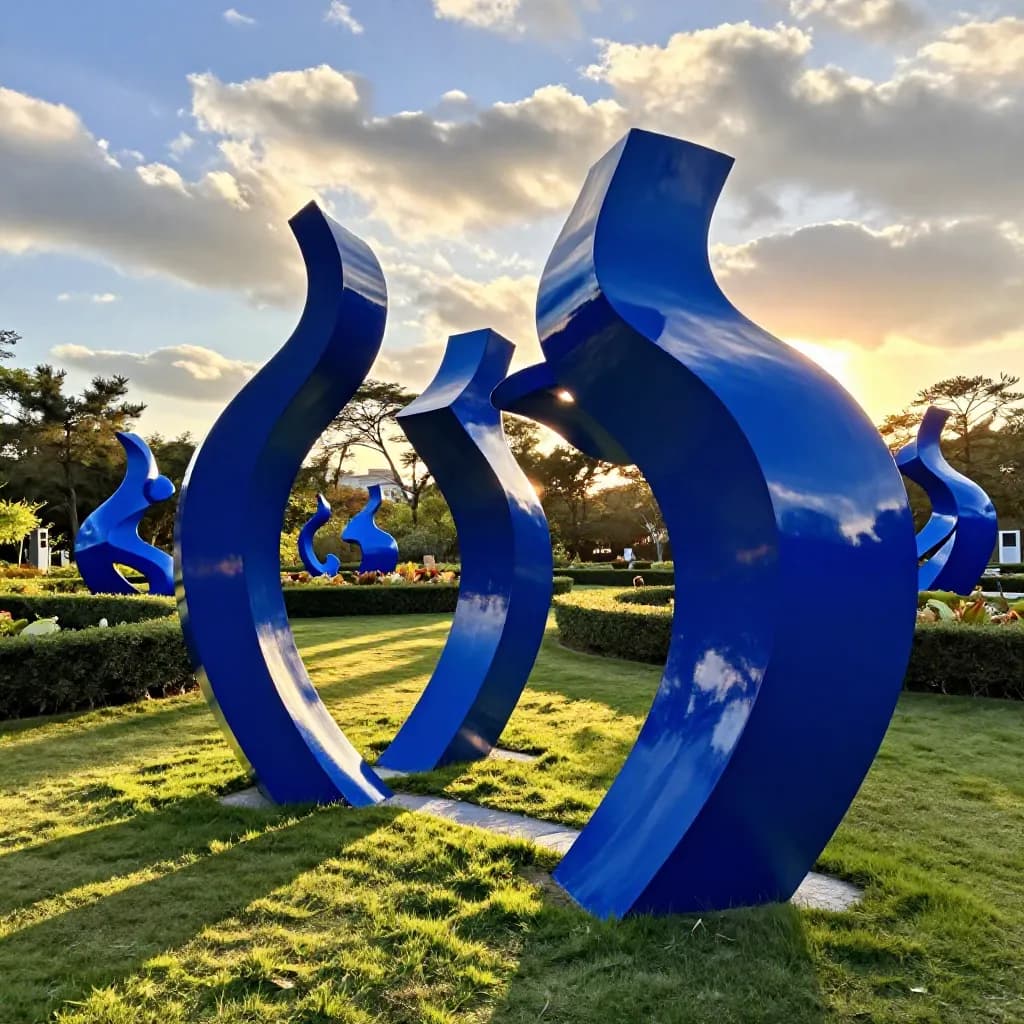
The relationship between powder coating and art goes beyond simple surface protection. For many artists, the coating is an integral part of the artwork's expression. The color, texture, and surface quality of the powder coating contribute to the sculpture's visual impact, emotional resonance, and interaction with light and environment. A bright red powder-coated steel sculpture makes a fundamentally different artistic statement than the same form in raw weathering steel or painted aluminum.
Ready to Start Your Project?
From one-off customs to 15,000-part production runs — get precise pricing in 24 hours.
On This Page
Powder Coating as an Artistic Medium
Public art commissions, in particular, have driven the adoption of powder coating in the art world. Public artworks must withstand years of outdoor exposure, vandalism attempts, and minimal maintenance while maintaining the artist's intended appearance. Powder coating meets these demands better than most alternative finishes, which is why it has become the default specification for many public art programs and commissioning bodies.
This article explores how artists and fabricators use powder coating in sculpture and public art, the creative possibilities the technology offers, the practical considerations for outdoor installations, and how artists collaborate with coating professionals to achieve their vision.
Color Expression: The Artist's Palette in Powder
Color is the primary reason artists choose powder coating over other finishing methods. The powder coating palette offers thousands of standard colors plus unlimited custom matching, giving artists a range of color expression that rivals or exceeds any other metal finishing technology.
The vibrancy and depth of powder coating colors is exceptional. The thick film — 60-120 microns — provides rich, saturated color that has a visual depth and intensity difficult to achieve with thinner liquid paint films. Bright reds, deep blues, vivid yellows, and intense greens maintain their saturation and impact even on large-scale sculptures viewed from a distance, which is critical for public art that must command attention in urban environments.
Metallic and special effect powder coatings open additional creative possibilities. Metallic powders containing aluminum, mica, or glass flake pigments create surfaces that shift and shimmer as the viewer moves around the sculpture, adding a dynamic quality to static forms. Color-shifting chameleon powders change hue depending on the viewing angle, creating an interactive visual experience. Candy coat transparent colors over metallic base coats produce deep, jewel-like finishes with extraordinary depth.
Texture is another dimension of artistic expression available through powder coating. Smooth high-gloss finishes create mirror-like surfaces that reflect the surrounding environment, integrating the sculpture with its setting. Matte finishes absorb light and emphasize form and shadow. Textured finishes — wrinkle, sand, hammer-tone — add tactile quality and visual complexity to the surface. Some artists use multiple textures on a single sculpture, creating contrast between smooth and rough areas that guides the viewer's eye and hand.
Multi-color applications allow artists to use color as a compositional element within a single sculpture. Different sections can be coated in different colors, creating visual rhythm, highlighting structural elements, or referencing symbolic color associations. Masking techniques enable precise color boundaries, while deliberate blending and transition effects create more organic color relationships.
Custom color matching allows artists to specify exact colors that are central to their artistic concept. Whether matching a specific Pantone reference, a color from a painting, or a hue observed in nature, powder coating manufacturers can formulate custom powders to match virtually any color reference.
Weather Resistance: Art That Endures Outdoors
Outdoor sculpture faces relentless environmental assault — UV radiation, rain, snow, temperature cycling, pollution, salt spray in coastal locations, and physical contact from the public. The finish must withstand all of these stresses while maintaining the artist's intended appearance for the expected life of the installation, which for public art is typically 20-50 years or more.
Powder coating's weather resistance makes it exceptionally well-suited for outdoor sculpture. Super-durable polyester powder coatings are formulated to resist UV degradation, maintaining color and gloss for 15-20 years in direct outdoor exposure. Fluoropolymer powder coatings — based on PVDF or FEVE chemistry — extend this to 25-30 years or more, making them the premium choice for high-profile public art installations where long-term appearance is critical.
The thick film of powder coating provides robust protection against moisture penetration, preventing corrosion of the metal substrate beneath. For steel sculptures, this corrosion protection is essential — without it, rust would develop within months of outdoor installation. For aluminum sculptures, the coating prevents the dulling and pitting that unprotected aluminum develops over time in outdoor environments.
Salt spray resistance is particularly important for coastal installations. Powder coating systems with proper pretreatment routinely achieve 1000-2000 hours of salt spray resistance in accelerated testing, translating to decades of real-world coastal exposure. For sculptures installed near the ocean, specifying a marine-grade coating system with enhanced pretreatment ensures the artwork maintains its appearance in this aggressive environment.
Graffiti resistance is a practical concern for public art. Anti-graffiti clear coats can be applied over the powder coating, creating a sacrificial or permanent barrier that allows graffiti to be removed without damaging the underlying color coat. Sacrificial anti-graffiti coatings are removed along with the graffiti and then reapplied, while permanent anti-graffiti coatings allow repeated cleaning without reapplication.
The combination of color vibrancy, weather resistance, and low maintenance makes powder coating the practical choice for outdoor sculpture that must look as good in year twenty as it did on installation day.
Public Art: Commissions, Specifications, and Maintenance
Public art commissions have specific requirements for finish durability, maintenance, and longevity that powder coating is well-positioned to meet. Understanding these requirements helps artists and fabricators specify the right coating system for public installations.
Many public art programs and commissioning bodies specify minimum coating performance standards in their project requirements. These may include minimum salt spray resistance hours, UV resistance ratings, adhesion test requirements, and expected maintenance intervals. Powder coating systems that meet Qualicoat Class 2 or AAMA 2605 specifications satisfy the most demanding public art coating requirements.
Maintenance planning is an integral part of public art specification. The commissioning body needs to know what maintenance the artwork will require over its installed life, including cleaning frequency, touch-up procedures, and expected recoating intervals. Powder coating's low maintenance requirements — periodic cleaning with soap and water, occasional touch-up of minor damage — are a significant advantage in public art budgeting, where ongoing maintenance funds are often limited.
Touch-up and repair protocols should be established at the time of installation. The artist or fabricator should provide the commissioning body with color-matched touch-up paint, application instructions, and contact information for the coating shop that can perform more extensive repairs if needed. Documenting the exact powder product, color code, and application parameters ensures that future repairs match the original finish.
Installation protection is critical for preserving the coating during the installation process. Sculptures are often transported long distances and installed using heavy equipment, creating opportunities for coating damage. Protective wrapping, padding at contact points, and careful rigging procedures minimize installation damage. Any damage that does occur should be repaired immediately using the provided touch-up materials.
For artists responding to public art calls, specifying powder coating in the proposal demonstrates an understanding of durability requirements and maintenance realities. Including coating specifications, expected maintenance schedule, and warranty information strengthens the proposal by addressing the commissioning body's concerns about long-term artwork preservation.
Gallery and Indoor Sculpture
While outdoor durability drives much of the demand for powder coating in sculpture, indoor and gallery-based artists also benefit from the technology's aesthetic qualities and finish precision.
Gallery sculpture demands flawless surface quality. Every imperfection — dust inclusion, orange peel, uneven coverage, color variation — is visible under gallery lighting and detracts from the artwork. Powder coating, when applied by a skilled coater, achieves a level of surface perfection that is difficult to match with brush or spray-applied liquid paint. The smooth, uniform film with consistent color and gloss creates a surface that enhances rather than distracts from the sculptural form.
The range of finishes available in powder coating gives gallery artists extensive creative options. High-gloss finishes create reflective surfaces that interact with gallery lighting, creating highlights and reflections that change as the viewer moves. Matte finishes create a quiet, contemplative surface quality that emphasizes form over surface. Satin finishes balance reflection and absorption, providing a versatile middle ground.
Color precision matters in gallery contexts where the artwork's color is a deliberate artistic choice. Custom color matching ensures the exact hue the artist envisions is achieved, and the consistency of powder coating means the color is uniform across the entire sculpture. For artists working in series or creating multi-part installations, powder coating's batch-to-batch consistency ensures all pieces match precisely.
Small-scale sculpture and art objects benefit from powder coating's ability to coat complex forms uniformly. The electrostatic application process wraps powder around curves, into recesses, and over edges, providing consistent coverage on the intricate geometries common in sculptural work. This is particularly valuable for cast and fabricated forms with complex surface topology.
For indoor sculpture, the full range of powder coating colors and effects is available without the UV resistance constraints that limit outdoor color choices. This means artists can use any color, including those that might fade in outdoor exposure, with confidence that the finish will maintain its appearance indefinitely in a controlled indoor environment.
Artist-Coater Collaboration: Getting the Best Results
The relationship between the artist and the powder coating professional is a collaboration that significantly affects the final artwork. Artists who understand the coating process and communicate effectively with their coater achieve better results than those who treat coating as an afterthought.
Start the conversation early. Ideally, the artist should discuss coating plans with the coater during the design phase, before fabrication begins. The coater can advise on design details that affect coating quality — minimum radii for edge coverage, access for spray guns into recessed areas, hanging points that minimize visible marks, and substrate preparation requirements. Incorporating this input during design avoids costly modifications after fabrication.
Provide clear, specific color and finish references. Bring physical color samples, specify RAL or Pantone numbers, and provide reference images that show the desired surface quality. If the artwork requires multiple colors, provide a detailed drawing or model showing color placement and boundaries. The more precisely the artist communicates their vision, the more accurately the coater can execute it.
Request and evaluate samples before committing to the final coating. The coater should produce sample panels in the specified color and finish for the artist to evaluate under the lighting conditions where the artwork will be displayed. Color appearance varies significantly with lighting — a color that looks perfect under fluorescent shop lights may appear different under gallery spotlights or outdoor daylight. Evaluating samples in context prevents surprises.
Discuss masking and multi-color techniques in detail. If the artwork requires multiple colors, sharp color boundaries, or areas left uncoated, the masking approach must be planned carefully. Complex masking is time-consuming and requires skill — discuss the feasibility, cost, and expected precision of the masking work before proceeding.
Be present during coating if possible. Many coaters welcome the artist's presence during the coating process, particularly for complex or high-value pieces. Being on-site allows the artist to make real-time decisions about coverage, color placement, and finish quality, and it builds the collaborative relationship that produces the best results.
Acknowledge the coater's expertise. Professional powder coaters bring deep knowledge of materials, processes, and techniques that complement the artist's creative vision. The best outcomes result from mutual respect — the artist brings the vision, and the coater brings the technical skill to realize it.
Practical Considerations for Artists
Artists considering powder coating for their work should be aware of several practical factors that affect feasibility, cost, and planning.
Size limitations exist because the artwork must fit inside the coating shop's spray booth and curing oven. Most shops can accommodate pieces up to 2-3 meters in their largest dimension, though some shops have larger ovens for architectural and industrial work. Very large sculptures may need to be coated in sections and assembled after coating, which requires careful planning of joint locations and touch-up procedures at assembly points.
Weight and handling affect both logistics and cost. Heavy sculptures require special handling equipment — cranes, forklifts, or custom fixtures — to move through the coating process safely. The coating shop needs to know the weight and dimensions of the piece in advance to plan appropriate handling. Fragile or delicate elements may need protection during handling and coating.
Heat exposure during curing is a consideration for mixed-media sculptures. The curing oven reaches 180-200 degrees Celsius, which will damage or destroy non-metal components. Any wood, plastic, rubber, fabric, or other heat-sensitive materials must be removed before coating and reattached afterward. If the sculpture includes permanently attached non-metal elements, those areas must be masked and protected from heat, or alternative coating methods considered.
Cost for art and sculpture coating is typically higher than standard industrial coating because of the individual attention, custom colors, complex masking, and careful handling required. Artists should budget for coating as a significant component of the artwork's production cost and factor it into pricing for commissions and sales.
Timeline planning should account for the coating shop's lead time, which may be longer for complex art pieces than for standard industrial work. Allow 1-3 weeks for coating, plus additional time for custom color formulation if needed. For public art commissions with fixed installation deadlines, build adequate buffer into the production schedule for the coating phase.
Documentation of the coating specification — product, color, cure schedule, and shop contact — should be maintained as part of the artwork's provenance record. This information is essential for future conservation, repair, and maintenance of the artwork.
Frequently Asked Questions
Why do sculptors choose powder coating over paint?
Powder coating offers superior color vibrancy, exceptional weather resistance for outdoor installations, a smooth factory-quality finish, and 15-20 year durability. The thick film provides rich, saturated color with visual depth that thin paint films cannot match. For public art that must maintain its appearance for decades, powder coating is the most reliable finishing technology.
Can powder coating achieve custom colors for artwork?
Yes. Powder coating manufacturers can custom-match virtually any color from a physical sample, Pantone reference, or RAL specification. Custom colors add lead time and cost but provide artists with unlimited color possibilities. Metallic, textured, and special effect finishes further expand the creative palette.
How long does powder coating last on outdoor sculpture?
Super-durable polyester powder coatings maintain color and gloss for 15-20 years in outdoor exposure. Fluoropolymer coatings extend this to 25-30 years or more. With proper pretreatment and coating specification, powder-coated outdoor sculpture can maintain its intended appearance for the expected life of most public art installations.
What size sculpture can be powder coated?
Most coating shops can accommodate pieces up to 2-3 meters in their largest dimension. Some shops have larger ovens for architectural work. Very large sculptures can be coated in sections and assembled after coating, with touch-up at assembly joints. Discuss size limitations with the coating shop early in the design process.
How should artists work with powder coating shops?
Start the conversation during the design phase, provide precise color and finish references, request sample panels for evaluation under actual display lighting, discuss masking and multi-color techniques in detail, and be present during coating if possible. The best results come from treating the coating process as a collaboration between the artist's vision and the coater's technical expertise.
Ready to Start Your Project?
From one-off customs to 15,000-part production runs — get precise pricing in 24 hours.