Aquarium stands operate in one of the most challenging indoor environments for any metal finish. The constant proximity to water — whether freshwater or saltwater — creates a microclimate of elevated humidity around the stand that accelerates corrosion on unprotected or poorly protected metal. Splashes during water changes, condensation dripping from equipment, and the occasional overflow or leak mean that the stand's finish is regularly exposed to direct water contact. Powder coating provides the moisture resistance and durability these demanding conditions require.
Consumer
Powder Coating for Aquarium Stands: Humidity Resistance, Salt Water Proximity, and Aesthetics
Sundial Powder Coating·April 22, 2026·8 min
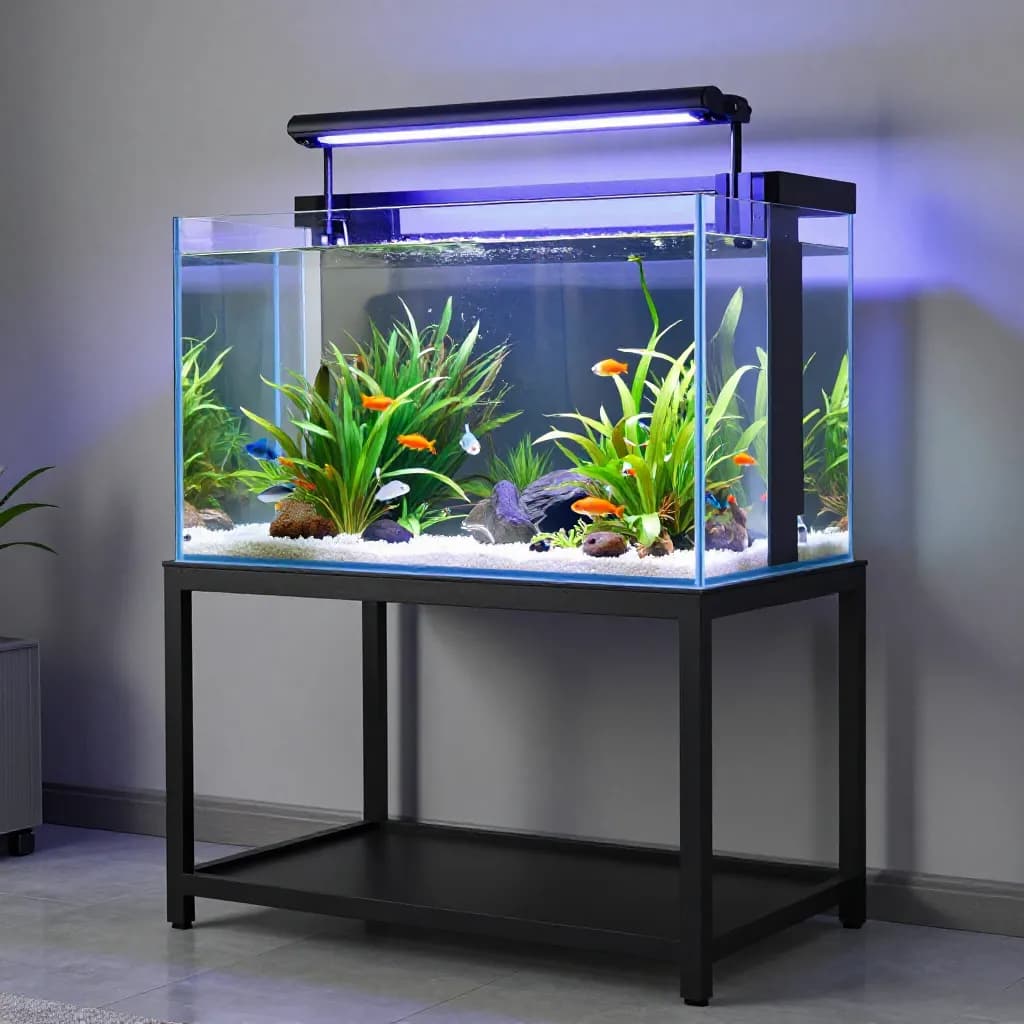
The consequences of coating failure on an aquarium stand go beyond aesthetics. A corroding steel stand loses structural integrity over time, and a stand supporting hundreds of pounds of water, glass, rock, and substrate cannot afford any structural compromise. A 75-gallon aquarium weighs approximately 850 pounds when filled, and larger tanks can exceed several thousand pounds. The stand must maintain its full load-bearing capacity throughout its service life, which means the coating must prevent corrosion from weakening the steel structure.
Ready to Start Your Project?
From one-off customs to 15,000-part production runs — get precise pricing in 24 hours.
On This Page
Why Aquarium Stands Need Superior Coatings
Powder coating addresses both the protective and aesthetic requirements of aquarium stands. The thick, well-adhered film creates a robust moisture barrier that protects the steel from the humid environment. The smooth, attractive finish transforms a utilitarian steel frame into a piece of furniture that complements the aquarium display and the room's decor. For aquarium enthusiasts who invest significant time and money in their tanks, a properly coated stand protects that investment.
Freshwater vs Saltwater: Different Corrosion Challenges
The type of aquarium the stand supports significantly affects the coating requirements. Freshwater aquariums create a humid environment around the stand, but the water itself is relatively benign from a corrosion standpoint. Standard powder coating with proper preparation provides excellent protection for freshwater aquarium stands, and the coating can be expected to perform well for many years with basic maintenance.
Saltwater aquariums present a dramatically more aggressive corrosion environment. Salt spray from protein skimmers, salt creep from evaporation, and the general salt-laden humidity around a marine tank create conditions similar to a coastal environment — right inside the home. Sodium chloride is one of the most aggressive corrosion accelerators for steel, and even small amounts of salt on a metal surface can initiate pitting corrosion that spreads beneath the coating.
For saltwater aquarium stands, a two-coat powder coating system is strongly recommended. An epoxy primer provides superior adhesion and corrosion resistance at the metal interface, while a polyester topcoat provides the color, appearance, and moisture resistance needed on the exterior surface. All edges, weld joints, and fastener holes should receive extra coating attention, as these are the most vulnerable points for salt-induced corrosion. Some aquarists go further, applying a marine-grade sealant to all weld joints and edges after powder coating for an additional layer of protection.
Weight Capacity and Structural Considerations
Aquarium stands must support enormous static loads — water weighs approximately 8.3 pounds per gallon, and a fully set up aquarium with substrate, rock, and equipment weighs significantly more than the water alone. A 125-gallon tank can easily exceed 1,400 pounds total weight. The stand's structural design must handle this load with an appropriate safety margin, and the coating must not compromise the stand's structural performance.
Powder coating does not affect the structural capacity of a steel aquarium stand. The curing temperature of 180 to 200 degrees Celsius is well below the temperature that would alter the mechanical properties of structural steel. The coating adds negligible weight to the stand and does not change the dimensions of structural members in any meaningful way. The stand retains its full designed load capacity after coating.
The coating does play an indirect structural role by preventing corrosion. Corrosion reduces the cross-sectional area of steel members, which directly reduces their load-bearing capacity. A stand that develops significant corrosion at a weld joint or at the base of a leg could eventually fail under the weight of the aquarium. By preventing corrosion, the powder coating helps maintain the stand's structural integrity throughout its service life. This is particularly important for saltwater stands, where the aggressive corrosion environment can cause rapid deterioration of unprotected steel.
Preparation for Maximum Moisture Resistance
Surface preparation for aquarium stands should be more thorough than for typical indoor furniture because of the sustained moisture exposure these stands endure. The standard preparation sequence — degreasing, abrasive blasting, and conversion coating — applies, but each step should be executed with extra care to ensure no contaminants or corrosion remain on the surface before coating.
Abrasive blasting should achieve a near-white metal finish, removing all mill scale, rust, and surface contaminants. For stands that will support saltwater aquariums, a zinc phosphate conversion coating provides better corrosion protection than iron phosphate. The zinc phosphate layer creates a crystalline barrier at the metal surface that enhances coating adhesion and provides an additional corrosion-resistant layer beneath the powder.
Weld joints deserve particular attention during preparation. Welds on aquarium stands are structural and must be sound, but they also create crevices and surface irregularities where moisture can accumulate and corrosion can initiate. All weld spatter should be removed, and weld seams should be ground smooth to eliminate crevices that could trap moisture. After blasting, inspect all welds for porosity and incomplete fusion — these defects create pathways for moisture to reach the bare metal beneath the coating and should be repaired before coating.
Aesthetic Options for Aquarium Furniture
An aquarium stand is a piece of furniture that occupies a prominent position in the room, and its appearance matters. Powder coating offers the design flexibility to create stands that complement both the aquarium display and the room's decor. The finish should enhance the visual presentation of the tank without competing with it for attention.
Black is the most popular color for aquarium stands because it recedes visually, allowing the aquarium to be the focal point. Matte and satin black finishes are preferred over high gloss because they show water spots, fingerprints, and dust less readily — practical considerations in the splash-prone environment around an aquarium. Dark charcoal and deep navy are subtle alternatives to black that add a touch of color without drawing attention away from the tank.
For aquariums in living rooms and other prominent locations, the stand can be finished to match the room's furniture. Wood-grain effect powder coatings replicate the appearance of oak, walnut, cherry, and other popular furniture woods, allowing a metal stand to blend with wooden furniture in the room. Metallic finishes in bronze, pewter, and brushed nickel create a premium look for high-end aquarium installations. White and light gray finishes suit modern and minimalist interiors, though they require more frequent cleaning to maintain their appearance in the humid environment around an aquarium.
Protecting the Stand During Aquarium Operation
Even the best powder coating benefits from sensible precautions during aquarium operation. Water changes, equipment maintenance, and the general operation of an aquarium inevitably result in some water contact with the stand. Minimizing this contact and cleaning up spills promptly extends the coating's life and prevents corrosion from gaining a foothold.
Placing a waterproof mat or tray beneath the aquarium catches drips and small spills before they reach the stand surface. This is particularly important for the top surface of the stand where the tank sits, as water that seeps between the tank and the stand can remain trapped against the coating for extended periods. A thin neoprene or rubber mat between the tank and the stand also prevents the tank from sliding and cushions the glass against any irregularities in the stand surface.
During water changes, drape a towel over the stand's visible surfaces to catch splashes and drips. Wipe down the stand after each water change to remove any water that has contacted the coating. For saltwater aquariums, this post-water-change wipe-down is especially important — salt residue left on the coating surface attracts moisture from the air and creates a concentrated salt solution that accelerates corrosion at any coating defect. A quick wipe with a damp cloth followed by a dry cloth removes salt residue and keeps the coating in optimal condition.
Maintenance and Long-Term Care
Regular maintenance of a powder-coated aquarium stand is straightforward and takes only a few minutes. Weekly wiping with a damp cloth removes dust, water spots, and any salt residue that has accumulated. Monthly inspection of the coating — particularly at the base of the legs, around weld joints, and on the top surface beneath the tank — catches any early signs of coating damage or corrosion before they become serious problems.
The base of the stand legs is the most vulnerable area for corrosion because this is where water accumulates from spills and condensation. If the stand sits on carpet, moisture can wick up from the carpet into the leg bases and remain in contact with the coating for extended periods. Placing the stand on a hard, waterproof surface or using leg caps that elevate the steel slightly above the floor surface prevents this moisture accumulation.
If coating damage is discovered — a chip from moving equipment, a scratch from a bucket, or any area where bare metal is exposed — touch it up immediately with a matching touch-up paint or a marine-grade epoxy. For saltwater stands, even a small area of exposed metal can develop significant corrosion within weeks if left untreated. Keeping a small bottle of matching touch-up paint near the aquarium makes it easy to address damage as soon as it is noticed, preventing minor issues from becoming major coating failures.
Frequently Asked Questions
Is powder coating strong enough for a heavy aquarium?
Powder coating does not affect the structural strength of the steel stand. The curing temperature is well below the level that would alter steel properties. The stand retains its full designed load capacity after coating. The coating actually helps maintain structural integrity by preventing corrosion that would weaken the steel over time.
Do I need special coating for a saltwater aquarium stand?
A two-coat system with epoxy primer and polyester topcoat is strongly recommended for saltwater aquarium stands. The salt-laden humidity around marine tanks creates an aggressive corrosion environment similar to coastal conditions. Single-coat systems may not provide adequate long-term protection against salt-induced corrosion.
How do I prevent rust on my aquarium stand?
Start with a quality powder coating on a properly prepared surface. During operation, wipe up water spills promptly, especially salt water. Place a waterproof mat beneath the tank to catch drips. Inspect the coating regularly and touch up any damage immediately. Keep the stand base dry and elevated slightly above floor level.
Can I powder coat an existing aquarium stand?
Yes. The aquarium must be removed and the stand completely emptied before coating. The stand is then stripped of any existing finish, blasted, and powder coated. This is an excellent opportunity to inspect the stand's structural condition and repair any corrosion damage before applying the new coating.
What color is best for an aquarium stand?
Matte or satin black is the most popular choice because it recedes visually and lets the aquarium be the focal point. Dark charcoal and navy are subtle alternatives. For stands in living areas, wood-grain effect or furniture-matching colors help the stand blend with the room's decor. Light colors show water spots more readily.
Ready to Start Your Project?
From one-off customs to 15,000-part production runs — get precise pricing in 24 hours.