Orange peel is the most commonly discussed powder coating defect, named for its resemblance to the dimpled surface of an orange skin. Instead of a smooth, glossy finish, the cured coating has a bumpy, textured appearance. While some degree of texture is normal in powder coating compared to high-end liquid paint, excessive orange peel indicates a problem with the application or curing process.
Consumer
Common Powder Coating Defects: What Went Wrong and How to Fix It
Sundial Powder Coating·April 20, 2026·10 min
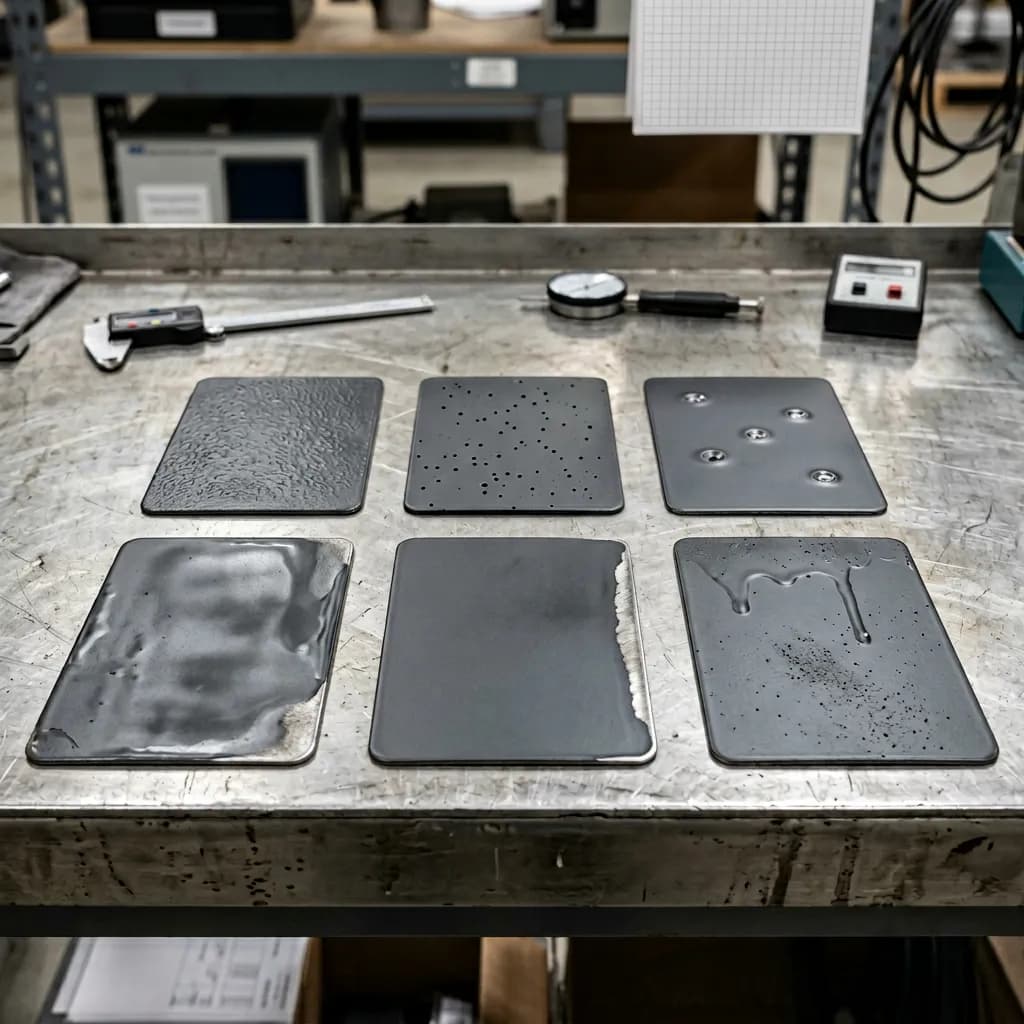
The most common causes are insufficient cure temperature, poor powder flow characteristics, and excessive film thickness. If the oven temperature is too low or the part does not reach full cure temperature, the powder does not flow out completely before it begins to gel and cross-link. Similarly, some powder formulations have inherently poor flow, and applying the powder too thickly can prevent the lower layers from melting and flowing properly.
Ready to Start Your Project?
From one-off customs to 15,000-part production runs — get precise pricing in 24 hours.
On This Page
Orange Peel Texture
To fix orange peel, start by verifying your oven temperature with a calibrated thermometer or oven profiler — the displayed temperature is often different from the actual part temperature. Ensure the powder is designed for your cure schedule, and consider switching to a flow-optimized formulation if the problem persists. Reducing film thickness to the manufacturer's recommended range also helps the powder flow into a smoother finish.
Pinholes and Outgassing
Pinholes are tiny holes in the cured coating surface, sometimes visible to the naked eye and sometimes only apparent under magnification. They are caused by gas escaping through the coating film during the curing process. As the powder melts and flows, trapped gas bubbles rise to the surface. If the coating gels before the gas can escape and the surface can heal over, the bubbles leave permanent pinholes.
The most common source of outgassing is moisture trapped on or in the substrate. Even a thin film of moisture on the metal surface will vaporize in the oven and push through the melting powder. Cast metals like aluminum and zinc die castings are particularly prone to outgassing because their porous structure traps air and moisture that releases during heating. Hot-rolled steel can also outgas due to mill scale and surface contaminants.
The fix depends on the source. For moisture-related pinholes, ensure parts are thoroughly dry before coating — a pre-bake at 200°C for 10-20 minutes drives off moisture and reveals any outgassing issues before powder is applied. For castings, a dedicated pre-bake cycle is almost always necessary. Using a powder specifically formulated for outgassing-prone substrates, with extended flow time before gelation, can also help the surface heal over any gas that does escape.
Poor Adhesion and Peeling
When powder coating peels, flakes, or lifts from the substrate, the problem almost always traces back to surface preparation. Powder coating requires a clean, properly profiled surface to achieve a strong bond. Contaminants like oil, grease, silicone, old paint residue, or mill scale create a weak boundary layer that prevents the powder from adhering directly to the metal.
Inadequate pretreatment is another frequent cause. While powder can adhere to clean bare metal, a proper conversion coating dramatically improves adhesion and long-term durability. Skipping pretreatment or using a worn-out pretreatment bath produces parts that pass initial adhesion tests but fail in service as moisture and thermal cycling stress the bond.
Under-curing can also cause adhesion failure. If the powder does not reach full cure temperature for the required duration, the cross-linking reaction is incomplete. The resulting film may appear normal but lacks the mechanical properties of a fully cured coating, making it prone to peeling under stress. Always verify cure with a combination of oven profiling and physical testing such as the cross-cut adhesion test or solvent rub test.
Thin Spots and Faraday Cage Issues
Faraday cage effect is a phenomenon where electrostatic charge concentrates on the outer edges and protruding features of a part while recessed areas, inside corners, and channels receive little or no powder. The result is thick coating on edges and thin or bare spots in recesses. This is a fundamental challenge of electrostatic application and affects complex geometries most severely.
The physics behind the Faraday cage effect relate to how electric field lines distribute around a conductive object. Field lines concentrate at points and edges, attracting more powder to those areas, while the interior of recesses is shielded from the electric field. Increasing the voltage on the spray gun actually makes the problem worse by strengthening the field concentration at the edges.
To combat Faraday cage issues, reduce the gun voltage to allow powder to penetrate into recesses more easily. Switching from a corona (high-voltage) gun to a tribo (friction-charged) gun can dramatically improve coverage in recessed areas because tribo charging does not create the strong field lines that cause the Faraday effect. Manual touch-up of recessed areas before curing, and adjusting the gun-to-part distance, are also effective strategies.
Color Inconsistency
Color variation between parts or across a single part is a frustrating defect that can have several causes. The most common is batch-to-batch variation in the powder itself. Even with tight manufacturing controls, slight differences in pigment dispersion or resin chemistry between production batches can produce visible color shifts, particularly in lighter colors and metallics where the eye is most sensitive to variation.
Uneven film thickness is another frequent cause of apparent color inconsistency. Thicker areas appear darker and more saturated, while thinner areas look lighter and less vivid. This is especially noticeable with transparent, candy, and metallic finishes where the visual depth of the coating changes with thickness. Maintaining consistent film thickness across the part is essential for uniform color.
Contamination in the application equipment can also cause color problems. Residual powder from a previous color left in the gun, hoses, or recovery system will contaminate the current color, producing specks, streaks, or an overall color shift. Thorough cleaning between color changes — including purging all lines, cleaning the gun thoroughly, and vacuuming the booth — prevents cross-contamination and ensures true color delivery.
Runs and Sags
Runs and sags are relatively rare in powder coating compared to liquid paint, but they can occur under specific conditions. When the powder film is applied excessively thick, the melted coating can flow under gravity during the early stages of curing before it gels. This produces visible drips, runs, or sagging on vertical surfaces, similar to what you would see with over-applied liquid paint.
The primary cause is simply too much powder on the part. This can happen when an operator dwells too long on one area, when automatic guns are set to deliver too high a flow rate, or when reclaimed powder with degraded charging properties is used, causing the operator to compensate by applying more material. Parts that are preheated before application are also more susceptible because the hot surface causes the powder to melt on contact, building up thickness rapidly.
The fix is straightforward: reduce the amount of powder applied to stay within the manufacturer's recommended film thickness range, typically 60-80 microns for a single coat. If using preheated parts, apply a thinner layer and rely on the heat to improve flow rather than building excessive thickness. Check that reclaimed powder is blended properly with virgin powder and that the electrostatic charging system is functioning correctly to ensure efficient powder transfer without over-application.
Frequently Asked Questions
Can powder coating defects be repaired without stripping?
Minor defects can sometimes be sanded smooth and recoated with a second layer of powder. However, adhesion issues, contamination, and severe outgassing typically require stripping back to bare metal and starting over. Attempting to coat over a defective layer often results in the same problem recurring.
Why does my powder coating have a rough, gritty texture?
A gritty texture is usually caused by contamination — either debris in the powder, dirt on the part, or particles in the oven. It can also result from powder that has been stored improperly and has begun to clump or degrade. Ensure your powder is clean, your parts are thoroughly prepped, and your oven is free of loose debris.
What causes powder coating to turn yellow during curing?
Yellowing is typically caused by over-curing — either too high a temperature or too long in the oven. Light colors and whites are most susceptible. It can also be caused by contamination from oven fumes or outgassing products from other parts curing simultaneously. Verify your cure schedule and oven cleanliness.
How do I test if my powder coating is fully cured?
The most common field test is the solvent rub test, where a cloth soaked in methyl ethyl ketone (MEK) is rubbed firmly across the surface. A fully cured coating resists the solvent with no softening or color transfer after 50 double rubs. Oven temperature profiling with a data logger confirms that the part reached the required temperature for the specified duration.
Is some orange peel normal in powder coating?
Yes. Powder coating inherently has a slightly more textured surface than high-end liquid paint due to the way the powder melts and flows. A mild, uniform texture is normal and expected. Excessive or uneven orange peel, however, indicates a process issue that should be addressed.
Ready to Start Your Project?
From one-off customs to 15,000-part production runs — get precise pricing in 24 hours.