One of powder coating's greatest strengths is its extraordinary color range. With thousands of standard colors available across multiple color systems, plus the ability to create custom matches to virtually any reference, powder coating offers design flexibility that few other finishing technologies can match. From subtle architectural neutrals to vibrant automotive candy coats, the palette is essentially unlimited.
Consumer
Most Popular Powder Coating Colors: Trends, RAL Favorites, and Custom Matching
Sundial Powder Coating·April 22, 2026·12 min
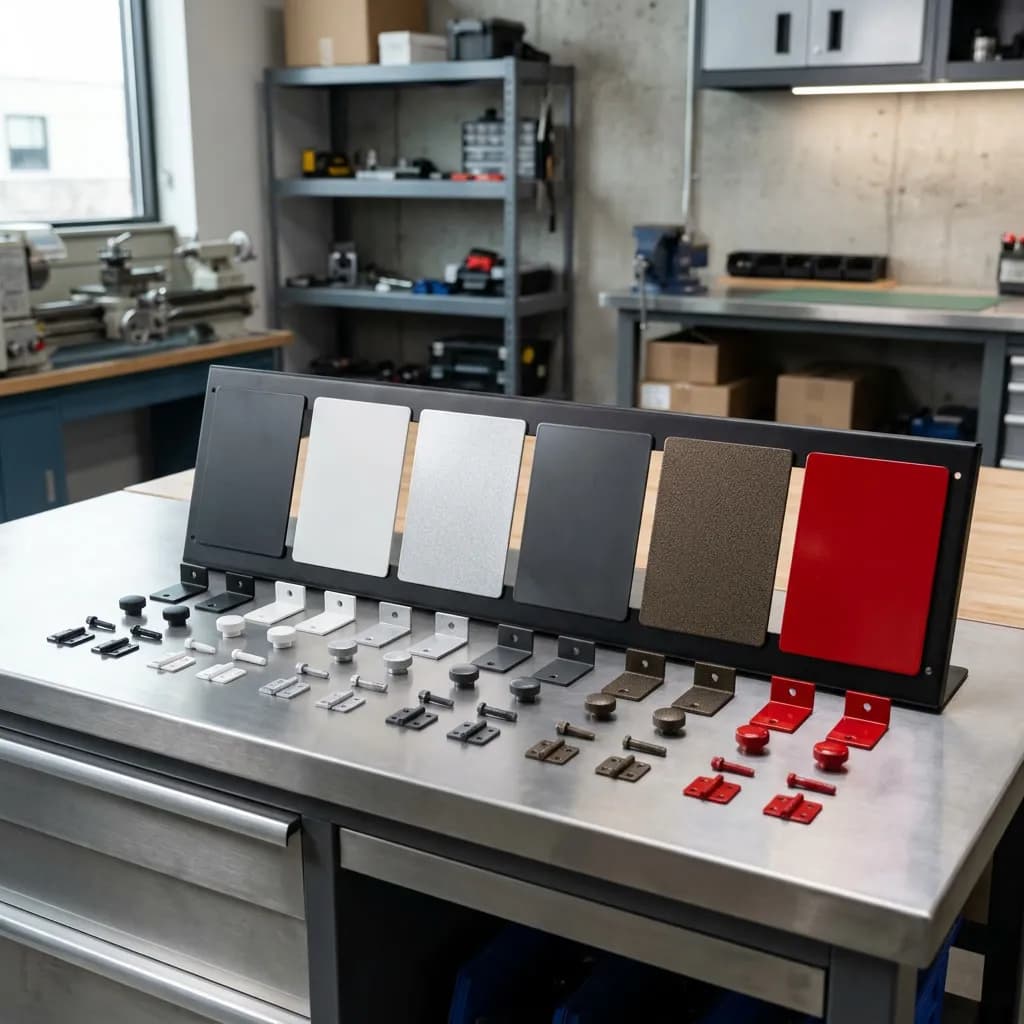
But within this vast range, certain colors consistently dominate. Industry data shows that a relatively small number of colors account for the majority of powder coating volume, driven by practical considerations, aesthetic trends, and industry-specific preferences. Understanding which colors are most popular — and why — helps consumers make informed choices and can simplify the ordering process by identifying colors that are readily available from stock.
Ready to Start Your Project?
From one-off customs to 15,000-part production runs — get precise pricing in 24 hours.
On This Page
The World of Powder Coating Color
Color selection for powder coating involves more than personal preference. The chosen color affects lead time and availability, since popular colors are stocked by most suppliers while unusual colors may need to be ordered or custom manufactured. It affects cost, since standard colors are less expensive than custom formulations. And it affects long-term satisfaction, since color trends evolve and some choices age better than others.
This article surveys the most popular powder coating colors across different industries and applications, explains the RAL color system that serves as the global standard for powder coating color specification, discusses current trends, and covers the custom color matching process for when standard colors do not meet your needs.
The All-Time Bestsellers: Black, White, and Grey
Black, white, and grey powder coatings collectively account for an estimated 50-60 percent of all powder coating volume worldwide. These neutral colors dominate because they work across virtually every application, complement any design scheme, and never go out of style.
Black is the single most popular powder coating color. RAL 9005 (jet black) in both gloss and matte finishes is the highest-volume individual color in the industry. Satin black and matte black have surged in popularity in recent years, driven by trends in automotive customization, consumer electronics, furniture design, and architectural hardware. Black powder coating is used for everything from automotive wheels and motorcycle frames to office furniture, industrial equipment, and architectural metalwork.
White ranks second in overall volume. RAL 9010 (pure white) and RAL 9016 (traffic white) are the most commonly specified white shades. White is the dominant color for appliances, HVAC equipment, electrical enclosures, and commercial shelving. In architecture, white powder coating is used extensively for window frames, curtain wall components, and interior trim. The clean, neutral appearance of white makes it a safe choice for products that must appeal to broad markets.
Grey has become increasingly popular, particularly in architecture and industrial design. RAL 7016 (anthracite grey) has emerged as one of the most specified architectural colors globally, used for window frames, facades, railings, and entrance systems. RAL 7035 (light grey) dominates the industrial equipment and electrical enclosure market. The grey family — from light silver-grey to deep charcoal — offers a sophisticated neutral palette that has largely displaced beige and brown tones in contemporary design.
The dominance of these neutral colors reflects both practical and aesthetic factors. Neutral colors are versatile, timeless, and widely acceptable. They are always in stock, which means shorter lead times and lower costs. And they hide dirt and wear better than many bright colors, which is a practical advantage for high-use applications.
RAL Color System: The Global Standard
The RAL color system is the international standard for powder coating color specification, and understanding it helps consumers communicate their color requirements clearly and accurately. Developed in Germany in 1927, the RAL system assigns a unique four-digit number to each standardized color, eliminating ambiguity in color communication across languages and borders.
RAL Classic is the most widely used collection, containing 215 colors organized by hue families: RAL 1000 series (yellows), RAL 2000 series (oranges), RAL 3000 series (reds), RAL 4000 series (violets), RAL 5000 series (blues), RAL 6000 series (greens), RAL 7000 series (greys), RAL 8000 series (browns), and RAL 9000 series (whites and blacks). When someone specifies a powder coating color as RAL 5015, any powder manufacturer worldwide knows exactly which shade of sky blue is required.
RAL Design is a newer, larger collection of 1,825 colors organized by hue, lightness, and chroma using a systematic notation. RAL Design colors are specified with a seven-digit code that precisely defines the color's position in color space. This system is used primarily by architects and designers who need precise color specification beyond the RAL Classic range.
RAL Effect is a collection of 490 colors including 70 metallic colors, designed for contemporary design applications. The Effect collection includes colors inspired by nature, technology, and modern aesthetics that are not represented in the Classic range.
Beyond RAL, other color systems used in powder coating include NCS (Natural Color System), popular in Scandinavian countries; Pantone, widely used in graphic design and branding; and manufacturer-specific color collections from major powder producers like Akzo Nobel, Tiger, and Jotun. Most powder coating shops can work with any of these systems, though RAL remains the most universally understood.
For consumers, specifying a RAL number is the clearest way to communicate the desired color to a powder coating shop. RAL color charts and fan decks are available for purchase and provide physical color samples that are more accurate than on-screen representations.
Industry-Specific Color Preferences
Different industries have distinct color preferences driven by functional requirements, regulatory standards, brand identity, and end-user expectations. Understanding these preferences provides context for color selection in specific applications.
Architecture favors neutral tones with a strong emphasis on grey, black, white, and earth tones. RAL 7016 anthracite grey has become the defining color of contemporary European architecture, used extensively for aluminum window frames, curtain walls, and facade elements. Bronze and copper-tone metallics are popular for premium architectural projects. The trend toward dark, muted facades has driven demand for deep greys, charcoals, and matte black in architectural powder coating.
Automotive aftermarket powder coating is dominated by black (gloss, satin, and matte), followed by gunmetal grey, bronze, and gold for wheel applications. Bright colors — red, blue, orange — are popular for brake calipers and accent components. The automotive sector also drives demand for specialty finishes including chrome effects, candy coats, and color-shifting chameleon powders.
Industrial equipment and machinery uses functional colors, often specified by safety standards. RAL 7035 light grey is the standard for electrical enclosures and control panels. Safety yellow (RAL 1003), safety red (RAL 3001), and safety green (RAL 6024) are used for hazard marking, emergency equipment, and safety barriers. Machine tool grey and equipment blue are traditional industrial colors that remain widely used.
Furniture and consumer products follow broader design trends more closely than other sectors. Current preferences lean toward matte black, warm whites, sage green, terracotta, and muted earth tones. Metallic finishes — brushed gold, rose gold, and aged bronze — are popular for furniture hardware and accent pieces. The furniture sector is more trend-sensitive than architecture or industrial, with color preferences shifting more rapidly.
Agriculture and construction equipment uses brand-specific colors — John Deere green, Caterpillar yellow, Kubota orange — that are custom-matched to each manufacturer's brand standards. These colors are produced in high volume and are typically proprietary formulations.
Trending Colors and Emerging Preferences
Powder coating color trends evolve continuously, influenced by broader design movements, material trends, and cultural shifts. Current trends reflect a move toward natural, grounded palettes with sophisticated metallic accents.
Matte and satin finishes continue to gain market share at the expense of high gloss. The matte trend, which began in automotive and consumer electronics, has spread to architecture, furniture, and industrial design. Matte black, matte grey, and matte white are now among the most requested finishes across all sectors. The appeal of matte finishes lies in their contemporary, understated aesthetic and their practical advantage of hiding fingerprints and minor surface imperfections.
Warm metallics — bronze, copper, brass, and gold tones — are experiencing strong demand in both architecture and interior design. These metallic powder coatings replicate the appearance of natural metals without the maintenance requirements, offering warm, luxurious aesthetics for hardware, lighting, furniture, and architectural accents. Rose gold and champagne gold have been particularly popular in recent years.
Earth tones and nature-inspired colors are trending across multiple sectors. Sage green, olive, terracotta, clay, and warm taupe reflect a broader design movement toward natural, organic aesthetics. These colors work well in both residential and commercial environments and pair naturally with wood, stone, and other natural materials.
Dark, moody colors — deep navy, forest green, burgundy, and charcoal — are gaining popularity for architectural and furniture applications. These rich, saturated colors create dramatic visual impact while maintaining the sophistication of a neutral palette. They are particularly effective on large surfaces like facade panels and furniture pieces.
Texture effects are an emerging trend that goes beyond color. Powder coatings that replicate the appearance of concrete, rust, stone, and weathered metal are gaining traction in architectural and interior design. These textured finishes add visual and tactile interest to metal surfaces, creating material illusions that expand the design possibilities of powder-coated metal.
Sustainability-driven color choices are also emerging, with designers selecting colors that evoke environmental responsibility — natural greens, earth tones, and organic textures that communicate ecological awareness through material choices.
Custom Color Matching: When Standard Colors Are Not Enough
When no standard color meets your requirements, custom color matching allows you to create a powder coating in virtually any color you can imagine — or any color you can provide a physical sample of.
The custom matching process begins with a color reference. This can be a physical sample — a painted panel, a fabric swatch, a product sample, or any object in the desired color — or a color specification from a recognized system like Pantone, NCS, or a proprietary brand color. The more precise and stable the reference, the better the match will be. Avoid using faded, dirty, or inconsistent samples, as the match will replicate whatever the sample looks like.
The powder manufacturer uses a spectrophotometer to measure the color reference numerically, then formulates a powder coating to match those measurements. The formulation process involves selecting the appropriate resin system, pigments, and additives to achieve the target color, gloss, and texture. A test batch is produced and applied to sample panels for evaluation.
Color approval typically involves sending coated sample panels to the customer for visual evaluation under specified lighting conditions. Color perception varies with lighting — a color that matches perfectly under daylight may look different under fluorescent or LED lighting. Specifying the lighting conditions for evaluation ensures that the match is acceptable in the environment where the coated product will be used.
Custom color matching adds lead time and cost compared to standard colors. The formulation process typically takes 1-3 weeks, and there is usually a minimum order quantity for custom colors — often 20-25 kilograms, though some manufacturers offer smaller minimums. The per-kilogram cost of custom powder is higher than standard colors due to the formulation work and smaller batch sizes.
For consumers, custom color matching is most practical when the project requires a specific brand color, when matching an existing finish on adjacent components, or when the design calls for a color that is not available in standard ranges. For most applications, the thousands of standard colors available in RAL and manufacturer collections provide more than enough options without the additional cost and lead time of custom matching.
Color Psychology and Practical Selection Tips
Color choice affects how people perceive and interact with products and spaces, and understanding basic color psychology can inform better powder coating color decisions.
Black communicates sophistication, authority, and modernity. It is the default choice for premium products and contemporary design. However, black shows dust, fingerprints, and scratches more readily than lighter colors, making it higher maintenance in high-touch applications. Matte black mitigates the fingerprint issue but still shows dust.
White communicates cleanliness, simplicity, and openness. It is the standard for medical equipment, food processing, and environments where hygiene perception matters. White shows dirt more than dark colors but hides dust and light scratches well. It reflects heat, making it a practical choice for outdoor equipment in hot climates.
Grey communicates professionalism, neutrality, and technical competence. It is the dominant color in corporate, industrial, and architectural contexts. Grey hides dirt and wear better than either black or white, making it the most practical choice for high-traffic and industrial applications.
Bright colors — red, blue, yellow, green — communicate energy, brand identity, and differentiation. They are effective for products that need to stand out, safety equipment that needs to be visible, and brand-specific applications. Bright colors show fading more noticeably than neutrals, so UV-resistant formulations are important for exterior use.
When selecting a powder coating color, consider these practical factors beyond aesthetics: maintenance requirements (dark colors show dust, light colors show dirt), fade resistance (bright and dark colors fade more noticeably than neutrals), availability and lead time (standard colors ship faster), resale value (neutral colors appeal to broader markets), and the environment where the coated item will be used (lighting, surrounding colors, and materials all affect how the color appears in context).
Request physical color samples before committing to a color for a large project. Screen and printed color representations are unreliable — the actual powder coating color can look significantly different from what you see on a monitor or in a brochure. Physical samples evaluated under the actual lighting conditions of the installation provide the most accurate preview of the final result.
Frequently Asked Questions
What is the most popular powder coating color?
Black is the single most popular powder coating color worldwide, with RAL 9005 jet black in gloss and matte finishes being the highest-volume individual color. Black, white, and grey collectively account for an estimated 50-60 percent of all powder coating volume. Matte black has seen particularly strong growth in recent years.
What is the RAL color system?
RAL is the international standard color system for powder coating, assigning unique four-digit numbers to standardized colors. RAL Classic contains 215 colors organized by hue family. Specifying a RAL number ensures any powder manufacturer worldwide produces the exact same color. RAL color charts are available for purchase to evaluate colors physically.
Can you get any color in powder coating?
Yes. Thousands of standard colors are available across RAL, NCS, Pantone, and manufacturer collections. For colors not available as standard, custom color matching can create a powder coating to match virtually any physical sample or color specification. Custom colors add lead time and cost but provide unlimited color possibilities.
What powder coating colors are trending right now?
Current trends include matte and satin finishes across all colors, warm metallics like bronze and copper, earth tones like sage green and terracotta, and dark moody colors like deep navy and forest green. Texture effects that replicate concrete, rust, and stone are also gaining popularity in architectural and interior design applications.
Do dark powder coating colors fade faster than light colors?
Dark and bright colors tend to show fading more noticeably than neutrals, though the actual rate of UV degradation depends on the powder formulation rather than the color alone. Super-durable polyester and fluoropolymer powder coatings resist fading significantly better than standard formulations regardless of color. For exterior applications in any color, specify UV-resistant formulations.
Ready to Start Your Project?
From one-off customs to 15,000-part production runs — get precise pricing in 24 hours.