The most widely used color standard in the powder coating industry is the RAL Classic system, a European color standard that assigns a four-digit code to each of its 215 colors. When you tell a coater you want RAL 9005, they know exactly which shade of jet black you mean, with no ambiguity. RAL colors are the common language of the coating world, and most powder manufacturers offer their full range as standard stock colors.
Consumer
Powder Coating Color Matching: How to Get the Exact Color You Want
Sundial Powder Coating·April 20, 2026·8 min
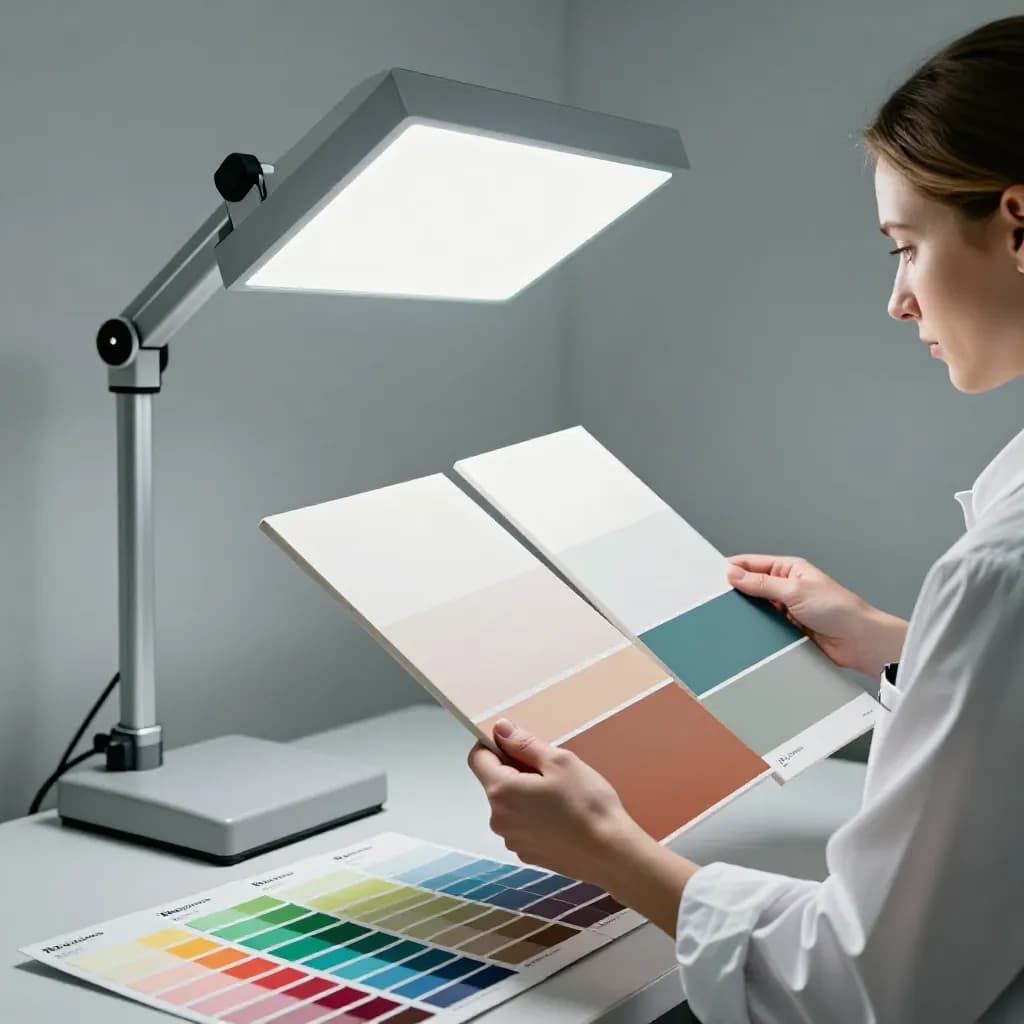
Beyond RAL, other systems are also used depending on the industry and region. Pantone is common in graphic design and branding, and many coaters can cross-reference a Pantone color to the closest available powder. The NCS (Natural Color System) is popular in Scandinavian architecture and interior design. Some manufacturers also maintain their own proprietary color charts with hundreds of additional shades, effects, and textures.
Ready to Start Your Project?
From one-off customs to 15,000-part production runs — get precise pricing in 24 hours.
On This Page
How Powder Coating Colors Are Specified
For truly custom colors, you can provide a physical sample to the powder manufacturer. This could be a painted panel, a piece of fabric, a product housing, or any object that represents the color you want. The manufacturer will analyze the sample and formulate a custom powder to match it as closely as possible.
The Color Matching Process
Professional color matching begins with a spectrophotometer, an instrument that measures the exact wavelengths of light reflected by a surface. When you provide a sample or specify a color code, the powder manufacturer uses a spectrophotometer to quantify the target color in precise numerical terms. This eliminates the subjectivity of human color perception and provides a repeatable, measurable standard.
Once the target is defined, the manufacturer formulates a trial batch of powder and sprays it onto a test panel. This panel is cured under the same conditions the final parts will experience, because powder coating color can shift slightly depending on cure temperature and time. The cured panel is then measured again with the spectrophotometer and compared to the target.
If the match is within acceptable tolerances, typically a Delta E value of 1.0 or less for critical applications, the panel is sent to you for visual approval. You should always review the approval panel in person under the same lighting conditions where the finished parts will be seen. Once you sign off on the panel, it becomes the production standard that all subsequent batches are measured against.
Why Colors Look Different on Screen vs in Person
One of the most common frustrations in color selection is discovering that the color you chose on a website or digital catalog looks completely different on the actual coated part. This is not a failure of the coating process. It is a fundamental limitation of digital color reproduction. Computer monitors, phone screens, and printed materials all use different color models and technologies that cannot perfectly replicate the appearance of a physical coating.
Monitor calibration plays a significant role. Two monitors sitting side by side can display the same color file with noticeably different results depending on their brightness, contrast, color temperature, and calibration settings. The same color viewed on a phone screen in sunlight will look different than on a desktop monitor in a dim office.
Metamerism adds another layer of complexity. Two colors can appear identical under one light source but look distinctly different under another. A powder coating that matches your sample perfectly under daylight fluorescent tubes may look slightly off under warm incandescent lighting. This is a property of the pigments themselves and affects all colored materials, not just powder coatings.
Tips for Choosing the Right Color
The single most important step you can take is to request physical samples before committing to a color. Most powder manufacturers and many coating shops offer sample chips, fan decks, or sprayed panels that you can hold in your hand and evaluate under real-world conditions. Never make a final color decision based solely on a screen image or printed brochure.
View your samples in the lighting conditions where the finished parts will actually live. If you are coating outdoor furniture, look at the samples outside in natural daylight. If you are coating kitchen cabinet hardware, evaluate them under your kitchen lighting. Colors shift dramatically between cool fluorescent, warm LED, and natural sunlight, and the right choice under one light source may look wrong under another.
Remember that gloss level has a significant impact on how a color is perceived. The same pigment formulation will appear darker and more saturated in a high-gloss finish and lighter and more muted in a matte finish. If you are comparing a gloss sample to a matte sample in the same color code, they will not look identical, and that is expected behavior, not a defect.
Matching Existing Finishes
Matching a new powder coating to an existing finish on a product, vehicle, or structure requires extra care. The best approach is to bring a physical sample of the existing finish to your coater. This could be a removable part, a cut section, or even a large chip of the old coating. The coater or powder manufacturer can then measure it with a spectrophotometer and formulate a match.
Keep in mind that existing finishes may have faded, yellowed, or shifted in color over time due to UV exposure and weathering. A perfect match to the current faded color may look odd next to the original shade if other parts are later restored. Discuss with your coater whether you want to match the finish as it is now or as it was when new. For restoration projects, original manufacturer color codes are invaluable if you can find them.
Batch variation is a reality in powder coating, just as it is in paint, fabric, and virtually every manufactured material. Two batches of the same color code from the same manufacturer may have very slight differences that are measurable but usually not visible to the naked eye. For critical color-match projects, request that all parts be coated from the same powder batch to ensure perfect consistency across the entire job.
Frequently Asked Questions
Can any RAL color be powder coated?
Yes. The full RAL Classic range is available in powder coating from major manufacturers, and most standard RAL colors are kept in stock for quick delivery. Less common RAL colors or those from the RAL Design or RAL Effect ranges may need to be custom ordered, which can add lead time.
What is Delta E and why does it matter?
Delta E is a numerical measure of the difference between two colors. A Delta E of 1.0 or less is generally considered imperceptible to the human eye under normal viewing conditions. For critical color matching, a Delta E under 1.0 is the standard target. Values between 1.0 and 2.0 are noticeable only under close comparison.
How long does custom color matching take?
A custom color match typically takes one to three weeks from the time you submit your sample. The process involves spectrophotometer measurement, trial formulation, test panel spraying and curing, and shipping the approval panel to you for sign-off. Rush services are sometimes available for an additional fee.
Can I match a powder coating color to my car's factory paint?
In most cases, yes. Provide the vehicle manufacturer's paint code to the powder supplier, and they can formulate a close match. However, because powder coating and automotive paint use different chemistries and application methods, a perfect side-by-side match is difficult. The result will be very close but may show slight differences in metallic flake orientation or depth of color.
Ready to Start Your Project?
From one-off customs to 15,000-part production runs — get precise pricing in 24 hours.