Color fading in powder coatings is a photochemical process driven primarily by ultraviolet radiation from sunlight. Understanding the science behind fading explains why some coatings fade faster than others and what can be done to maximize color retention over the life of the finish.
Consumer
Powder Coating Color Fading: UV Causes, Resin Types, Pigment Selection, and Maintenance Role
Sundial Powder Coating·April 23, 2026·11 min
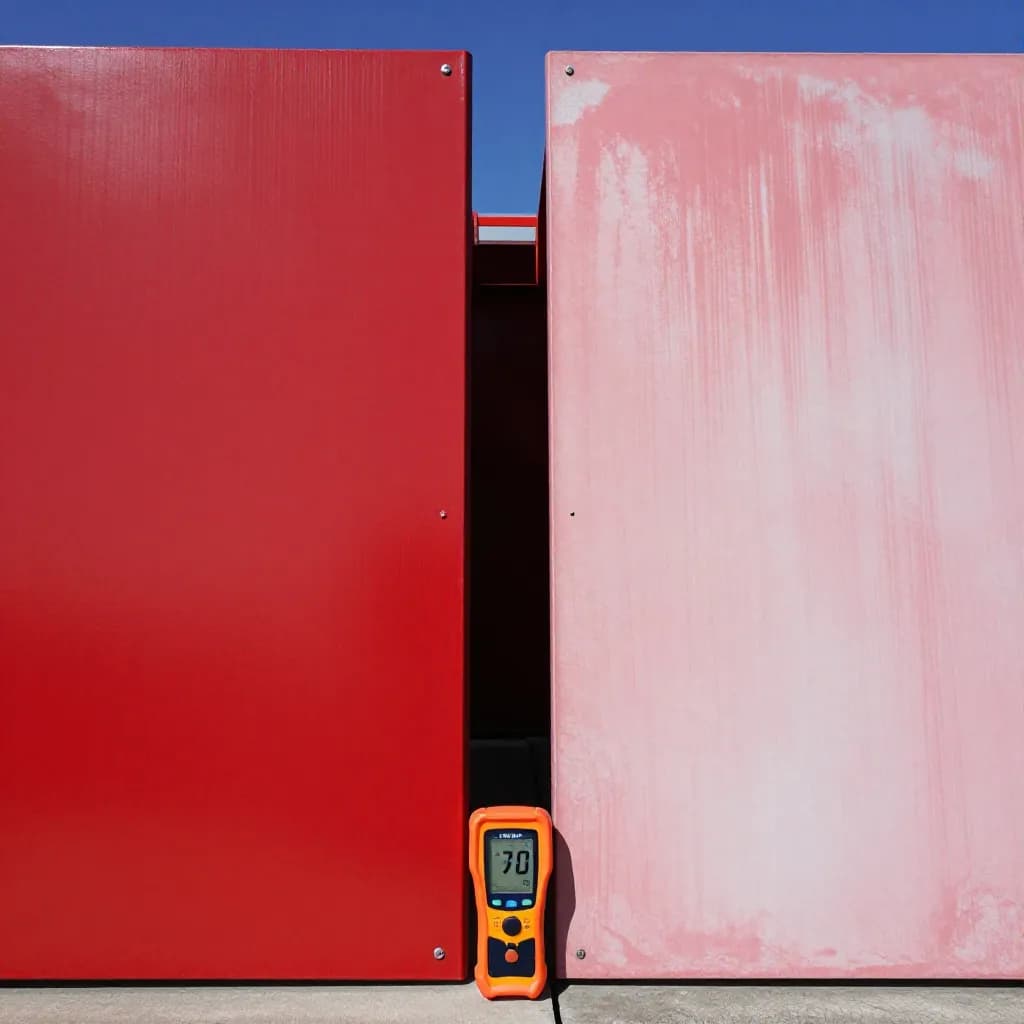
UV radiation carries enough energy to break chemical bonds in organic molecules. When UV photons strike the coating surface, they are absorbed by the resin binder and pigment molecules. This absorbed energy can break the molecular bonds that hold the polymer chains together and that give pigments their color. As these bonds break, the coating's structure and appearance gradually change.
Ready to Start Your Project?
From one-off customs to 15,000-part production runs — get precise pricing in 24 hours.
On This Page
The Science Behind Powder Coating Color Fading
The fading process begins at the coating surface, where UV exposure is most intense. The resin binder at the surface degrades first, releasing pigment particles that are no longer anchored in the polymer matrix. These loose pigment particles are washed away by rain or wiped off during cleaning, reducing the pigment concentration at the surface and causing the color to appear lighter or less saturated.
Simultaneously, some pigment molecules are directly degraded by UV radiation. The chemical structures that give pigments their color, called chromophores, can be altered or destroyed by UV energy. When a chromophore is damaged, the pigment molecule loses its ability to absorb and reflect light at its characteristic wavelength, and the color shifts or fades.
The rate of fading depends on the balance between UV attack and the coating's built-in defenses. UV absorbers and hindered amine light stabilizers in the coating formulation intercept UV energy before it can damage the resin and pigments. The effectiveness and longevity of these stabilizers determine how long the coating maintains its color. When the stabilizers are consumed, the rate of fading accelerates.
Temperature amplifies UV damage. Higher surface temperatures increase the rate of photochemical reactions, which is why dark colors that absorb more solar energy and reach higher surface temperatures tend to degrade faster than light colors in the same exposure conditions.
How Resin Type Determines Fading Resistance
The resin system is the single most important factor in a powder coating's resistance to color fading. Different resin chemistries offer dramatically different levels of UV stability, and selecting the right resin for the intended exposure is the most impactful decision for long-term color retention.
Super-durable polyester resins represent the highest level of UV resistance available in standard powder coating technology. These resins are formulated with specific polyester building blocks that resist UV degradation, combined with high levels of UV absorbers and light stabilizers. Super-durable polyester coatings meet the demanding requirements of Qualicoat Class 2 and AAMA 2605, which require minimal color change after years of accelerated weathering testing. In real-world exposure, these coatings maintain acceptable color for 20 to 25 years.
Standard polyester resins offer good UV resistance that satisfies the majority of exterior applications. They meet Qualicoat Class 1 and AAMA 2604 requirements and typically maintain acceptable color for 10 to 15 years in full sun exposure. Standard polyester is the most widely used exterior powder coating chemistry and provides a practical balance of UV performance and broad color availability.
Polyester-epoxy hybrid resins combine polyester and epoxy components. The epoxy component provides excellent chemical and mechanical properties but is highly susceptible to UV degradation. Hybrids offer moderate UV resistance suitable for sheltered exterior applications or interior use with some UV exposure, such as near windows. In full sun exposure, hybrids may show noticeable fading within 3 to 5 years.
Pure epoxy resins have the poorest UV resistance of any common powder coating chemistry. Epoxy coatings chalk and fade rapidly in sunlight, often showing significant degradation within 1 to 2 years of outdoor exposure. They should never be specified for exterior applications where color retention matters. Their excellent chemical and corrosion resistance makes them ideal for interior, underground, and covered applications.
Fluoropolymer coatings, including PVDF-based systems, offer the ultimate UV resistance but are typically applied as liquid coatings rather than powder. Fluoropolymer powder coatings are available but less common. These coatings can maintain color for 30 years or more in full sun exposure.
Pigment Selection and Its Impact on Color Stability
Even within the same resin system, color stability varies significantly based on the pigments used. Pigment selection is a critical but often overlooked factor in powder coating color retention, and understanding the basics helps set realistic expectations for different colors.
Inorganic pigments are generally the most UV-stable. These include titanium dioxide for white, iron oxides for reds, yellows, and browns, chromium oxide for green, and carbon black for black. These pigments are mineral-based compounds with crystal structures that are inherently resistant to UV degradation. Coatings formulated with inorganic pigments typically show the best long-term color retention.
Organic pigments offer brighter, more saturated colors than inorganic pigments but are generally less UV-stable. The complex organic molecules that produce vivid reds, oranges, yellows, blues, and greens are more susceptible to UV-induced bond breaking. However, the UV stability of organic pigments varies enormously between different chemical classes, and some high-performance organic pigments approach the stability of inorganic pigments.
Reds and yellows are the colors most commonly associated with fading problems. Bright, saturated reds using organic pigments such as certain azo reds can fade noticeably within a few years of exterior exposure, even in a super-durable polyester resin. More UV-stable red pigments such as perylene reds and DPP reds offer significantly better performance but may not achieve the same brightness as the less stable options.
Blues and greens using phthalocyanine pigments offer excellent UV stability, often comparable to inorganic pigments. These are among the most lightfast organic pigments available and perform well in exterior powder coatings.
Metallic and effect pigments add another variable. Aluminum flake pigments used in metallic finishes are inherently UV-stable, but the resin surrounding them still degrades. As the surface resin chalks away, the metallic flakes may become exposed and oxidize, changing the appearance of the finish. Mica-based effect pigments are generally stable but can shift in appearance as the surrounding resin degrades.
When specifying powder coatings for exterior use where color retention is important, discuss pigment selection with the powder manufacturer. Request information about the specific pigments used in the desired color and their expected lightfastness rating. For critical applications, request accelerated weathering test data for the specific color formulation.
Environmental Factors That Accelerate Fading
Beyond the coating's inherent UV resistance, several environmental factors influence the rate of color fading. Understanding these factors helps predict performance and adjust maintenance practices accordingly.
Geographic location determines the annual UV dose that a surface receives. Locations closer to the equator receive more intense UV radiation year-round. High-altitude locations receive more UV because there is less atmosphere to filter the radiation. Desert and tropical climates combine high UV with high temperatures, creating the most aggressive fading conditions. A coating that lasts 20 years in northern Europe may last only 12 to 15 years in the Middle East or southern United States.
Surface orientation affects UV exposure dramatically. In the northern hemisphere, south-facing surfaces receive the most direct sunlight and fade fastest. West-facing surfaces receive intense afternoon sun when temperatures are highest, compounding the UV effect with thermal acceleration. North-facing surfaces receive the least direct UV and fade slowest. East-facing surfaces receive morning sun when temperatures are lower, resulting in moderate fading rates.
Reflected UV from water, sand, snow, and light-colored surfaces adds to the direct UV dose. Coastal buildings receive reflected UV from the ocean surface. Buildings surrounded by concrete or light-colored paving receive reflected UV from the ground. This reflected radiation can significantly increase the total UV exposure on surfaces that might otherwise be partially shaded.
Atmospheric pollutants can accelerate fading through photocatalytic reactions. Nitrogen oxides, sulfur dioxide, and ozone interact with UV radiation on the coating surface, creating reactive species that attack the resin and pigments more aggressively than UV alone. Coatings in urban and industrial environments may fade faster than the same coating in a clean rural environment.
Moisture and humidity affect fading indirectly. Wet surfaces absorb UV radiation differently than dry surfaces, and moisture can accelerate the chemical reactions initiated by UV exposure. Tropical environments with high UV and high humidity are particularly challenging for coating color retention.
Cleaning frequency and method influence fading by affecting the accumulation of surface contaminants. Contaminants that absorb UV radiation and convert it to heat can create localized hot spots that accelerate degradation. Regular cleaning removes these contaminants and allows the coating's built-in UV protection to function at its best.
The Role of Maintenance in Preserving Color
While maintenance cannot stop UV degradation, it can significantly slow the rate of color fading and extend the period during which the coating maintains an acceptable appearance. The maintenance practices that matter most for color preservation are straightforward and accessible.
Regular cleaning is the most impactful maintenance activity for color preservation. Atmospheric contaminants, industrial fallout, and biological deposits that accumulate on the coating surface can accelerate UV degradation through photocatalytic and chemical mechanisms. Removing these contaminants through regular washing allows the coating's built-in UV stabilizers to work without interference. Studies have shown that regularly cleaned coatings can maintain color significantly longer than identical coatings that are not cleaned.
The cleaning frequency should match the contamination level of the environment. In clean suburban environments, semi-annual cleaning may be sufficient. In urban, industrial, or coastal environments, quarterly or monthly cleaning provides better color preservation. The investment in regular cleaning is repaid through extended coating life and delayed recoating.
UV-protective wax and sealant products provide a supplementary barrier against UV radiation. These products contain UV absorbers that intercept UV energy before it reaches the coating surface. Applied seasonally, they provide measurable UV protection that supplements the coating's built-in stabilizers. This is particularly valuable for standard polyester coatings that have less built-in UV protection than super-durable formulations.
Prompt repair of any coating damage prevents localized degradation from spreading. A chip or scratch that exposes the substrate creates a point where moisture can infiltrate beneath the coating, potentially causing adhesion loss and accelerated degradation in the surrounding area. Repairing damage promptly maintains the coating's integrity and prevents secondary degradation.
Avoiding contact with chemicals that can attack the coating surface preserves its UV-protective properties. Aggressive solvents, strong acids, and strong alkalis can damage the coating's surface layer, removing the UV stabilizers concentrated there and exposing the less-protected coating beneath to direct UV attack.
Setting Realistic Expectations for Color Retention
Realistic expectations for color retention prevent disappointment and support informed specification decisions. No organic coating maintains its original color indefinitely in exterior exposure, and understanding the expected timeline for color change helps owners plan maintenance and recoating budgets.
For super-durable polyester coatings in moderate climates, expect minimal visible color change for the first 10 to 15 years, with gradual fading becoming noticeable between 15 and 25 years. In harsh UV environments, these timelines may be shortened by 20 to 30 percent. Colors using highly stable inorganic pigments will perform at the longer end of this range, while colors using organic pigments may be at the shorter end.
For standard polyester coatings, expect minimal visible color change for the first 5 to 8 years, with noticeable fading developing between 8 and 15 years. Again, harsh environments and UV-sensitive pigments shorten these timelines. Standard polyester provides excellent value for applications where moderate color change over time is acceptable.
For hybrid and epoxy coatings used outdoors, expect visible color change within 2 to 5 years. These chemistries are not designed for UV exposure, and rapid fading is the predictable result of using them in exterior applications.
Color change is measured objectively using the Delta E scale, where values below 1 are imperceptible, 1 to 3 are noticeable to trained observers, and above 5 are obvious to everyone. Warranty specifications typically allow Delta E values of 3 to 5 over the warranty period, acknowledging that some color change is normal and acceptable.
The perception of fading depends on context. A coating that has faded uniformly across an entire facade may look perfectly acceptable because there is no reference point for comparison. The same degree of fading on a panel adjacent to a recently replaced panel will be glaringly obvious. When planning partial recoating or panel replacement, consider the color difference between new and aged coatings and discuss color-matching strategies with the coating supplier.
Choosing Colors for Maximum Longevity
If long-term color retention is a priority, color selection can be optimized to take advantage of the most UV-stable pigment options. This does not mean limiting choices to a few safe colors, but rather understanding which colors inherently perform better and making informed trade-offs.
Whites and off-whites using titanium dioxide pigment offer the best overall color retention. Titanium dioxide is one of the most UV-stable pigments available, and white coatings benefit from reflecting rather than absorbing solar radiation, keeping surface temperatures lower. The main concern with white coatings is yellowing rather than fading, which is addressed through proper resin selection and cure control.
Earth tones including beiges, tans, browns, and terracottas using iron oxide pigments provide excellent color stability. Iron oxides are inorganic pigments with inherent UV resistance, and the warm, natural tones they produce are popular for architectural applications. These colors are among the safest choices for long-term exterior color retention.
Grays and charcoals using combinations of titanium dioxide, carbon black, and iron oxide pigments offer very good stability. These neutral tones are versatile for architectural and industrial applications and benefit from using exclusively inorganic pigments.
Blues and greens using phthalocyanine pigments offer good stability among the brighter color options. These pigments are among the most lightfast organic pigments and perform well in exterior powder coatings. Navy blue and forest green are popular architectural colors that hold up well over time.
Bright reds, oranges, and yellows require the most careful pigment selection for exterior use. High-performance organic pigments such as DPP reds, benzimidazolone yellows, and quinacridone magentas offer significantly better UV stability than standard organic pigments in these color ranges. Discuss specific pigment options with the powder manufacturer and request weathering data for the proposed formulation.
When color retention is the top priority, consider specifying the color with a note requiring UV-stable pigments and requesting the powder manufacturer's recommendation for the most lightfast formulation available in the desired shade.
Frequently Asked Questions
Why do some powder coating colors fade faster than others?
Color fading depends on both the resin chemistry and the pigments used. Organic pigments in bright reds, yellows, and oranges are generally less UV-stable than inorganic pigments in whites, earth tones, and blacks. Dark colors also absorb more heat, which accelerates degradation. The resin type matters equally, with super-durable polyester offering the best UV resistance.
How long before powder coating starts to fade?
Super-durable polyester coatings typically show minimal fading for 10 to 15 years in moderate climates. Standard polyester maintains color for 5 to 8 years. Hybrid coatings may fade noticeably within 2 to 5 years outdoors. Harsh UV environments, south-facing orientation, and UV-sensitive pigments all shorten these timelines.
Does cleaning powder coating help prevent fading?
Yes. Regular cleaning removes atmospheric contaminants that accelerate UV degradation through photocatalytic reactions. Studies show that regularly cleaned coatings maintain color significantly longer than uncleaned coatings in the same environment. Cleaning allows the coating's built-in UV stabilizers to work without interference from surface contaminants.
What is the most fade-resistant powder coating color?
Whites and off-whites using titanium dioxide pigment offer the best overall fade resistance because the pigment is highly UV-stable and the light color reflects solar radiation. Earth tones using iron oxide pigments are also excellent. Among brighter colors, blues and greens using phthalocyanine pigments offer the best stability.
Can faded powder coating be restored to its original color?
Mild fading can be partially improved through polishing, which removes the degraded surface layer. However, significant fading cannot be reversed because the pigment has been permanently lost from the coating. The only way to fully restore the original color is to strip and recoat the surface with fresh powder coating.
Ready to Start Your Project?
From one-off customs to 15,000-part production runs — get precise pricing in 24 hours.