Coastal environments present the most aggressive conditions that powder coated surfaces routinely face. The combination of airborne salt, high humidity, UV radiation, and wind-driven abrasion creates a multi-factor attack that degrades coatings faster than any single environmental threat alone. Understanding these challenges is the first step toward effective coastal maintenance.
Consumer
Powder Coating Coastal Maintenance: Salt Spray Cleaning, Inspections, and Corrosion Prevention
Sundial Powder Coating·April 23, 2026·12 min
Airborne salt is the primary concern. Ocean spray generates microscopic salt particles that can travel hundreds of meters inland on prevailing winds. These particles deposit on every exposed surface, creating a thin but highly corrosive film. Unlike road salt that appears seasonally, coastal salt exposure is continuous and year-round, giving it far more cumulative impact on coating systems.
Ready to Start Your Project?
From one-off customs to 15,000-part production runs — get precise pricing in 24 hours.
On This Page
The Coastal Environment Challenge for Powder Coated Surfaces
The salt deposits are hygroscopic, meaning they absorb moisture from the air. Even when the surface appears dry, salt deposits attract and hold a thin film of moisture that maintains an active corrosion cell at any point where the coating barrier is compromised. This is why coastal corrosion can progress rapidly even during periods without rain.
High humidity compounds the salt problem. Coastal areas typically experience higher average humidity than inland locations, which means surfaces stay wet longer and the moisture film on salt deposits is maintained more consistently. The combination of salt and sustained moisture is far more corrosive than either factor alone.
UV exposure in coastal areas is often intensified by reflection from water surfaces and light-colored sand. This reflected UV adds to the direct solar radiation, increasing the total UV dose received by coated surfaces. Wind-driven sand and salt particles also cause micro-abrasion of the coating surface, gradually thinning the protective film and creating microscopic defects where corrosion can initiate.
Despite these challenges, properly specified and maintained powder coatings perform well in coastal environments. The key is selecting the right coating system and committing to a maintenance program that matches the severity of the exposure.
Salt Spray Cleaning: Frequency, Methods, and Best Practices
Regular salt removal is the single most important maintenance activity for powder coated surfaces in coastal environments. Salt that is removed promptly causes minimal damage. Salt that is allowed to accumulate and remain in contact with the surface for extended periods causes progressive degradation that shortens coating life dramatically.
Cleaning frequency should be based on proximity to the shoreline and local conditions. Within 200 meters of the high-water mark, monthly cleaning is the minimum recommendation, and bi-weekly cleaning is preferable during seasons with strong onshore winds. Between 200 meters and 1 kilometer from the shore, quarterly cleaning is typically adequate. Beyond 1 kilometer, the standard semi-annual cleaning schedule for urban environments usually suffices, though local conditions may warrant more frequent attention.
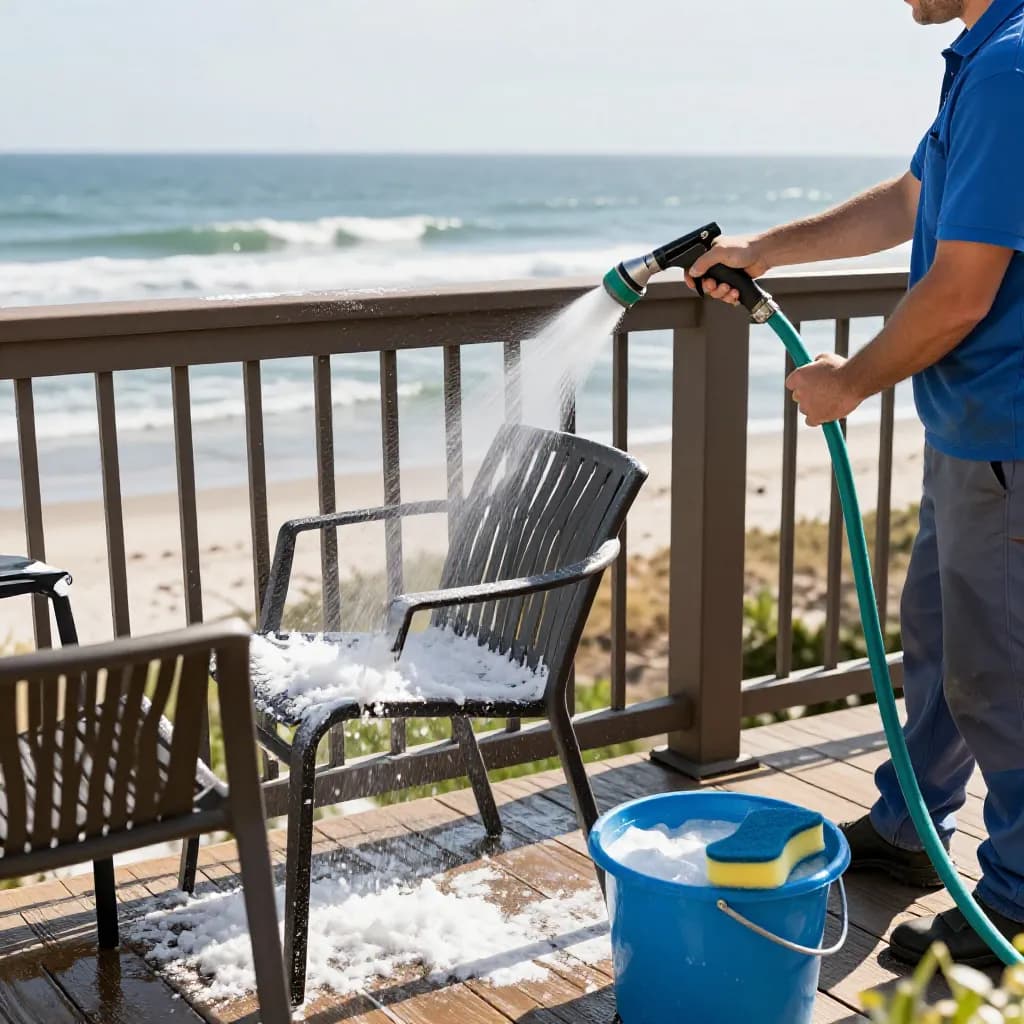
The cleaning method for salt removal is straightforward. Begin with a thorough rinse of clean fresh water to dissolve and flush away salt deposits. This initial rinse removes the majority of the salt and is the most important step. Follow with a wash using pH-neutral detergent and a soft cloth or sponge to remove any remaining salt and other contaminants. Rinse again with clean water and allow to dry.
For surfaces that cannot be washed with a hose, such as upper-story facade panels or difficult-to-access areas, professional cleaning services with appropriate access equipment should be engaged at the recommended frequency. Neglecting hard-to-reach areas because they are inconvenient to clean is a common mistake that leads to premature coating failure in exactly the locations where repair is most difficult and expensive.
Rainwater provides some natural salt removal, but it should not be relied upon as a substitute for deliberate cleaning. Rain may not reach all surfaces, particularly those sheltered by overhangs or adjacent structures. Rain also redistributes salt rather than removing it completely, concentrating deposits at drainage points and in areas where water pools.
After cleaning, inspect the surface for any damage that was hidden by salt deposits. Salt accumulation can mask chips, scratches, and early corrosion that need attention. The post-cleaning inspection is an integral part of the cleaning process, not a separate activity.
Inspection Frequency and Protocol for Coastal Installations
Coastal installations require more frequent and more detailed inspections than inland installations. The accelerated degradation rate in marine environments means that problems develop faster and the window for early intervention is shorter. An inspection schedule that works well inland may allow coastal damage to progress too far before detection.
For installations within 500 meters of the shoreline, quarterly inspections are recommended. These should be thorough, systematic assessments covering every coated surface, with particular attention to the areas most vulnerable to salt exposure. Semi-annual inspections are appropriate for installations between 500 meters and 2 kilometers from the shore. Beyond 2 kilometers, annual inspections are generally sufficient unless local conditions are unusually severe.
The coastal inspection protocol should include all the elements of a standard powder coating inspection plus several additional checks specific to marine environments. Examine all surfaces for salt deposit accumulation patterns, which reveal areas where salt is concentrating and where cleaning may need to be more thorough or frequent.
Check for filiform corrosion, a distinctive form of corrosion that appears as thread-like filaments spreading across the surface beneath the coating. Filiform corrosion is particularly common in coastal environments and indicates that moisture and salt are penetrating the coating at defect points and migrating along the coating-substrate interface. It often originates from cut edges, scratches, or areas of thin coating coverage.
Inspect all fasteners, joints, and connections for signs of galvanic corrosion. In coastal environments, dissimilar metals in contact with each other corrode much faster than they would inland because the salt-laden moisture provides an excellent electrolyte. Look for white powdery deposits on aluminum, red rust on steel, and green patina on copper or brass at contact points with other metals.
Examine the coating at edges, corners, and cut ends where film thickness is typically thinnest. These are the first points of failure in coastal environments because the thinner coating provides less barrier protection against salt penetration. Edge corrosion that is caught early can be addressed with touch-up paint, but if left unchecked, it can undercut adjacent coating and spread rapidly.
Document all findings with photographs and condition ratings. Coastal inspection records are particularly valuable because they track the rate of degradation, which helps predict when recoating will be needed and supports warranty discussions if the coating fails prematurely.
Recognizing Corrosion Signs Before They Become Critical
Early corrosion detection in coastal environments can save significant repair costs and prevent structural damage. Corrosion that is caught at the surface stage can often be addressed with touch-up repair. Corrosion that has progressed to structural involvement may require component replacement.
Rust staining on or around powder coated steel surfaces is the most obvious corrosion indicator. Orange or brown discoloration at chip sites, scratches, edges, or fastener holes indicates that the steel substrate is actively corroding. The staining may extend beyond the actual corrosion site as rust is washed across the surface by rain or cleaning water.
Blistering or bubbling of the coating indicates that corrosion is occurring beneath the intact coating surface. Moisture and salt have penetrated through a defect and are corroding the substrate under the coating, generating corrosion products that push the coating away from the surface. Blisters may contain liquid or dry corrosion products when punctured. Any blistering in a coastal environment should be treated as urgent because the corrosion beneath is progressing rapidly.
White powdery deposits on powder coated aluminum indicate aluminum oxide formation, which is the aluminum equivalent of rust. While aluminum oxide is less structurally damaging than iron rust, it indicates that the coating barrier has been breached and the substrate is reacting with the environment. In coastal conditions, aluminum corrosion can progress to pitting, which creates permanent surface damage.
Edge creep is the progressive loss of coating adhesion starting from an edge or damage point and spreading outward. In coastal environments, edge creep can advance several millimeters per year as salt-laden moisture works its way under the coating from the exposed edge. Measure and document edge creep at each inspection to track its rate of progression.
Discoloration or staining that does not wash off during cleaning may indicate chemical reaction between the coating and salt deposits or atmospheric pollutants. This is different from surface contamination and suggests that the coating surface is being chemically altered. While not immediately critical, persistent staining indicates that the coating's chemical resistance is being challenged and warrants closer monitoring.
Coating Specifications for Coastal Environments
Selecting the right coating specification for coastal installations is the most impactful decision for long-term performance. A coating system designed for coastal exposure will outperform a standard specification by years, even with identical maintenance programs.
Qualicoat Seaside certification is the gold standard for powder coated aluminum in marine environments. This certification adds specific requirements beyond standard Qualicoat Class 1 or Class 2, including enhanced pretreatment, minimum film thickness of 80 microns, and additional salt spray testing. Coatings carrying the Seaside label have been specifically validated for coastal performance.
For steel substrates in coastal environments, the pretreatment and primer system is as important as the topcoat. A zinc-rich primer beneath the powder topcoat provides galvanic protection to the steel substrate, meaning the zinc corrodes sacrificially to protect the steel even if the topcoat is damaged. This dual-layer approach dramatically improves corrosion resistance compared to a single powder coat directly on steel.
Film thickness should be at the upper end of the specification range for coastal applications. Thicker films provide a more robust barrier against salt penetration and give more margin for the gradual surface erosion caused by wind-driven salt and sand particles. Specify a minimum of 80 microns for architectural applications and 60 microns for general industrial use in coastal zones.
Super-durable polyester chemistry is strongly recommended for coastal exterior applications. The enhanced UV resistance of super-durable formulations is important because coastal UV exposure is typically higher than inland due to water and sand reflection. Standard polyester is acceptable for sheltered coastal applications or where the coating is protected from direct sun.
Edge coverage deserves special attention in coastal specifications. Specify that all cut edges, drilled holes, and machined surfaces must receive adequate coating coverage. Some specifications require edge sealing with a liquid primer or sealant before powder coating to ensure that these vulnerable points are fully protected. In coastal environments, edge failure is the most common mode of coating breakdown.
Protective Measures Beyond Routine Maintenance
Beyond regular cleaning and inspection, several additional protective measures can significantly improve the performance of powder coated surfaces in coastal environments.
Applying a marine-grade wax or sealant to powder coated surfaces creates a hydrophobic barrier that repels salt-laden moisture and makes salt deposits easier to remove during cleaning. Marine wax products are formulated for the specific challenges of salt water environments and typically provide longer-lasting protection than standard automotive waxes. Apply at least twice per year, or more frequently on surfaces with heavy salt exposure.
Installing sacrificial anodes on steel structures in direct marine exposure provides electrochemical corrosion protection that supplements the powder coating barrier. Zinc or magnesium anodes corrode preferentially, protecting the steel substrate even at points where the coating has been damaged. This technique is widely used in marine construction and can be adapted for powder coated steel structures near the coast.
Designing for drainage and ventilation reduces the time that salt-laden moisture remains in contact with coated surfaces. Ensure that all horizontal surfaces slope to drain, that enclosed spaces have adequate ventilation to prevent condensation, and that water cannot pool in joints, channels, or recesses. Standing salt water is far more corrosive than salt spray that drains away quickly.
Using compatible materials throughout the assembly prevents galvanic corrosion at contact points. When dissimilar metals must be joined, isolate them with non-conductive gaskets, bushings, or sealants. In coastal environments, galvanic corrosion at dissimilar metal junctions is one of the fastest and most destructive forms of corrosion.
Consider applying a clear topcoat over the powder coating for maximum protection in severe coastal exposures. A clear polyurethane or fluoropolymer topcoat adds an additional barrier layer and UV protection. This approach is common on high-value architectural installations in direct marine exposure where maximum coating life is required.
Maintain detailed records of all protective measures applied, including product names, application dates, and coverage areas. This information supports maintenance planning and helps evaluate the effectiveness of different protective strategies over time.
Long-Term Coastal Maintenance Planning
Effective coastal maintenance requires a long-term perspective that anticipates the coating's lifecycle and plans for eventual recoating. A reactive approach that waits for visible failure before taking action will always result in higher costs and more extensive damage than a proactive plan.
Establish a realistic expected service life for the coating based on its specification, the severity of the coastal exposure, and the maintenance program in place. For Qualicoat Seaside certified coatings with diligent maintenance, 15 to 20 years is a reasonable expectation. For standard specifications with moderate maintenance, 8 to 12 years is more realistic. Use these timelines for budgeting and planning purposes, but always let actual inspection data guide the final recoating decision.
Create a maintenance budget that covers the full lifecycle of the coating. This should include regular cleaning labor and materials, inspection costs, touch-up repair materials, protective products like wax and sealant, and a reserve for eventual recoating. Spreading these costs over the expected coating life provides a realistic picture of the true maintenance investment required.
Plan for recoating before it becomes urgent. When inspection data indicates that the coating is in the moderate degradation stage, begin obtaining quotes and scheduling recoating work. Recoating a surface that is degraded but still intact is simpler and less expensive than recoating a surface where the coating has failed and the substrate has corroded. Lead times for coating work can be several months, so early planning prevents delays.
Review and update the maintenance plan annually based on inspection findings. If the coating is degrading faster than expected, increase cleaning frequency and consider additional protective measures. If it is performing better than expected, the plan may be able to be relaxed slightly. The maintenance plan should be a living document that adapts to actual conditions.
When recoating is eventually needed, use the opportunity to upgrade the specification if the original coating underperformed. Specify Qualicoat Seaside certification, increase film thickness, add a primer system, or upgrade to super-durable chemistry. The recoating event is the chance to reset the clock with a better-performing system that will require less maintenance over its next lifecycle.
Frequently Asked Questions
How often should I clean powder coating near the ocean?
Within 200 meters of the shoreline, clean at least monthly and preferably bi-weekly during seasons with onshore winds. Between 200 meters and 1 kilometer, clean quarterly. Beyond 1 kilometer, semi-annual cleaning is usually sufficient. Adjust frequency based on local wind patterns and salt exposure severity.
What is Qualicoat Seaside certification?
Qualicoat Seaside is a specialized certification for powder coated aluminum in marine environments. It adds requirements beyond standard Qualicoat including enhanced pretreatment, minimum 80 micron film thickness, and additional salt spray testing. It is the recommended specification for coastal architectural applications.
How do I know if coastal corrosion is starting under powder coating?
Early signs include blistering or bubbling of the coating surface, rust staining at edges or damage points on steel, white powdery deposits on aluminum, and filiform corrosion appearing as thread-like filaments under the coating. Any of these signs warrant prompt investigation and repair to prevent further spread.
Does powder coating work well in coastal environments?
Yes, when properly specified and maintained. Powder coatings with Qualicoat Seaside certification, adequate film thickness, and appropriate pretreatment perform well in coastal environments for 15 to 20 years. The key is selecting the right specification and committing to a maintenance program that matches the exposure severity.
Should I use a primer under powder coating for coastal steel?
Yes. A zinc-rich primer beneath the powder topcoat provides galvanic protection to steel substrates, meaning the zinc corrodes sacrificially to protect the steel even if the topcoat is damaged. This dual-layer approach dramatically improves corrosion resistance in coastal environments compared to a single powder coat.
Ready to Start Your Project?
From one-off customs to 15,000-part production runs — get precise pricing in 24 hours.