Almost any metal component on your vehicle is a candidate for powder coating, and the list is longer than most people realize. Valve covers, intake manifolds, and throttle bodies are among the most popular engine bay parts to coat. These components are easy to remove, tolerate oven curing temperatures without issue, and look fantastic once finished. Powder coating an engine bay transforms it from a grimy afterthought into a showpiece.
Consumer
Powder Coating Car Parts: What Can Be Coated and What to Expect
Sundial Powder Coating·April 20, 2026·9 min
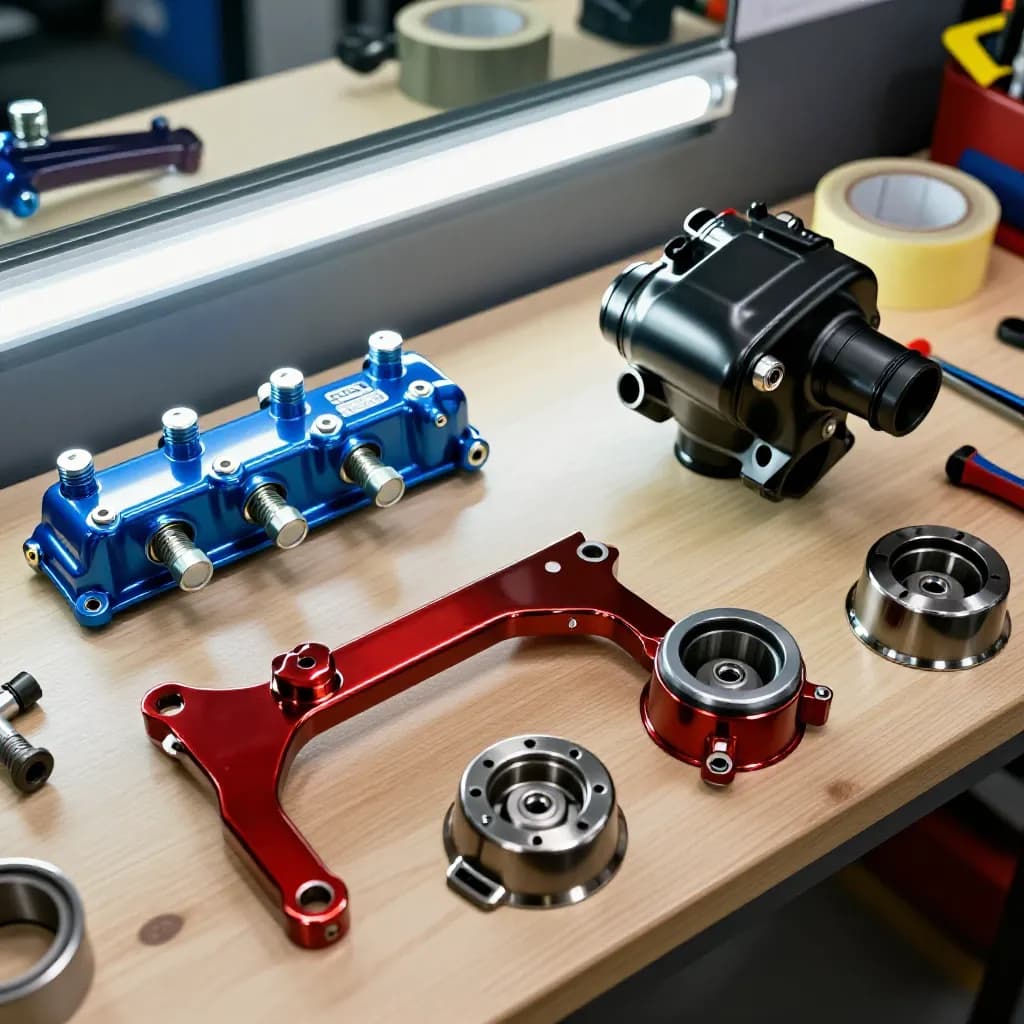
Brake calipers are another hugely popular choice. A set of freshly coated calipers in red, yellow, or even a subtle satin black gives your car a performance look without the price tag of aftermarket big brake kits. Suspension arms, subframes, and brackets also benefit enormously from powder coating. These parts live in the harshest environment on the car, constantly exposed to road salt, gravel, and water spray, so a tough powder coat finish protects them far better than the thin factory paint they came with.
Ready to Start Your Project?
From one-off customs to 15,000-part production runs — get precise pricing in 24 hours.
On This Page
What Car Parts Can Be Powder Coated?
Heat shields, exhaust flanges, and other components near the engine or exhaust can also be coated using high-temperature powder formulations rated for 500°C or more. These specialty powders maintain their finish and protective properties even under extreme thermal cycling, making them ideal for parts that see serious heat.
Parts You Should Avoid Powder Coating
While the list of coatable parts is long, there are some important exceptions. Any part that still has rubber bushings pressed in should not go into a curing oven. The 200°C bake cycle will destroy rubber and polyurethane bushings, so these must be pressed out before coating and reinstalled afterward. If a bushing cannot be removed without damage, consider having just that part painted instead.
Electronic sensors, wiring connectors, and any component with integrated electronics should never be powder coated. The oven temperatures will destroy circuit boards, melt plastic housings, and ruin sensor calibrations. Always strip these components off before sending a part to the coater.
Size is another practical limitation. Parts must fit inside the curing oven, and most shops have ovens that accommodate items up to about two meters in length. Very large components like full exhaust systems or complete subframes may need to be disassembled into smaller sections, or you may need to find a shop with an oversized oven. Always check with your coater before dropping off unusually large parts.
Popular Automotive Colors
Wrinkle black is the undisputed king of engine bay powder coating. Its textured finish hides minor surface imperfections, resists fingerprints, and gives valve covers and intake manifolds a classic performance look that never goes out of style. Wrinkle finishes are also available in red and blue for those who want a bolder engine bay.
For brake calipers, red remains the most popular choice by a wide margin, followed by yellow and bright blue. These high-visibility colors draw the eye through the wheel spokes and give any car a sporty, purposeful appearance. Satin black calipers are a more subtle option that still looks significantly better than bare or rusty cast iron.
Suspension components and subframes are most commonly coated in satin or semi-gloss black. This provides excellent corrosion protection while maintaining a clean, understated look that does not draw attention away from the rest of the build. For show cars, matching suspension components to the body color or using a contrasting accent color can create a striking underbody presentation.
Cost Ranges for Automotive Parts
Small parts like valve covers, brackets, and individual brake calipers typically cost between $30 and $75 each to powder coat. At this price point, powder coating is remarkably affordable compared to the visual and protective impact it delivers. A set of four brake calipers might run $120 to $300 total depending on size and color choice.
Larger items like intake manifolds, subframes, and suspension arms generally fall in the $75 to $200 range per piece. The price increases with size because larger parts require more powder, more oven space, and more handling time. Complex shapes with lots of recesses and hard-to-reach areas may also cost more because they require extra attention during application to ensure full coverage.
When budgeting for an automotive powder coating project, factor in the cost of removal and reinstallation as well. If you can pull the parts yourself, you save significantly on labor. Many enthusiasts combine powder coating with a scheduled maintenance session, removing parts for coating while they are already off the car for service.
Tips for Automotive Powder Coating Projects
Plan your project around downtime. If your car is your daily driver, coordinate with the powder coating shop so your parts spend the minimum time off the vehicle. Many shops can turn around small batches of parts in two to three days, so removing parts on a Friday and picking them up midweek is a common strategy.
Thoroughly clean and degrease every part before dropping it off. While the shop will do their own preparation, removing heavy grease, oil, and gasket material beforehand speeds up the process and may reduce your final cost. Plug or tape any threaded holes, mating surfaces, or areas that must remain uncoated, and communicate these clearly to the coater.
Keep all hardware, gaskets, and fasteners organized in labeled bags so reassembly goes smoothly. Take photos before disassembly to reference during reinstallation. If you are coating engine bay parts, consider doing all visible components at once for a cohesive look rather than coating one piece at a time over several months.
Frequently Asked Questions
Can you powder coat brake calipers without removing them from the car?
No. Brake calipers must be removed from the vehicle, disassembled, and stripped before powder coating. The curing process requires oven temperatures around 200°C, which would destroy brake lines, seals, and brake fluid. Always have calipers properly disassembled and rebuilt with new seals after coating.
Will powder coating a valve cover void my warranty?
Powder coating a valve cover does not typically void your vehicle warranty for unrelated repairs. However, if a coated part fails and the coating is determined to be the cause, that specific claim could be denied. For most enthusiasts working on older or out-of-warranty vehicles, this is not a concern.
How do I protect threaded holes during powder coating?
Use high-temperature silicone plugs or metal masking bolts to block threaded holes before coating. These prevent powder from building up inside threads, which would make it difficult to reinstall fasteners. Any reputable powder coating shop will have these supplies on hand and mask critical areas as part of the process.
Can exhaust manifolds be powder coated?
Yes, but they require a high-temperature powder formulation rated for the extreme heat exhaust manifolds generate. Standard powder coatings will discolor and fail quickly on exhaust components. High-temp ceramic-based powders can withstand temperatures above 500°C and are specifically designed for this application.
Ready to Start Your Project?
From one-off customs to 15,000-part production runs — get precise pricing in 24 hours.