Yes, powder coating is widely used on marine components, but with an important caveat: it is best suited for above-waterline parts and components that are not permanently submerged. Powder coating provides excellent protection against salt spray, humidity, and UV exposure — the primary threats to above-waterline hardware. It is not recommended for hull bottoms or parts that sit in the water continuously, as prolonged immersion can eventually compromise adhesion.
Consumer
Powder Coating Boat and Marine Parts: What Works and What Doesn't
Sundial Powder Coating·April 20, 2026·9 min
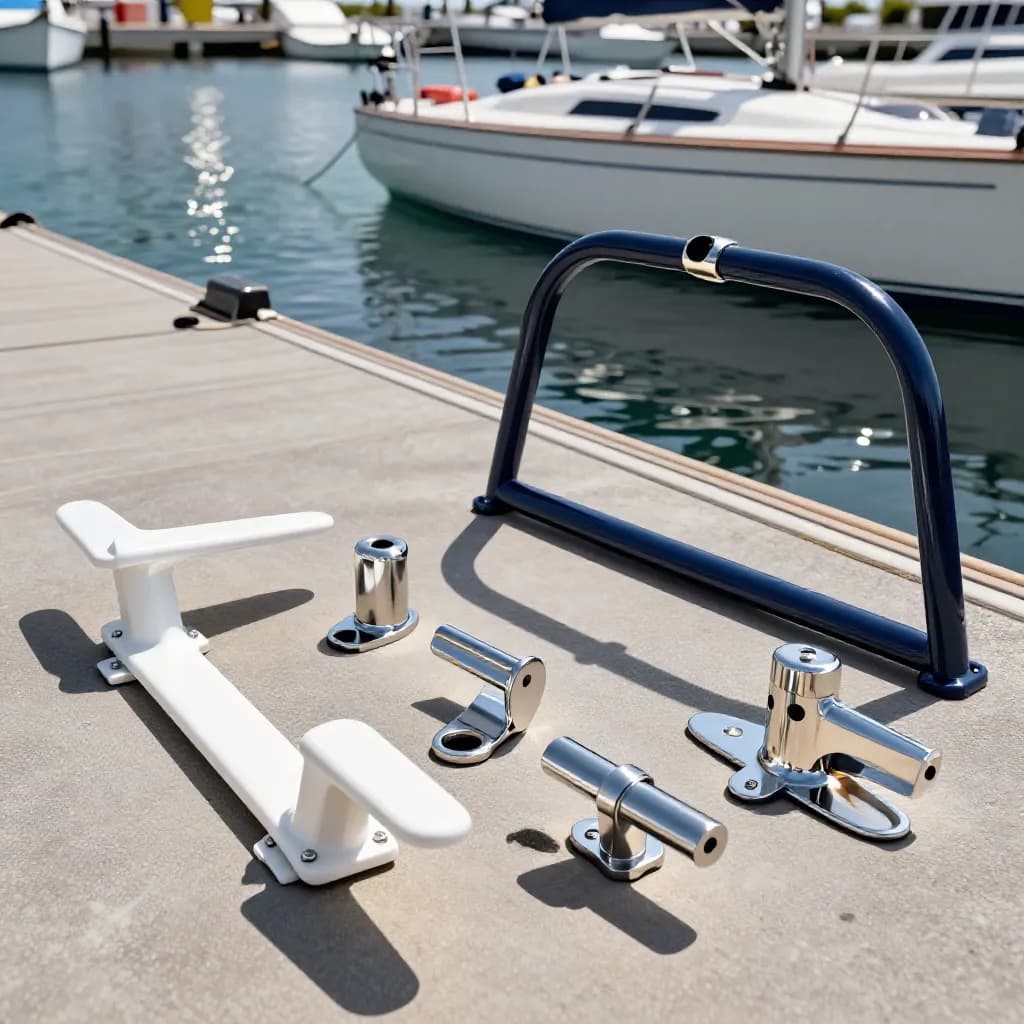
The marine industry has embraced powder coating for a wide range of applications because it outperforms most liquid marine paints in chip resistance, chemical resistance, and color retention. T-tops, tower frames, railings, console housings, and trailer frames are all commonly powder coated with excellent results. The finish withstands the harsh marine environment while providing the color and aesthetic options that boat owners want.
Ready to Start Your Project?
From one-off customs to 15,000-part production runs — get precise pricing in 24 hours.
On This Page
Can You Powder Coat Marine Parts?
The key to success with marine powder coating is proper specification. Not all powder coatings are equal in marine environments, and a coating system that works well on a garden gate may fail prematurely on a boat. Marine applications demand enhanced pretreatment, appropriate primer selection, and UV-stable topcoat chemistry to deliver the long-term performance that saltwater environments require.
Best Marine Applications for Powder Coating
T-tops and tower frames are among the most popular marine powder coating applications. These aluminum structures are constantly exposed to salt spray, UV radiation, and physical contact, making them ideal candidates for a durable, attractive finish. Powder coating provides a uniform, professional appearance that resists the fading and chalking that plague painted towers after a few seasons in the sun.
Rod holders, cleats, railings, grab handles, and console housings all benefit from powder coating's combination of corrosion resistance and impact toughness. These parts are handled frequently, bumped with equipment, and exposed to salt, sunscreen, fish blood, and cleaning chemicals. A quality powder coat shrugs off this daily abuse while maintaining its appearance far longer than anodizing or liquid paint in the same conditions.
Boat trailer frames are perhaps the most demanding common application for marine powder coating. Trailers are repeatedly submerged in salt water during launching and retrieval, then left to dry with salt residue on every surface. A properly specified powder coat system with enhanced pretreatment and primer provides outstanding protection for trailer frames, dramatically extending their service life compared to basic paint or even galvanizing alone.
Why Marine Environments Are So Demanding
Saltwater environments attack metal finishes through multiple mechanisms simultaneously. Salt spray deposits a thin film of sodium chloride on every exposed surface, and this salt film absorbs moisture from the air even on dry days, creating a persistently corrosive electrolyte layer. The chloride ions in salt are particularly aggressive at penetrating protective oxide layers and initiating pitting corrosion on aluminum and stainless steel.
UV exposure at sea is more intense than on land because water reflects UV radiation upward, effectively doubling the UV dose on surfaces above the waterline. This accelerated UV exposure causes coatings to chalk and fade faster than identical coatings in inland environments. Combined with the abrasive effect of wind-driven salt particles, marine UV exposure is one of the harshest conditions any coating can face.
Galvanic corrosion is an additional threat unique to marine environments. When dissimilar metals are in contact in the presence of saltwater — an excellent electrolyte — the less noble metal corrodes preferentially. Aluminum fittings bolted to stainless steel hardware, or steel brackets attached to aluminum structures, create galvanic cells that can cause rapid, localized corrosion. Powder coating can help by insulating the metals from each other, but proper material selection and isolation techniques are also essential.
Specification for Marine Use
Marine powder coating specifications start with enhanced pretreatment. For aluminum, a chromate or chrome-free conversion coating provides the best foundation for adhesion and corrosion resistance. For steel, zinc phosphate pretreatment is preferred over the simpler iron phosphate used in less demanding applications. The pretreatment quality directly determines how long the coating system will last in a saltwater environment.
A primer coat is strongly recommended for marine applications. An epoxy or epoxy-polyester primer applied over the pretreatment provides a dense, chemically resistant barrier directly at the metal surface. This primer layer is the primary corrosion defense, and its adhesion and chemical resistance are more important than the topcoat for long-term protection. The primer should be cured before the topcoat is applied.
The topcoat should be a superdurable polyester formulation for maximum UV and weather resistance. Standard polyester powders perform adequately in moderate marine environments, but superdurable grades provide significantly better gloss and color retention under the intense UV exposure found at sea. The total system — pretreatment, primer, and superdurable topcoat — delivers marine-grade protection that can withstand years of saltwater exposure with proper maintenance.
Maintenance in Saltwater Environments
Frequent freshwater rinsing is the single most important maintenance practice for powder-coated marine parts. After every outing, rinse all coated surfaces thoroughly with fresh water to remove salt deposits before they dry and concentrate on the surface. Salt left to accumulate creates a persistently corrosive layer that will eventually degrade even the best coating system. A five-minute rinse after each trip is the most effective protection you can provide.
Inspect coated surfaces regularly for chips, scratches, or any damage that exposes bare metal. Marine environments are unforgiving — a small chip that would be cosmetic on a garden fence becomes a corrosion entry point on a boat. Touch up any damage promptly with a marine-grade touch-up paint or epoxy to seal the exposed metal before corrosion can start. Pay particular attention to areas around fasteners, where dissimilar metal contact and mechanical stress make the coating most vulnerable.
Clean powder-coated marine parts more frequently than you would inland components. A monthly wash with mild boat soap removes salt haze, sunscreen residue, and organic deposits that can stain or degrade the coating surface. Avoid abrasive cleaners and harsh solvents. A periodic application of a marine-grade wax or UV protectant helps maintain gloss and provides an additional barrier against salt and UV exposure.
Frequently Asked Questions
Can you powder coat a boat hull?
Powder coating is not recommended for boat hulls below the waterline. Prolonged immersion can eventually compromise adhesion, and hull bottoms require antifouling properties that powder coatings do not provide. Above-waterline hull surfaces can be powder coated, but marine paint systems are more practical for full hull finishing due to the size and geometry involved.
Is powder coating better than anodizing for marine aluminum?
Each has strengths. Anodizing creates a hard, integral oxide layer that is excellent for wear resistance and maintains a metallic appearance. Powder coating provides a thicker barrier with unlimited color options and better chip resistance. For marine T-tops and towers, powder coating is generally preferred for its color range and impact resistance.
How long does powder coating last on a boat?
With proper specification and maintenance, a marine-grade powder coating system can last seven to fifteen years on above-waterline components. The key factors are the quality of pretreatment, whether a primer was used, the UV resistance of the topcoat, and how diligently the owner rinses salt and maintains the finish.
Will powder coating prevent electrolysis on my boat?
Powder coating can help reduce galvanic corrosion by insulating dissimilar metals from each other, but it should not be relied upon as the sole protection. Proper marine practice includes using isolation bushings, choosing compatible metals, and maintaining a functioning sacrificial anode system in addition to any coating.
Ready to Start Your Project?
From one-off customs to 15,000-part production runs — get precise pricing in 24 hours.