Powder coating is the best finish you can put on a bicycle frame for durability and appearance. It is significantly tougher than spray paint, resisting chips from cable rub, lock scratches, and the general knocks that come with daily riding and rack storage. For anyone building a custom bike or restoring a vintage frame, powder coating delivers a factory-quality finish that spray cans simply cannot match.
Consumer
Powder Coating a Bicycle Frame: Cost, Colors, and Process
Sundial Powder Coating·April 20, 2026·7 min
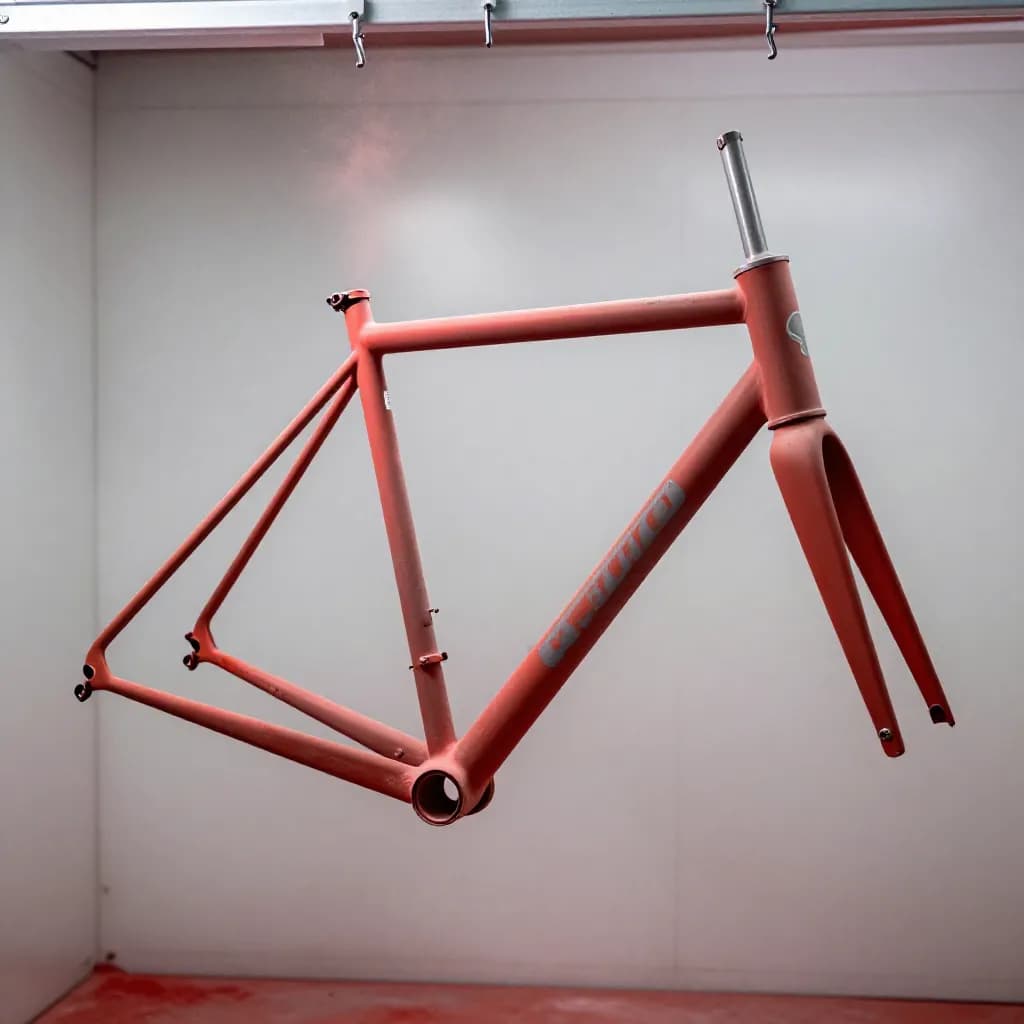
Beyond toughness, powder coating opens up a world of color options. You are not limited to the handful of colors available in bike-specific spray paint. The full RAL color chart is available, along with metallics, mattes, candies, and custom color matching. Want to restore a vintage Peugeot in its original color? Or build a custom fixie in neon pink? Powder coating can do both.
Ready to Start Your Project?
From one-off customs to 15,000-part production runs — get precise pricing in 24 hours.
On This Page
Why Powder Coat a Bike Frame?
For vintage bike restorations, powder coating is especially valuable. It strips away decades of rust, old paint, and corrosion, then seals the bare metal under a protective finish that will last for years. Many classic steel frames are too good to scrap but too far gone for a simple respray. Powder coating gives them a second life.
The Process: From Bare Frame to Finished Bike
The process begins with complete disassembly. Every component must come off the frame: wheels, crankset, bottom bracket, headset, seatpost, brakes, derailleurs, cables, and all hardware. You deliver a bare frame and fork to the coater. Some shops will handle disassembly for an additional fee, but most expect you to bring in stripped frames.
The frame is then chemically stripped or media blasted to remove all old paint, primer, and rust. After stripping, critical areas are carefully masked. The bottom bracket shell, head tube interior, seat tube interior, dropout faces, and any threaded bosses must be protected from powder buildup. Powder in these areas can prevent components from fitting properly or cause creaking and alignment issues.
Once masked, the frame is hung and powder is applied electrostatically, then cured in an oven at around 200 degrees Celsius. After cooling, the masking is removed and the frame is inspected. If you want decals or logos, these are applied after coating, either as waterslide decals under a clear coat or as vinyl stickers on top of the finish.
Popular Bike Colors and Finishes
Matte black is the most requested color for bicycle frames, offering a clean, modern look that works on everything from road bikes to mountain bikes. Gloss black is a close second, providing a classic, deep finish. Beyond black, metallic blue, candy red, British racing green, and pearl white are consistently popular choices.
Two-tone and fade finishes are possible but require multiple coating and masking stages, which increases cost. A common approach is a main color on the frame with a contrasting color on the fork, or a color-to-black fade on the seat stays and chain stays. These multi-color jobs look stunning but typically double the coating cost.
For restorations, many owners want to match the original factory color. If you can provide a color code, a paint chip, or even a photo, most coaters can get very close. RAL and Pantone color matching is standard at quality shops. Some specialty bicycle powder coaters even stock popular vintage bike colors and can replicate classic schemes including head tube badges and downtube decals.
Cost Guide
A single-color powder coat on a bicycle frame typically costs $100-250. The price depends on the frame size, condition, and the shop's pricing structure. A clean frame in good condition with minimal rust will be at the lower end, while a heavily corroded vintage frame requiring extensive prep will cost more. Adding the fork usually adds $40-80 to the total.
For a frame and fork together, budget $150-350 for a single color. Multi-stage finishes like two-tone, candy, or metallic-under-clear add $100-200 to the base price. If you want custom decals applied under a clear coat, that is typically an additional $50-100 depending on complexity.
Compared to a professional automotive-quality spray paint job, powder coating is competitively priced and delivers a more durable result. A quality spray job on a bike frame can cost $200-500 and will not be as chip-resistant. For most cyclists, powder coating offers the best combination of finish quality, durability, and value.
Things to Know Before You Go
Powder coating adds a small amount of weight to your frame, typically 50-100 grams depending on the frame size and the number of coats. For most riders this is completely insignificant. If you are building an ultralight race bike where every gram matters, discuss film thickness with your coater. A skilled applicator can keep the coating on the thinner side while still providing full coverage.
Discuss masking in detail with your shop before they start work. Provide a list of every area that needs to stay clear: bottom bracket threads, head tube bearing surfaces, seat tube interior, dropout faces, brake post threads, and water bottle bosses. If your frame has internal cable routing, make sure the coater knows so they can keep those passages clear.
Plan for decals and logos before coating, not after. If you want decals under a clear coat for a smooth, integrated look, you will need to provide them to the coater so they can apply them between the color coat and clear coat curing stages. Vinyl decals applied on top of the finished coat are simpler and cheaper but will not have the same seamless appearance.
Frequently Asked Questions
Can you powder coat a carbon fiber bicycle frame?
No. Carbon fiber cannot withstand the 200 degree Celsius curing temperatures required for powder coating. The resin matrix in carbon frames would be damaged or destroyed in the oven. Carbon frames should be refinished with automotive-style spray paint or vinyl wraps instead.
Will powder coating void my frame warranty?
It depends on the manufacturer. Some frame warranties are voided by any refinishing because the process involves heat that could theoretically affect the frame. Check with your frame manufacturer before proceeding. For vintage or used frames without an active warranty, this is not a concern.
How long does a powder-coated bike frame last?
A quality powder coat on a bicycle frame typically lasts 5-10 years of regular riding before showing significant wear. With careful use and occasional touch-ups on cable rub areas, it can last much longer. This is significantly better than spray paint, which often starts chipping within the first year of use.
Should I powder coat or spray paint my bike frame?
Powder coating is the better choice for most cyclists. It is more durable, more chip-resistant, and provides a more consistent finish than spray paint. The only situations where spray paint is preferable are carbon fiber frames that cannot be oven-cured, or when you want a very specific automotive-style finish like a deep metallic flake that is easier to achieve with liquid paint.
Ready to Start Your Project?
From one-off customs to 15,000-part production runs — get precise pricing in 24 hours.