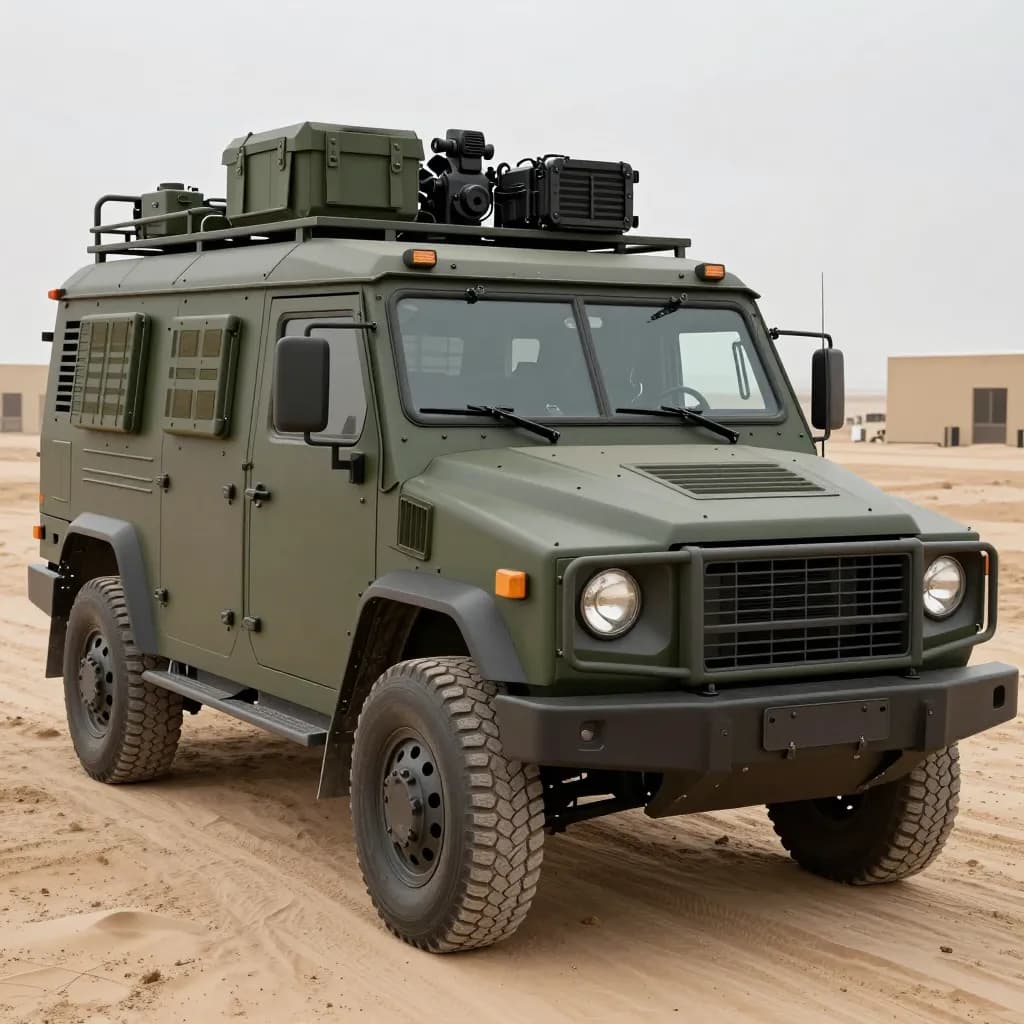
Military equipment operates in the world's most demanding environments - from desert heat and sand to arctic cold and salt spray, from chemical exposure to ballistic impact. The coatings protecting this equipment must perform under conditions that would rapidly degrade conventional finishes. Powder coatings have proven their capability in military applications, meeting stringent military specifications (MIL-SPECs) for corrosion resistance, chemical resistance, and durability while eliminating the hazardous solvent exposures that affect military maintenance personnel.
powder-coating-benefits
Military Applications: Powder Coating Performance for Tactical and Support Equipment
Sundial Research Team·February 18, 2025·5 min
| Environment | Challenge | Coating Requirement |
|---|---|---|
| Marine/salt spray | Corrosion | Exceptional salt spray resistance |
| Desert heat | UV degradation, sand erosion | UV stability, abrasion resistance |
| Arctic cold | Thermal cycling, brittle fracture | Flexibility at low temperatures |
| Chemical exposure | Decontamination agents, fuels | Chemical resistance |
| Mechanical abuse | Impact, abrasion, chipping | Toughness, hardness |
| Camouflage | Visual/NIR reflectance | Specific color and reflectance requirements |
Ready to Start Your Project?
From one-off customs to 15,000-part production runs — get precise pricing in 24 hours.
On This Page
Military Applications: Powder Coating Performance for Tactical and Support Equipment
Military Coating Requirements
Operational Environment Challenges
Key Military Specifications
| Specification | Title | Powder Coating Compliance |
|---|---|---|
| MIL-PRF-24712 | Powder Coating, Thermosetting | Direct compliance |
| MIL-DTL-32348 | Coating, Powder, Epoxy/Polyester | Direct compliance |
| MIL-DTL-53039 | Chemical Agent Resistant Coating (CARC) | Water-reducible CARC; powder alternatives emerging |
| MIL-PRF-22750 | Coating, Epoxy, High-Solids | Powder epoxy alternatives |
| MIL-PRF-85582 | Coating, Primer, Epoxy | Powder primer alternatives |
| TT-E-529 | Enamel, Alkyd | Powder alternatives available |
Powder Coating Advantages for Military Applications
Corrosion Protection
Military vehicles and equipment are particularly vulnerable to corrosion:
- Salt spray: Marine environments, winter road de-icing
- Galvanic corrosion: Dissimilar metals in contact
- Crevice corrosion: Trapped moisture in joints and seams
- Stress corrosion: Under mechanical load
Powder coatings provide superior corrosion protection through:
- Thicker films: 75-150 microns vs. 25-50 for liquid paint
- Edge coverage: Electrostatic wrap-around coats edges and corners
- Barrier properties: Crosslinked polymer is impermeable to moisture
- Zinc-rich primers: Cathodic protection for steel substrates
Salt Spray Performance
| Coating System | Salt Spray Hours (ASTM B117) | Military Relevance |
|---|---|---|
| Zinc-rich powder primer + polyester topcoat | 3,000-5,000+ | Marine vehicles, coastal equipment |
| Epoxy powder | 2,000-5,000+ | Submarine components, tanks |
| Polyurethane powder | 1,500-3,000 | Tactical vehicles, aircraft |
| Standard CARC (liquid) | 1,000-2,000 | Baseline military requirement |
Chemical Agent Resistance
Chemical Agent Resistant Coating (CARC) is required for equipment that may encounter chemical warfare agents. Traditional CARC is a liquid polyurethane system. Powder coating alternatives are being developed and qualified:
| Property | Liquid CARC | Powder CARC (Emerging) |
|---|---|---|
| Chemical agent resistance | Excellent | Under development |
| Decontamination durability | Good | Testing in progress |
| IR reflectance | Controlled | Achievable |
| VOC emissions | Significant | Near zero |
| Application | Complex multi-coat | Single or dual coat |
While full CARC replacement is not yet complete, powder coatings are qualified for many non-CARC military applications.
Specific Military Applications
Tactical Vehicles
| Vehicle Component | Powder Coating Benefit |
|---|---|
| Chassis and frame | Superior corrosion resistance, chip resistance |
| Wheels and rims | Salt spray resistance, impact durability |
| Engine components | Heat resistance, oil resistance |
| Body panels | UV stability, abrasion resistance |
| Bumper and brush guards | Impact resistance, chip resistance |
Weapons Systems
| Component | Requirement | Powder Coating Solution |
|---|---|---|
| Small arms receivers | Wear resistance, lubricity | Nylon/polyester blends |
| Artillery tubes | Heat resistance, erosion resistance | High-temperature formulations |
| Mounts and tripods | Corrosion resistance, durability | Epoxy-polyester hybrids |
| Ammunition containers | Chemical resistance, durability | Epoxy powders |
Support Equipment
| Equipment | Coating Challenge | Powder Solution |
|---|---|---|
| Generators | Heat, oil, weathering | High-temperature polyester |
| Shelters/containers | Corrosion, UV, abrasion | Super-durable polyester |
| Tooling and fixtures | Wear, impact | Tough nylon or epoxy powders |
| Communications gear | EMI/RFI shielding | Conductive powder coatings |
The Worker Health Imperative
Military Maintenance Personnel
Military depots and maintenance facilities employ thousands of civilian and military personnel who apply and maintain coatings:
- Depot-level maintenance: Major overhaul and refinishing
- Field maintenance: Touch-up and repair
- Corrosion control: Continuous maintenance in marine environments
These workers face the same hazards as civilian painters:
- Solvent exposure from paint thinners and reducers
- Isocyanate exposure from CARC and polyurethane systems
- Heavy metal exposure from pigments and primers
- VOC exposure during application and curing
The Base Community
Military bases are communities with families, schools, and healthcare facilities:
- Housing: Family housing painted during turnover
- Schools: On-base schools renovated during breaks
- Healthcare: Medical facilities requiring low-emission coatings
- Child development centers: Young children especially vulnerable to VOCs
Specifying powder coating for applicable military applications protects both maintenance workers and base communities.
Cost and Logistics Benefits
Reduced Hazardous Waste
Military facilities generate significant hazardous waste from coating operations:
- Solvent waste: Gun cleaning, line flushing, degreasing
- Paint sludge: Overspray, expired material
- Contaminated materials: PPE, rags, filters
Powder coating reduces this waste stream by 80-90%, simplifying compliance with:
- RCRA hazardous waste regulations
- Base environmental compliance
- Defense Environmental Restoration Program
Supply Chain Simplification
- No solvent storage: Eliminates flammable liquid storage requirements
- No HAZMAT shipping: Powder is non-hazardous freight
- Long shelf life: Powder stable for years; no skinning or separation
- Simplified inventory: Fewer SKUs, less waste from expired material
Current Military Powder Coating Programs
Army
- Tactical wheeled vehicles: Powder coating on non-CARC components
- Ground support equipment: Extensive powder coating qualification
- Ammunition containers: Epoxy powder coating standard
Navy/Marine Corps
- Shipboard equipment: Powder coating for corrosion protection
- Aviation support equipment: Qualified powder coatings
- Marine Corps vehicles: Increasing powder coating use
Air Force
- Ground support equipment: Powder coating for durability
- Aircraft components: Selected powder coating applications
- Base infrastructure: Powder coating for fencing, railings, fixtures
Future Directions
Emerging Technologies
- UV-curable powders: Lower temperature cure for heat-sensitive substrates
- Super-durable fluoropolymer powders: 30+ year performance
- Anti-microbial powders: For medical and food service applications
- Smart coatings: Sensing, self-healing capabilities
CARC Replacement
Research continues on powder coating systems that meet full CARC requirements:
- Chemical agent resistance testing
- Decontamination durability validation
- NIR reflectance control
- Field application methods
Conclusion
Military equipment demands coatings that perform in the world's most challenging environments. Powder coatings meet these demands while simultaneously eliminating the hazardous chemical exposures that affect military maintenance personnel. The superior corrosion resistance, durability, and material efficiency of powder coating align with military requirements for equipment reliability and operational readiness.
For military specification writers, the choice is not between performance and safety. Powder coatings deliver both. The question is whether military procurement will fully leverage a technology that protects equipment, protects personnel, and reduces lifecycle costs - a rare alignment of operational, health, and economic interests.
Ready to Start Your Project?
From one-off customs to 15,000-part production runs — get precise pricing in 24 hours.