When consumers ask whether powder coating is waterproof, the answer requires an important distinction that affects how you should think about powder coating in wet environments. Powder coating is highly water resistant — it provides an excellent barrier against rain, humidity, splashing, and intermittent water exposure. But calling it truly waterproof in the absolute sense would be misleading, because no organic coating is completely impermeable to water over extended periods.
Consumer
Is Powder Coating Waterproof? Water Resistance, Immersion Testing, and Marine Applications
Sundial Powder Coating·April 22, 2026·11 min
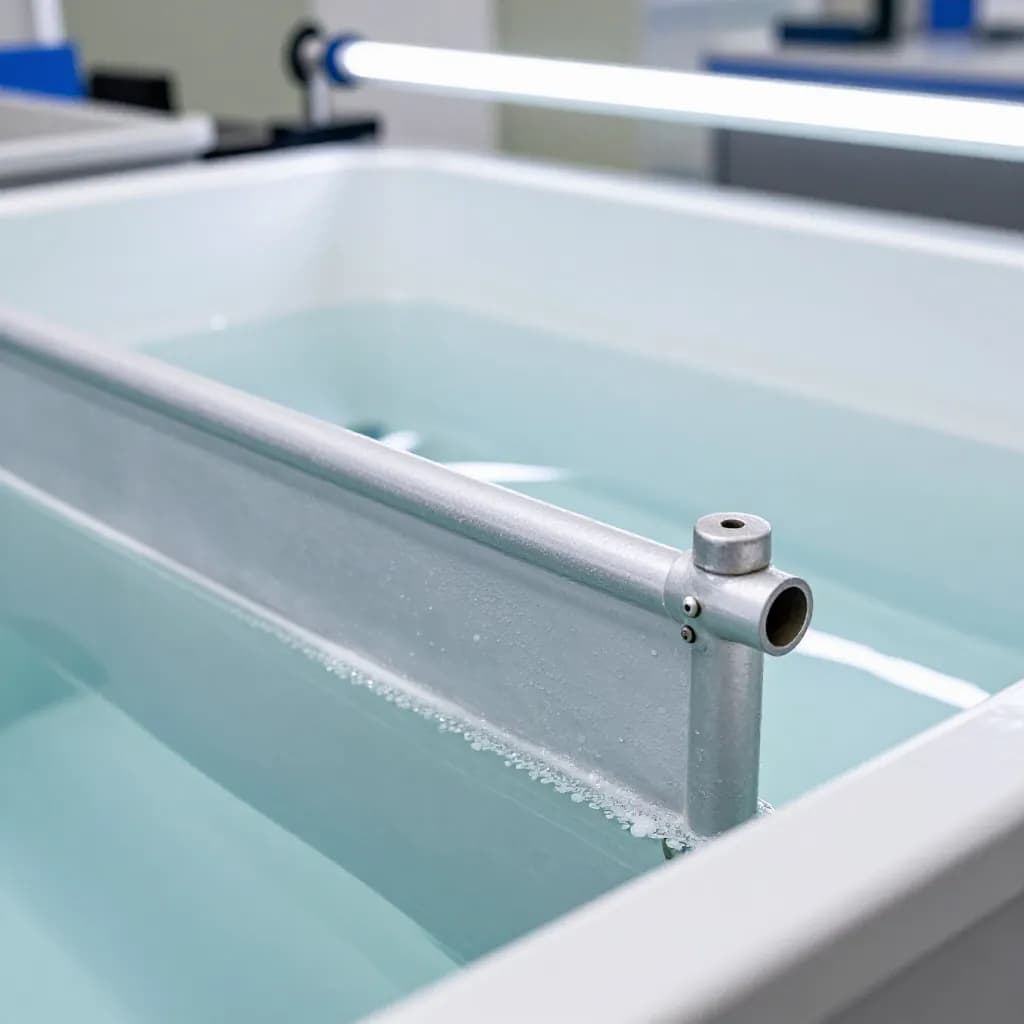
Water resistance means the coating effectively repels water and prevents it from reaching the substrate under normal exposure conditions. Rain runs off a powder-coated surface. Humidity does not penetrate. Splashing and washing do not compromise the coating. For the vast majority of applications — outdoor furniture, fences, automotive parts, architectural elements, and industrial equipment — powder coating's water resistance is more than adequate to protect the underlying metal for decades.
Ready to Start Your Project?
From one-off customs to 15,000-part production runs — get precise pricing in 24 hours.
On This Page
Water Resistant vs Waterproof: An Important Distinction
True waterproofing implies complete impermeability to water under all conditions, including prolonged immersion and high-pressure exposure. At a molecular level, all organic polymer coatings — including powder coatings — allow some degree of water vapor transmission over time. This permeation is extremely slow and insignificant for most applications, but it means that powder coating alone may not be sufficient for applications involving continuous water immersion or extreme hydrostatic pressure.
Understanding this distinction helps consumers make informed decisions about using powder coating in wet environments. For most applications, powder coating provides outstanding water protection. For specialized applications involving continuous immersion or extreme conditions, additional measures or specialized coating systems may be needed.
How Powder Coating Resists Water
Powder coating's water resistance comes from its physical and chemical structure. When powder coating is cured, the resin molecules cross-link into a dense, three-dimensional polymer network that forms a continuous film over the metal surface. This cross-linked structure creates a physical barrier that water molecules cannot easily penetrate.
The film thickness of powder coating contributes significantly to its water resistance. At 60-120 microns, powder coating is substantially thicker than most liquid paint films (25-50 microns). This greater thickness means water molecules must travel a longer path to reach the substrate, and the probability of finding a continuous pathway through the coating decreases with increasing thickness. The relationship between film thickness and barrier performance is well-established in coating science.
The absence of solvent in powder coatings is another factor in their water resistance. Liquid paints contain solvents that evaporate during drying, potentially leaving microscopic voids and channels in the cured film. These micro-voids can act as pathways for water penetration. Powder coatings, applied as 100 percent solid material with no solvent, cure into a denser, more void-free film with fewer potential pathways for water ingress.
Surface preparation and pretreatment play a critical role in the overall water resistance of a powder coating system. The coating itself may be an excellent water barrier, but if the adhesion between the coating and the metal substrate is compromised, water can penetrate at the interface and cause corrosion beneath the coating. Proper pretreatment — phosphate conversion coating, chromate conversion, or modern alternatives — creates a chemical bond at the metal-coating interface that resists water penetration and maintains adhesion even in wet conditions.
The specific powder coating chemistry also affects water resistance. Epoxy powder coatings offer the best water and chemical resistance but have poor UV stability. Polyester powders provide good water resistance with excellent UV performance. Epoxy-polyester hybrids offer a balance of both properties. For applications with significant water exposure, the coating chemistry should be selected based on the specific environmental conditions.
Immersion Testing: What the Data Shows
Immersion testing is the standard method for evaluating a coating's resistance to prolonged water contact. These tests provide objective data on how powder coatings perform under conditions far more severe than normal environmental exposure.
ASTM D870 is the standard test method for water immersion testing of coatings. Coated test panels are submerged in distilled water at a specified temperature — typically 38 degrees Celsius — for a defined period, then evaluated for blistering, adhesion loss, softening, discoloration, and corrosion. High-quality powder coatings routinely pass 500-1000 hours of water immersion testing without significant degradation, demonstrating excellent resistance to prolonged water contact.
Salt spray testing (ASTM B117) evaluates corrosion resistance under accelerated conditions by exposing coated panels to a continuous salt fog at 35 degrees Celsius. This test simulates years of outdoor exposure in a compressed timeframe. Quality powder coating systems on properly prepared steel substrates typically achieve 500-2000 hours of salt spray resistance, depending on the coating chemistry, film thickness, and pretreatment system. Premium systems designed for marine and industrial environments can exceed 3000 hours.
Cyclic corrosion testing (ASTM D5894 and similar) alternates between salt spray, UV exposure, and drying cycles to simulate real-world weathering more accurately than constant salt spray. These tests are considered more representative of actual outdoor performance and are increasingly used for coating qualification. Powder coatings generally perform well in cyclic testing, often outperforming liquid paint systems of equivalent thickness.
Humidity resistance testing (ASTM D2247) exposes coated panels to 100 percent relative humidity at 38 degrees Celsius for extended periods. This test evaluates the coating's resistance to moisture vapor penetration and condensation. Powder coatings typically pass 1000 or more hours of humidity testing without blistering or adhesion loss.
These test results demonstrate that powder coating provides robust water resistance that exceeds the requirements of most applications. The data supports using powder coating confidently in outdoor, marine-adjacent, and wet industrial environments, with the understanding that the overall system performance depends on proper surface preparation and pretreatment as much as the coating itself.
Marine Applications: Powder Coating Near and On the Water
Marine environments represent one of the most demanding tests for any coating system, combining salt water exposure, UV radiation, humidity, and mechanical stress. Powder coating is used extensively in marine and coastal applications, though the specific requirements and limitations must be understood.
Coastal architecture — buildings, bridges, railings, and infrastructure within a few kilometers of the ocean — is a major application for powder coating in marine-adjacent environments. Salt-laden air accelerates corrosion of metal structures, and powder coating provides an effective barrier against this salt exposure. Qualicoat Seaside certification specifically addresses powder coating performance in coastal environments, requiring enhanced pretreatment and coating systems that withstand the aggressive conditions.
Marine hardware and deck equipment — cleats, hinges, latches, railings, and structural components on boats and docks — are frequently powder coated for corrosion protection and aesthetics. These applications involve direct salt water splash and spray exposure, which is more aggressive than coastal atmospheric exposure. High-performance powder coatings with enhanced barrier properties and proper marine-grade pretreatment provide good service life in these applications, though periodic inspection and maintenance are important.
Submerged marine applications — hull coatings, underwater structural members, and immersed equipment — push beyond the typical capabilities of standard powder coatings. Continuous immersion in salt water is the most demanding water exposure scenario, and while specialized powder coatings can perform in immersion service, these applications typically require fusion-bonded epoxy or other specialized coating systems designed specifically for immersion. Standard decorative powder coatings are not suitable for continuous salt water immersion.
For consumers with boats, docks, or coastal property, powder coating is an excellent choice for above-waterline components and structures. It provides superior corrosion protection compared to liquid paint, with better film thickness, edge coverage, and resistance to chipping from impact. The key is specifying a marine-grade coating system — typically an epoxy primer with a polyester topcoat — applied over proper pretreatment on the appropriate substrate.
Aluminum is the preferred substrate for marine powder coating applications because it does not rust. Powder-coated aluminum railings, window frames, and structural elements in coastal buildings provide decades of service with minimal maintenance.
Where Powder Coating's Water Resistance Has Limits
While powder coating excels in most wet environments, there are specific conditions where its water resistance reaches its limits. Recognizing these limitations helps consumers avoid applications where powder coating may underperform.
Continuous immersion in hot water accelerates water permeation through the coating film. The rate of water molecule diffusion through polymer coatings increases with temperature, and hot water immersion can cause blistering and adhesion loss in coatings that perform perfectly in cold water or atmospheric exposure. Applications involving continuous hot water contact — such as the interior of water heaters or hot water pipes — require specialized coating systems designed for this specific condition.
Edge coverage, while better than liquid paint, remains a potential weak point for water penetration. Powder coating naturally builds up thicker on flat surfaces and thinner on sharp edges and corners. If edges are not properly prepared — rounded or radiused before coating — the thinner coating at these points can be the first area where water penetration and corrosion begin. For critical applications, edge preparation and minimum edge radius specifications are important.
Coating damage — chips, scratches, and mechanical wear — creates pathways for water to reach the substrate. Once water penetrates through a coating defect, it can spread along the metal-coating interface, causing underfilm corrosion that extends well beyond the visible damage. Prompt repair of coating damage is essential in wet environments to prevent this spreading corrosion.
Chemical contamination of water changes the equation. Water containing dissolved chemicals — acids, alkalis, solvents, or salts at high concentration — can attack the coating chemically in ways that pure water does not. Industrial wastewater, chemical processing fluids, and heavily chlorinated pool water may require specialized coating chemistries selected for resistance to the specific chemicals present.
Joints, fastener holes, and areas where coated surfaces meet uncoated surfaces are vulnerable points in any coating system. Water can wick into these interfaces through capillary action, bypassing the coating barrier entirely. Proper design — sealing joints, using coated fasteners, and minimizing crevices — is as important as the coating itself for water resistance in assembled structures.
Maximizing Water Resistance in Your Powder Coating Project
If your powder coating project will be exposed to significant water or moisture, several steps will maximize the water resistance and longevity of the coating system.
Substrate selection matters. Aluminum and stainless steel are inherently corrosion-resistant and provide the best foundation for powder coating in wet environments. If steel must be used, specify hot-dip galvanized steel, which provides a zinc sacrificial layer beneath the powder coating for additional corrosion protection. The combination of galvanizing plus powder coating — known as a duplex system — provides the highest level of corrosion protection available for steel structures.
Surface preparation must be thorough. For wet environment applications, the surface preparation standard should be higher than for dry interior use. Specify blast cleaning to SA 2.5 (near-white metal) for steel, and ensure that chemical pretreatment is applied — not just a quick wipe and coat. The pretreatment creates the adhesion and corrosion resistance at the metal-coating interface that is critical for water resistance.
Coating thickness should be at the upper end of the recommended range. For standard applications, 60-80 microns is typical. For wet environment applications, specify 80-120 microns to provide a thicker barrier against water permeation. Some marine and industrial specifications call for even thicker films or multi-coat systems.
Consider a primer plus topcoat system for maximum protection. An epoxy primer provides excellent adhesion and corrosion resistance at the metal interface, while a polyester topcoat provides UV resistance and aesthetic durability. This two-coat system outperforms a single-coat application in wet environments because the epoxy primer maintains its barrier properties even if the topcoat is damaged.
Design the part or structure to shed water rather than trap it. Avoid horizontal surfaces that pond water, crevices that trap moisture, and geometries that prevent drainage. Good design reduces the water exposure that the coating must resist and extends the service life of the coating system.
Specify the coating system based on the actual exposure conditions. Discuss the specific environment — freshwater or saltwater, immersion or splash, temperature range, chemical exposure — with the powder coating manufacturer or a coatings consultant. They can recommend the optimal coating chemistry, film thickness, and pretreatment for your specific conditions.
Powder Coating vs Other Coatings for Water Resistance
Comparing powder coating's water resistance to alternative coating technologies helps consumers choose the right finish for wet environment applications.
Liquid epoxy coatings are the traditional choice for immersion and severe water exposure applications. Two-component liquid epoxies can be applied at very high film thicknesses — 200-500 microns or more — and provide excellent water and chemical resistance. For continuous immersion in water, particularly in tanks, pipes, and marine structures below the waterline, liquid epoxy systems remain the standard. However, they contain solvents, require careful mixing, and have limited UV resistance.
Hot-dip galvanizing provides cathodic (sacrificial) corrosion protection that continues to protect steel even when the zinc layer is damaged. Galvanizing excels in atmospheric and splash zone exposure but has limited aesthetic options. The combination of galvanizing plus powder coating provides both sacrificial protection and barrier protection, making it the premium system for steel in wet environments.
Anodizing provides excellent corrosion resistance for aluminum through a thick, integral oxide layer. Anodized aluminum performs well in marine and wet environments, and the anodic layer is harder and more scratch-resistant than powder coating. However, anodizing offers a limited color range and cannot be applied to steel or other metals.
Ceramic coatings provide exceptional chemical and temperature resistance and are used in specialized applications where organic coatings cannot perform. Ceramic coatings are more expensive and more difficult to apply than powder coating but offer superior performance in extreme chemical and thermal environments.
For most consumer and commercial applications involving water exposure — outdoor furniture, fences, railings, automotive parts, marine hardware above the waterline, and architectural elements — powder coating provides the best balance of water resistance, durability, aesthetics, and cost. Its thick film, excellent adhesion, and wide color range make it the practical choice for the vast majority of wet environment applications.
Frequently Asked Questions
Is powder coating waterproof?
Powder coating is highly water resistant but not absolutely waterproof in the strictest sense. It provides an excellent barrier against rain, humidity, splashing, and intermittent water exposure, protecting the substrate for decades under normal conditions. However, no organic coating is completely impermeable to water over extended periods of continuous immersion.
Can powder-coated items be left outside in the rain?
Yes. Powder coating is designed to withstand outdoor weather exposure including rain, snow, humidity, and UV radiation. Properly applied powder coating on well-prepared metal will protect against rain and moisture for 10-20 years or more. This is one of the primary reasons powder coating is used for outdoor furniture, fences, railings, and architectural elements.
Is powder coating suitable for marine environments?
Powder coating works well for above-waterline marine applications and coastal environments when a marine-grade coating system is specified. This typically means an epoxy primer with a polyester topcoat over proper pretreatment. For continuous underwater immersion, specialized coating systems like fusion-bonded epoxy are more appropriate than standard powder coatings.
How long does powder coating resist water in immersion tests?
High-quality powder coatings routinely pass 500-1000 hours of water immersion testing and 500-2000 hours of salt spray testing without significant degradation. Premium marine-grade systems can exceed 3000 hours of salt spray resistance. These results demonstrate robust water resistance that exceeds the requirements of most applications.
What is the best powder coating system for wet environments?
A duplex system of hot-dip galvanized steel with an epoxy primer and polyester topcoat provides the highest level of water and corrosion protection. For aluminum, a chromate or zirconium pretreatment with a polyester powder coat is excellent. Specify film thickness at the upper end of the range — 80-120 microns — for maximum barrier performance.
Ready to Start Your Project?
From one-off customs to 15,000-part production runs — get precise pricing in 24 hours.