Powder coating can be highly UV resistant, but the level of protection against ultraviolet degradation varies dramatically depending on the resin chemistry selected. This is one of the most important distinctions in powder coating technology, and choosing the wrong resin type for an outdoor application is one of the most common specification errors.
Consumer
Is Powder Coating UV Resistant? Sunlight Performance by Resin Type
Sundial Powder Coating·April 22, 2026·12 min
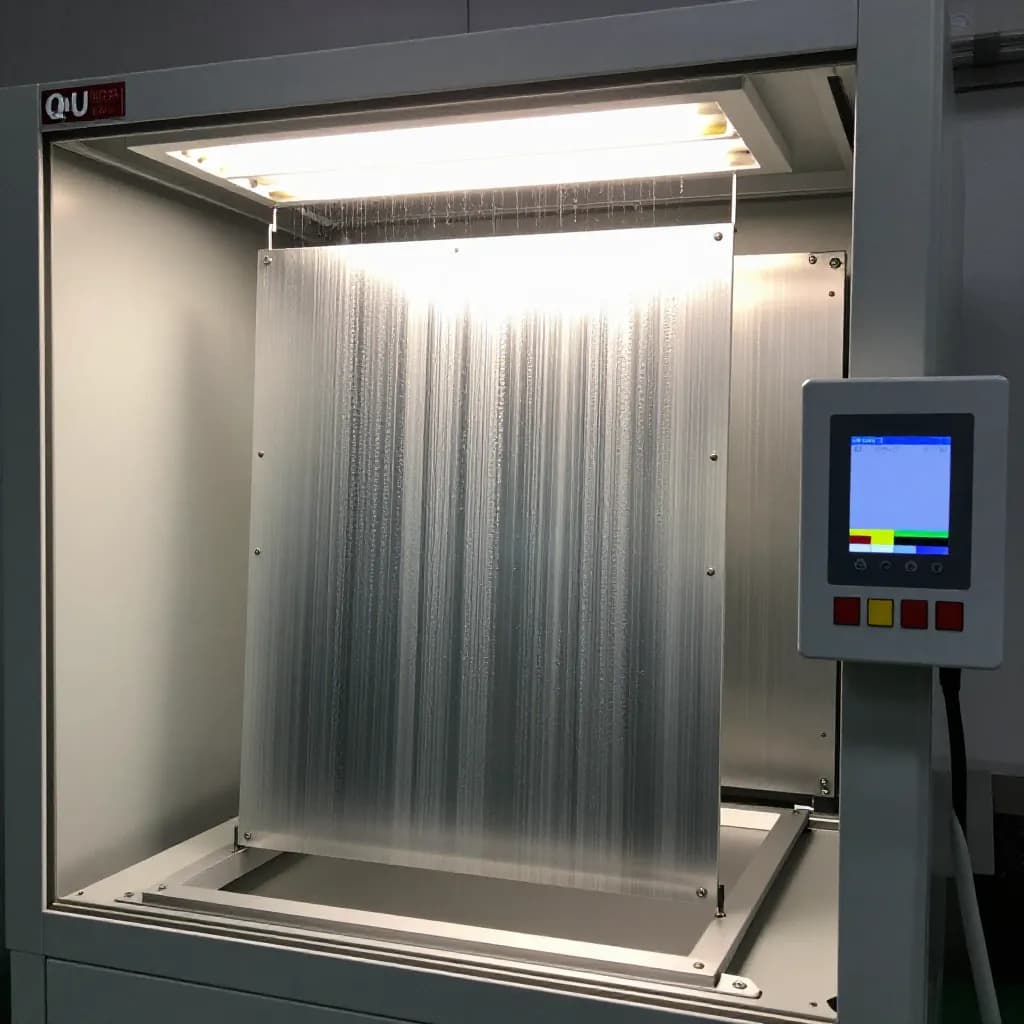
Polyester and super-durable polyester powder coatings offer excellent UV resistance and are the standard choice for exterior applications. These formulations are engineered to withstand years of direct sunlight exposure with minimal color change, gloss loss, or chalking. At the other end of the spectrum, epoxy powder coatings have very poor UV resistance and will chalk and discolor rapidly when exposed to sunlight, sometimes within weeks.
Ready to Start Your Project?
From one-off customs to 15,000-part production runs — get precise pricing in 24 hours.
On This Page
UV Resistance Depends Entirely on the Resin Type
Between these extremes, hybrid epoxy-polyester coatings offer moderate UV resistance suitable for some semi-exterior applications, while fluoropolymer powder coatings such as PVDF-based systems provide the ultimate in UV and weathering resistance for the most demanding architectural applications.
Understanding these differences is essential for anyone specifying or purchasing powder-coated products intended for outdoor use. The right resin selection ensures decades of color stability and appearance retention, while the wrong choice can result in rapid and unsightly degradation that undermines both aesthetics and the protective function of the coating.
Polyester: The Standard for Outdoor UV Performance
Standard polyester powder coatings are the workhorse of exterior powder coating applications. Formulated with saturated polyester resins cross-linked with either TGIC or HAA hardeners, these coatings provide good UV resistance suitable for a wide range of outdoor products including garden furniture, fencing, agricultural equipment, and general architectural components.
Standard polyester formulations typically maintain acceptable appearance for 5 to 10 years of exterior exposure in moderate climates, with gradual gloss reduction and minor color shift occurring over this period. The rate of degradation depends on the specific formulation, the color, the geographic location, and the orientation of the coated surface relative to the sun.
The UV degradation mechanism in polyester coatings involves the absorption of ultraviolet radiation by the polymer chains, leading to chain scission and the formation of degradation products on the coating surface. This manifests as chalking — a powdery residue on the surface caused by the breakdown of the resin binder, leaving pigment particles loosely bound at the surface. Chalking is typically accompanied by a reduction in gloss and, in some cases, a shift in color.
For applications requiring longer exterior durability, standard polyester may not be sufficient, and specifiers should consider super-durable polyester formulations. However, for many consumer and light industrial applications where the coated product has a service life of 5 to 10 years or where periodic recoating is acceptable, standard polyester provides a cost-effective solution with adequate UV performance.
Color selection also influences UV performance. Lighter colors and those based on inorganic pigments generally show better UV stability than dark colors and those using organic pigments, which are more susceptible to UV-induced fading.
Super-Durable Polyester: Extended UV Protection
Super-durable polyester powder coatings represent a significant advancement in UV resistance for powder coating technology. These formulations use specially designed polyester resins with enhanced resistance to UV degradation, typically incorporating UV absorbers and hindered amine light stabilizers within the coating formulation to provide multiple layers of UV protection.
The performance improvement over standard polyester is substantial. Super-durable polyester coatings are designed to retain at least 50 percent of their original gloss after 2,000 to 3,000 hours of accelerated weathering testing in a QUV or Xenon arc chamber, compared to 1,000 to 1,500 hours for standard polyester. In real-world exterior exposure, this translates to 15 to 25 years of acceptable appearance retention in moderate climates.
Super-durable polyester is the standard specification for architectural powder coating applications certified under Qualicoat Class 1 and Class 2 standards. Qualicoat Class 1 requires one year of South Florida exposure testing, while Class 2 requires three years. These real-world exposure requirements ensure that certified coatings perform as expected under actual outdoor conditions, not just in laboratory accelerated tests.
The AAMA 2604 specification in North America similarly requires super-durable polyester performance levels, with five years of South Florida exposure testing demonstrating acceptable color retention, gloss retention, chalk resistance, and film integrity. This specification is widely used for commercial architectural applications including storefronts, curtain walls, and entrance systems.
Super-durable polyester coatings are available in the full range of colors and finishes, including metallics, textures, and special effects. The cost premium over standard polyester is typically 15 to 30 percent, which is easily justified by the extended service life and reduced maintenance requirements for exterior applications.
Epoxy: Why It Fails Outdoors
Epoxy powder coatings are excellent performers in many respects — they offer outstanding adhesion, chemical resistance, and corrosion protection — but UV resistance is their critical weakness. Epoxy resins contain aromatic chemical structures that absorb ultraviolet radiation very efficiently, leading to rapid photodegradation when exposed to sunlight.
The degradation of epoxy coatings in sunlight is dramatic and unmistakable. Within weeks to months of outdoor exposure, an epoxy powder coating will begin to chalk heavily, developing a white powdery surface layer that obscures the original color. Continued exposure leads to severe color change, with many colors shifting toward a yellowish or whitened appearance. The gloss drops rapidly, and the surface becomes increasingly rough and unattractive.
This UV sensitivity means epoxy powder coatings should never be specified for exterior applications where appearance matters. Their use should be restricted to interior applications, enclosed environments, or situations where the coating will not be exposed to direct or indirect sunlight. Common appropriate applications for epoxy coatings include interior furniture, electrical enclosures, under-hood automotive components, and industrial equipment housed inside buildings.
It is worth noting that the UV degradation of epoxy coatings is primarily a cosmetic issue rather than a structural one. The chalking and color change occur at the surface of the coating, while the bulk of the film retains its mechanical properties and corrosion protection capability. An epoxy coating that looks terrible after outdoor exposure may still be providing effective corrosion protection to the underlying metal. However, for most applications, the cosmetic degradation is unacceptable.
Hybrid epoxy-polyester coatings offer a compromise, with better UV resistance than pure epoxy but inferior to pure polyester. These are suitable for semi-exterior applications with limited direct sunlight exposure, such as covered walkways or north-facing surfaces in the Northern Hemisphere.
Chalking and Fading: What to Expect Over Time
Chalking and fading are the two primary manifestations of UV degradation in powder coatings, and understanding what to expect helps set realistic expectations for long-term appearance. Chalking is the formation of a loose, powdery residue on the coating surface caused by the breakdown of the resin binder at the surface layer. It is measured on a scale of 1 to 10 using ASTM D4214, where 10 represents no chalking and lower numbers indicate increasing severity.
Fading refers to a change in the color of the coating, measured instrumentally as Delta E using a spectrophotometer. A Delta E of less than 1 is generally imperceptible to the human eye, while values above 3 to 5 become noticeable to most observers. Architectural specifications typically require Delta E values below 5 after the specified exposure period, with premium specifications requiring values below 3.
The rate of chalking and fading depends on several factors beyond resin type. Geographic location is significant — coatings in high-UV environments such as South Florida, the Middle East, or tropical regions degrade faster than those in northern European or temperate climates. Surface orientation matters as well, with south-facing and horizontal surfaces receiving the most UV exposure and degrading fastest.
Color choice has a substantial impact on perceived fading. Dark colors tend to show more visible change than light colors because the same absolute color shift is more noticeable against a dark background. Bright, saturated colors using organic pigments are generally more susceptible to fading than muted colors based on inorganic pigments. Whites and light grays typically show the best long-term color stability.
Regular cleaning can mitigate the visual impact of chalking by removing the loose surface layer and restoring some of the original appearance. However, cleaning does not reverse the underlying UV degradation, and eventually the coating will require recoating to restore its original appearance and protective properties.
Florida Testing: The Gold Standard for UV Performance
South Florida exposure testing is considered the gold standard for evaluating the real-world UV and weathering performance of powder coatings. The combination of intense UV radiation, high humidity, salt air, and elevated temperatures in South Florida creates one of the most demanding natural weathering environments in the world, making it an ideal proving ground for coating durability.
Test panels are mounted on outdoor exposure racks at a 45-degree angle facing south at testing facilities in locations such as Miami or Homestead, Florida. The panels are exposed continuously to natural weather conditions and evaluated periodically for gloss retention, color change, chalking, cracking, blistering, and other signs of degradation. The results provide a realistic assessment of how the coating will perform in actual outdoor service.
Major architectural coating specifications require specific durations of Florida exposure testing. AAMA 2603 requires one year of South Florida exposure for basic architectural coatings. AAMA 2604 requires five years for high-performance coatings. AAMA 2605, the most demanding North American architectural specification, requires a full ten years of South Florida exposure, ensuring that only the most durable formulations qualify.
Qualicoat Class 1 requires one year of Florida exposure, while Qualicoat Class 2 requires three years. GSB Master certification also requires multi-year Florida exposure testing. These real-world exposure requirements complement laboratory accelerated weathering tests and provide confidence that certified coatings will perform as expected in actual service conditions.
The correlation between Florida exposure results and performance in other geographic locations is well established. As a general rule, one year of South Florida exposure is roughly equivalent to two to three years of exposure in central Europe or the northern United States. This correlation allows specifiers to estimate expected coating life in their specific location based on Florida test data.
Choosing the Right UV-Resistant Powder Coating
Selecting the appropriate powder coating for UV resistance requires matching the resin chemistry to the application's exposure conditions and expected service life. The decision framework is straightforward once the key variables are understood.
For interior applications with no sunlight exposure, any resin type is suitable, and the choice can be based on other performance requirements such as chemical resistance, hardness, or flexibility. Epoxy and hybrid coatings are commonly used for interior applications where their other performance advantages can be leveraged without concern for UV degradation.
For exterior applications with moderate durability requirements of 5 to 10 years, standard polyester powder coating provides adequate UV resistance at the most economical cost. This is appropriate for products such as garden furniture, fencing, light poles, and general outdoor equipment where periodic replacement or recoating is expected.
For exterior applications requiring 15 to 25 years of appearance retention, super-durable polyester is the appropriate specification. This covers most architectural applications including window frames, curtain walls, cladding panels, and entrance systems. Specifying coatings certified to Qualicoat, GSB, or AAMA standards provides assurance of UV performance.
For the most demanding applications requiring 25 years or more of UV resistance, fluoropolymer powder coatings based on PVDF resin technology offer the ultimate in weathering performance. These coatings meet AAMA 2605 requirements and are specified for premium architectural projects where long-term appearance retention is critical.
Regardless of resin type, specifiers should also consider color selection, surface orientation, and geographic location when evaluating UV performance requirements. Consulting with powder coating manufacturers and reviewing available test data for specific formulations and colors ensures that the selected coating will meet the project's long-term performance expectations.
Frequently Asked Questions
Which powder coating resin is best for outdoor UV resistance?
Super-durable polyester is the standard choice for most outdoor applications, providing 15-25 years of appearance retention. For the most demanding architectural applications requiring 25+ years, fluoropolymer (PVDF-based) powder coatings offer the ultimate UV resistance. Standard polyester is suitable for moderate outdoor use of 5-10 years.
Why does epoxy powder coating turn white in sunlight?
Epoxy resins contain aromatic chemical structures that absorb UV radiation very efficiently, causing rapid photodegradation at the coating surface. This breaks down the resin binder, leaving pigment particles loosely bound as a white powdery residue called chalking. This can occur within weeks to months of outdoor exposure.
How long does powder coating last in direct sunlight?
It depends on the resin type: epoxy fails within weeks to months, standard polyester lasts 5-10 years, super-durable polyester lasts 15-25 years, and fluoropolymer coatings can exceed 25 years. Geographic location, color choice, and surface orientation also significantly affect UV durability.
What is Florida testing for powder coatings?
South Florida exposure testing is the gold standard for evaluating real-world UV and weathering performance. Test panels are mounted outdoors in South Florida's intense UV, humidity, and heat. Major specifications require 1-10 years of Florida exposure, with AAMA 2605 requiring a full 10 years for premium architectural coatings.
Do dark colors fade faster than light colors in powder coating?
Dark colors tend to show more visible fading because the same absolute color change is more noticeable against a dark background. Additionally, bright saturated colors using organic pigments are more susceptible to UV-induced fading than muted colors based on more stable inorganic pigments.
Ready to Start Your Project?
From one-off customs to 15,000-part production runs — get precise pricing in 24 hours.