Powder coating has a well-deserved reputation for durability, and scratch resistance is a major part of that reputation. Compared to conventional liquid paint, powder coating is significantly harder and more resistant to scratching, scuffing, and abrasion. This is one of the primary reasons consumers choose powder coating for items that will see regular handling, outdoor exposure, or mechanical contact.
Consumer
Is Powder Coating Scratch Resistant? Hardness Ratings, Impact Resistance, and Care Tips
Sundial Powder Coating·April 22, 2026·11 min
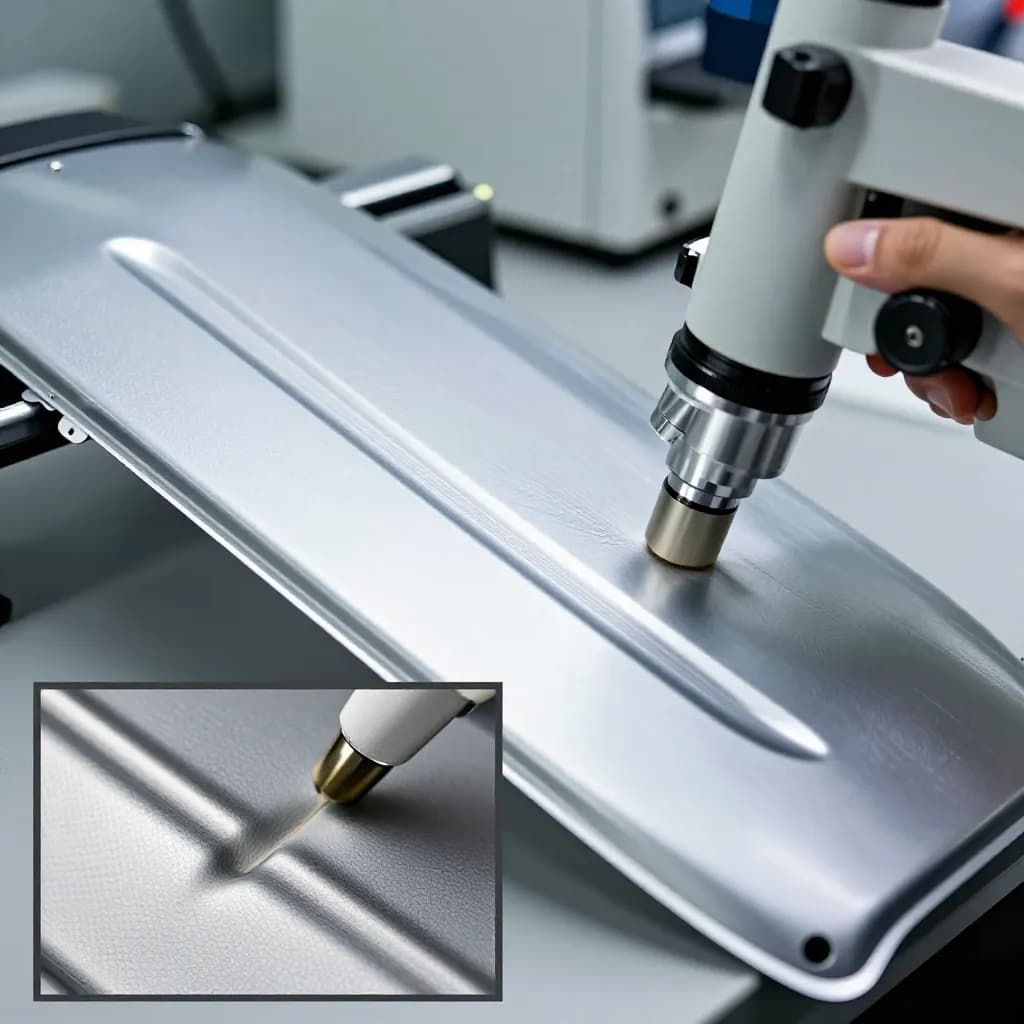
But scratch resistance is not absolute. Powder coating can be scratched by materials harder than itself — metal tools, abrasive particles, sharp impacts, and aggressive cleaning can all mark a powder-coated surface. The practical question is not whether powder coating can be scratched, but how well it resists the types of scratching and abrasion it will encounter in its intended use.
Ready to Start Your Project?
From one-off customs to 15,000-part production runs — get precise pricing in 24 hours.
On This Page
How Scratch Resistant Is Powder Coating Really?
The answer depends on the specific powder coating formulation, the film thickness, the substrate, and the type of mechanical stress involved. A high-hardness polyester powder coating on a steel substrate will resist scratching far better than a flexible coating on a thin aluminum panel. Understanding the factors that affect scratch resistance helps consumers choose the right coating for their application and maintain it properly to maximize its service life.
This article explains how scratch resistance is measured, what the numbers mean in practical terms, how powder coating compares to alternative finishes, and what you can do to keep your powder-coated surfaces looking their best.
Pencil Hardness: The Standard Measurement
Pencil hardness testing is the most widely used method for measuring the scratch resistance of coatings, and it provides a standardized way to compare different products. The test, defined by ASTM D3363, uses calibrated pencils of increasing hardness drawn across the coating surface at a specified angle and pressure. The hardness of the softest pencil that scratches the coating defines the coating's pencil hardness rating.
The pencil hardness scale ranges from 6B (softest) through HB (medium) to 9H (hardest). Standard powder coatings typically achieve pencil hardness ratings of 2H to 4H, which places them in the hard end of the scale. For comparison, most liquid paints achieve ratings of HB to 2H, and automotive clear coats typically rate at H to 2H. Powder coating's higher hardness is a direct result of its cross-linked polymer structure and greater film thickness.
A pencil hardness of 2H to 4H means the coating resists scratching by materials softer than these pencil grades — which includes fingernails, most plastics, wood, and soft metals like aluminum and brass. Harder materials — steel, glass, ceramic, and abrasive particles like sand — can scratch powder coating because they exceed its hardness.
Different powder coating chemistries achieve different hardness levels. Epoxy powder coatings are generally the hardest, often reaching 3H to 4H. Polyester powders typically achieve 2H to 3H. Hybrid epoxy-polyester powders fall in between. Specialty formulations designed for high-wear applications can achieve even higher hardness ratings through the use of ceramic fillers and modified resin systems.
It is important to note that pencil hardness measures resistance to scratching by a pointed object, which is only one aspect of overall durability. A coating can be hard (scratch-resistant) but brittle, or softer but more flexible and impact-resistant. The best powder coatings balance hardness with flexibility to resist both scratching and impact damage.
Impact Resistance: The Other Side of Durability
While scratch resistance measures how well a coating resists surface damage from sliding contact, impact resistance measures how well it withstands sudden blows and deformation. These are different properties, and a coating that excels at one may not excel at the other. Powder coating generally performs well in both categories, which is part of what makes it such a versatile protective finish.
Impact resistance is measured using tests like ASTM D2794, which drops a weighted indenter onto the coated surface from increasing heights until the coating cracks or detaches. The result is expressed in inch-pounds or joules of impact energy. Standard powder coatings typically achieve impact resistance of 60-160 inch-pounds, which is substantially higher than most liquid paint systems.
The combination of hardness and flexibility in powder coating comes from its cross-linked polymer structure. The cross-links provide hardness and chemical resistance, while the polymer chains between cross-links provide flexibility and elongation. Well-formulated powder coatings achieve a balance that allows the coating to deform with the substrate under impact without cracking or delaminating.
Film thickness contributes to impact resistance. The thicker film of powder coating — 60-120 microns compared to 25-50 microns for liquid paint — provides more material to absorb and distribute impact energy. This is why powder-coated surfaces resist chipping from stone impacts, tool drops, and handling damage better than painted surfaces.
Substrate properties also affect practical impact resistance. A powder coating on a rigid steel substrate will resist impact differently than the same coating on a thin, flexible aluminum panel. The substrate's ability to absorb and distribute impact energy works together with the coating's properties to determine the overall system's impact resistance.
For consumers, the practical implication is that powder coating provides excellent resistance to the bumps, knocks, and impacts of everyday use. Powder-coated furniture, automotive parts, tools, and equipment handle rough treatment far better than painted equivalents, maintaining their appearance through years of use that would chip and damage conventional paint.
Powder Coating vs Paint: Scratch Resistance Comparison
Comparing powder coating to liquid paint in terms of scratch resistance reveals a clear advantage for powder coating in most categories. Understanding the specific differences helps consumers appreciate why powder coating is preferred for applications where durability matters.
Film hardness is consistently higher for powder coating. Standard polyester powder coatings achieve 2H-3H pencil hardness, while equivalent liquid polyester paints typically achieve H-2H. This one to two grade difference translates to noticeably better scratch resistance in everyday use. The difference is even more pronounced when comparing powder coating to spray paint from aerosol cans, which typically achieves only HB to H hardness.
Chip resistance is dramatically better with powder coating. The thicker film and superior adhesion of powder coating mean that impacts that would chip liquid paint often leave powder coating intact or with only a minor mark. This is particularly evident on automotive wheels, where powder-coated wheels resist stone chip damage far better than painted wheels.
Abrasion resistance — the ability to withstand repeated rubbing or sliding contact — is another area where powder coating excels. Taber abrasion testing, which measures material loss under standardized abrasive conditions, consistently shows lower material loss for powder coatings compared to liquid paints of equivalent chemistry. This translates to better performance in applications involving repeated contact, such as handrails, door frames, and equipment handles.
Flexibility under stress is comparable or better. Powder coatings maintain their adhesion and integrity when the substrate is bent or deformed, while liquid paints are more prone to cracking and flaking under the same conditions. This is important for parts that experience vibration, thermal expansion, or mechanical flexing in service.
The one area where some liquid coatings can match or exceed powder coating is in ultra-high-hardness applications. Specialized two-component polyurethane and ceramic liquid coatings can achieve very high hardness ratings, but these are premium products that are more expensive and more difficult to apply than standard liquid paints. For equivalent cost and complexity, powder coating consistently outperforms liquid paint in scratch and impact resistance.
Factors That Affect Scratch Resistance in Practice
Several factors beyond the powder coating formulation itself affect how scratch-resistant the finished surface will be in real-world use. Understanding these factors helps consumers maximize the durability of their powder-coated items.
Film thickness directly correlates with scratch resistance. Thicker coatings provide more material between the surface and the substrate, requiring deeper scratches to reach the metal. Coatings at the upper end of the recommended thickness range — 80-120 microns — will resist scratching better than coatings at the lower end. However, excessively thick coatings can become brittle and prone to cracking, so there is an optimal range rather than a simple more-is-better relationship.
Cure quality affects hardness. An under-cured powder coating will be softer and less scratch-resistant than a fully cured coating of the same formulation. Under-curing occurs when the oven temperature is too low, the cure time is too short, or the part does not reach the required temperature throughout the cure cycle. Conversely, over-curing can make the coating brittle, reducing impact resistance while potentially increasing surface hardness. Proper cure — following the powder manufacturer's recommended temperature and time — produces the optimal balance of properties.
Surface finish affects perceived scratch resistance. Glossy powder coatings show scratches more readily than matte or textured finishes, even though the actual scratch resistance may be identical. A fine scratch that is invisible on a matte surface catches light and becomes visible on a glossy surface. For applications where scratch visibility is a concern, matte, satin, or textured finishes are more forgiving.
Color affects scratch visibility similarly. Dark colors, particularly black, show scratches more prominently than light colors because the scratch exposes lighter material beneath the surface. Light-colored coatings and metallic finishes tend to hide minor scratches better than solid dark colors.
The substrate beneath the coating matters. A hard, rigid substrate like steel provides a firm foundation that supports the coating against scratching forces. A softer substrate like aluminum can deform under the same forces, potentially causing the coating to crack or detach even if the coating itself is not scratched through.
Specialty High-Wear Powder Coatings
For applications with extreme scratch and abrasion demands, specialty powder coatings have been developed that significantly exceed the performance of standard formulations. These products are designed for environments where standard coatings would wear through prematurely.
Ceramic-filled powder coatings incorporate microscopic ceramic particles into the coating matrix, dramatically increasing surface hardness and abrasion resistance. These coatings can achieve pencil hardness ratings of 5H-7H and Taber abrasion resistance several times better than standard powders. They are used for industrial equipment, conveyor components, agricultural machinery, and other applications where abrasive contact is constant.
Anti-mar and anti-scratch additives can be incorporated into standard powder coating formulations to improve their resistance to surface marking. These additives — typically PTFE, wax, or silicone-based — reduce the coefficient of friction at the coating surface, causing objects to slide rather than dig in. The result is a surface that resists scuffing and light scratching better than an unmodified coating of the same chemistry.
Textured powder coatings provide practical scratch resistance through their surface geometry. The raised texture pattern distributes contact forces across multiple high points rather than concentrating them on a smooth surface, and the texture pattern visually masks minor scratches and wear marks. Wrinkle, sand, and leather texture finishes are popular choices for equipment, enclosures, and furniture where durability and appearance must be maintained in demanding environments.
Multi-coat systems with a hard topcoat over a flexible primer provide the best combination of scratch resistance and impact resistance. The hard topcoat resists surface scratching, while the flexible primer absorbs impact energy and maintains adhesion to the substrate. This approach is used in automotive and industrial applications where both types of mechanical stress are present.
For consumers, these specialty options are worth considering when standard powder coating does not provide adequate durability for the intended application. Discuss the specific wear conditions with your coating shop — they can recommend the appropriate specialty formulation based on the type and severity of mechanical stress your parts will experience.
Care Tips to Maximize Scratch Resistance
While powder coating is inherently more scratch-resistant than most alternative finishes, proper care and handling practices will maximize its appearance and longevity. These tips apply to all powder-coated surfaces, from furniture and automotive parts to architectural elements and industrial equipment.
Avoid contact with abrasive materials. Sand, grit, metal filings, and other hard particles are the most common cause of scratching on powder-coated surfaces. Keep coated surfaces clean and free of abrasive debris, and avoid placing powder-coated items on sandy or gritty surfaces. When cleaning, always rinse loose grit off the surface before wiping to prevent dragging abrasive particles across the coating.
Use soft cleaning materials. Microfiber cloths, soft sponges, and soft-bristle brushes are safe for powder-coated surfaces. Avoid steel wool, scouring pads, abrasive cleaning powders, and stiff wire brushes, all of which will scratch the coating. Even paper towels can be mildly abrasive on glossy powder coatings.
Apply protective pads and bumpers. For powder-coated furniture, apply felt pads to the bottoms of legs and any contact points where the furniture touches other surfaces. For powder-coated equipment and tools, use rubber bumpers and protective covers at points of regular contact.
Address scratches promptly. If a scratch does occur, clean the area and apply touch-up paint to prevent corrosion at the scratch site. A small scratch that is touched up promptly remains a minor cosmetic issue; a scratch that is left untreated can become a corrosion site that spreads and undermines the surrounding coating.
Consider a sacrificial clear coat for high-value items. Applying a clear powder coat or liquid clear coat over the color coat provides a sacrificial layer that absorbs scratches before they reach the color coat. When the clear coat becomes worn, it can be reapplied without stripping the entire coating system. This approach is common for automotive wheels and high-end architectural applications.
Choose the right finish for the application. If scratch resistance and appearance maintenance are priorities, consider matte, satin, or textured finishes that hide minor scratches better than high-gloss finishes. If a glossy finish is desired, accept that it will require more careful handling to maintain its appearance.
Frequently Asked Questions
How hard is powder coating compared to regular paint?
Powder coating typically achieves pencil hardness ratings of 2H to 4H, while liquid paints usually rate HB to 2H. This means powder coating is one to three grades harder than equivalent liquid paint, providing noticeably better scratch resistance in everyday use. The thicker film of powder coating further enhances its practical durability.
Can powder coating be scratched?
Yes, powder coating can be scratched by materials harder than itself, including steel tools, glass, ceramic, and abrasive particles like sand. However, it resists scratching from softer materials like fingernails, wood, and most plastics. Powder coating is significantly more scratch-resistant than conventional paint but is not scratch-proof.
Which powder coating finish hides scratches best?
Matte, satin, and textured finishes hide scratches much better than high-gloss finishes. Textured coatings like wrinkle and sand textures are particularly effective because the surface pattern masks minor wear marks. Light colors and metallic finishes also show scratches less than solid dark colors, especially black.
Does powder coating chip easily?
No. Powder coating has excellent chip resistance due to its thick film, strong adhesion, and flexible cross-linked structure. It resists chipping from impacts far better than liquid paint. Powder-coated automotive wheels, for example, resist stone chip damage significantly better than painted wheels. However, severe impacts can still chip any coating.
How can I prevent scratches on powder-coated surfaces?
Keep surfaces clean of abrasive grit, use soft cleaning materials like microfiber cloths, apply felt pads to furniture contact points, and avoid contact with hard metal tools. For high-value items, consider a sacrificial clear coat layer. Choose matte or textured finishes for applications where scratch visibility is a concern.
Ready to Start Your Project?
From one-off customs to 15,000-part production runs — get precise pricing in 24 hours.