The US infrastructure network - over 600,000 bridges, 4 million miles of roads, and thousands of miles of rail - faces a corrosion crisis that costs billions annually. The coatings protecting this infrastructure must withstand extreme environmental stress: salt spray from coastal exposure and road de-icing chemicals, thermal cycling from summer heat to winter freeze, UV degradation, and mechanical abrasion from traffic and maintenance operations. Powder coatings have emerged as a high-performance solution for infrastructure applications, providing corrosion protection that meets or exceeds conventional liquid coating systems while eliminating the hazardous solvent exposures that affect bridge maintenance workers and the VOC emissions that contribute to environmental degradation.
powder-coating-benefits
Infrastructure Coating: Powder Coating for Bridges, Highway Hardware, and Transportation Assets
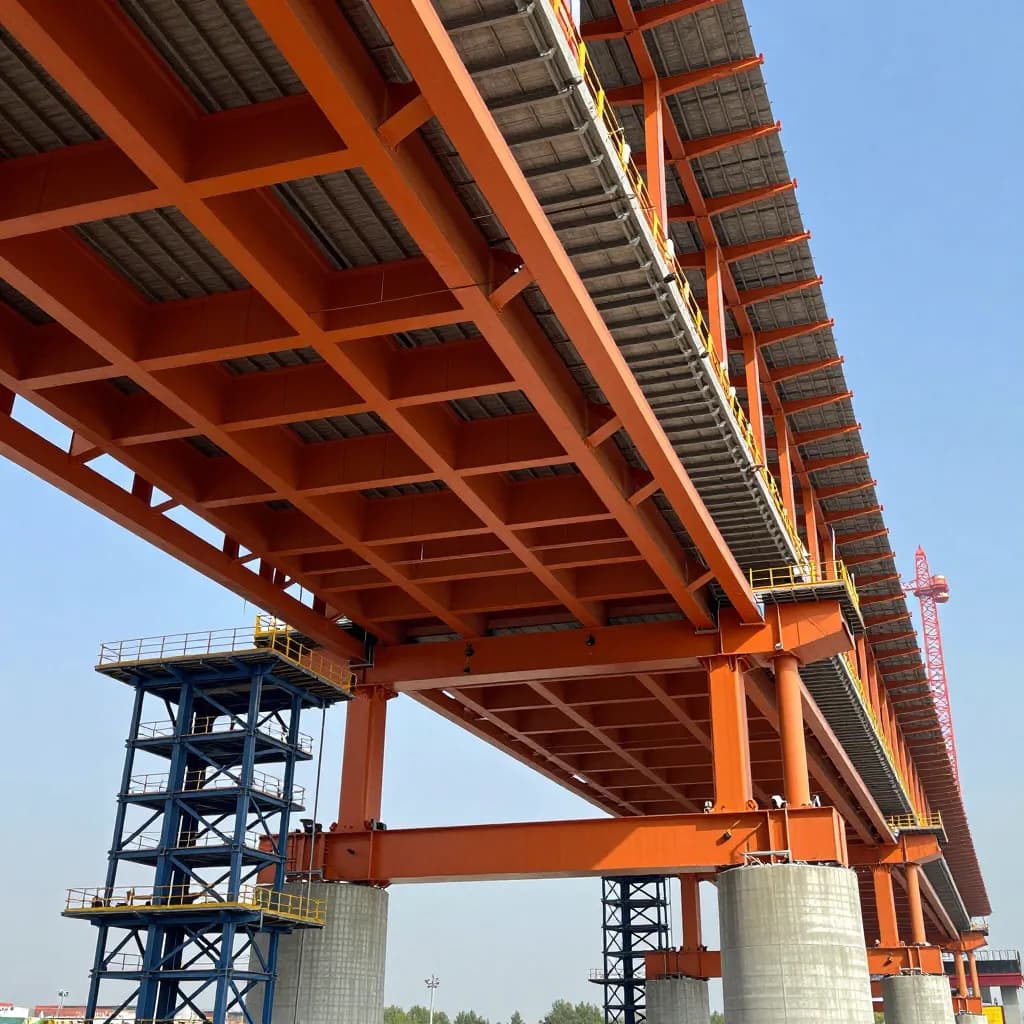
| Infrastructure Type | Count/Extent | Coating Relevance |
|---|---|---|
| Bridges | 617,000 | Structural steel, expansion joints, railings |
| Highway miles | 4.1 million | Guardrails, sign supports, lighting |
| Rail track | 140,000 miles | Rail components, signals, crossings |
| Traffic signals | 300,000+ intersections | Poles, cabinets, hardware |
| Airports | 5,000+ | Fencing, lighting, ground support |
Ready to Start Your Project?
From one-off customs to 15,000-part production runs — get precise pricing in 24 hours.
On This Page
Infrastructure Coating: Powder Coating for Bridges, Highway Hardware, and Transportation Assets
The Infrastructure Corrosion Challenge
Scale of the Problem
Corrosion Costs
The National Association of Corrosion Engineers (NACE) estimates:
- Direct corrosion costs: $276 billion annually (3.1% of GDP)
- Infrastructure share: Significant portion of total
- Coating as prevention: Most cost-effective corrosion control method
Environmental Exposure Factors
| Factor | Impact on Coatings | Infrastructure Example |
|---|---|---|
| Salt spray | Accelerated corrosion, blistering | Coastal bridges, de-iced highways |
| Thermal cycling | Film stress, cracking, delamination | All outdoor infrastructure |
| UV radiation | Binder degradation, chalking, color loss | Exposed steel structures |
| Acid rain | Binder hydrolysis, substrate corrosion | Industrial regions |
| Mechanical abrasion | Physical wear, coating loss | Guardrails, traffic hardware |
| Immersion | Water permeation, under-film corrosion | Bridge pilings, culverts |
Powder Coating for Infrastructure
Bridge Applications
| Component | Coating Requirement | Powder Solution |
|---|---|---|
| Structural steel (new) | Long-term corrosion protection | Zinc-rich primer + polyester topcoat |
| Structural steel (maintenance) | Overcoating compatibility | Epoxy or polyester systems |
| Expansion joints | Flexibility, abrasion resistance | Flexible polyurethane powder |
| Railings and fencing | Weathering, impact resistance | Super-durable polyester |
| Bearings and hardware | Chemical resistance, lubricity | Nylon or epoxy powder |
| Drainage systems | Chemical resistance, flow | Smooth epoxy powder |
Highway Hardware
| Component | Current Coating | Powder Coating Advantage |
|---|---|---|
| Guardrails | Hot-dip galvanizing + liquid paint | Superior adhesion, color options |
| Sign supports | Galvanizing | Extended color life, no fading |
| Lighting poles | Liquid paint or anodizing | Superior weathering, chip resistance |
| Traffic signal poles | Liquid paint | Longer service life, reduced maintenance |
| Bridge drain scuppers | Liquid paint | Better edge coverage, chemical resistance |
| Noise barrier panels | Liquid paint or PVC | Superior UV resistance, durability |
Rail Infrastructure
| Component | Coating Challenge | Powder Solution |
|---|---|---|
| Signal poles and cabinets | Weathering, vandalism | Graffiti-resistant, durable finish |
| Crossing gates and hardware | Impact, weathering | Tough, flexible finish |
| Platform structures | Public contact, weathering | Abrasion-resistant, attractive |
| Fencing | Long-term weathering | Super-durable polyester, 15+ year life |
| Third rail covers | Electrical insulation, weathering | Insulating epoxy powder |
Performance Specifications
AASHTO and DOT Standards
| Standard | Requirement | Powder Coating Compliance |
|---|---|---|
| AASHTO M300 | Inorganic zinc-rich primer | Zinc-rich powder primer alternatives |
| SSPC-Paint 20 | Zinc-rich coating specification | Powder formulations meet requirements |
| State DOT specs | Vary by state | Many states approve powder coatings |
Salt Spray Performance
| System | ASTM B117 Hours | Infrastructure Suitability |
|---|---|---|
| Hot-dip galvanizing alone | 500-1,000 | Moderate environments |
| Galvanizing + powder topcoat | 2,000-4,000 | Severe environments |
| Zinc-rich powder primer + topcoat | 3,000-5,000+ | Marine, industrial |
| Epoxy powder (immersion) | 2,000-5,000+ | Splash zones, immersion |
Weathering Performance
| Coating Type | Expected Service Life | Maintenance Interval |
|---|---|---|
| Liquid alkyd | 3-5 years | Frequent touch-up |
| Liquid epoxy/urethane | 7-10 years | Periodic re-coat |
| Super-durable polyester powder | 15-20 years | Minimal maintenance |
| Fluoropolymer powder | 20-30+ years | Very minimal maintenance |
Economic Analysis for Infrastructure
Lifecycle Cost Comparison
For a highway guardrail system (per mile):
| Cost Element | Liquid Coating | Powder Coating | 20-Year Savings |
|---|---|---|---|
| Initial coating | $15,000 | $20,000 | -$5,000 |
| Maintenance (re-coat at 5, 10, 15 years) | $45,000 | $5,000 | $40,000 |
| Traffic control during maintenance | $30,000 | $3,000 | $27,000 |
| Disposal of waste | $5,000 | $500 | $4,500 |
| 20-year total | $95,000 | $28,500 | $66,500 |
Example estimates; actual costs vary by project
Maintenance Burden Reduction
Infrastructure maintenance is expensive and disruptive:
- Lane closures: Traffic delays, safety risks
- Equipment mobilization: Cranes, lifts, traffic control
- Environmental controls: Containment for paint overspray
- Waste disposal: Hazardous paint waste management
- Weather windows: Limited suitable application conditions
Powder coating's longer service life reduces maintenance frequency and associated disruption.
Worker Protection in Infrastructure Maintenance
Bridge Painting Hazards
Bridge maintenance painters face severe exposures:
| Hazard | Source | Exposure Scenario |
|---|---|---|
| Lead | Old paint removal | Abrasive blasting, scraping |
| Silica | Abrasive blasting | Sand, garnet, coal slag media |
| Solvents | Paint thinners, cleaners | Confined spaces over water |
| Isocyanates | Polyurethane coatings | Spray application on platforms |
| Falls | Working at height | Suspended platforms, scaffolding |
| Confined spaces | Inside box girders | Poor ventilation, rescue difficulty |
The Confined Space Problem
Bridge painting often occurs in confined spaces:
- Box girders: Poor ventilation, solvent accumulation
- Inside piers: Limited access, restricted airflow
- Under decks: Enclosed areas with overspray
These conditions maximize solvent concentrations and minimize natural ventilation - the worst possible combination for worker health.
Powder Coating Worker Benefits
| Hazard | Liquid Coating Exposure | Powder Coating Elimination |
|---|---|---|
| Solvent inhalation | High in confined spaces | Eliminated |
| Isocyanate exposure | Present in polyurethane | Eliminated |
| Paint waste (hazardous) | Generated from overspray | Minimal |
| Solvent waste disposal | Significant burden | Eliminated |
| Fire hazard | Flammable solvents present | Reduced |
Environmental Benefits for Infrastructure
VOC Emissions from Bridge Painting
Large bridge painting projects generate substantial VOC emissions:
- Golden Gate Bridge: ~10,000 gallons of paint per maintenance cycle
- Typical highway bridge: 500-2,000 gallons
- VOC content: 2-5 lbs/gallon for conventional paint
- Total VOCs: Thousands of pounds per project
Powder coating eliminates these emissions for applicable components.
Waterway Protection
Bridge painting over water creates environmental risks:
- Overspray into water: Paint and solvent contamination
- Wastewater from cleaning: Contaminated washwater
- Abrasive blast waste: Paint-impregnated grit disposal
- Spills and leaks: During material handling
Powder coating reduces these risks through:
- No liquid spills
- No solvent runoff
- Contained overspray (in booth, for shop application)
- No wastewater generation
Specification Recommendations
For New Infrastructure
- Specify powder coating for metal components in fabrication shop
- Require zinc-rich primer + super-durable topcoat for severe environments
- Mimimum film thickness: 75-150 microns per specification
- Salt spray requirement: Per AASHTO or project-specific
- Weathering requirement: Per AAMA 2604 or 2605 for architectural
For Maintenance
- Evaluate powder coating for replaceable components
- Specify low-VOC liquid when powder is not feasible
- Require containment for paint removal over water
- Mandate lead-safe practices for removal of old coatings
- Require air monitoring for confined space work
Conclusion
Infrastructure corrosion is a multibillion-dollar problem that demands effective, durable, and economically viable coating solutions. Powder coatings meet this demand with corrosion resistance that exceeds conventional liquid systems, service life that reduces maintenance burden, and material efficiency that minimizes waste. For the workers who maintain bridges, highways, and rail systems, powder coating eliminates the solvent and isocyanate exposures that make infrastructure painting one of the most hazardous coating applications.
For government agencies managing the nation's infrastructure, powder coating specification is not merely a coating choice. It is an investment in asset longevity, worker safety, environmental protection, and fiscal responsibility. The bridge that stands 20 years without re-coating, the highway hardware that maintains its appearance and function, the maintenance worker who returns home without solvent-induced brain damage - these are the returns on the decision to specify powder coating for infrastructure.
In an era of infrastructure investment, the choice of coating technology affects not only the initial construction cost but the lifecycle cost, maintenance burden, worker health, and environmental impact of every bridge, highway, and rail line. Powder coating offers the performance, durability, and safety that infrastructure demands.
Ready to Start Your Project?
From one-off customs to 15,000-part production runs — get precise pricing in 24 hours.