Powder coating is designed to be permanent, which is exactly what makes it such a good protective finish — and exactly what makes it challenging to remove when you need to. There are several legitimate reasons why powder coating removal becomes necessary, and understanding your specific situation helps determine the best removal method.
Consumer
How to Remove Powder Coating: Chemical Stripping, Heat, Blasting, and DIY Methods
Sundial Powder Coating·April 22, 2026·12 min
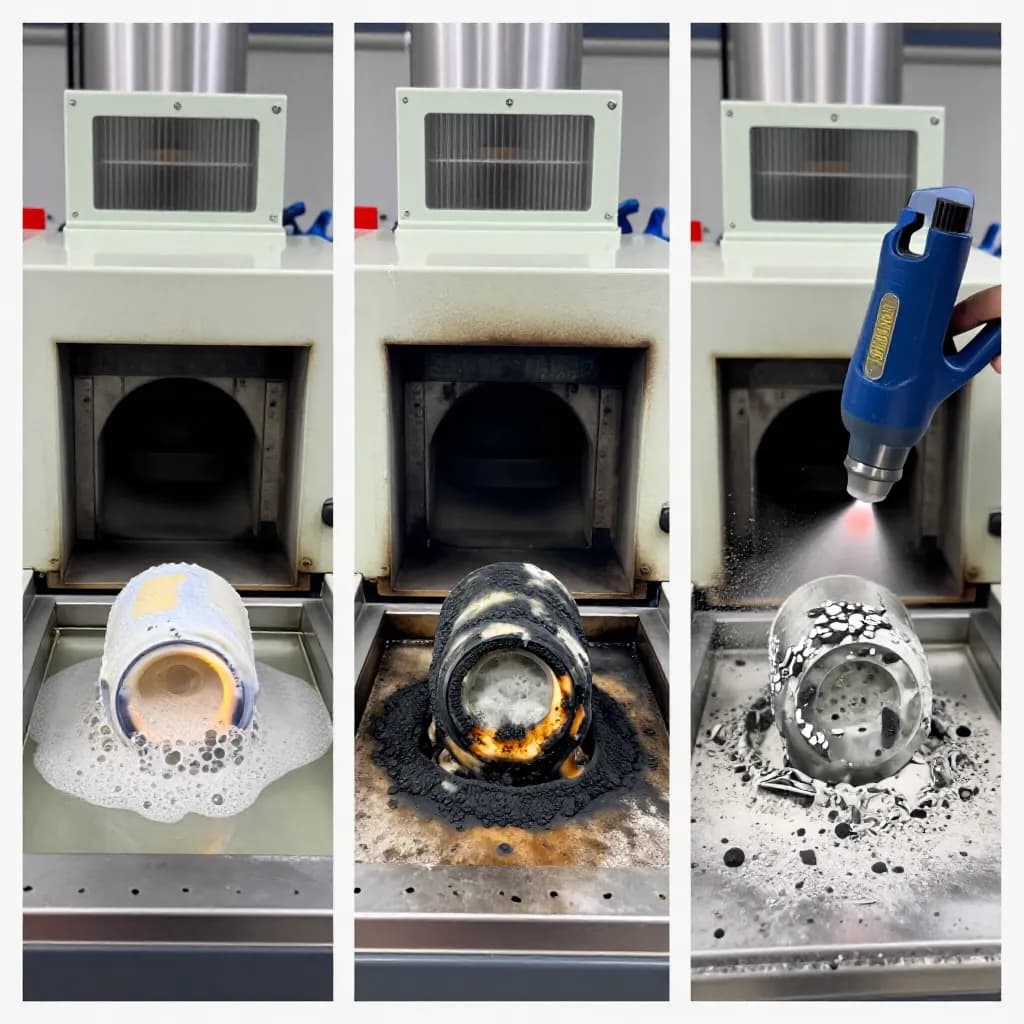
Recoating is the most common reason for removal. When a powder-coated part needs a new color, has been damaged beyond touch-up repair, or has reached the end of its coating life after years of service, the old coating must be removed before a new powder coating can be applied. Applying new powder over old, degraded coating will result in adhesion failures and a poor-quality finish.
Ready to Start Your Project?
From one-off customs to 15,000-part production runs — get precise pricing in 24 hours.
On This Page
Why You Might Need to Remove Powder Coating
Restoration projects frequently require powder coating removal. Vintage car parts, antique furniture, and architectural hardware that were powder coated at some point may need to be returned to bare metal for replating, patina development, or application of a period-correct finish. Collectors and restorers often need to strip powder coating to access the original metal surface.
Manufacturing defects — wrong color, contamination, orange peel, runs, or adhesion failures — sometimes require stripping and recoating rather than attempting to repair the defective coating. Quality-conscious coating shops will strip and redo a part rather than ship a substandard finish.
Whatever the reason, the goal is the same: completely remove the powder coating without damaging the underlying metal substrate. The method you choose depends on the type of metal, the size and geometry of the part, the number of parts to be stripped, and whether you are doing the work yourself or having it done professionally.
Chemical Stripping: The Most Versatile Method
Chemical stripping uses specialized chemical solutions to dissolve or soften the powder coating so it can be washed or scraped off the metal surface. This is the most versatile removal method because it works on parts of any size and geometry, does not generate heat that could warp thin parts, and does not remove base metal the way abrasive blasting does.
Methylene chloride-based strippers are the most aggressive and effective chemical strippers for powder coating. These products penetrate and dissolve the cross-linked polymer matrix of cured powder coating, typically softening the coating within 15-60 minutes depending on the coating thickness and formulation. The softened coating can then be pressure washed or scraped off. Methylene chloride strippers work on all common powder coating chemistries including polyester, epoxy, hybrid, and polyurethane.
However, methylene chloride is a hazardous chemical that requires proper ventilation, chemical-resistant gloves, and eye protection. Regulatory restrictions on methylene chloride have increased in recent years due to health concerns, and some jurisdictions have limited or banned its use. Always follow the manufacturer's safety instructions and local regulations when using these products.
Alkaline strippers offer a less hazardous alternative. These water-based solutions use strong alkaline chemistry — typically sodium hydroxide or potassium hydroxide based — to break down the powder coating. Alkaline strippers are slower than methylene chloride, often requiring immersion for several hours or overnight, but they are safer to handle and more environmentally friendly. They work well on steel and iron parts but should not be used on aluminum, as strong alkaline solutions will attack and dissolve aluminum.
For DIY users, consumer-grade paint strippers available at hardware stores can work on powder coating, though they are generally slower and may require multiple applications. Products marketed specifically for powder coating removal will be more effective than general-purpose paint strippers. Regardless of the product chosen, always test on a small area first and allow adequate time for the stripper to work before attempting removal.
Thermal Removal: Burn-Off Ovens and Heat Guns
Thermal removal uses high temperatures to decompose the powder coating, reducing it to ash that can be brushed or washed off the metal surface. This method is fast and effective for steel and iron parts but has important limitations and safety considerations.
Burn-off ovens, also called pyrolysis ovens or thermal stripping ovens, are the professional standard for thermal powder coating removal. These specialized ovens heat parts to 370-430 degrees Celsius in a controlled atmosphere, decomposing the organic powder coating into carbon ash and volatile gases. The gases are captured and incinerated in an afterburner to prevent air pollution. After the burn-off cycle, which typically takes 2-4 hours, the parts are removed and the residual ash is washed or blasted off, leaving clean bare metal.
Burn-off ovens are highly efficient for batch processing of steel parts — racks of hooks, fixtures, and rejected parts can be stripped in a single cycle. Most professional powder coating shops have burn-off ovens for stripping their coating racks and reworking defective parts. For consumers, some shops offer burn-off stripping as a service.
Heat guns can be used for small-scale DIY powder coating removal. A high-temperature heat gun — 500-600 degrees Celsius — can soften and blister powder coating on small areas, allowing it to be scraped off with a putty knife or wire brush. This method is slow and labor-intensive, suitable only for small parts or localized removal. It requires patience and care to avoid overheating the metal, which can cause warping or changes to the metal's temper.
Critical limitation: thermal removal should never be used on aluminum parts. The temperatures required to decompose powder coating are close to or above the melting point of some aluminum alloys, and even temperatures below melting can permanently alter the temper and mechanical properties of heat-treated aluminum. Aluminum parts should always be stripped using chemical or mechanical methods.
Safety is paramount with thermal removal. The decomposition of powder coating produces toxic fumes including carbon monoxide and potentially hazardous organic compounds. Professional burn-off ovens have afterburners and ventilation systems to handle these emissions safely. DIY heat gun stripping should only be done outdoors or in very well-ventilated areas with appropriate respiratory protection.
Media Blasting: Mechanical Removal
Media blasting uses compressed air to propel abrasive particles against the coated surface, physically removing the powder coating through impact and abrasion. This method is effective, widely available, and works on all metal types, but it requires proper technique to avoid damaging the substrate.
Aluminum oxide is the most common blasting media for powder coating removal. It is hard, aggressive, and reusable, making it cost-effective for production stripping. Aluminum oxide blasting removes powder coating quickly and simultaneously creates a surface profile suitable for recoating. For steel parts that will be recoated with powder, aluminum oxide blasting accomplishes both stripping and surface preparation in a single step.
Garnet media is slightly less aggressive than aluminum oxide and produces a smoother surface profile. It is a good choice for parts where a finer finish is desired or where the substrate is softer. Garnet is commonly used for stripping powder coating from aluminum parts, where the lower aggressiveness reduces the risk of surface damage.
Glass bead blasting is the gentlest common blasting method and is used when surface preservation is critical. Glass beads remove powder coating through peening action rather than cutting, leaving a smooth, satin finish on the metal surface. This method is slower than aluminum oxide or garnet but is preferred for decorative parts, thin-gauge metal, and parts with fine details that could be damaged by more aggressive media.
Soda blasting uses sodium bicarbonate (baking soda) as the blast media. It is non-destructive to the metal substrate, making it safe for aluminum, brass, copper, and other soft metals. Soda blasting is also water-soluble, so residual media can be rinsed away easily. The downside is that soda blasting does not create a surface profile for recoating, so a secondary blasting step with conventional media may be needed if the part will be powder coated again.
For DIY users, portable blast cabinets and pressure-pot blasters are available for home use. These are effective for small parts like automotive brackets, hardware, and tools. Larger parts may require a professional blasting service or a walk-in blast room.
DIY Methods: What Works at Home
For consumers tackling powder coating removal at home, several approaches are practical depending on the tools and space available. DIY removal is most feasible for small to medium-sized parts — hardware, automotive brackets, bicycle frames, small furniture pieces, and similar items.
Chemical stripping at home is the most accessible method. Purchase a powder coating-specific chemical stripper or a heavy-duty paint stripper from a hardware store. Apply the stripper generously to the coated surface, cover with plastic wrap to prevent evaporation, and allow it to work for the recommended time — typically several hours to overnight. Once the coating has softened and blistered, scrape it off with a plastic scraper or putty knife, then wash the part with water and a scrub brush to remove residue. Multiple applications may be needed for thick coatings.
A small blast cabinet is a worthwhile investment for anyone who regularly works with metal parts. Benchtop blast cabinets are available at reasonable cost and can strip powder coating from parts that fit inside the cabinet. Using aluminum oxide media at moderate pressure, a blast cabinet can strip a small part in minutes. The enclosed cabinet contains the dust and spent media, making it cleaner and safer than open blasting.
Angle grinders with stripping discs or flap wheels can remove powder coating from flat and gently curved surfaces. This method is fast but aggressive — it is easy to gouge the metal or create an uneven surface if you are not careful. Use a light touch and keep the grinder moving to avoid concentrating material removal in one spot. This approach works best for parts that will be recoated, where minor surface imperfections will be hidden by the new coating.
Wire wheels on a bench grinder or drill can remove powder coating from small parts and hard-to-reach areas. Knotted wire wheels are more aggressive and faster, while crimped wire wheels are gentler and less likely to damage the substrate. Wear eye protection and heavy gloves when using wire wheels, as broken wire bristles can be ejected at high speed.
Oven cleaning with a self-cleaning oven cycle is sometimes suggested for small steel parts. The self-cleaning cycle reaches approximately 480 degrees Celsius, which will decompose powder coating. However, this method produces toxic fumes inside your home, can damage your oven, and should generally be avoided. If you want to use thermal removal at home, an outdoor propane torch on steel parts is a safer alternative, though it requires careful technique to avoid overheating.
Choosing the Right Method for Your Situation
Selecting the best powder coating removal method depends on several factors specific to your situation. Here is a decision framework to help you choose.
Consider the metal type first. Aluminum parts should never be thermally stripped — use chemical stripping or gentle media blasting instead. Steel and iron parts can use any method. Brass, copper, and other soft metals should use chemical stripping or soda blasting to avoid surface damage from aggressive abrasives.
Part size and quantity matter. For a single small part, DIY chemical stripping or a blast cabinet is practical. For multiple parts or large items like a bicycle frame or furniture piece, professional chemical stripping or media blasting is more efficient. For production quantities — dozens or hundreds of parts — a burn-off oven or automated blasting system is the most economical approach.
Surface preservation requirements influence the choice. If the part will be recoated with powder, aggressive stripping methods are acceptable because the new coating will cover any surface roughness. If the part needs to retain a smooth or polished surface — for replating, clear coating, or bare metal display — gentler methods like chemical stripping, soda blasting, or glass bead blasting are necessary.
Time constraints play a role. Media blasting is the fastest method for individual parts — minutes rather than hours. Chemical stripping takes hours to overnight but requires minimal active labor. Thermal stripping in a burn-off oven takes 2-4 hours but can process many parts simultaneously.
Environmental and safety considerations should not be overlooked. Chemical strippers require proper ventilation and disposal. Thermal methods produce toxic fumes. Media blasting generates dust that requires containment and respiratory protection. Choose the method that you can perform safely with the equipment and space available to you.
When in doubt, consult a professional powder coating shop. Most shops offer stripping services and can recommend the best approach for your specific parts and requirements.
Preparing Stripped Parts for Recoating
If the goal of removing powder coating is to apply a new coating, the stripped surface must be properly prepared before the new powder is applied. The preparation requirements depend on the stripping method used and the condition of the exposed metal.
After chemical stripping, the metal surface should be thoroughly rinsed to remove all chemical residue. Any remaining stripper left on the surface will contaminate the new coating and cause adhesion failures. A neutralizing rinse may be required depending on the stripper chemistry — acid-based strippers should be neutralized with an alkaline rinse, and vice versa. After rinsing, the surface should be lightly blasted to create a fresh surface profile for the new coating.
After thermal stripping, residual ash must be completely removed from the metal surface. This is typically done by media blasting, which removes the ash and simultaneously creates the surface profile needed for recoating. Any ash left on the surface will act as a contaminant layer that prevents adhesion of the new powder coating.
After media blasting, the surface is generally ready for pretreatment and coating, provided the blasting was thorough and the surface is free of embedded media particles. A compressed air blow-off removes loose dust and particles from the surface before pretreatment.
Regardless of the stripping method, the time between stripping and recoating should be minimized. Bare steel begins to flash rust within hours in humid conditions, and aluminum forms a passive oxide layer that can reduce coating adhesion. Ideally, stripped parts should be pretreated and coated within the same day. If storage between stripping and coating is unavoidable, the parts should be kept in a dry, climate-controlled environment and may need to be lightly re-blasted before coating to remove any surface oxidation that has formed.
Pretreatment — phosphate wash, conversion coating, or similar — should be applied after stripping and before powder coating, just as it would be for new parts. Do not skip pretreatment simply because the part has been stripped; the pretreatment provides adhesion promotion and corrosion protection at the metal-coating interface that is essential for long-term coating performance.
Frequently Asked Questions
What is the easiest way to remove powder coating at home?
Chemical stripping is the most accessible DIY method. Apply a heavy-duty paint stripper or powder coating-specific stripper, cover with plastic wrap, and let it work for several hours or overnight. Scrape off the softened coating and wash the surface clean. Multiple applications may be needed for thick coatings. A small blast cabinet is also effective for parts that fit inside it.
Can you use a heat gun to remove powder coating?
Yes, but only on steel or iron parts, and it is slow and labor-intensive. A high-temperature heat gun at 500-600 degrees Celsius can soften powder coating for scraping. This method works for small areas or individual parts but is impractical for large surfaces. Never use heat to strip powder coating from aluminum, as the temperatures can damage the metal.
How do professionals remove powder coating?
Professional shops typically use burn-off ovens for steel parts, which decompose the coating at 370-430 degrees Celsius, or chemical immersion tanks for batch stripping. Media blasting with aluminum oxide is used for both stripping and surface preparation. The method chosen depends on the metal type, part size, and whether the part will be recoated.
Can you sand off powder coating?
Sanding can remove powder coating but is extremely slow and labor-intensive for anything beyond a very small area. Powder coating is much harder than conventional paint, so it wears through sandpaper quickly. An angle grinder with a stripping disc or flap wheel is faster for flat surfaces, but care must be taken not to gouge the metal underneath.
Will aircraft stripper remove powder coating?
Methylene chloride-based aircraft strippers are among the most effective chemical strippers for powder coating, typically softening the coating within 15-60 minutes. However, these products are hazardous and increasingly regulated. Always use proper protective equipment and follow local regulations. Non-methylene chloride alternatives are available but work more slowly.
How do you remove powder coating from aluminum?
Use chemical stripping with a non-alkaline stripper or gentle media blasting with glass bead or soda media. Never use thermal stripping on aluminum, as the high temperatures can warp the metal and alter its mechanical properties. Avoid strong alkaline chemical strippers, which will attack and dissolve aluminum. Acid-based or solvent-based strippers are safe for aluminum.
Ready to Start Your Project?
From one-off customs to 15,000-part production runs — get precise pricing in 24 hours.