When powder coating is correctly applied over properly prepared and pretreated metal, it forms an exceptionally strong bond that should not peel under normal service conditions. The combination of electrostatic attraction during application, mechanical interlocking with the surface profile, chemical bonding through the conversion coating layer, and thermal fusion during curing creates an adhesion system that is remarkably robust.
Consumer
Does Powder Coating Peel Off? Causes, Prevention, and Solutions
Sundial Powder Coating·April 22, 2026·11 min
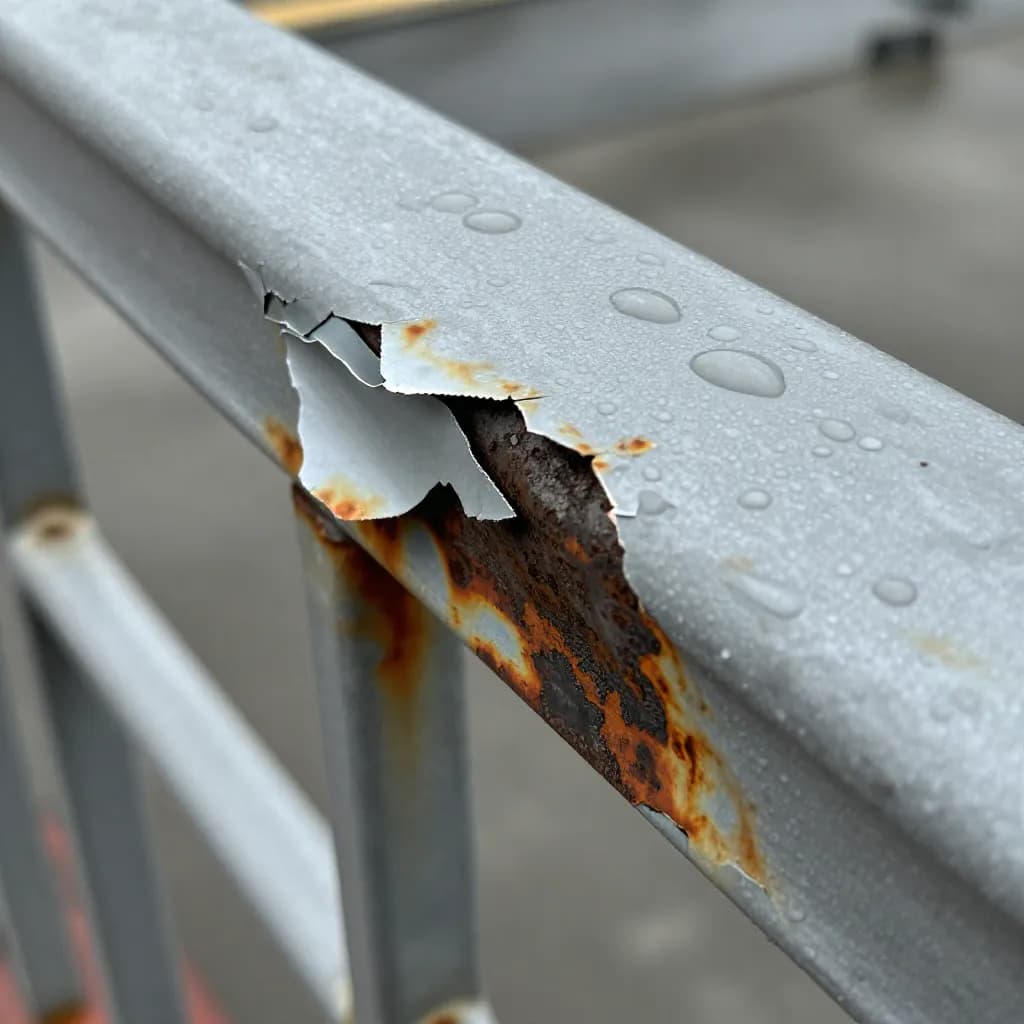
If powder coating is peeling from a product, something went wrong during the preparation or application process. Peeling is not an inherent weakness of powder coating technology — it is a symptom of a process failure that can be identified and prevented. Understanding the common causes of peeling helps consumers evaluate product quality and helps manufacturers eliminate adhesion problems from their coating operations.
Ready to Start Your Project?
From one-off customs to 15,000-part production runs — get precise pricing in 24 hours.
On This Page
Properly Applied Powder Coating Should Never Peel
The most common causes of powder coating peeling are inadequate surface preparation, contamination at the coating-substrate interface, improper pretreatment, under-curing, and incompatible substrate materials. Each of these causes produces characteristic peeling patterns that can help diagnose the root cause and guide corrective action.
This article examines each cause of peeling in detail, explains how to identify the root cause from the peeling pattern, and provides practical prevention strategies for both manufacturers and consumers.
Pretreatment Failure: The Leading Cause of Peeling
Inadequate or failed pretreatment is responsible for the majority of powder coating peeling problems. Pretreatment serves the dual purpose of cleaning the substrate and creating a conversion coating layer that promotes adhesion. When either function is compromised, the coating's bond to the metal is weakened, and peeling can occur under mechanical stress, thermal cycling, or moisture exposure.
Insufficient cleaning leaves residual oils, greases, drawing compounds, or other contaminants on the metal surface. These contaminants create a weak boundary layer between the metal and the coating that prevents intimate contact and chemical bonding. The coating may appear well-adhered initially but peels away under stress, often in large sheets with a clean separation at the contamination layer.
Conversion coating failures can result from depleted chemical baths, incorrect bath concentrations, inadequate contact time, or improper rinse water quality. A thin, incomplete, or poorly formed conversion coating provides insufficient adhesion promotion and corrosion protection. The resulting peeling often appears as small blisters that grow and coalesce, eventually lifting the coating from the surface.
Rinse water quality is a frequently overlooked factor. Contaminated rinse water can deposit salts, silicates, or other residues on the conversion-coated surface that interfere with coating adhesion. Deionized water rinses are recommended for the final rinse stage to minimize residue deposition.
For manufacturers, maintaining pretreatment quality requires regular monitoring of bath chemistry, temperature, and contact times, along with periodic testing of conversion coating weight and adhesion performance. Pretreatment is a chemical process that requires the same process control discipline as any other chemical operation.
Contamination: Hidden Causes of Adhesion Loss
Surface contamination is an insidious cause of powder coating peeling because the contaminants are often invisible to the naked eye. Even microscopic amounts of certain substances can prevent proper adhesion, and contamination can occur at multiple points in the manufacturing process — before, during, or after pretreatment.
Silicone contamination is one of the most problematic contaminants for powder coating adhesion. Silicone-based lubricants, mold release agents, and personal care products create an extremely thin but tenacious film on metal surfaces that resists removal by standard cleaning processes. Even parts per million levels of silicone contamination can cause widespread adhesion failure. Sources include silicone-based cutting fluids, conveyor lubricants, and even hand lotions used by workers handling parts before coating.
Weld spatter and heat-affected zones around welds present adhesion challenges because the metal surface chemistry and oxide structure differ from the parent material. These areas may not respond to pretreatment chemicals in the same way as the surrounding metal, resulting in localized adhesion weakness and peeling at or near weld lines.
Outgassing from porous substrates is a common cause of peeling on cast iron, cast aluminum, and hot-dip galvanized steel. These substrates contain trapped gases or moisture that expand during the curing process, creating bubbles and voids beneath the coating. As these voids grow, they can lift the coating from the surface, causing blistering and peeling. Pre-baking porous substrates before coating drives out trapped gases and prevents this problem.
Moisture trapped beneath the coating, either from inadequate drying after pretreatment or from humid ambient conditions during application, can cause osmotic blistering when the coated part is exposed to moisture in service. Water molecules migrate through the coating to the trapped moisture at the interface, creating osmotic pressure that lifts the coating from the surface.
Environmental contamination in the coating area, including airborne oil mist, dust, and chemical vapors, can deposit on parts between pretreatment and coating application, compromising adhesion. Maintaining clean air in the coating area and minimizing the time between pretreatment and coating application reduces this risk.
Cure-Related Peeling Problems
Improper curing can cause powder coating to peel, though the mechanism differs from pretreatment-related peeling. Under-cured powder coating has not fully developed its cross-linked molecular network, resulting in a film that is softer, weaker, and less well-bonded to the substrate than a properly cured coating. Under-cured coatings may peel when subjected to mechanical stress, solvent exposure, or thermal cycling that a fully cured coating would withstand.
Under-curing occurs when the part does not reach the required metal temperature for the required duration during the curing process. Common causes include oven temperature set too low, insufficient time in the oven, heavy parts that take longer to heat through, and oven temperature variations across the load. Parts at the center of a densely loaded oven may receive less heat than parts at the edges, resulting in inconsistent cure across the batch.
Over-curing, while less commonly associated with peeling, can also contribute to adhesion problems. Excessive cure temperatures or times can cause thermal degradation of the coating, making it brittle and prone to cracking and delamination. Over-curing can also degrade the conversion coating layer beneath the powder, weakening the adhesion foundation.
Cure verification is essential for preventing cure-related peeling. Methods include oven temperature profiling using thermocouples attached to representative parts, solvent rub testing to assess cross-link development, and differential scanning calorimetry for precise measurement of cure completion. Regular cure verification catches problems before they result in field failures.
For complex part geometries with varying metal thicknesses, cure schedules must be designed to ensure that the thickest sections reach the required temperature while avoiding over-curing of thinner sections. This may require extended cure times at lower temperatures or staged heating profiles.
Substrate Compatibility Issues
Not all substrates are equally compatible with powder coating, and applying powder coating to an incompatible or poorly suited substrate can result in peeling. Understanding substrate-specific challenges helps prevent adhesion failures.
Hot-dip galvanized steel is one of the most challenging substrates for powder coating adhesion. The zinc surface can be chemically reactive, and the galvanizing process can leave surface contaminants including flux residues and zinc oxide that interfere with adhesion. Additionally, the zinc layer can outgas during curing, creating voids beneath the coating. Successful powder coating of galvanized steel requires specialized pretreatment processes and often a pre-bake step to drive out trapped gases.
Aluminum alloys vary in their compatibility with powder coating depending on the alloy composition and temper. Some alloys form tenacious oxide layers that resist conversion coating, while others may contain alloying elements that interfere with pretreatment chemistry. Chromate-free pretreatment processes for aluminum have been developed to address environmental concerns, but they require careful process control to achieve adequate adhesion.
Cast metals including cast iron and cast aluminum present porosity challenges. The microscopic pores in cast surfaces trap air, moisture, and contaminants that can cause outgassing during cure and osmotic blistering in service. Pre-baking at temperatures above the cure temperature drives out trapped volatiles and is standard practice for cast substrates.
Multi-metal assemblies create galvanic corrosion risks at the interface between dissimilar metals, which can undermine coating adhesion from beneath. Proper design to isolate dissimilar metals and appropriate pretreatment for each metal type helps prevent this failure mode.
Previously coated surfaces require careful evaluation before recoating. Old coatings that are poorly adhered, contaminated, or chemically incompatible with the new powder coating can cause peeling of the entire system. Complete removal of the old coating followed by fresh pretreatment is the safest approach for recoating applications.
Diagnosing Peeling: Reading the Failure Pattern
The pattern and characteristics of peeling provide valuable diagnostic information about the root cause. Experienced coating professionals can often identify the cause of peeling by examining how and where the coating separates from the substrate.
Clean separation at the metal surface, where the underside of the peeled coating is smooth and the metal surface is clean, typically indicates a pretreatment failure or contamination issue. The coating never formed a proper bond with the metal, and the separation occurs at the weakest point — the coating-metal interface.
Cohesive failure within the coating film, where the coating splits within its own thickness leaving residue on both the metal and the peeled piece, suggests an over-cure or formulation problem. The coating bonded adequately to the metal but the film itself is weakened, causing internal fracture rather than interface separation.
Blistering that progresses to peeling indicates moisture-related failure. Osmotic blistering creates dome-shaped raised areas that eventually rupture and peel. The presence of corrosion products beneath the blisters confirms that moisture has reached the metal surface and initiated corrosion that undermines adhesion.
Localized peeling at edges, corners, or weld areas suggests inadequate coating thickness or pretreatment at these specific locations. Edges and welds are inherently more difficult to coat and pretreat, and localized failures at these points are common when process controls are insufficient.
Perimeter peeling that starts at cut edges and progresses inward indicates corrosion-driven adhesion loss. Moisture enters at the unprotected cut edge, initiates corrosion beneath the coating, and the expanding corrosion products progressively lift the coating from the metal surface.
Documenting the peeling pattern with photographs and notes before attempting repair provides valuable information for root cause analysis and corrective action.
Prevention: Ensuring Powder Coating Stays Bonded
Preventing powder coating peeling requires a systematic approach to quality control across the entire coating process. The following practices, when consistently applied, virtually eliminate peeling as a failure mode.
Establish and maintain rigorous pretreatment process controls. Monitor bath chemistry daily, maintain temperature and contact time within specified ranges, and test conversion coating quality regularly using coating weight measurements and adhesion testing. Replace or replenish chemical baths on schedule rather than waiting for failures to occur.
Implement contamination prevention measures throughout the manufacturing process. Eliminate silicone-based products from the facility, require glove use for parts handling, maintain clean conveyor systems, and ensure adequate air filtration in the coating area. Conduct regular contamination audits to identify and eliminate sources of surface contamination.
Verify cure quality on every production run using oven temperature profiling and periodic solvent rub testing. Maintain calibrated oven temperature recording equipment and establish clear acceptance criteria for cure verification results. Investigate and correct any cure deviations immediately.
Perform adhesion testing on production parts at defined frequencies. Cross-cut adhesion testing according to ASTM D3359 provides a quick, reliable assessment of adhesion quality. Establish minimum acceptance criteria and stop production if adhesion results fall below the threshold.
For challenging substrates such as galvanized steel, cast metals, and aluminum alloys, develop substrate-specific pretreatment and coating procedures validated through testing. Do not assume that a process optimized for mild steel will work equally well on other substrates.
Train all personnel involved in the coating process on the importance of each process step and the consequences of shortcuts or deviations. Many peeling problems trace back to human factors — skipped steps, incorrect settings, or contamination introduced through careless handling. A well-trained workforce is the most effective quality assurance tool available.
Frequently Asked Questions
Why is my powder coating peeling off?
The most common causes are inadequate pretreatment, surface contamination (especially silicone), under-curing, and substrate outgassing. Peeling indicates a process failure — properly applied powder coating on well-prepared metal forms an extremely strong bond that should not peel under normal conditions.
Can you fix peeling powder coating without stripping it all off?
For localized peeling, you can remove the loose coating, prepare the exposed area, and apply touch-up. However, if peeling is widespread, it indicates a systemic adhesion problem and the entire coating should be stripped, the root cause corrected, and the part recoated for reliable results.
How do you test powder coating adhesion?
The cross-cut test (ASTM D3359) is the standard method: a grid is cut through the coating, tape is applied and pulled away, and coating removal is rated from 0B (complete failure) to 5B (no removal). Pull-off adhesion testing (ASTM D4541) provides quantitative adhesion strength in megapascals.
Does powder coating peel off galvanized steel?
Galvanized steel is one of the most challenging substrates for powder coating adhesion due to zinc surface reactivity, flux residues, and outgassing. Successful coating requires specialized pretreatment and often a pre-bake step. Without these measures, peeling is a common problem.
How long should powder coating last without peeling?
Properly applied powder coating on well-pretreated metal should maintain adhesion for the full service life of the coating — typically 15-25 years for exterior applications and indefinitely for interior applications. Any peeling within the expected service life indicates a process or material deficiency.
Ready to Start Your Project?
From one-off customs to 15,000-part production runs — get precise pricing in 24 hours.