Every coating exposed to sunlight will eventually experience some degree of fading, and powder coating is no exception. However, the rate and severity of fading varies enormously depending on the resin type, color selection, and environmental conditions. With the right formulation, powder coating can maintain its color and appearance for 15 to 25 years or more in direct outdoor exposure — far longer than most liquid paint alternatives.
Consumer
Does Powder Coating Fade in Sunlight? UV Degradation and Prevention
Sundial Powder Coating·April 22, 2026·11 min
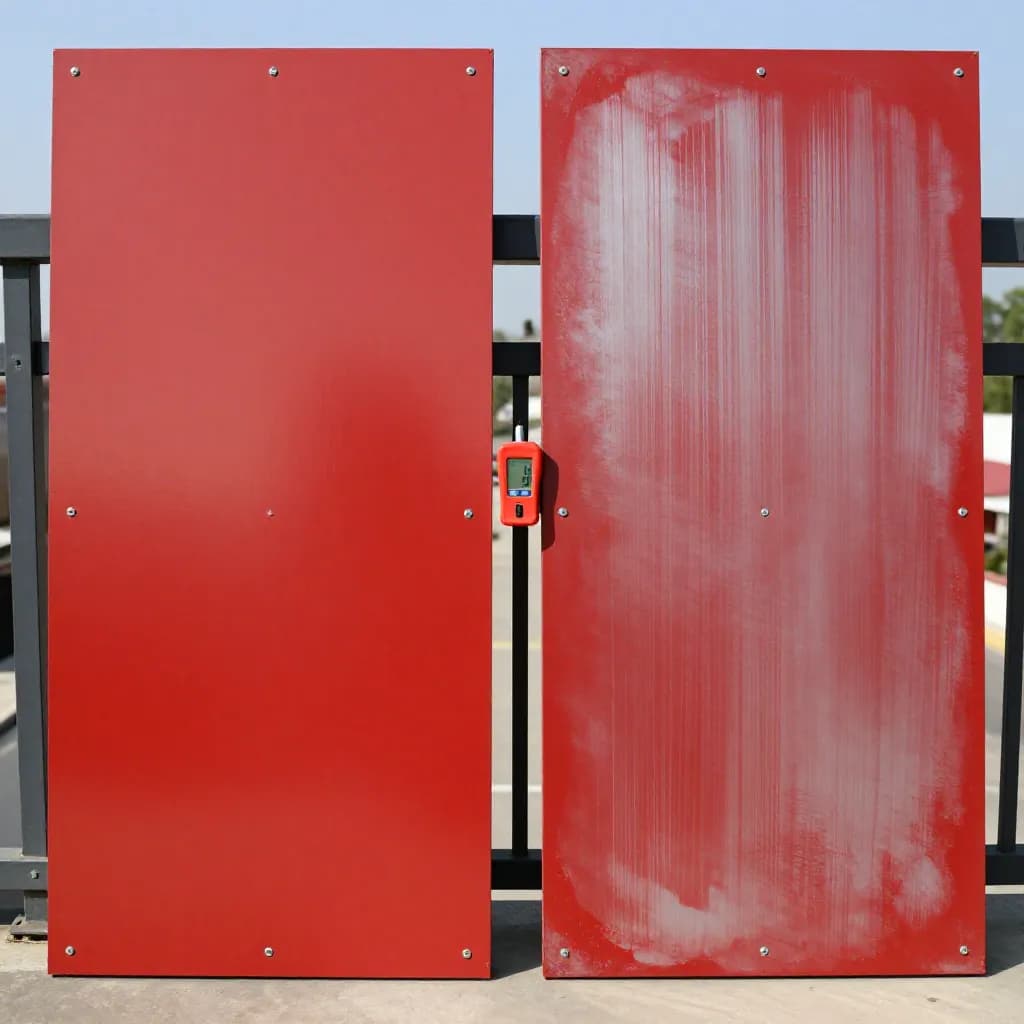
Fading in powder coatings is caused by ultraviolet radiation from sunlight breaking down the chemical bonds in the resin and pigment molecules at the coating surface. This photodegradation process is gradual and cumulative, with the rate depending on the UV intensity, the chemical stability of the coating components, and the presence of UV stabilizers in the formulation.
Ready to Start Your Project?
From one-off customs to 15,000-part production runs — get precise pricing in 24 hours.
On This Page
All Coatings Fade Eventually, But the Right Powder Coating Resists It for Decades
The critical factor in fade resistance is resin selection. Polyester and super-durable polyester powder coatings are specifically engineered for outdoor UV resistance and provide excellent fade resistance. Epoxy powder coatings, by contrast, fade and chalk rapidly in sunlight and should never be used for exterior applications where appearance matters.
For consumers and specifiers, understanding the relationship between resin type, color choice, and expected fade performance enables informed decisions about powder coating selection for outdoor applications. The right combination of resin and color can deliver decades of color stability, while the wrong choice can result in noticeable fading within months.
How UV Radiation Causes Fading
Ultraviolet radiation from sunlight is the primary driver of color fading in powder coatings. UV photons carry enough energy to break chemical bonds in organic molecules, initiating a chain of degradation reactions that progressively alter the coating's appearance. The process begins at the coating surface, where UV exposure is most intense, and gradually works deeper into the film over time.
The degradation mechanism involves several steps. First, UV photons are absorbed by chromophoric groups in the resin or pigment molecules — chemical structures that are particularly susceptible to UV energy absorption. This absorption excites the molecules to a higher energy state, which can lead to bond breaking, free radical formation, and oxidation reactions.
These chemical changes manifest as visible fading through two mechanisms. Pigment degradation occurs when UV radiation directly attacks the pigment molecules, altering their chemical structure and changing their light absorption characteristics. This changes the color the pigment reflects, producing a visible color shift. Resin degradation at the surface causes chalking — the formation of a loose, powdery layer of degraded resin and exposed pigment particles that scatters light and dulls the appearance.
The rate of UV degradation depends on the total UV dose received, which is a function of geographic location, surface orientation, and exposure duration. South-facing surfaces in tropical or subtropical locations receive the highest UV doses and fade fastest. North-facing surfaces in temperate climates receive much less UV and fade correspondingly slower.
Modern powder coating formulations combat UV degradation through multiple mechanisms: UV-stable resin chemistry that resists bond breaking, UV absorber additives that preferentially absorb UV radiation before it reaches the resin, and hindered amine light stabilizers that scavenge the free radicals produced by UV exposure before they can propagate degradation reactions.
Resin Selection: The Biggest Factor in Fade Resistance
The choice of resin type is the single most important decision affecting the fade resistance of a powder coating. The differences between resin types are dramatic and non-negotiable — no amount of UV stabilizer additives can make an epoxy coating perform like a polyester in outdoor UV exposure.
Epoxy powder coatings contain aromatic ether linkages that absorb UV radiation very efficiently, making them extremely susceptible to photodegradation. Outdoor exposure causes rapid chalking and yellowing, often visible within weeks. Epoxy coatings should be used exclusively for interior applications or environments with no UV exposure.
Hybrid epoxy-polyester coatings offer improved UV resistance over pure epoxy but still fall short of pure polyester performance. They are suitable for semi-exterior applications with limited direct sunlight, such as covered outdoor areas or north-facing surfaces, but should not be specified for full exterior exposure.
Standard polyester powder coatings provide good UV resistance suitable for moderate outdoor exposure of 5 to 10 years. The saturated polyester backbone is inherently more UV-stable than epoxy, and standard UV stabilizer packages provide adequate protection for many consumer and light industrial applications.
Super-durable polyester formulations represent the mainstream choice for long-term exterior applications. Enhanced resin chemistry combined with optimized UV absorber and HALS packages deliver 15 to 25 years of color retention in outdoor exposure. These formulations meet the requirements of architectural specifications including Qualicoat Class 1 and 2, and AAMA 2604.
Fluoropolymer powder coatings based on PVDF technology provide the ultimate fade resistance, with color retention exceeding 25 years in the most demanding environments. These coatings meet AAMA 2605 requirements and are specified for premium architectural projects where long-term appearance is paramount.
How Color Choice Affects Fading
Not all colors fade at the same rate, even when applied using the same resin system. The pigments used to create different colors have varying levels of inherent UV stability, and this pigment stability significantly influences the overall fade performance of the finished coating.
Inorganic pigments — those based on metal oxides and mineral compounds — generally offer superior UV stability compared to organic pigments. Titanium dioxide (white), iron oxides (reds, yellows, browns), and chromium oxide (green) are among the most UV-stable pigments available. Coatings based on these pigments tend to show the least color change over time.
Organic pigments, which provide the brightest and most saturated colors, are generally more susceptible to UV-induced fading. Bright reds, oranges, yellows, and some blues and greens based on organic pigment chemistry may show more noticeable color change than muted earth tones based on inorganic pigments. However, modern high-performance organic pigments have been developed with significantly improved UV stability, narrowing the gap with inorganic alternatives.
Dark colors present a particular challenge because they absorb more solar radiation, including UV, than light colors. This higher energy absorption accelerates degradation at the coating surface. Additionally, any color change in a dark coating is more visually apparent than the same absolute change in a light coating, making fading seem more severe even when the measured color shift is similar.
Metallic and textured finishes can mask the visual effects of fading better than smooth, high-gloss finishes. The light-scattering effects of metallic flakes and surface texture make gradual color changes less noticeable to the eye, providing a practical advantage for outdoor applications where some fading is inevitable over time.
When specifying colors for critical outdoor applications, consult the powder manufacturer's weathering data for specific color formulations. Reputable manufacturers can provide accelerated weathering test results and, in some cases, real-world Florida exposure data for their most popular colors.
Measuring and Evaluating Fading
Fading is measured objectively using instrumental color measurement, which eliminates the subjectivity of visual assessment. A spectrophotometer measures the color of the coating and expresses it in the CIE Lab* color space, where L* represents lightness, a* represents the red-green axis, and b* represents the yellow-blue axis. The total color difference between the original and faded coating is calculated as Delta E, a single number that quantifies the magnitude of color change.
Delta E values provide a standardized way to evaluate fading severity. A Delta E below 1.0 is generally imperceptible to the human eye. Values between 1.0 and 3.0 are noticeable only to trained observers or when compared side by side with the original color. Values between 3.0 and 5.0 are noticeable to most people, and values above 5.0 represent obvious color change.
Architectural coating specifications set maximum allowable Delta E values after defined exposure periods. AAMA 2604 requires Delta E below 5.0 after five years of South Florida exposure. AAMA 2605 requires Delta E below 5.0 after ten years. Qualicoat Class 2 requires Delta E below 5.0 after three years of Florida exposure. These requirements ensure that certified coatings maintain acceptable appearance over their specified service life.
Gloss retention is measured alongside color change as an indicator of surface degradation. Gloss is measured at 60 degrees using a gloss meter, and retention is expressed as a percentage of the original gloss value. Specifications typically require 50 percent gloss retention after the specified exposure period. Loss of gloss often accompanies fading and contributes to the overall perception of coating degradation.
For consumers evaluating fading on existing powder-coated products, comparing an exposed surface to a protected area — such as under a mounting bracket or behind a hinge — provides a visual reference for the degree of color change that has occurred.
Maintenance Practices to Minimize Fading
While maintenance cannot reverse UV degradation of the polymer and pigment molecules, regular cleaning and care can significantly improve the appearance of powder-coated surfaces and slow the visible progression of fading.
Regular cleaning removes surface contaminants including dirt, pollution deposits, and biological growth that can accelerate coating degradation and make fading appear worse than it actually is. A clean coating surface reflects light more uniformly and appears brighter and more color-true than a dirty surface. Cleaning with mild detergent and water at least twice per year is recommended for exterior powder-coated surfaces, with more frequent cleaning in polluted or coastal environments.
Chalking, the powdery surface residue caused by UV degradation of the resin, can be removed by cleaning, temporarily restoring some of the original color and gloss. While the underlying degradation remains, removing the chalk layer reveals the less-degraded coating beneath and improves appearance. For lightly chalked surfaces, a soft cloth with mild detergent is sufficient. More heavily chalked surfaces may benefit from a non-abrasive cleaning compound.
Applying a UV-protective wax or sealant to powder-coated surfaces can provide an additional layer of UV protection and slow the rate of surface degradation. These products are particularly beneficial for high-value items such as automotive wheels, motorcycle frames, and outdoor furniture where maintaining appearance is important.
Avoiding unnecessary UV exposure through design and placement can also extend color life. Positioning powder-coated items in shaded areas, using awnings or overhangs to reduce direct sun exposure, and orienting surfaces away from the most intense sun angles all reduce the cumulative UV dose and slow fading.
When fading has progressed to an unacceptable level, the powder-coated surface can be recoated. Proper preparation of the existing coating surface — cleaning, light abrasion, and in some cases chemical treatment — provides a suitable foundation for a fresh coat of powder that restores the original appearance and protection.
Setting Realistic Expectations for Outdoor Color Retention
Setting realistic expectations for color retention helps consumers and specifiers avoid disappointment and make appropriate product selections. No organic coating maintains its original color indefinitely in outdoor exposure, and some degree of color change over time is normal and expected.
For standard polyester powder coatings on consumer products such as garden furniture, fencing, and outdoor equipment, expect good color retention for 5 to 10 years in moderate climates, with gradual fading becoming noticeable after this period. This is adequate for products with expected service lives in this range or where periodic recoating is acceptable.
For super-durable polyester on architectural applications, expect excellent color retention for 15 to 25 years, with color change remaining within specification limits throughout this period. This performance level is appropriate for building facades, window frames, and other architectural elements where long-term appearance is important.
For fluoropolymer coatings on premium architectural projects, expect color retention exceeding 25 years, with minimal visible change even in high-UV environments. This premium performance comes at a higher cost but is justified for landmark buildings and high-profile projects.
Geographic location significantly affects these timelines. Coatings in high-UV environments such as the Middle East, Australia, or the southern United States will fade faster than the same coatings in northern Europe or Canada. Altitude also increases UV intensity, accelerating fading at higher elevations.
Color selection affects perceived longevity as well. Light, muted colors based on inorganic pigments will appear to last longer than dark, saturated colors based on organic pigments, even when the measured color change is similar. Choosing colors with inherently good UV stability extends the period of acceptable appearance.
Ultimately, the combination of appropriate resin selection, suitable color choice, and regular maintenance determines how long a powder-coated surface maintains its appearance in outdoor service. Matching these factors to the specific application requirements and expected service life ensures satisfaction with the coating's long-term performance.
Frequently Asked Questions
How long before powder coating starts to fade outdoors?
It depends on the resin type: epoxy fades within weeks, standard polyester maintains color for 5-10 years, super-durable polyester for 15-25 years, and fluoropolymer coatings exceed 25 years. Geographic location, color choice, and surface orientation also significantly affect the timeline.
Which powder coating colors fade the fastest?
Dark, saturated colors using organic pigments tend to show the most visible fading. Bright reds, oranges, and yellows are particularly susceptible. Light colors and earth tones based on inorganic pigments like titanium dioxide and iron oxides show the best long-term color stability.
Can you prevent powder coating from fading?
You can minimize fading by selecting the right resin type (super-durable polyester or fluoropolymer for outdoor use), choosing UV-stable colors, cleaning regularly to remove surface degradation, and reducing UV exposure through shading or orientation. Complete prevention is not possible for any organic coating.
Does fading affect the protective properties of powder coating?
Surface fading and chalking are primarily cosmetic issues. The bulk of the coating film typically retains its mechanical properties and corrosion protection even when the surface shows visible fading. However, severe degradation over many years can eventually compromise the coating's protective function.
Can faded powder coating be restored?
Light fading can be improved by cleaning to remove chalk and applying UV-protective wax. For significant fading, the surface can be recoated with fresh powder coating after proper preparation. Complete restoration to original appearance requires recoating rather than surface treatment alone.
Ready to Start Your Project?
From one-off customs to 15,000-part production runs — get precise pricing in 24 hours.