Powder coating is considerably more resistant to chipping than conventional liquid paint. The thicker film build, superior adhesion, and inherent toughness of the cross-linked polymer network give powder coating a clear advantage in impact and chip resistance. While no coating is completely immune to chipping under extreme impact, powder coating withstands the everyday knocks, bumps, and abrasion that would chip or flake liquid paint.
Consumer
Does Powder Coating Chip Easily? Impact Resistance and Adhesion Explained
Sundial Powder Coating·April 22, 2026·11 min
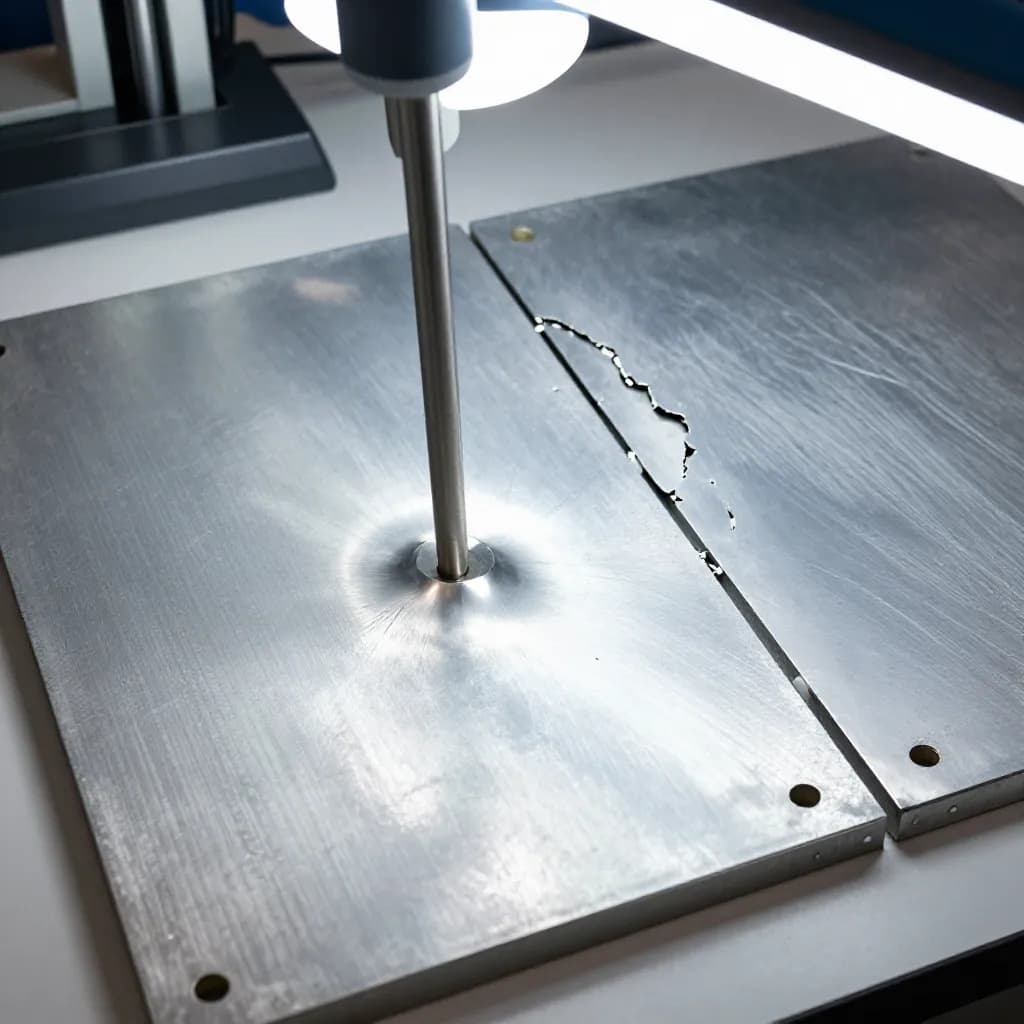
The chip resistance of powder coating comes from several factors working together. The typical film thickness of 60 to 120 microns provides a substantial cushion that absorbs impact energy before it can reach the coating-substrate interface where delamination begins. The thermoset cross-linked structure of the cured film distributes impact forces across a wider area rather than concentrating them at the point of impact. And the electrostatic application process produces excellent adhesion to properly prepared substrates, meaning the coating resists separation from the metal even when subjected to significant mechanical stress.
Ready to Start Your Project?
From one-off customs to 15,000-part production runs — get precise pricing in 24 hours.
On This Page
Powder Coating Is Significantly More Chip-Resistant Than Paint
However, chip resistance is not solely a property of the powder coating itself. The quality of surface preparation and pretreatment, the substrate material, the coating thickness, and the cure quality all influence how well the coating resists chipping in service. A powder coating applied over poor pretreatment will chip far more easily than the same coating applied over properly prepared and pretreated metal.
Understanding the factors that contribute to chip resistance helps consumers evaluate powder-coated products and helps specifiers ensure that the coating system delivers the expected level of durability.
Impact Resistance: How It Is Measured
Impact resistance of powder coatings is measured using standardized tests that simulate the effect of sudden mechanical force on the coated surface. The most common test is the Gardner impact test, performed according to ASTM D2794, which drops a weighted indenter onto the coated surface from increasing heights until the coating cracks or loses adhesion.
In the Gardner impact test, a standard weight — typically 2 pounds or 4 pounds — is dropped through a guide tube onto a hemispherical punch resting on the coated panel. The drop height is increased incrementally, and after each impact the coating is examined for cracking and tested for adhesion loss using tape pull. The result is reported in inch-pounds of impact energy, with higher values indicating greater impact resistance.
Standard powder coatings typically achieve direct impact resistance of 80 to 160 inch-pounds, which is substantially higher than most liquid paint systems at 20 to 60 inch-pounds. Flexible powder coating formulations can achieve impact resistance exceeding 160 inch-pounds, approaching the limits of the test method.
Reverse impact testing, where the indenter strikes the back of the panel and the coating is deformed outward, is a more severe test that evaluates the coating's ability to stretch without cracking. Powder coatings generally perform well in reverse impact testing due to their combination of adhesion and flexibility, though results are typically lower than direct impact values.
The falling dart impact test according to ISO 6272 provides an alternative assessment using a different geometry and is commonly referenced in European specifications. Both test methods provide useful comparative data for evaluating the chip resistance of different coating systems.
Adhesion Quality: The Foundation of Chip Resistance
Adhesion between the powder coating and the substrate is the single most important factor in chip resistance. A coating with excellent inherent toughness will still chip and peel if it is not properly bonded to the metal surface. Conversely, a well-adhered coating can withstand significant impact and deformation because the forces are transferred into the substrate rather than causing delamination at the interface.
Adhesion is measured using the cross-cut test according to ASTM D3359 or ISO 2409. In this test, a grid pattern is cut through the coating to the substrate using a multi-blade cutting tool, adhesive tape is applied over the grid and pulled away, and the amount of coating removed is evaluated on a scale from 0B (complete removal) to 5B (no removal). Properly applied powder coatings on well-pretreated substrates consistently achieve 5B ratings, indicating perfect adhesion.
The pull-off adhesion test according to ASTM D4541 provides a quantitative measurement of adhesion strength in megapascals. Powder coatings on properly pretreated steel typically achieve pull-off adhesion values of 5 to 15 megapascals, which exceeds the cohesive strength of many liquid paint films. This means that under extreme stress, the coating is more likely to fail within the film itself than at the coating-substrate interface — a desirable failure mode that indicates excellent adhesion.
Adhesion quality is primarily determined by surface preparation and pretreatment rather than by the powder coating formulation. The best powder coating in the world will have poor adhesion if applied over a contaminated, oxidized, or improperly pretreated surface. This is why pretreatment quality is emphasized so heavily in powder coating specifications and quality standards.
The Role of Pretreatment in Preventing Chips
Pretreatment is the unsung hero of powder coating chip resistance. While consumers see and appreciate the finished coating, it is the invisible pretreatment layer beneath that determines whether the coating will stay bonded to the metal through years of use and abuse. Skipping or shortcutting pretreatment is the most common cause of premature chipping and peeling in powder-coated products.
Mechanical pretreatment through sandblasting or shot blasting creates a roughened surface profile that dramatically increases the surface area available for coating adhesion. The microscopic peaks and valleys of a blasted surface provide mechanical interlocking points where the molten powder flows into surface irregularities during curing, creating a physical bond that resists separation. A blast profile of 25 to 75 microns is typical for powder coating applications.
Chemical pretreatment through conversion coating adds a second adhesion mechanism. Iron phosphate, zinc phosphate, or zirconium-based conversion coatings chemically bond to the metal surface and create a crystalline or amorphous layer that provides an ideal bonding surface for the powder coating. The conversion coating also provides a corrosion-resistant barrier at the coating-metal interface, preventing under-film corrosion that can cause adhesion loss and chipping from beneath the coating.
The combination of mechanical surface preparation and chemical conversion coating provides the strongest possible foundation for powder coating adhesion. Parts that receive both blast cleaning and conversion coating consistently demonstrate the highest impact resistance and the best long-term chip resistance in service.
For consumer products, the quality of pretreatment is often the differentiating factor between powder-coated items that maintain their appearance for years and those that begin chipping within months. Unfortunately, pretreatment quality is invisible to the consumer at the point of purchase, making it important to buy from reputable manufacturers who invest in proper surface preparation.
Powder Coating vs Liquid Paint: Chip Resistance Comparison
In direct comparison testing, powder coating consistently outperforms liquid paint in chip resistance by a significant margin. The reasons for this advantage are both physical and chemical, and they compound to produce a coating that is fundamentally more resistant to mechanical damage.
Film thickness is the most obvious advantage. At 60 to 120 microns, powder coating provides two to four times the film build of a typical single-coat liquid paint at 25 to 40 microns. This thicker film absorbs more impact energy before the force reaches the coating-substrate interface, providing a larger buffer against chipping. Even multi-coat liquid paint systems rarely match the total film build of a single powder coat.
The cross-linked thermoset structure of cured powder coating is inherently tougher than many liquid paint films. The three-dimensional molecular network distributes stress across a larger volume of material, resisting the localized failure that causes chipping. Many liquid paints, particularly air-dry and low-bake formulations, have less developed cross-link structures and are more prone to brittle fracture under impact.
Edge coverage is another area where powder coating excels. The electrostatic application process causes powder particles to wrap around edges and corners, building up coating thickness at these vulnerable points. Liquid paint tends to thin at edges due to surface tension, creating weak points where chipping is most likely to initiate. This edge coverage advantage is particularly important for products with sharp edges, corners, and complex geometries.
Adhesion uniformity also favors powder coating. The single-coat application and thermal cure process produces a consistent bond across the entire coated surface, without the inter-coat adhesion issues that can occur in multi-layer liquid paint systems. Delamination between paint layers is a common failure mode in liquid paint that does not exist in single-coat powder coating applications.
Common Causes of Chipping in Powder-Coated Products
Despite its excellent chip resistance, powder coating can chip under certain conditions, and understanding the common causes helps prevent premature failure. The most frequent cause of chipping is inadequate pretreatment, which results in poor adhesion between the coating and the substrate. Contamination from oils, greases, or residual cleaning chemicals at the coating-metal interface creates weak spots where the coating can separate under relatively minor impact.
Over-curing is another common cause of chipping. When powder coating is cured at temperatures or times significantly exceeding the manufacturer's recommendations, the coating can become excessively hard and brittle. This over-cured coating loses its ability to absorb impact energy through elastic deformation and instead fractures and chips under forces that a properly cured coating would withstand.
Insufficient coating thickness, particularly at edges and corners, creates vulnerable points where chipping can initiate. While powder coating generally provides good edge coverage, very sharp edges, burrs, and thin metal sections can be difficult to coat adequately. Proper edge preparation, including deburring and radius creation, helps ensure adequate coating thickness at these critical locations.
Substrate quality affects chip resistance as well. Metal with surface defects, inclusions, or residual mill scale provides a compromised foundation for coating adhesion. Outgassing from porous substrates such as cast iron or hot-dip galvanized steel can create voids and weak spots in the coating that are prone to chipping.
Environmental factors including extreme temperature cycling, prolonged UV exposure, and chemical attack can degrade the coating over time, reducing its flexibility and impact resistance. A coating that was chip-resistant when new may become more brittle and chip-prone after years of environmental exposure, particularly if the resin type was not appropriate for the service conditions.
How to Maximize Chip Resistance in Powder-Coated Products
Maximizing chip resistance requires attention to every step of the coating process, from substrate selection through application to post-coating handling. For specifiers and manufacturers, the following practices ensure the best possible chip resistance performance.
Start with proper substrate preparation. Ensure all fabrication operations including welding, cutting, drilling, and forming are completed before coating. Remove all burrs, sharp edges, and weld spatter. Specify a minimum edge radius of 0.5 millimeters to ensure adequate coating coverage at edges.
Invest in quality pretreatment. For maximum chip resistance, specify blast cleaning followed by zinc phosphate conversion coating. If blast cleaning is not feasible, thorough alkaline cleaning followed by iron phosphate conversion coating provides good results for less demanding applications. Never skip or shortcut the pretreatment process.
Apply adequate coating thickness. For applications where chip resistance is critical, specify a minimum film thickness of 80 to 100 microns rather than the standard 60 to 80 microns. The additional thickness provides a meaningful improvement in impact absorption and chip resistance.
Cure properly. Follow the powder manufacturer's recommended cure schedule precisely. Use oven temperature profiling to verify that parts reach the specified metal temperature for the specified duration. Both under-cure and over-cure compromise chip resistance.
Handle coated parts carefully. Use protective packaging, soft contact points, and careful handling procedures to prevent damage during transport, storage, and assembly. Many chipping complaints trace back to post-coating handling damage rather than coating deficiency.
For consumers, choosing powder-coated products from reputable manufacturers who follow these practices is the best assurance of long-term chip resistance. While it is difficult to assess pretreatment quality at the point of purchase, the overall finish quality, edge coverage, and coating thickness provide visible indicators of manufacturing care.
Frequently Asked Questions
Is powder coating more chip-resistant than paint?
Yes, significantly. Powder coating typically achieves impact resistance of 80-160 inch-pounds compared to 20-60 inch-pounds for liquid paint. The thicker film (60-120 microns vs 25-40 microns), cross-linked structure, and superior edge coverage all contribute to powder coating's advantage in chip resistance.
What causes powder coating to chip?
The most common causes are inadequate pretreatment leading to poor adhesion, over-curing that makes the coating brittle, insufficient thickness at edges and corners, substrate contamination, and post-coating handling damage. Proper surface preparation is the single most important factor in preventing chipping.
How thick should powder coating be to prevent chipping?
Standard applications require 60-80 microns, but for enhanced chip resistance, specify 80-100 microns minimum. The additional thickness provides better impact absorption. Edge coverage is equally important — ensure edges are deburred and have a minimum 0.5mm radius for adequate coating buildup.
Can you repair chipped powder coating?
Minor chips can be repaired using liquid touch-up paint matched to the powder coating color, or with powder touch-up systems for larger areas. However, touch-up repairs rarely match the performance of the original coating. For critical applications, recoating the entire part may be necessary.
Does powder coating chip in cold weather?
Powder coatings can become slightly more brittle at very low temperatures as the polymer moves further below its glass transition temperature. However, properly formulated and cured powder coatings maintain adequate flexibility and chip resistance across normal temperature ranges including freezing conditions.
Ready to Start Your Project?
From one-off customs to 15,000-part production runs — get precise pricing in 24 hours.