Powder coating adds a measurable layer of material to every coated surface, and this dimensional change must be considered when coating parts with tight tolerances, threaded connections, press fits, or mating surfaces. Standard powder coating thickness ranges from 60 to 120 microns (approximately 2.4 to 4.7 thousandths of an inch), which is added to each coated surface of the part.
Consumer
Does Powder Coating Add Thickness? Dimensional Impact and Tolerance Guide
Sundial Powder Coating·April 22, 2026·11 min
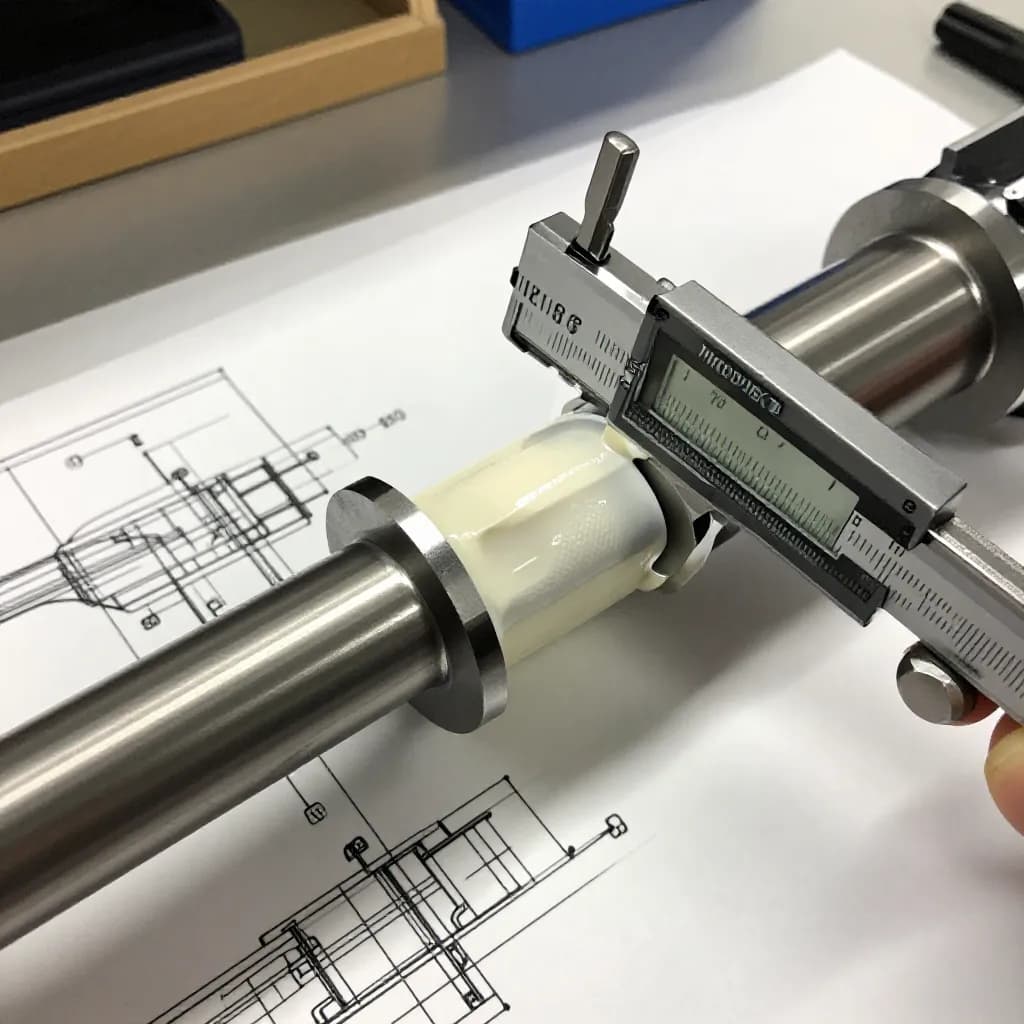
For a part coated on all sides, the total dimensional increase is twice the coating thickness — once for each opposing surface. A shaft with 80 microns of powder coating on all surfaces will increase in diameter by 160 microns (0.16 millimeters or about 6.3 thousandths of an inch). This may seem small, but it is significant for precision-machined components, threaded fasteners, bearing fits, and assemblies with tight clearances.
Ready to Start Your Project?
From one-off customs to 15,000-part production runs — get precise pricing in 24 hours.
On This Page
Yes, Powder Coating Adds Measurable Thickness to Every Surface
The dimensional impact of powder coating is greater than most liquid paint systems, which typically apply at 25 to 50 microns per coat. This thicker film is one of the reasons powder coating provides superior protection and durability, but it also means that dimensional considerations are more important when specifying powder coating for precision components.
Understanding the thickness that powder coating adds, knowing where it matters, and using appropriate strategies to manage dimensional impact ensures that powder-coated parts fit and function correctly in their intended assemblies.
Standard Thickness Ranges and What Determines Them
Powder coating thickness is not a single fixed value but a range that depends on the application method, powder formulation, part geometry, and specification requirements. Understanding these variables helps predict and control the dimensional impact on coated parts.
Standard decorative and protective powder coatings are typically applied at 60 to 80 microns for general industrial applications. Architectural specifications often require 60 to 120 microns depending on the certification level and exposure conditions. Functional coatings for demanding environments may be applied at 100 to 150 microns or more for enhanced protection.
The electrostatic application process naturally produces some thickness variation across a part. Flat surfaces facing the spray gun receive the most uniform coating, while recessed areas, inside corners, and complex geometries may receive less powder. Conversely, edges and outside corners tend to attract more powder due to electrostatic field concentration, resulting in thicker coating at these locations.
Powder particle size distribution affects the minimum achievable thickness. Standard powder coatings have a median particle size of 30 to 50 microns, which makes it difficult to achieve uniform films below about 50 microns. For thinner applications, fine-particle powders with median sizes of 15 to 25 microns are available, enabling film builds as low as 25 to 40 microns.
The number of coats also affects total thickness. While most powder coating applications use a single coat, some specifications require a primer coat plus a topcoat, which can result in total film builds of 120 to 200 microns. Multi-coat systems provide enhanced protection but increase the dimensional impact proportionally.
Coating thickness is measured using non-destructive magnetic or eddy current gauges according to ASTM D7091 or ISO 2808. These instruments provide instant readings accurate to within a few microns, enabling real-time thickness monitoring during production.
Thread Fit and Fastener Considerations
Threaded connections are among the most sensitive areas for powder coating thickness impact. The coating adds material to both the thread crests and roots, effectively reducing the clearance between mating threads. For standard thread fits, this can prevent assembly or create excessive interference that damages the threads during installation.
The impact on thread fit depends on the thread size, pitch, and tolerance class. Coarse-pitch threads with generous tolerances can often accommodate standard powder coating thickness without problems. Fine-pitch threads and tight tolerance classes are more sensitive and may require special measures to ensure proper fit after coating.
For external threads (bolts, studs, and screws), powder coating adds to the major diameter and fills the thread roots, increasing the effective thread size. For internal threads (nuts and tapped holes), coating reduces the minor diameter and fills the thread crests, decreasing the effective thread size. Both effects work against proper thread engagement.
Several strategies address thread fit issues. The most common is masking threads before coating using silicone plugs, caps, or tape that prevent powder from reaching the threaded surfaces. This preserves the original thread dimensions but leaves the threads uncoated and unprotected.
An alternative approach is to coat the threads and then chase them with a tap or die to remove excess coating and restore proper thread geometry. This provides some coating protection on the thread surfaces while ensuring proper fit. However, the coating on thread flanks will be thinner and less uniform than on flat surfaces.
For applications where both thread protection and proper fit are critical, specifying oversized tapped holes or undersized bolt threads to accommodate the coating thickness is the most reliable approach. This requires coordination between the machining and coating operations but ensures both protection and fit.
Tolerance Considerations for Precision Parts
Precision-machined parts with tight dimensional tolerances require careful planning when powder coating is specified. The coating thickness must be accounted for in the part design, and strategies must be implemented to ensure that coated dimensions remain within the required tolerance range.
For parts with bilateral tolerances, the coating thickness effectively shifts the dimension toward the upper limit for external features and toward the lower limit for internal features. If the part is machined to the nominal dimension, adding 60 to 80 microns of coating per surface may push the final dimension outside the tolerance band. The solution is to machine the part to a dimension that accounts for the expected coating thickness, so the coated dimension falls within the specified tolerance.
Bearing fits and press fits are particularly sensitive to coating thickness. A shaft designed for a sliding fit in a bearing will become an interference fit if coated without dimensional compensation. Similarly, a hole designed for a press fit will become looser if coated internally. For these applications, either the mating surfaces must be masked to prevent coating, or the machined dimensions must be adjusted to compensate for the coating thickness.
Sliding and rotating interfaces require special attention. Powder coating on sliding surfaces adds friction and can cause binding if clearances are insufficient. The coating thickness on both mating surfaces must be considered when calculating the required clearance. For rotating applications, coating thickness affects the running clearance and can cause interference at operating temperature if thermal expansion is not also considered.
Assembly interfaces where parts must mate flush or align precisely are affected by coating thickness on the mating surfaces. Locating features, dowel holes, and alignment surfaces may need to be masked or dimensionally compensated to ensure proper assembly after coating.
The key principle is that coating thickness must be treated as a dimensional variable in the part design, not as an afterthought. Involving the coating specification early in the design process allows dimensional compensation to be incorporated from the start, avoiding costly rework or assembly problems.
Thin-Film Powder Coating Options
When standard powder coating thickness creates unacceptable dimensional impact, thin-film powder coating technologies offer a solution. These specialized products and application techniques enable film builds of 25 to 50 microns — roughly half the thickness of standard powder coatings — while still providing meaningful protection and appearance.
Fine-particle powder coatings are formulated with a smaller median particle size than standard powders, typically 15 to 25 microns compared to 30 to 50 microns for standard products. The smaller particles flow more easily into a thin, uniform film during curing, enabling lower film builds without the bare spots and inconsistencies that occur when standard powder is applied too thinly.
Thin-film application requires modified equipment settings and techniques. Lower powder flow rates, reduced electrostatic voltage, and optimized gun-to-part distances help achieve uniform thin films. Some applicators use specialized thin-film spray guns designed for precise control at low film builds.
The trade-off with thin-film powder coating is reduced protection compared to standard thickness. Corrosion resistance, impact resistance, and chemical resistance all decrease with thinner films because the barrier between the environment and the substrate is reduced. Thin-film coatings are appropriate for interior applications, mild environments, or situations where the primary requirement is appearance rather than heavy-duty protection.
Ultra-thin powder coatings achieving film builds of 15 to 30 microns have been developed for specific applications such as automotive fasteners, electronic components, and precision hardware. These products use advanced particle size control and formulation technology to achieve uniform coverage at thicknesses approaching those of liquid paint.
For applications where both thin film and high protection are required, consider liquid paint as an alternative. Liquid coatings can be applied at 15 to 30 microns with good uniformity and protection, though they sacrifice the environmental and efficiency advantages of powder coating.
Masking Strategies for Critical Dimensions
Masking is the most common and reliable method for protecting critical dimensions from the thickness impact of powder coating. By preventing powder from reaching specific surfaces, masking preserves the original machined dimensions at those locations while allowing the remainder of the part to be coated.
Silicone plugs and caps are the workhorses of powder coating masking. Available in thousands of standard sizes and shapes, these reusable masking products are inserted into holes, placed over studs, or pressed onto surfaces to prevent powder deposition. Silicone withstands the curing temperatures of powder coating without degradation and can be reused hundreds of times, making it cost-effective for production applications.
High-temperature masking tape is used for flat surfaces, irregular shapes, and areas where plugs and caps are not practical. Polyester and polyimide tapes withstand cure temperatures up to 200 to 260 degrees Celsius and leave clean, sharp mask lines. Tape masking is more labor-intensive than plug masking but offers greater flexibility for complex masking patterns.
Custom masking fixtures are designed for high-volume production applications where the same masking pattern is repeated on every part. These fixtures, typically made from silicone rubber or high-temperature plastics, are shaped to mask specific areas of the part and can be applied and removed quickly, reducing masking labor and improving consistency.
Liquid masking compounds, also called peelable maskants, are applied by brushing or dipping and form a temporary film that prevents powder adhesion. After curing, the maskant is peeled away to reveal the uncoated surface. Liquid maskants are useful for irregular surfaces and large areas that are difficult to mask with tape or plugs.
The cost of masking must be factored into the overall coating cost, as complex masking requirements can significantly increase the per-part coating expense. Designing parts to minimize the number of critical surfaces that require masking reduces both cost and the risk of masking errors.
Design Guidelines for Powder-Coated Parts
Designing parts with powder coating thickness in mind from the outset prevents dimensional problems and reduces the need for costly masking or rework. The following guidelines help engineers and designers accommodate coating thickness in their part designs.
Specify coating thickness requirements on engineering drawings, including minimum and maximum film build and any areas requiring specific thickness control. This information enables the coating applicator to optimize their process for the part's dimensional requirements.
Add coating thickness allowance to machined dimensions for features that will be coated. For a shaft that must be 25.00 millimeters after coating, machine it to 24.84 millimeters to allow for 80 microns of coating on each side. Document the pre-coating and post-coating dimensions on the drawing to avoid confusion.
Design clearances to accommodate coating thickness on mating surfaces. If both mating parts will be coated, the clearance must accommodate coating on both surfaces — a total of four coating thicknesses for a shaft-in-hole fit (coating on both sides of the shaft and both sides of the hole).
Avoid designing features that are difficult to coat uniformly, such as deep narrow channels, sharp internal corners, and blind holes with high aspect ratios. These features tend to receive inconsistent coating thickness, making dimensional control unpredictable.
Specify masking requirements clearly on the drawing, identifying all surfaces that must remain uncoated with appropriate symbols or notes. Include the reason for masking (thread fit, bearing surface, electrical contact, etc.) to help the coating applicator understand the criticality of each masked area.
Consider the coating process when selecting tolerances. If a feature has a tolerance of plus or minus 25 microns and the coating adds 60 to 80 microns per surface, the tolerance cannot be met without masking or dimensional compensation. Either relax the tolerance, specify masking, or adjust the pre-coating dimension to accommodate the coating thickness.
Communicate with the coating applicator early in the design process. Experienced applicators can advise on achievable thickness ranges, masking options, and design modifications that simplify the coating process while meeting dimensional requirements.
Frequently Asked Questions
How much thickness does powder coating add?
Standard powder coating adds 60-120 microns (2.4-4.7 thousandths of an inch) per surface. For a part coated on all sides, the total dimensional increase is twice the coating thickness on each axis. Thin-film options can reduce this to 25-50 microns per surface.
Will powder coating affect thread fit?
Yes. Coating on threads reduces clearance and can prevent assembly, especially on fine-pitch and tight-tolerance threads. Solutions include masking threads before coating, chasing threads after coating to restore geometry, or machining threads to compensate for coating thickness.
Can you powder coat precision parts?
Yes, with proper planning. Critical dimensions can be preserved through masking, dimensional compensation in machining, or thin-film powder coating. The key is accounting for coating thickness during the design phase rather than treating it as an afterthought.
Is there a thin powder coating option?
Yes. Fine-particle powder coatings enable film builds of 25-50 microns, roughly half the standard thickness. Ultra-thin formulations can achieve 15-30 microns for applications like automotive fasteners and electronic components. Thinner films provide less protection but minimize dimensional impact.
How do you prevent powder coating from changing part dimensions?
The main strategies are masking critical surfaces with silicone plugs, caps, or tape; machining parts to pre-coating dimensions that account for coating thickness; using thin-film powder coatings; and designing clearances to accommodate coating on mating surfaces.
Ready to Start Your Project?
From one-off customs to 15,000-part production runs — get precise pricing in 24 hours.