If you regularly work on cars, motorcycles, bicycles, or small metal projects, a home powder coating setup can pay for itself surprisingly quickly. Sending individual brackets, valve covers, intake manifolds, or small parts to a professional shop adds up fast, especially when you factor in turnaround time. With your own setup, you can coat parts on your own schedule for just the cost of powder and electricity.
Consumer
DIY Powder Coating at Home: Equipment, Setup, and Tips
Sundial Powder Coating·April 20, 2026·10 min
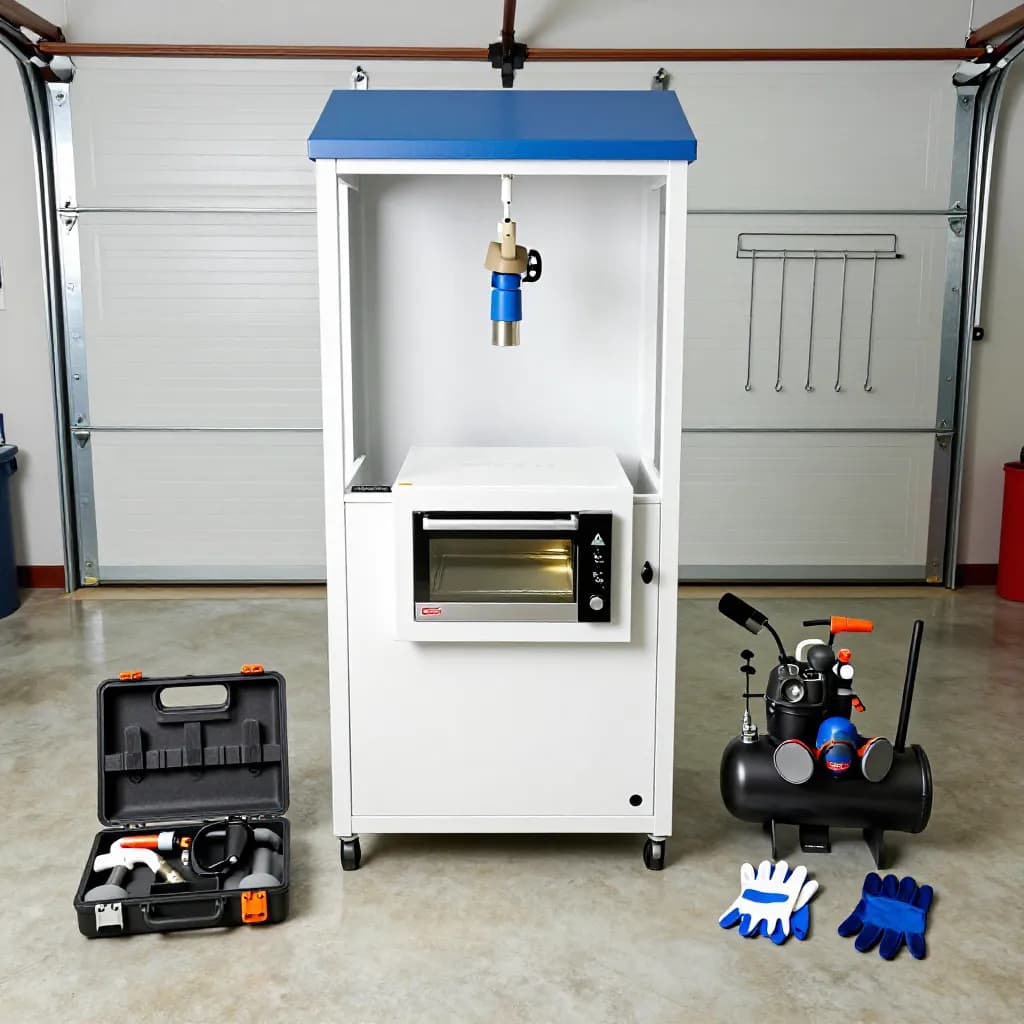
DIY powder coating is best suited for small to medium-sized parts that fit in a home oven or a dedicated curing oven. Think brake calipers, suspension components, motorcycle parts, bicycle frames, tool boxes, light fixtures, and decorative hardware. If most of your projects fall into this size range, a home setup makes excellent sense.
Ready to Start Your Project?
From one-off customs to 15,000-part production runs — get precise pricing in 24 hours.
On This Page
Is DIY Powder Coating Worth It?
The learning curve is real but manageable. Your first few attempts may not be perfect, but with practice and attention to preparation, most hobbyists produce very good results within a handful of projects. The fundamentals are straightforward: clean the part, apply the powder, cure it in an oven. Getting consistently great results is about mastering the details of each step.
Essential Equipment
The core of any home powder coating setup is an electrostatic powder gun. Entry-level guns suitable for hobbyists cost $100-200, while more capable units with better voltage control and powder flow adjustment run $200-400. Brands like Eastwood, Columbia Coatings, and Harbor Freight offer popular hobbyist options. A good gun makes a noticeable difference in how evenly and efficiently you can apply powder.
You need a curing oven large enough to fit your parts. Many hobbyists start with a dedicated toaster oven for small items like brackets and hardware. For larger parts, a used kitchen oven or a purpose-built powder coating oven is necessary. Purpose-built ovens designed for powder coating range from $300-1,500 depending on size. Important: never use the same oven for food and powder coating, as the outgassing during curing releases chemicals you do not want near food.
Rounding out the essentials, you will need a compressed air source to feed the powder gun, a hanging rack or hooks to suspend parts during spraying and curing, high-temperature masking tape and silicone plugs for masking, and personal protective equipment including a respirator, safety glasses, and gloves. Budget $400-800 total for a complete starter setup, or $800-1,500 for a more capable rig with a larger oven.
Setting Up Your Workspace
Powder coating requires a clean, dry workspace with good ventilation. A garage or workshop is ideal. The spraying area should be free of dust, moisture, and drafts that could contaminate the finish or blow powder off the part before curing. Many hobbyists build a simple spray booth from PVC pipe and plastic sheeting to contain overspray and keep the workspace clean.
Ventilation is important during both spraying and curing. While powder coating powder is not as hazardous as liquid paint solvents, you should avoid breathing the fine particles. A respirator rated for particulates is essential during spraying. During curing, the oven releases small amounts of outgassing that should be vented outside. Position your curing oven near a garage door or window, or install a simple exhaust fan.
Grounding is critical for the electrostatic process to work properly. The part being coated must be electrically grounded so the charged powder particles are attracted to it. Use a proper grounding clamp connected to the part and to a known earth ground. Poor grounding is one of the most common reasons for uneven coverage and powder that will not stick.
The DIY Process Step by Step
Start with thorough cleaning and preparation. Remove all grease, oil, rust, and old coatings from the part. Sandblasting or media blasting gives the best results, but hand sanding with 120-220 grit sandpaper works for small, simple parts. After sanding or blasting, wipe the part with a pre-paint cleaner or acetone to remove any remaining oils. Do not touch the clean surface with bare hands, as skin oils can cause adhesion problems.
Hang the part from your rack using wire hooks or custom fixtures, making sure the grounding clamp has good contact with bare metal. Set your powder gun to the recommended voltage and flow rate for the powder you are using, typically 15-25 kV for most hobby guns. Apply the powder in light, even passes, building up coverage gradually. The powder should cling to the part electrostatically. If it is falling off or not sticking, check your ground connection.
Once the part is evenly coated, carefully transfer it to the preheated curing oven. Most powders cure at 190-210 degrees Celsius for 10-20 minutes, measured from when the part itself reaches temperature, not from when you close the oven door. Thicker metal parts take longer to come up to temperature. Use an infrared thermometer or oven probe to verify the part temperature. After curing, turn off the oven and let the part cool slowly before handling.
Common DIY Mistakes and How to Avoid Them
Poor surface preparation is the number one cause of failed DIY powder coating jobs. If the part is not perfectly clean and free of oils, rust, and old coatings, the powder will not adhere properly and may peel, bubble, or flake off after curing. Invest the time in thorough prep work. If you skip this step, nothing else matters.
Applying powder too thick or too thin is another common mistake. Too thick and the finish will have orange peel texture, sags, or runs. Too thin and you will see bare spots or inconsistent coverage. Practice on scrap metal to get a feel for the right application thickness. The powder layer should look even and opaque but not heavily built up. Most powders perform best at 60-80 microns of cured film thickness.
Temperature control is critical. An oven that runs too hot will burn the powder, causing yellowing or a rough, grainy texture. Too cool and the powder will not fully cure, leaving a soft finish that scratches easily. Use an oven thermometer to verify your oven's actual temperature, as built-in thermostats can be inaccurate by 10-20 degrees. Consistent, accurate temperature is more important than any other variable in the curing process.
When to Use a Professional Instead
Large parts that do not fit in your oven are the most obvious reason to use a professional shop. Motorcycle frames, car bumpers, large furniture pieces, and anything over about a meter in length will require an industrial-sized oven that home setups simply cannot accommodate. Professional shops have walk-in ovens that can handle virtually any size part.
Complex shapes with deep recesses, internal cavities, and hard-to-reach areas are also better left to professionals. These parts require experience and technique to coat evenly, and a professional with a high-quality gun and years of practice will get better coverage than a hobbyist with an entry-level setup. Faraday cage effects in deep recesses are particularly challenging for DIY equipment.
If you need a show-quality finish for a visible part like a motorcycle tank, a set of wheels, or a display piece, a professional shop will deliver a more consistent result. Home setups can produce very good finishes, but achieving the flawless, mirror-smooth results that a professional booth and experienced operator deliver is difficult in a garage environment. For parts where appearance is critical, the professional premium is usually worth paying.
Frequently Asked Questions
Can I use my kitchen oven for powder coating?
Technically yes, but it is strongly recommended that you do not. Powder coating releases small amounts of chemical outgassing during curing that can contaminate an oven used for food. Use a dedicated oven for powder coating, whether that is a secondhand kitchen oven reserved exclusively for coating or a purpose-built unit.
What kind of compressor do I need for powder coating?
A small compressor producing 1-2 CFM at 20-30 PSI is sufficient for most hobby powder guns. You do not need a large shop compressor. The air must be clean and dry, so use a moisture trap and oil filter on the air line. Moisture in the air supply is a common cause of finish defects in DIY setups.
How much does powder coating powder cost?
Hobby-sized quantities of powder typically cost $15-30 per pound, and a pound goes a long way on small parts. A single pound can coat dozens of small brackets or several larger items like valve covers. Buying in bulk from coating suppliers brings the cost down to $8-15 per pound. Most hobbyists keep a few popular colors on hand.
Can I powder coat aluminum and steel with the same setup?
Yes, the same equipment works for both metals. The main difference is in preparation. Aluminum requires different pretreatment chemistry than steel, and it heats up faster in the oven due to its higher thermal conductivity. Adjust your curing time accordingly and monitor part temperature rather than relying solely on oven time.
Is DIY powder coating safe?
Yes, with proper precautions. Wear a particulate respirator when spraying, safety glasses, and gloves. Ensure good ventilation during spraying and curing. Keep the workspace clean and free of ignition sources, as airborne powder can be combustible in high concentrations. Follow your equipment manufacturer's safety guidelines and never exceed recommended voltage settings.
Ready to Start Your Project?
From one-off customs to 15,000-part production runs — get precise pricing in 24 hours.