Zinc and zinc alloys — including the widely used Zamak die-casting alloys — can be powder coated with excellent results. Zinc is electrically conductive, accepts electrostatic powder application readily, and the curing temperatures used in powder coating are well within the safe range for zinc substrates. Powder-coated zinc parts are found across the automotive, hardware, furniture, and consumer products industries, demonstrating that this is a well-established and reliable process.
Consumer
Can You Powder Coat Zinc? A Practical Guide
Sundial Powder Coating·April 22, 2026·8 min
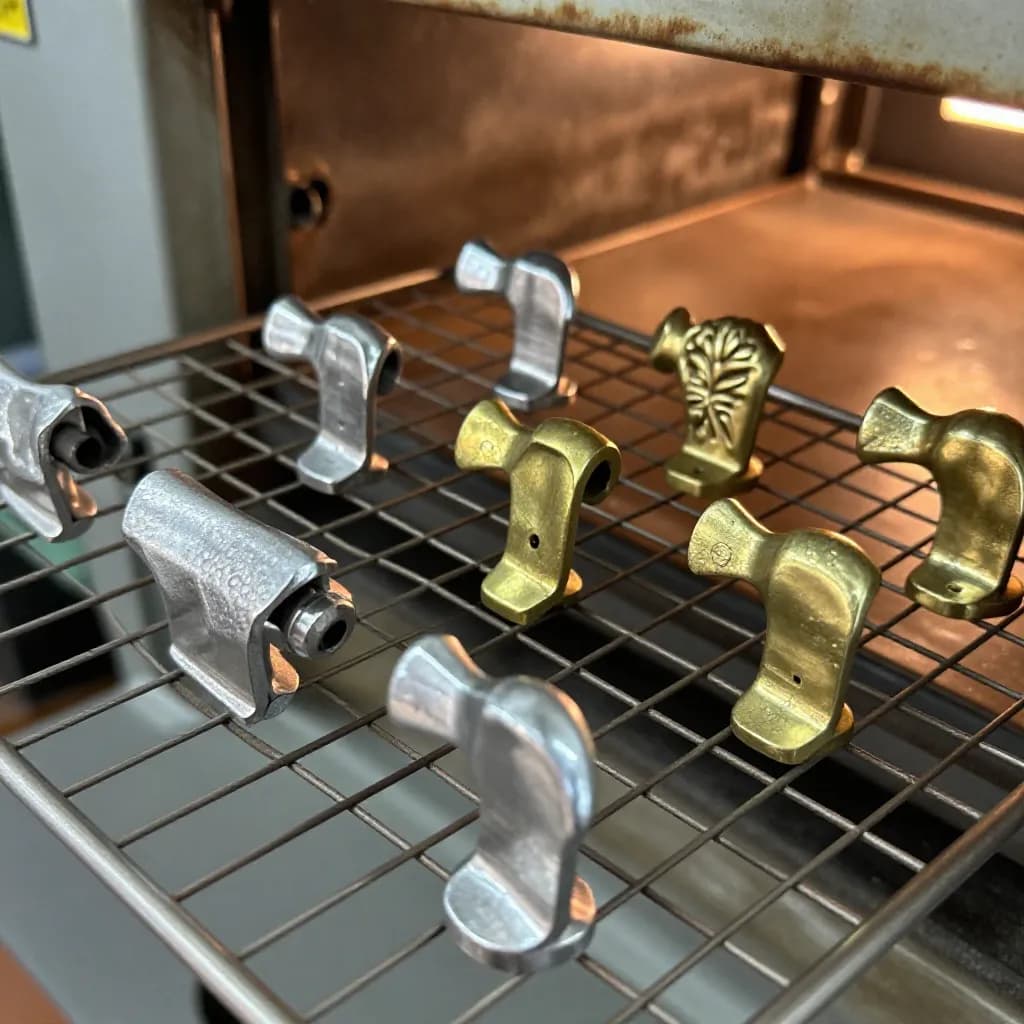
The most common zinc substrates encountered in powder coating are zinc die castings, which are used extensively for door handles, cabinet hardware, automotive trim, light fixtures, plumbing fixtures, and decorative components. Zinc die casting is popular because it allows complex shapes to be produced economically with excellent surface finish and dimensional accuracy. Powder coating these parts adds color, texture, and an additional layer of corrosion and wear protection.
Ready to Start Your Project?
From one-off customs to 15,000-part production runs — get precise pricing in 24 hours.
On This Page
Yes, Zinc Can Be Powder Coated Successfully
While zinc is generally easier to powder coat than cast iron or titanium, it does present one significant challenge: outgassing. Like cast iron, zinc die castings have a porous microstructure that can trap gases, moisture, and mold release agents during the casting process. These trapped substances can cause defects in the powder coating if not properly addressed during preparation. Understanding and managing outgassing is the key to achieving a flawless finish on zinc substrates.
Outgassing in Zinc Die Castings
Outgassing is the primary technical challenge when powder coating zinc die castings, and it occurs for the same fundamental reason as outgassing in cast iron — trapped gases and moisture escape from the porous substrate during oven curing and disrupt the powder film. However, the specifics of zinc outgassing differ from cast iron in important ways that affect the preparation strategy.
Zinc die castings are produced by injecting molten zinc alloy into steel molds under high pressure. The rapid solidification process can trap air pockets, porosity, and residual mold release agents within the casting. During powder curing at 180 to 200 degrees Celsius, these trapped substances expand and migrate to the surface. If the powder film has already begun to gel, the escaping gases create pinholes, blisters, or craters in the finished surface.
The severity of outgassing varies significantly between individual castings and depends on factors such as the casting quality, wall thickness, alloy composition, and the type and amount of mold release agent used during production. High-quality castings produced with optimized process parameters and minimal porosity will outgas less than lower-quality castings with significant internal voids. Communicating with the casting supplier about porosity levels and mold release chemistry can help the coater anticipate and plan for outgassing challenges.
Preparation and Pre-Bake Process
The preparation process for zinc die castings follows a similar logic to cast iron preparation, with the pre-bake step being the most critical element for managing outgassing. The process begins with thorough cleaning to remove surface contaminants, including mold release agents, machining oils, fingerprints, and any corrosion products. Alkaline cleaning solutions are effective for degreasing zinc, and ultrasonic cleaning can help remove contaminants from complex geometries and blind holes.
After cleaning, the parts are pre-baked in the curing oven at the powder curing temperature — typically 190 to 200 degrees Celsius — for 15 to 30 minutes. This pre-bake drives out trapped gases and moisture while the surface is still bare, preventing these substances from disrupting the powder film during the actual curing cycle. The pre-bake duration depends on the casting quality and wall thickness, with thicker or more porous castings requiring longer pre-bake times.
Following the pre-bake, parts are allowed to cool to a temperature suitable for powder application. A conversion coating — typically a chromate-free treatment designed for zinc — is applied to promote adhesion and provide an additional corrosion barrier. The powder is then applied electrostatically and cured in the normal manner. Some coaters apply the powder while the parts are still slightly warm from the pre-bake, which can help the powder adhere and begin flowing before the part enters the curing oven, reducing the window for outgassing to cause defects.
Choosing the Right Powder for Zinc
The selection of powder coating chemistry for zinc substrates should consider both the application requirements and the outgassing characteristics of the specific castings being coated. Polyester powder coatings are the most commonly used type for zinc die castings in consumer and architectural applications, offering good UV resistance, color retention, and a wide range of available colors and finishes.
For applications where outgassing is a persistent concern despite proper pre-baking, specially formulated low-temperature cure powders can be advantageous. These powders begin to flow and gel at lower temperatures, which means the film is still fluid and permeable when the initial burst of outgassing occurs, allowing gases to escape without leaving defects. Low-cure powders typically gel at 140 to 150 degrees Celsius compared to 170 to 180 degrees Celsius for standard formulations.
Textured and semi-matte finishes are popular choices for zinc die castings because they are more forgiving of minor surface imperfections than smooth, high-gloss finishes. Fine texture powders can effectively mask small pinholes or surface irregularities that might be visible in a glossy finish. For high-end applications where a smooth, glossy finish is required, the combination of thorough pre-baking, proper conversion coating, and careful powder selection is essential to achieve a defect-free result.
Common Zinc Items That Are Powder Coated
Zinc die castings are among the most frequently powder-coated components in consumer products manufacturing. Door handles, cabinet pulls, drawer knobs, and other architectural hardware are overwhelmingly produced from zinc die castings and finished with powder coating. The combination of zinc's ability to reproduce fine detail in the casting process with powder coating's durability and color range makes this pairing ideal for hardware that must be both attractive and long-lasting.
Automotive components represent another major application area. Zinc die-cast trim pieces, emblems, mirror housings, door handle assemblies, and interior components are routinely powder coated during vehicle manufacturing. The automotive industry has extensive experience with zinc powder coating and has developed robust processes for managing outgassing and ensuring consistent quality across high-volume production runs.
Lighting fixtures and electrical components made from zinc die castings are also commonly powder coated. The complex shapes possible with zinc die casting — including thin walls, internal ribs, and integrated mounting features — make it a popular choice for light fixture housings, switch plates, and electrical enclosure components. Furniture hardware, sporting goods components, toy parts, and decorative items round out the wide range of zinc products that benefit from powder coating.
Zinc vs. Galvanized Steel: Different Challenges
It is important to distinguish between zinc die castings and galvanized steel, as they present different challenges for powder coating despite both involving zinc. Zinc die castings are solid zinc alloy parts produced by the die-casting process, while galvanized steel is steel that has been coated with a thin layer of zinc for corrosion protection. The powder coating challenges and preparation requirements differ significantly between these two substrates.
Zinc die castings primarily suffer from outgassing due to porosity in the casting, as discussed above. Galvanized steel, on the other hand, presents challenges related to the zinc coating itself — including surface contamination from the galvanizing process, zinc oxide formation, and the potential for the zinc layer to react with certain pretreatment chemicals. Galvanized steel also has its own outgassing issues, as moisture and gases can become trapped between the zinc coating and the steel substrate.
The pretreatment approach differs as well. Zinc die castings are typically cleaned, pre-baked, and conversion coated before powder application. Galvanized steel requires specific pretreatment designed for the galvanized surface — often involving a sweep blast to remove zinc oxide and create surface profile, followed by a zinc-compatible conversion coating. Using pretreatment chemicals designed for bare steel on galvanized surfaces can damage the zinc coating and compromise corrosion protection.
Quality Control and Testing
Quality control is particularly important when powder coating zinc due to the outgassing variable. Visual inspection of the cured coating surface is the first line of defense — pinholes, blisters, and craters are immediately visible on smooth finishes and indicate that outgassing was not adequately controlled. For textured finishes, closer inspection may be needed to identify defects that the texture might partially conceal.
Adhesion testing using the cross-hatch method is a standard quality check for powder-coated zinc parts. A grid pattern is cut through the coating to the substrate, adhesive tape is applied and pulled off, and the amount of coating removed is evaluated against a standardized scale. Good adhesion on zinc requires proper conversion coating — without it, the powder may appear well-adhered initially but fail adhesion testing or delaminate in service.
Salt spray testing is used for applications where corrosion resistance is critical. Coated zinc parts are placed in a salt fog chamber and evaluated for coating degradation, blistering, and substrate corrosion over a specified period. For automotive and outdoor hardware applications, salt spray requirements of 500 to 1,000 hours are common. Accelerated weathering tests using UV exposure and moisture cycling evaluate the long-term appearance retention of the coating for outdoor applications.
Frequently Asked Questions
Do all zinc die castings need to be pre-baked before powder coating?
Pre-baking is strongly recommended for all zinc die castings to minimize outgassing defects. Even high-quality castings with low porosity can contain enough trapped gas to cause pinholes in the coating. The pre-bake adds only 15 to 30 minutes to the process and significantly improves the likelihood of a defect-free finish.
Can you powder coat zinc-plated steel parts?
Yes, zinc-plated steel can be powder coated, but the zinc plating must be properly prepared with a compatible conversion coating. The thin zinc plating layer is different from solid zinc die castings and typically does not have the same outgassing issues. However, adhesion to zinc plating requires appropriate pretreatment to ensure long-term coating performance.
What causes white spots on powder-coated zinc?
White spots on powder-coated zinc are typically caused by zinc oxide formation (white rust) on the substrate before coating, or by moisture trapped beneath the coating that causes localized corrosion after curing. Thorough cleaning, proper conversion coating, and timely powder application after preparation help prevent this issue.
Is powder coating zinc better than chrome plating?
Powder coating and chrome plating serve different purposes. Chrome plating provides a bright, metallic mirror finish that powder coating cannot replicate, while powder coating offers a much wider range of colors and textures. Powder coating is more environmentally friendly, as chrome plating involves hazardous chemicals. For durability and corrosion protection, both can perform well when properly applied.
Can zinc parts be recoated if the powder coating fails?
Yes, zinc parts can be stripped and recoated if the initial powder coating is defective. Chemical stripping is the preferred method for removing powder coating from zinc, as it does not damage the substrate. The part should then go through the full preparation process — cleaning, pre-baking, and conversion coating — before the new powder coat is applied.
Ready to Start Your Project?
From one-off customs to 15,000-part production runs — get precise pricing in 24 hours.