Most people assume powder coating is exclusively a metal finishing process, and for decades that was true. But advances in powder coating chemistry — particularly UV-curable and low-temperature cure formulations — have made it possible to apply powder coatings to wood and wood-based substrates like MDF (medium-density fiberboard). The European furniture and kitchen cabinet industry has been using powder-coated MDF commercially since the early 2000s, and the technology continues to gain traction worldwide.
Consumer
Can You Powder Coat Wood? MDF, Solid Wood, UV Cure, and Furniture Applications
Sundial Powder Coating·April 22, 2026·11 min
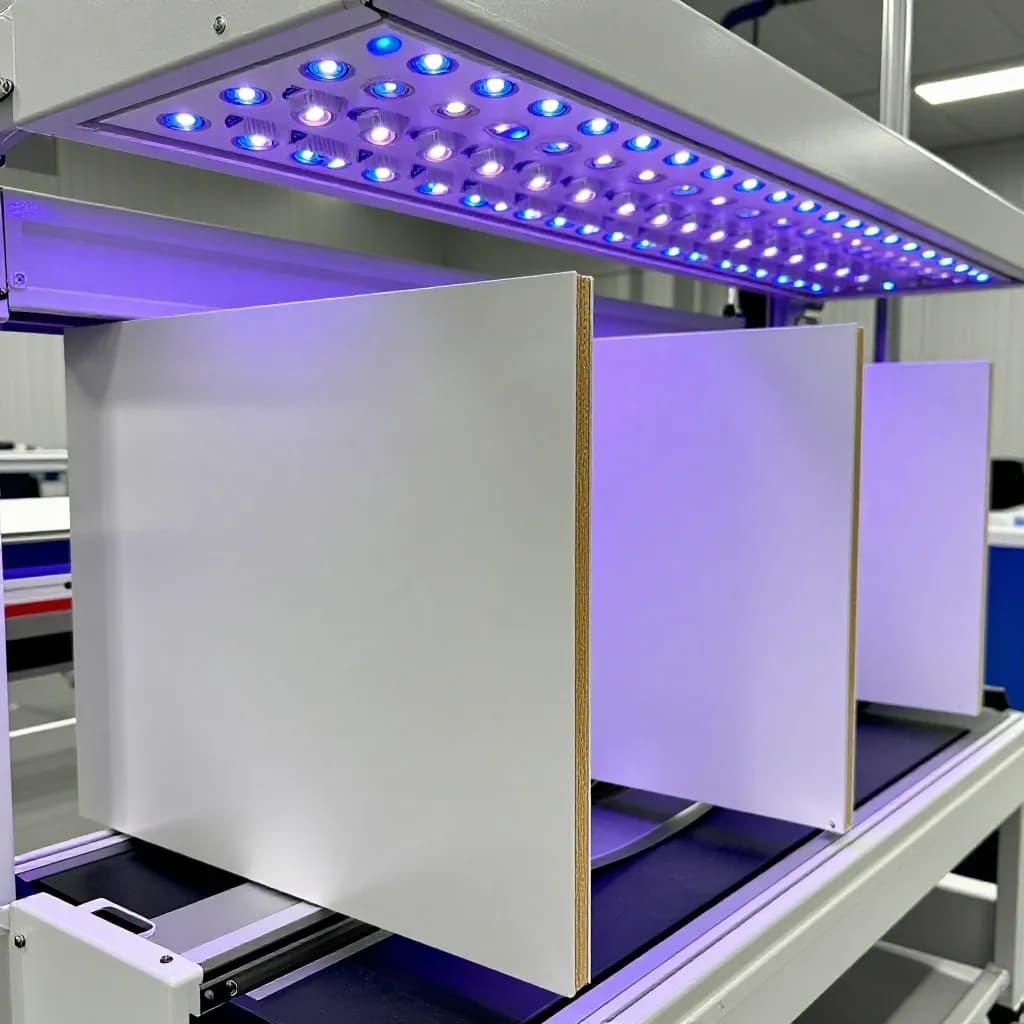
The appeal of powder coating wood is straightforward: it delivers a finish quality that rivals or exceeds liquid lacquer and paint, with superior edge coverage, zero solvent emissions, and high material efficiency. For MDF panels used in kitchen cabinets, office furniture, retail fixtures, and architectural millwork, powder coating produces a smooth, durable, and environmentally friendly finish that is difficult to achieve with conventional liquid coatings.
Ready to Start Your Project?
From one-off customs to 15,000-part production runs — get precise pricing in 24 hours.
On This Page
Powder Coating on Wood: A Surprising Reality
However, powder coating wood is fundamentally different from powder coating metal, and the process has real limitations that consumers and designers should understand. The heat sensitivity of wood, the need for specialized powder formulations, and the limited number of shops equipped for wood coating all affect whether this technology is practical for a given project. This article explains how the process works, what substrates are suitable, and where the technology excels and falls short.
MDF vs Solid Wood: Why the Substrate Matters
The choice of wood substrate is the single most important factor in determining whether powder coating will succeed. MDF is by far the most suitable wood-based material for powder coating, and it accounts for the vast majority of commercial wood powder coating applications. Solid wood, plywood, and particleboard each present different challenges that make them less ideal or entirely unsuitable.
MDF works well because it has a dense, uniform, and smooth surface with no grain pattern, knots, or voids. This homogeneous structure allows the powder to melt and flow into a smooth, even film without the surface irregularities that would cause defects on natural wood. MDF also has relatively consistent moisture content when properly conditioned, which is critical because moisture in the substrate turns to steam during heating and can cause blistering and pinholes in the coating.
Solid wood is much more challenging. Natural wood has grain patterns, varying density between growth rings, knots, and natural moisture content that varies with species and environmental conditions. When heated, solid wood can release moisture, sap, and volatile organic compounds that disrupt the coating. The grain pattern can telegraph through the powder coating, creating an uneven surface. Some hardwoods with very tight grain — maple, birch, and beech — can be powder coated with careful preparation, but the results are less consistent than MDF.
Plywood and particleboard are generally poor candidates. Plywood has edge voids and delamination risks when heated, while particleboard has a rough, porous surface that absorbs powder unevenly and can outgas significantly during curing. For these materials, conventional liquid coatings remain the better choice.
Moisture content is critical regardless of substrate. Wood intended for powder coating should be conditioned to 6-8 percent moisture content before coating. Higher moisture levels will cause steam-related defects during the cure cycle.
UV-Curable Powder Coating: The Breakthrough for Wood
UV-curable powder coating is the technology that made wood powder coating commercially viable. Unlike conventional thermosetting powders that require sustained high temperatures to cross-link and cure, UV-curable powders use a two-stage process: a brief low-temperature melt phase followed by ultraviolet light exposure that triggers the curing reaction.
In the melt phase, the powder-coated panel passes through an infrared or convection oven at 100-130 degrees Celsius for just 1-3 minutes — long enough to melt the powder into a smooth, continuous film but not long enough to damage the wood substrate. The panel then passes under high-intensity UV lamps that initiate a photochemical cross-linking reaction, fully curing the coating in seconds. The total thermal exposure to the wood is minimal, typically keeping the substrate temperature below 120 degrees Celsius.
This low thermal exposure is what makes UV cure suitable for wood. Standard thermosetting powders require object temperatures of 160-200 degrees Celsius maintained for 10-20 minutes, which would scorch, warp, or ignite wood substrates. UV cure reduces both the temperature and the duration of heat exposure to levels that MDF and some solid woods can tolerate without damage.
The finish quality of UV-cured powder on MDF is exceptional. The coating flows into a smooth, uniform film with excellent edge coverage — powder naturally wraps around edges and corners, providing thicker coverage in these vulnerable areas compared to liquid coatings that tend to thin out on edges. The cured film is hard, scratch-resistant, and chemically resistant, with a surface quality comparable to high-end automotive finishes.
UV-curable powders are available in a range of colors and finishes, including high gloss, satin, matte, and textured options. However, the color range is somewhat more limited than conventional thermosetting powders, and very dark colors can be challenging because the UV light must penetrate through the coating to initiate curing. Heavily pigmented dark colors can block UV penetration, resulting in incomplete cure.
Low-Temperature Thermal Cure: An Alternative Approach
While UV cure is the dominant technology for wood powder coating, low-temperature thermosetting powders offer an alternative approach that some manufacturers prefer. These powders use modified resin chemistry with catalysts that enable full cross-linking at temperatures of 120-150 degrees Celsius, significantly lower than the 180-200 degrees required by standard powders.
Low-temperature cure powders for wood typically use polyester or acrylic resin systems formulated with accelerated curing agents. The cure cycle is longer than UV cure — typically 10-20 minutes at the target temperature — which means the wood substrate is exposed to heat for a longer period. This makes substrate selection and moisture conditioning even more critical than with UV cure, as the extended heat exposure increases the risk of moisture-related defects.
The advantage of low-temperature thermal cure over UV cure is broader color availability and simpler equipment requirements. Because curing is driven by heat rather than UV light, there are no limitations related to UV penetration through dark or heavily pigmented coatings. Any color, including deep blacks and dark metallics, can be fully cured. The equipment is also simpler — a standard convection or infrared oven is sufficient, without the need for UV lamp systems.
The disadvantage is the longer heat exposure, which limits the range of suitable substrates. MDF with proper moisture conditioning handles low-temperature cure well, but solid wood is more problematic due to the extended time at elevated temperature. Thin MDF panels under 12 millimeters can also be challenging because they heat through quickly and may warp before the cure cycle is complete.
Some manufacturers use a hybrid approach, combining a brief infrared pre-heat to melt the powder with a short UV exposure to initiate cure, followed by a low-temperature thermal post-cure to ensure complete cross-linking. This hybrid process offers the color flexibility of thermal cure with the reduced heat exposure of UV cure.
Furniture and Cabinet Applications
The furniture and kitchen cabinet industry is the primary market for powder-coated wood products, and the results in this sector demonstrate the technology's potential. Powder-coated MDF cabinet doors, drawer fronts, shelving, and panel components offer a premium finish quality that competes directly with high-pressure laminate, thermofoil, and multi-coat lacquer systems.
Kitchen cabinets are a particularly strong application because the powder-coated finish provides excellent resistance to moisture, steam, cooking oils, and household cleaning chemicals — all common exposures in kitchen environments. The seamless edge coverage that powder coating provides is a significant advantage over thermofoil wrapping, which can peel at edges over time, and over liquid lacquer, which tends to be thinner on edges and corners where wear is greatest.
Office furniture manufacturers use powder-coated MDF for desk surfaces, partition panels, and storage units. The hard, scratch-resistant finish withstands the daily wear of office environments, and the zero-VOC application process aligns with corporate sustainability goals and green building certification requirements for indoor air quality.
Retail fixtures and point-of-sale displays benefit from the design flexibility of powder-coated MDF. The ability to achieve high-gloss, matte, textured, and metallic finishes on MDF panels allows designers to create visually striking retail environments. The durability of the powder coating ensures that fixtures maintain their appearance through years of public use.
For consumers considering powder-coated wood furniture or cabinets, the key advantage is the combination of finish quality and durability. A well-applied powder coating on MDF will resist chipping, scratching, and chemical damage better than most liquid paint finishes, and the edge coverage provides protection in the areas where conventional finishes are most vulnerable. The environmental benefit of zero solvent emissions during application is an additional advantage for health-conscious consumers.
The Powder Coating Process for Wood Step by Step
The process for powder coating wood differs from metal coating in several important ways, and understanding the steps helps consumers appreciate why this is a specialized service.
Substrate preparation begins with moisture conditioning. MDF panels are stored in a climate-controlled environment to achieve a uniform moisture content of 6-8 percent. Panels that are too wet will blister during curing; panels that are too dry may absorb moisture from the air and swell unevenly. The panels are then sanded to a smooth, uniform surface, typically to 180-220 grit, and cleaned to remove dust and contaminants.
Because wood is not electrically conductive, the panels must be made conductive for electrostatic powder application. This is typically achieved by applying a thin conductive primer or by using panels manufactured with conductive additives incorporated into the MDF during production. Some systems use a pre-heat step instead — warming the panel to 80-100 degrees Celsius so that the powder particles melt on contact and adhere through thermal attraction rather than electrostatic charge.
Powder application uses standard electrostatic spray guns, but the settings are adjusted for wood substrates. Lower charging voltages are typically used to prevent back-ionization and Faraday cage effects in recessed areas. The powder is applied to a thickness of 60-100 microns, similar to metal applications.
Curing follows the UV or low-temperature thermal process described earlier. For UV cure, the panel passes through a brief infrared melt zone and then under UV lamps. For thermal cure, the panel enters a convection or infrared oven at 120-150 degrees Celsius for the specified cure time. Temperature monitoring is critical — the substrate temperature must be tracked to ensure it stays within the safe range for the wood material.
After curing, the panels are cooled gradually to prevent thermal shock, which can cause cracking or warping. Quality inspection checks for surface smoothness, color consistency, adhesion, and edge coverage before the panels are released for assembly or shipping.
Limitations and Practical Considerations
While powder coating on wood has clear advantages, consumers and designers should be aware of its limitations to make informed decisions about when this technology is appropriate.
Availability is the most significant practical limitation. Powder coating wood requires specialized equipment, materials, and expertise that most powder coating shops do not have. The vast majority of powder coating facilities are set up exclusively for metal substrates. Finding a shop that can powder coat wood may require searching regionally or nationally, and shipping large panels adds cost and logistics complexity.
Size limitations exist because the panels must fit through the coating line's oven and UV cure stations. Most wood powder coating lines are designed for flat or gently curved panels up to approximately 1.2 by 2.4 meters. Three-dimensional wood objects, turned components, and irregularly shaped pieces are generally not suitable for the automated lines used in commercial wood powder coating.
Repair and touch-up of powder-coated wood is more difficult than with liquid-painted wood. If a powder-coated MDF panel is damaged — chipped, scratched through to the substrate, or dented — it cannot be easily spot-repaired in the field. Liquid touch-up paint can be color-matched, but it will not perfectly replicate the powder coating's texture and sheen. Significant damage typically requires replacing the panel rather than repairing it.
Cost is generally higher than liquid painting for small quantities. The specialized materials, equipment, and process control required for wood powder coating mean that it is most economical at production volumes where the setup costs are spread across many parts. For a single custom piece or a small batch, liquid lacquer or paint may be more cost-effective.
Despite these limitations, powder coating on wood continues to grow as more manufacturers invest in the technology and as consumers and designers demand higher-performance, more sustainable finishes for furniture and architectural millwork.
Frequently Asked Questions
Can you powder coat solid wood furniture?
It is technically possible to powder coat some solid hardwoods with tight grain, such as maple and birch, using UV-cure or low-temperature cure powders. However, MDF is far more suitable due to its uniform density and smooth surface. Solid wood's grain pattern, moisture variability, and tendency to outgas make it a challenging and less predictable substrate for powder coating.
How does UV-cure powder coating work on wood?
UV-cure powder coating uses a two-stage process. First, the powder is melted into a smooth film using brief infrared heating at 100-130 degrees Celsius for 1-3 minutes. Then, high-intensity UV lamps cure the coating in seconds through a photochemical reaction. This minimizes heat exposure to the wood, keeping substrate temperatures below levels that would cause damage.
Is powder-coated MDF more durable than painted MDF?
Yes, in most cases. Powder coating on MDF provides a thicker, harder film with superior edge coverage compared to liquid paint. The coating resists scratching, chipping, and chemical exposure better than most liquid lacquer systems, and the seamless edge coverage protects the most vulnerable areas of MDF panels where liquid coatings tend to be thinnest.
Why is moisture content important when powder coating wood?
Wood with excessive moisture will release steam when heated during the powder coating cure cycle, causing blistering, pinholes, and bubbles in the finished coating. MDF should be conditioned to 6-8 percent moisture content before coating. Proper moisture conditioning is one of the most critical steps in achieving a defect-free powder-coated finish on wood substrates.
Can I get any color in powder-coated wood finishes?
Low-temperature thermal cure powders offer a wide color range including dark colors and metallics. UV-cure powders have a somewhat more limited palette because very dark or heavily pigmented colors can block UV light penetration needed for curing. However, the available range still covers most standard and custom colors for furniture and architectural applications.
Where can I find a shop that powder coats wood?
Wood powder coating is a specialized service offered by relatively few shops compared to metal powder coating. Look for manufacturers that specifically advertise MDF or wood powder coating, particularly those serving the furniture, cabinet, or architectural millwork industries. You may need to search regionally, as this capability is not available in every market.
Ready to Start Your Project?
From one-off customs to 15,000-part production runs — get precise pricing in 24 hours.