Stainless steel is already corrosion-resistant, attractive, and durable — so why would anyone want to powder coat it? The question is reasonable, and the answer comes down to specific situations where powder coating adds value that bare stainless steel cannot provide on its own.
Consumer
Can You Powder Coat Stainless Steel? Preparation, Adhesion, and When It Makes Sense
Sundial Powder Coating·April 22, 2026·11 min
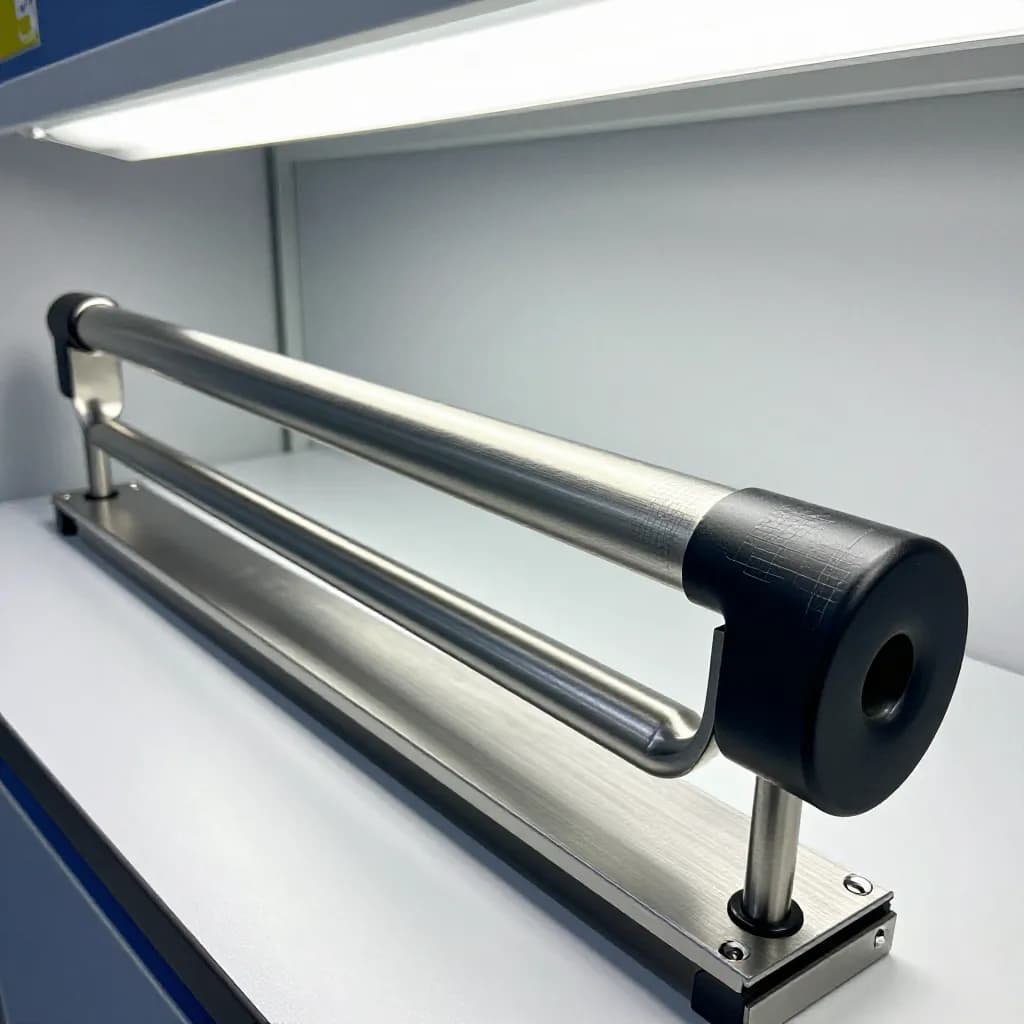
Color is the most common reason. Bare stainless steel comes in one color: silver. While different surface finishes — brushed, mirror polished, bead blasted — provide some visual variety, stainless steel cannot be colored without a coating. Powder coating opens the full spectrum of colors, textures, and effects, allowing designers to use stainless steel's structural and corrosion-resistant properties while achieving any desired aesthetic. Architectural projects, furniture, consumer products, and signage frequently use powder-coated stainless steel for this reason.
Ready to Start Your Project?
From one-off customs to 15,000-part production runs — get precise pricing in 24 hours.
On This Page
Why Would You Powder Coat Stainless Steel?
Additional corrosion protection is another motivation, particularly in aggressive environments that challenge even stainless steel. Marine environments with constant salt spray, chemical processing facilities, and swimming pool areas with chlorinated atmospheres can cause pitting and crevice corrosion on certain stainless steel grades. Adding a powder coating provides a supplementary barrier that extends the service life of the stainless steel in these demanding conditions.
Fingerprint resistance drives powder coating of stainless steel in consumer-facing applications. Bare stainless steel, particularly in brushed finishes, shows fingerprints prominently. Powder coating eliminates this issue entirely, which is why many appliance manufacturers and architectural hardware producers offer powder-coated stainless steel options alongside bare stainless finishes.
The Adhesion Challenge with Stainless Steel
Stainless steel presents a unique adhesion challenge for powder coating that does not exist with carbon steel or aluminum. The very property that makes stainless steel corrosion-resistant — its passive chromium oxide layer — also makes it resistant to coating adhesion. This passive layer is extremely thin, chemically stable, and self-healing, which means it provides a poor surface for mechanical or chemical bonding with powder coatings.
The passive oxide layer on stainless steel is only a few nanometers thick, but it is remarkably effective at preventing interaction between the metal surface and applied coatings. Unlike the rough, reactive surface of blasted carbon steel, which provides excellent mechanical adhesion for powder coating, the passive layer on stainless steel is smooth at a molecular level and chemically inert. Powder coating applied to inadequately prepared stainless steel will appear to adhere initially but can delaminate over time, particularly when exposed to moisture, thermal cycling, or mechanical stress.
This adhesion challenge is not insurmountable — millions of stainless steel parts are successfully powder coated every year — but it requires proper surface preparation that goes beyond what is needed for carbon steel. The preparation must disrupt the passive layer and create a surface profile that promotes both mechanical and chemical adhesion, while also applying the coating promptly before the passive layer regenerates.
Different grades of stainless steel also present varying levels of adhesion difficulty. Austenitic grades like 304 and 316 are the most commonly powder coated and respond well to proper preparation. Ferritic and martensitic grades can also be coated successfully. The key is matching the preparation method to the specific grade and the performance requirements of the application.
Surface Preparation Methods for Stainless Steel
Proper surface preparation is the single most critical factor in achieving durable powder coating adhesion on stainless steel. Several methods are used, often in combination, to create a surface that the powder coating can bond to reliably.
Abrasive blasting with aluminum oxide or garnet media is the most common mechanical preparation method. Blasting creates a surface profile of microscopic peaks and valleys that provide mechanical anchoring for the powder coating. For stainless steel, the blast profile should be 25-50 microns — aggressive enough to provide adhesion but not so rough that it creates stress concentrations or an unacceptably rough final appearance. The blast media must be iron-free to prevent contamination that could cause rust staining on the stainless steel surface.
Chemical pretreatment after blasting significantly improves adhesion and corrosion resistance at the coating-metal interface. Iron phosphate pretreatment is commonly used for stainless steel, creating a thin conversion coating that promotes chemical bonding with the powder coating. More advanced pretreatments include zirconium-based and silane-based systems that provide excellent adhesion promotion without the environmental concerns associated with traditional phosphate processes.
For applications where blasting is not practical — thin-gauge stainless steel that would warp, polished surfaces where the blast profile would show through the coating, or parts with complex geometries — chemical etching provides an alternative. Acid-based etching solutions dissolve the passive layer and create microscopic surface roughness without the mechanical impact of blasting. The etched surface must be coated promptly, as the passive layer begins to regenerate within hours.
Thorough degreasing before any preparation step is essential. Stainless steel surfaces often carry oils, fingerprints, and contaminants from manufacturing and handling that will prevent adhesion if not completely removed. Solvent cleaning followed by alkaline degreasing is the standard approach, with some shops adding a final rinse with deionized water to prevent mineral deposits.
Decorative vs Protective Powder Coating on Stainless Steel
Powder coating on stainless steel serves two distinct purposes — decorative and protective — and the requirements differ depending on which function is primary.
Decorative powder coating is applied primarily for color and aesthetic effect. The stainless steel substrate already provides corrosion resistance, so the coating's primary job is to look good and maintain its appearance over time. Decorative applications include architectural cladding, furniture, consumer products, signage, and retail fixtures. The coating thickness is typically standard — 60-80 microns — and the powder formulation is chosen for color accuracy, surface quality, and UV resistance rather than maximum corrosion protection.
For decorative applications, the finish quality of the powder coating is paramount. Any surface defects — orange peel, inclusions, color variation, or texture inconsistency — are immediately visible and unacceptable. This means the surface preparation must be meticulous, the powder application must be precise, and the curing must be carefully controlled. Many decorative stainless steel applications use super-durable polyester powders that maintain color and gloss for 15-20 years in exterior exposure.
Protective powder coating adds a functional barrier to the stainless steel, providing additional defense against specific environmental threats. Marine applications, chemical processing equipment, food processing facilities, and infrastructure in corrosive environments may benefit from the supplementary protection that powder coating provides. In these cases, the coating formulation is selected for chemical resistance, barrier properties, and adhesion retention under aggressive conditions, with appearance being secondary.
Some applications combine both functions. Architectural stainless steel in coastal environments, for example, benefits from both the color flexibility of powder coating and the additional corrosion protection it provides against salt spray. In these dual-purpose applications, the coating system must satisfy both aesthetic and performance requirements, which typically means using high-performance polyester or fluoropolymer powder formulations with rigorous surface preparation.
Common Applications for Powder-Coated Stainless Steel
Powder-coated stainless steel is used across a wide range of industries and applications, each leveraging the combination of stainless steel's inherent properties with the aesthetic and protective benefits of powder coating.
Architectural applications include exterior cladding panels, handrails, balustrades, column covers, canopy structures, and entrance systems. Architects specify powder-coated stainless steel when they need the structural performance and corrosion resistance of stainless steel but want a specific color or texture that bare stainless cannot provide. Coastal and marine-adjacent buildings particularly benefit from this combination.
Food service and commercial kitchen equipment uses powder-coated stainless steel for exterior surfaces of refrigerators, ovens, dishwashers, and serving counters. The powder coating provides color options and fingerprint resistance while the stainless steel substrate ensures food safety compliance and corrosion resistance in the demanding kitchen environment. Interior food-contact surfaces remain bare stainless steel, while exterior visible surfaces receive the powder coating.
Street furniture and urban infrastructure — benches, bollards, bike racks, waste receptacles, and bus shelters — increasingly use powder-coated stainless steel for its combination of vandal resistance, corrosion performance, and design flexibility. The hardness of stainless steel resists denting and deformation, while the powder coating provides color coding, branding, and graffiti resistance.
Medical and laboratory equipment uses powder-coated stainless steel for equipment housings, carts, and furniture where both hygiene and aesthetics matter. The powder coating provides a smooth, easy-to-clean surface in the desired color, while the stainless steel substrate provides the structural integrity and corrosion resistance required in clinical environments.
Consumer products including high-end appliances, water bottles, cookware exteriors, and hardware accessories use powder-coated stainless steel to combine premium material quality with brand-specific colors and finishes.
Powder Coating vs Other Stainless Steel Finishes
Consumers considering powder coating for stainless steel should understand how it compares to other finishing options available for this material.
PVD (Physical Vapor Deposition) coating is a competing technology that deposits thin metallic films onto stainless steel, creating colored finishes in gold, rose gold, bronze, black, and blue tones. PVD coatings are extremely thin — typically 0.2-0.5 microns — and maintain the metallic character of the stainless steel surface. PVD excels for metallic color effects but cannot achieve the matte, textured, or non-metallic finishes that powder coating offers. PVD is also more expensive than powder coating for most applications.
Electrochemical coloring uses an electrochemical process to thicken and modify the natural oxide layer on stainless steel, producing interference colors including bronze, blue, gold, and black. This process does not add a separate coating layer — the color is integral to the oxide film. Electrochemical coloring is durable and does not peel, but the color range is limited and the process is not suitable for all stainless steel grades.
Painting with liquid coatings is the most direct alternative to powder coating. Liquid paint offers unlimited color options and can be applied to any stainless steel part regardless of size or geometry. However, liquid paint typically provides a thinner film, lower durability, and higher VOC emissions compared to powder coating. For high-volume production, powder coating is generally more efficient and consistent.
Leaving stainless steel uncoated with a mechanical finish — brushed, mirror polished, bead blasted, or patterned — is always an option and avoids the adhesion challenges of coating entirely. For applications where the natural stainless steel appearance is acceptable, this is the simplest and most maintenance-free approach. The trade-off is the limited aesthetic palette and the fingerprint visibility issue.
Powder coating's primary advantages over these alternatives are its wide color and texture range, thick protective film, zero VOC application, and cost-effectiveness at production volumes.
Tips for Consumers Getting Stainless Steel Powder Coated
If you are considering having stainless steel parts powder coated, several practical tips will help ensure a successful outcome.
Choose a powder coating shop with specific experience coating stainless steel. Not all shops are familiar with the additional preparation requirements that stainless steel demands compared to carbon steel or aluminum. Ask whether they use iron-free blast media, whether they apply chemical pretreatment after blasting, and how quickly they coat parts after preparation. A shop that treats stainless steel the same as mild steel is likely to produce coatings with adhesion problems.
Specify the stainless steel grade to the coating shop. Different grades have different surface characteristics and may require adjusted preparation procedures. Grade 304 and 316 are the most commonly coated and well-understood, but if your parts are a different grade, make sure the shop is aware so they can adjust their process accordingly.
Discuss adhesion testing with the shop. A quality-conscious shop will perform cross-hatch adhesion testing on coated stainless steel parts and can provide test results. ASTM D3359 cross-hatch adhesion testing is the standard method — the coating should achieve a 4B or 5B rating, indicating minimal or no coating removal when tested.
Consider the end-use environment when selecting the powder formulation. For interior decorative applications, standard polyester powder is appropriate. For exterior applications, specify a super-durable or fluoropolymer powder for maximum UV and weather resistance. For chemical exposure environments, discuss the specific chemicals with the coating shop so they can recommend a resistant formulation.
Be aware that powder coating adds thickness to the part — typically 50-100 microns per surface. For precision-fit components, this dimensional change may need to be accounted for in the design. Masking specific areas to prevent coating — threads, mating surfaces, electrical contacts — should be discussed with the shop before coating begins.
Frequently Asked Questions
Why would you powder coat stainless steel if it already resists corrosion?
The most common reasons are color, fingerprint resistance, and additional protection in aggressive environments. Powder coating allows stainless steel to be finished in any color or texture, eliminates fingerprint visibility, and provides a supplementary barrier against salt spray, chemicals, or chlorinated atmospheres that can challenge even stainless steel.
Is it harder to powder coat stainless steel than regular steel?
Yes. Stainless steel's passive chromium oxide layer resists coating adhesion, requiring more thorough surface preparation than carbon steel. The surface must be blasted with iron-free media and chemically pretreated to achieve reliable adhesion. Without proper preparation, powder coating on stainless steel will eventually delaminate.
What preparation does stainless steel need before powder coating?
Stainless steel should be degreased, blasted with iron-free abrasive media like aluminum oxide to create a 25-50 micron surface profile, and then chemically pretreated with iron phosphate, zirconium, or silane-based systems. The part should be coated promptly after preparation before the passive oxide layer regenerates.
Will powder coating on stainless steel peel off?
Not if the surface is properly prepared. With correct blasting, pretreatment, and prompt coating application, powder coating adheres reliably to stainless steel and will last 10-20 years or more depending on the environment. Adhesion failures are almost always caused by inadequate surface preparation rather than any inherent incompatibility between the materials.
Can you powder coat food-grade stainless steel equipment?
Exterior surfaces of food service equipment can be powder coated for color and fingerprint resistance. However, interior food-contact surfaces should remain bare stainless steel to maintain food safety compliance. Some FDA-compliant powder coating formulations exist for incidental food contact, but direct food-contact surfaces are typically left uncoated.
Ready to Start Your Project?
From one-off customs to 15,000-part production runs — get precise pricing in 24 hours.