Rusty metal can be powder coated, and in fact, restoring rusted components with powder coating is one of the most common jobs in the industry. However, there is one non-negotiable requirement: all rust must be completely removed from the surface before the powder is applied. Powder coating over rust — even a thin layer — will result in coating failure. The rust will continue to spread beneath the coating, eventually causing blistering, flaking, and complete delamination.
Consumer
Can You Powder Coat Rusty Metal? How to Get It Right
Sundial Powder Coating·April 22, 2026·9 min
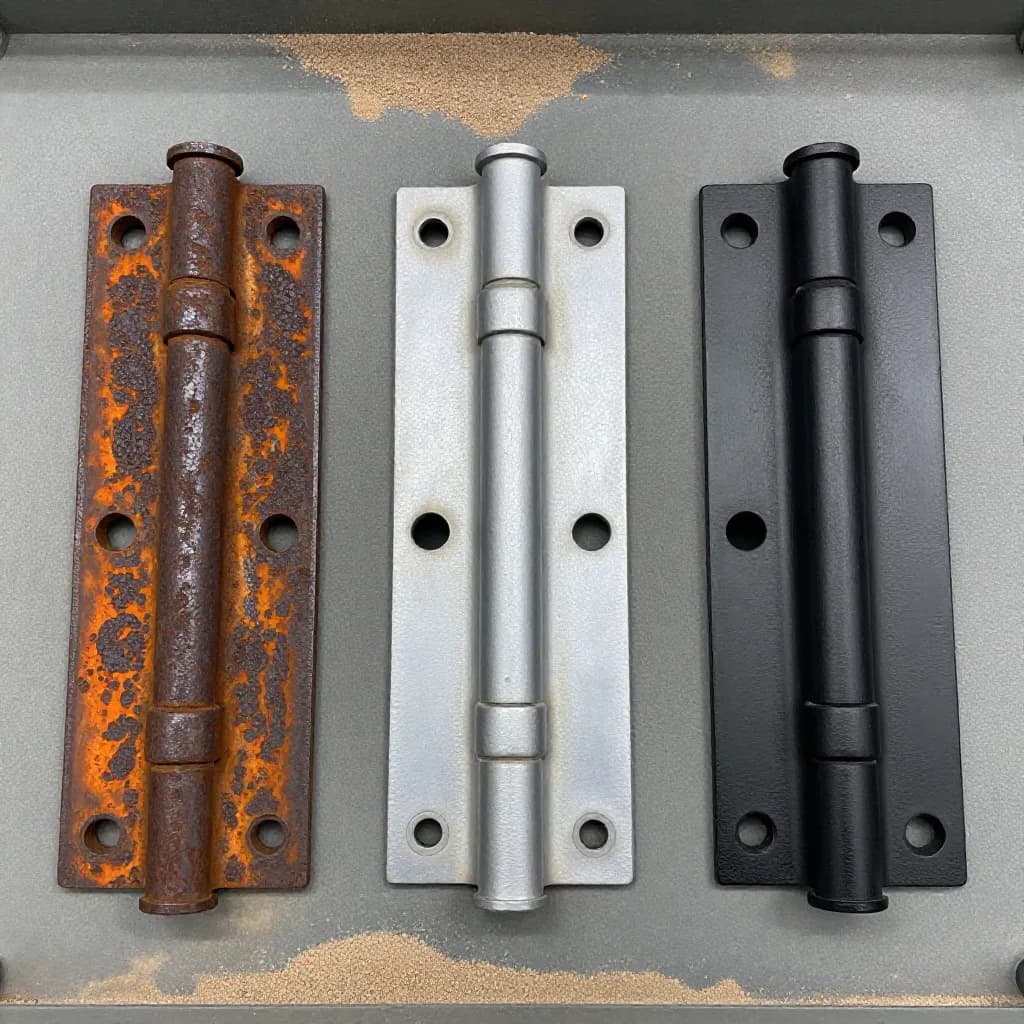
This is because rust (iron oxide) is a porous, loosely adherent material that does not provide a stable foundation for any coating system. When powder is applied over rust, the coating bonds to the rust layer rather than to the sound metal beneath it. Since the rust itself is not firmly bonded to the metal, the entire coating system is only as strong as the weakest layer — which is the rust. Additionally, rust traps moisture and continues the corrosion process beneath the coating, creating an expanding zone of degradation that eventually pushes the coating off the surface.
Ready to Start Your Project?
From one-off customs to 15,000-part production runs — get precise pricing in 24 hours.
On This Page
Yes, But All Rust Must Be Removed First
The good news is that professional powder coaters deal with rusty parts every day and have effective methods for removing rust completely. From lightly surface-rusted parts to heavily corroded components that have been exposed to the elements for years, proper preparation can restore the metal to a condition suitable for powder coating. The key is investing the time and effort in thorough preparation rather than trying to shortcut the process.
Why Rust Is the Enemy of Powder Coating
Understanding why rust is so problematic for powder coating helps explain why complete removal is essential. Rust is not a single substance but a complex mixture of iron oxides and hydroxides that forms when iron or steel is exposed to moisture and oxygen. The rust layer is porous, meaning it absorbs and retains moisture like a sponge. This trapped moisture continues to fuel the corrosion reaction even after the surface appears dry, creating an ongoing source of degradation beneath any coating applied over it.
Rust also has poor cohesive strength — it is brittle and crumbly, and it does not bond firmly to the underlying metal. As corrosion progresses, the rust layer expands in volume (iron oxide occupies roughly twice the volume of the original iron), creating mechanical stress that pushes the rust away from the metal surface. If a powder coating is applied over this unstable layer, the expanding rust will eventually crack and lift the coating from beneath.
The electrochemical nature of rust formation means that even small areas of remaining rust can act as initiation sites for further corrosion. A single spot of rust left beneath the coating will continue to grow, spreading outward and undermining the coating in an expanding circle around the original defect. This is why partial rust removal is not acceptable — the preparation must achieve bare, clean metal across the entire surface to be coated.
Abrasive Blasting: The Gold Standard
Abrasive blasting is the most effective and widely used method for removing rust from metal parts before powder coating. The process uses compressed air to propel abrasive media — such as steel grit, aluminum oxide, garnet, or glass bead — against the metal surface at high velocity. The impact of the media removes rust, mill scale, old paint, and other surface contaminants while simultaneously creating a roughened surface profile that promotes mechanical adhesion of the powder coating.
For heavily rusted parts, angular steel grit or aluminum oxide at moderate to high blast pressure provides the most efficient rust removal. The angular shape of these media cuts through rust and scale more effectively than round media like glass bead. The blast profile left by angular media — typically 50 to 75 microns — provides excellent anchor points for the powder coating. For thinner or more delicate parts where aggressive blasting might cause warping, finer media at lower pressures can be used, though the process will take longer.
The quality of the blast finish is typically specified using standards such as SSPC-SP5 (White Metal Blast), SSPC-SP10 (Near-White Blast), or SSPC-SP6 (Commercial Blast). For powder coating, a near-white blast finish (SP10) is generally the minimum acceptable standard, with white metal blast (SP5) preferred for critical applications. These standards define the percentage of the surface that must be free of all visible rust, mill scale, and other contaminants after blasting.
Chemical Rust Removal Methods
Chemical rust removal is an alternative or supplement to abrasive blasting, particularly useful for parts with complex geometries, internal surfaces, or delicate features that cannot withstand the mechanical force of blasting. Acid-based rust removers — typically containing phosphoric acid, hydrochloric acid, or proprietary acid blends — dissolve iron oxide through a chemical reaction, converting the rust into soluble iron salts that can be rinsed away.
Phosphoric acid-based rust removers are particularly popular because they not only dissolve rust but also deposit a thin iron phosphate conversion coating on the clean metal surface. This conversion coating provides temporary corrosion protection and can serve as an adhesion-promoting layer for the subsequent powder coating. However, the phosphate layer must be compatible with the powder coating system being used, and the surface should still be tested for adhesion before committing to production.
Chemical rust removal has limitations. It works best on light to moderate surface rust and may not be effective on heavily scaled or deeply pitted surfaces where the rust layer is thick and dense. For these cases, a combination approach — mechanical removal of the bulk rust by blasting or grinding, followed by chemical treatment to clean residual rust from pits and crevices — often produces the best results. After any chemical treatment, thorough rinsing with clean water is essential to remove all acid residues, which could cause coating adhesion problems or accelerate corrosion if left on the surface.
Dealing with Pitted and Heavily Corroded Metal
Heavily corroded metal presents additional challenges beyond simple rust removal. When corrosion has been active for an extended period, it often creates pitting — small craters in the metal surface where material has been lost to the corrosion process. These pits can be difficult to clean completely, as rust can remain embedded in the bottom of deep pits even after thorough blasting. They also create areas of reduced wall thickness that may affect the structural integrity of the part.
For pitted surfaces, a combination of aggressive blasting and chemical treatment is usually needed to ensure all rust is removed from within the pits. After cleaning, the pits will remain as surface irregularities in the metal. Powder coating can fill shallow pits to some degree — the typical 60 to 100 micron film build of powder coating can bridge over minor surface imperfections. However, deep pits may still be visible through the coating, particularly with smooth, glossy finishes.
In cases of severe pitting, the coater may recommend applying a thicker coating, using a textured finish that masks surface irregularities, or applying a high-build primer coat before the topcoat to fill the pits. For structural components, it is important to assess whether the material loss from corrosion has compromised the part's strength before investing in coating. A part that has lost significant wall thickness to corrosion may not be worth restoring, regardless of how good the coating looks.
Preventing Flash Rust After Preparation
Flash rust is a thin layer of orange-brown rust that forms on freshly cleaned steel surfaces within hours — or even minutes in humid conditions — after the protective oxide layer has been removed by blasting or chemical treatment. Flash rust is a common problem in powder coating operations and can compromise coating adhesion if the parts are not coated promptly after preparation.
The best prevention for flash rust is to minimize the time between surface preparation and powder application. In an ideal workflow, parts are blasted, conversion coated, and powder coated on the same day. If same-day coating is not possible, the cleaned parts should be stored in a dry, climate-controlled environment to slow the oxidation process. Some coaters apply a temporary rust-preventive treatment or conversion coating immediately after blasting to protect the surface until coating can be performed.
If flash rust does develop before coating, it must be addressed before proceeding. Light flash rust can sometimes be removed with a quick re-blast or a chemical treatment, but heavier flash rust may require repeating the full preparation process. The cost and time associated with re-preparation underscore the importance of planning the workflow to minimize the gap between preparation and coating. In humid climates or during wet seasons, this timing becomes even more critical.
Primer Coats for Extra Protection
For parts that have been heavily rusted or will be exposed to corrosive environments after coating, applying an epoxy primer coat before the topcoat provides an additional layer of protection. Epoxy primers are formulated for maximum adhesion and corrosion resistance, creating a dense, chemically resistant barrier between the metal surface and the topcoat. This two-coat system is more robust than a single topcoat alone and is recommended for any application where long-term corrosion protection is critical.
Zinc-rich epoxy primers are a particularly effective option for steel parts that will be exposed to harsh conditions. The zinc particles in the primer provide cathodic protection similar to galvanizing — if the coating is scratched or damaged, the zinc corrodes preferentially to protect the underlying steel. This sacrificial protection mechanism adds a significant safety margin against corrosion at damage sites, scratches, and edges where the coating may be thinner.
The two-coat system adds cost and processing time compared to a single coat, but the investment is justified for parts that have already demonstrated susceptibility to corrosion or that will be used in demanding environments. For indoor applications or parts with minimal corrosion exposure, a single coat of polyester or hybrid powder over properly prepared metal is usually sufficient. The coater can advise on whether a primer coat is warranted based on the part's history and intended use.
DIY Rust Removal Tips Before Sending Parts to a Coater
If you are planning to send rusty parts to a powder coater, there are steps you can take to improve the outcome and potentially reduce preparation costs. While the coater will perform the final surface preparation, removing loose rust, old paint, and heavy scale before delivery saves the coater time and ensures they can focus on achieving the precise surface condition needed for coating.
Wire brushing, scraping, and grinding can remove loose rust and flaking paint from the surface. An angle grinder with a flap disc or wire wheel attachment is effective for removing heavy rust from flat and curved surfaces. For smaller parts, soaking in a phosphoric acid-based rust remover overnight can dissolve surface rust and leave a clean, slightly phosphated surface. These steps do not replace the coater's professional preparation, but they reduce the amount of work needed and can improve turnaround time.
When delivering parts to the coater, communicate the history of the rust — how long the part has been exposed, what environment it was in, and whether there is any pitting or structural concern. This information helps the coater plan the appropriate preparation strategy. Also discuss your expectations for the finished appearance, as heavily pitted surfaces may not achieve the same smooth finish as parts with only surface rust. Setting realistic expectations upfront leads to better satisfaction with the final result.
Frequently Asked Questions
Can you powder coat directly over rust?
No. All rust must be completely removed before powder coating. Coating over rust will result in adhesion failure because the powder bonds to the unstable rust layer rather than the sound metal. The rust will continue to spread beneath the coating, causing blistering and flaking. Complete rust removal to bare metal is essential for a lasting finish.
What is the best way to remove rust before powder coating?
Abrasive blasting with steel grit or aluminum oxide is the most effective method, achieving both rust removal and surface profiling in one step. For parts with complex shapes or delicate features, chemical rust removers based on phosphoric acid are a good alternative. Heavily rusted parts often benefit from a combination of mechanical and chemical methods.
How quickly does flash rust form after blasting?
Flash rust can begin forming within minutes on freshly blasted steel in humid conditions. In dry environments, you may have several hours before visible rust appears. The best practice is to apply conversion coating and powder as soon as possible after blasting — ideally on the same day — to prevent flash rust from developing.
Will powder coating hide rust pits in the metal?
Powder coating can fill and mask shallow pits, but deep pitting will typically remain visible, especially under smooth, glossy finishes. Textured finishes and high-build primer coats can help conceal moderate pitting. For severely pitted surfaces, discuss expectations with your coater before proceeding, as the finish may not be perfectly smooth.
Is it worth powder coating heavily rusted parts?
It depends on the extent of material loss. If the rust is primarily surface corrosion without significant pitting or wall thickness reduction, powder coating can restore the part effectively. However, if corrosion has caused deep pitting or structural weakening, the part may not be worth the investment in preparation and coating. A professional coater can assess the part and advise accordingly.
Ready to Start Your Project?
From one-off customs to 15,000-part production runs — get precise pricing in 24 hours.