Whether you can powder coat exhaust pipes depends entirely on the operating temperature of the specific exhaust component and the type of powder coating used. Standard powder coatings — the polyester, epoxy, and hybrid formulations used for most applications — are rated for continuous service temperatures of approximately 150 to 200 degrees Celsius. Exhaust pipes, however, can reach temperatures far exceeding this range, with exhaust manifolds and headers routinely reaching 400 to 700 degrees Celsius and downstream pipes reaching 200 to 400 degrees Celsius.
Consumer
Can You Powder Coat Exhaust Pipes? Heat, Durability, and Options
Sundial Powder Coating·April 22, 2026·9 min
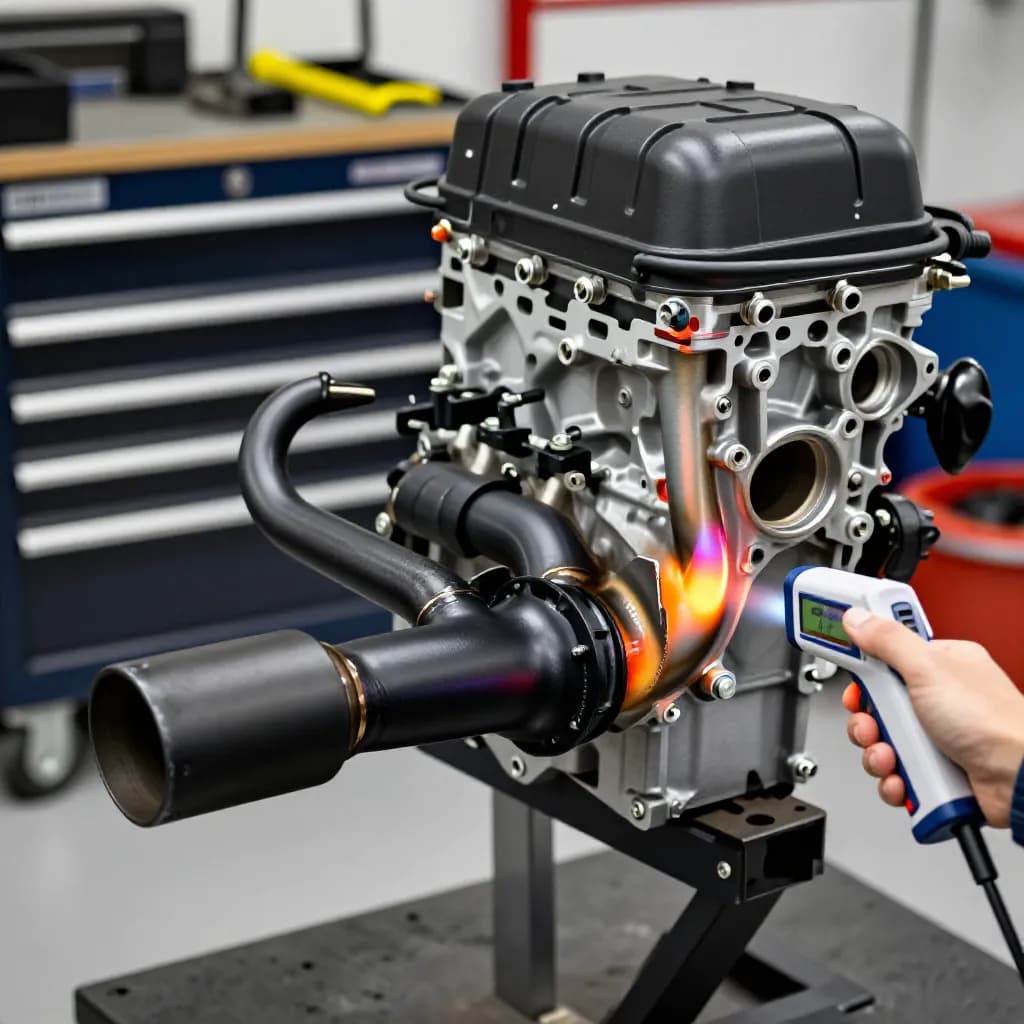
Applying standard powder coating to exhaust components that exceed the coating's temperature rating will result in rapid degradation. The coating will discolor, become brittle, crack, and eventually flake off as the organic resin breaks down from thermal exposure. This is not a gradual process — a standard polyester coating on a hot exhaust header can begin showing damage after the first drive cycle, making it a waste of time and money.
Ready to Start Your Project?
From one-off customs to 15,000-part production runs — get precise pricing in 24 hours.
On This Page
It Depends: Standard Powder Coating Has Temperature Limits
However, specialized high-temperature powder coatings do exist, and they can handle the thermal demands of certain exhaust components. Additionally, the temperature varies significantly along the length of an exhaust system — components farther from the engine run cooler and may be within the range of high-temperature powder coatings. Understanding the temperature profile of your specific exhaust system is the first step in determining whether powder coating is a viable option.
Understanding Exhaust Temperature Zones
An exhaust system is not a single-temperature environment. The temperature decreases progressively as exhaust gases travel from the engine to the tailpipe, and different components along this path experience very different thermal conditions. Understanding these temperature zones is essential for choosing the right coating approach for each section.
Exhaust manifolds and headers are the hottest components, directly connected to the engine's combustion chambers. These parts routinely reach 500 to 700 degrees Celsius during normal operation and can spike even higher under heavy load or aggressive driving. Standard powder coatings cannot survive these temperatures, and even most high-temperature powder coatings are insufficient. Ceramic-based coatings or thermal barrier coatings are typically the only viable options for these components.
Downpipes and catalytic converter housings operate at intermediate temperatures, typically 300 to 500 degrees Celsius. Some high-temperature powder coatings can handle the lower end of this range, but ceramic coatings are generally more reliable for these components. Mid-pipes, resonators, and mufflers operate at lower temperatures — typically 150 to 300 degrees Celsius — and are better candidates for high-temperature powder coating. Tailpipes and exhaust tips, being the farthest from the engine, often operate below 200 degrees Celsius and can sometimes be coated with standard high-temperature powder formulations.
High-Temperature Powder Coatings Explained
High-temperature powder coatings are specially formulated to withstand elevated service temperatures that would destroy standard powder coatings. These formulations use modified resin systems — typically silicone-modified polyester or pure silicone-based resins — that maintain their integrity at temperatures well above the limits of conventional powders. Depending on the specific formulation, high-temperature powder coatings can be rated for continuous service at 250 to 550 degrees Celsius.
Silicone-based high-temperature powders are the most heat-resistant powder coating option available. These coatings can withstand continuous temperatures of 400 to 550 degrees Celsius, making them suitable for mid-pipes, mufflers, and some downpipe applications. They are available in a limited color range — typically black, silver, gray, and a few metallic shades — because the pigments must also be heat-stable, which limits the palette compared to standard powder coatings.
The application and curing process for high-temperature powder coatings is similar to standard powders, though some formulations require a different curing schedule. Some high-temperature powders achieve their final cure through a combination of oven curing and an initial heat-up cycle during actual service — the first time the exhaust reaches operating temperature, the coating undergoes a final cross-linking reaction that completes the cure. This initial heat-up may produce some smoke or odor, which is normal and expected.
Ceramic Coatings: The Alternative for Extreme Heat
For exhaust components that exceed the temperature limits of even high-temperature powder coatings — particularly headers, manifolds, and downpipes — ceramic-based coatings are the industry standard. Ceramic exhaust coatings are not powder coatings in the traditional sense; they are typically applied as liquid coatings and cured at high temperatures to form a hard, heat-resistant ceramic layer on the metal surface.
Ceramic coatings can withstand continuous temperatures of 700 to 1,000 degrees Celsius or more, making them suitable for even the hottest exhaust components. Beyond heat resistance, ceramic coatings offer a thermal barrier effect — they reduce heat radiation from the exhaust, keeping under-hood temperatures lower and potentially improving exhaust gas velocity by maintaining higher gas temperatures within the pipe. This thermal management benefit is valued in performance and motorsport applications.
The application process for ceramic coatings differs from powder coating. The parts are typically cleaned and blasted, then the ceramic coating is sprayed on as a thin liquid film and cured in an oven at temperatures of 300 to 650 degrees Celsius, depending on the specific product. Some ceramic coatings require multiple thin coats with intermediate curing cycles. The finished coating is typically thinner than powder coating — around 25 to 50 microns — but provides superior heat resistance and thermal barrier properties.
Preparation Requirements for Exhaust Components
Regardless of whether you choose high-temperature powder coating or ceramic coating, thorough surface preparation is essential for exhaust components. Exhaust pipes accumulate a variety of contaminants during service — carbon deposits, oil residue, road salt, rust, and heat-induced oxidation scale — all of which must be removed before coating.
Abrasive blasting is the primary preparation method for exhaust components. Steel grit or aluminum oxide media at moderate pressure effectively removes rust, scale, carbon deposits, and old coatings. For stainless steel exhaust components, care must be taken to use non-ferrous blasting media (such as aluminum oxide or glass bead) to avoid embedding iron particles in the stainless surface, which could cause surface rust spots.
New or freshly fabricated exhaust components are easier to prepare than used parts, as they have not accumulated service contaminants. However, even new parts may have mill scale, forming lubricants, or welding discoloration that must be removed. For used exhaust parts, a chemical soak in a degreasing solution before blasting can help remove heavy carbon and oil deposits that would otherwise contaminate the blast media. After blasting, parts should be coated as quickly as possible to prevent flash rust on steel components.
What Parts of an Exhaust System Can Be Powder Coated
Given the temperature limitations, it is helpful to identify which specific exhaust components are good candidates for powder coating and which require alternative coatings. Tailpipes and exhaust tips are the best candidates for powder coating, as they operate at the lowest temperatures in the system and can often be coated with standard high-temperature powder formulations. These are also the most visible exhaust components, making the aesthetic benefits of powder coating particularly valuable.
Mufflers and resonators are generally suitable for high-temperature powder coating, as they typically operate in the 150 to 300 degree Celsius range. The large surface area of mufflers makes powder coating an efficient way to provide corrosion protection and a uniform appearance. Heat shields and exhaust hangers are also good candidates, as they are designed to operate at moderate temperatures and benefit from the corrosion protection that powder coating provides.
Headers, manifolds, and downpipes are generally not suitable for standard or even high-temperature powder coating due to their extreme operating temperatures. These components should be coated with ceramic-based coatings or left uncoated if they are made from corrosion-resistant materials like stainless steel. Some coaters offer a combination approach — ceramic coating on the hot components and powder coating on the cooler downstream components — to provide comprehensive protection with the appropriate coating for each temperature zone.
Durability and Maintenance Expectations
The durability of coatings on exhaust components depends on the coating type, the operating temperature, and the environmental exposure. High-temperature powder coatings on appropriately rated components — such as mufflers and tailpipes — can last several years under normal driving conditions. However, the thermal cycling that exhaust components experience (heating up during driving and cooling down when parked) creates expansion and contraction stresses that can eventually cause coating fatigue, particularly at weld joints and bends.
Ceramic coatings on high-temperature components are generally very durable, with many products rated for the life of the exhaust system. However, they can be damaged by mechanical impact — such as road debris striking the underside of the vehicle — and by chemical exposure from road salt and de-icing chemicals. Regular inspection of coated exhaust components, particularly after winter driving, helps identify any coating damage that should be addressed before corrosion takes hold.
It is important to set realistic expectations for coated exhaust components. Unlike powder-coated architectural aluminum that may last 20 to 25 years, exhaust coatings operate in one of the harshest environments on a vehicle — extreme heat, thermal cycling, vibration, chemical exposure, and mechanical impact. A well-applied high-temperature coating that lasts three to five years on a daily-driven vehicle is a good result. Motorsport and show vehicles that see less regular use may see longer coating life.
Making the Right Choice for Your Exhaust
Choosing the right coating for your exhaust system starts with understanding the temperature profile of each component and matching the coating to those conditions. For a complete exhaust system, a combination approach often makes the most sense: ceramic coating on the headers and downpipe where temperatures are highest, high-temperature powder coating on the mid-pipe and muffler where temperatures are moderate, and standard or high-temperature powder coating on the tailpipe and tips where temperatures are lowest.
Consider your priorities when making the decision. If appearance is the primary concern — for a show car or custom build — powder coating offers a wider range of colors and finishes than ceramic coating, but it can only be used on components within its temperature rating. If performance and heat management are priorities, ceramic coating on the headers and downpipe provides thermal barrier benefits that powder coating does not offer.
Always communicate clearly with your coater about the specific components you want coated and their expected operating temperatures. A knowledgeable coater will advise you on which components can be safely powder coated and which require ceramic or other high-temperature coatings. Providing information about your vehicle, engine modifications, and typical driving conditions helps the coater make accurate temperature assessments and recommend the appropriate coating system for each component.
Frequently Asked Questions
Will powder coating melt off exhaust headers?
Standard powder coating will degrade rapidly on exhaust headers, which can reach 500 to 700 degrees Celsius. The coating will discolor, crack, and flake off, often after the first drive. Headers require ceramic-based coatings rated for extreme temperatures, not standard or even high-temperature powder coatings.
What temperature can high-temperature powder coating withstand?
High-temperature powder coatings using silicone-modified or silicone-based resins can withstand continuous temperatures of 250 to 550 degrees Celsius, depending on the specific formulation. This makes them suitable for mufflers, tailpipes, and some mid-pipe applications, but not for headers or manifolds that exceed these temperatures.
Can you powder coat stainless steel exhaust tips?
Yes, stainless steel exhaust tips are excellent candidates for powder coating. They operate at relatively low temperatures and the stainless substrate provides inherent corrosion resistance. The powder coating adds color and finish options while providing additional protection against discoloration and staining from exhaust gases.
Is ceramic coating better than powder coating for exhaust?
For high-temperature components like headers and manifolds, ceramic coating is the only viable option. For cooler components like mufflers and tailpipes, powder coating offers a wider color range and thicker protective film. Many exhaust systems benefit from a combination approach using ceramic coating on hot components and powder coating on cooler ones.
Does powder coating exhaust pipes affect performance?
Powder coating on exhaust pipes has minimal effect on performance. Unlike ceramic coatings, standard powder coatings do not provide significant thermal barrier properties. The slight insulating effect of the coating is negligible in terms of exhaust flow or engine performance. Ceramic coatings on headers can provide a small performance benefit by maintaining exhaust gas temperature and velocity.
Ready to Start Your Project?
From one-off customs to 15,000-part production runs — get precise pricing in 24 hours.