The short answer is yes, you can powder coat chrome — but not by simply spraying powder over an existing chrome surface. Chrome plating creates an extremely smooth, non-porous surface that powder coating cannot adhere to reliably. If you apply powder coating directly over chrome without proper preparation, the finish will peel, chip, and flake off within weeks or even days. This is one of the most common mistakes people make when trying to change the appearance of chrome parts.
Consumer
Can You Powder Coat Chrome? Stripping, Preparation, and What to Expect
Sundial Powder Coating·April 22, 2026·12 min
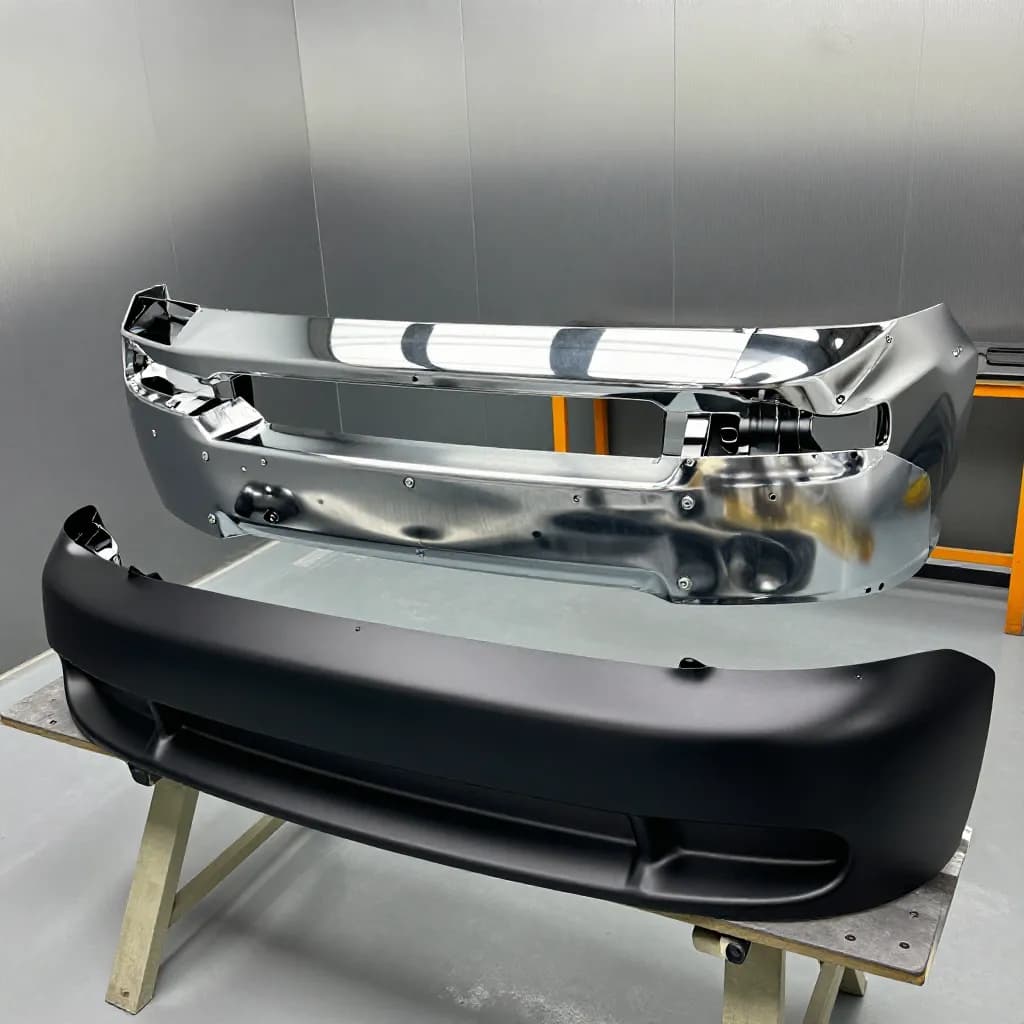
Chrome plating is an electroplated layer of chromium metal deposited onto a substrate, usually steel or aluminum, with intermediate layers of copper and nickel underneath. This multi-layer plating system creates a mirror-like surface that is chemically inert and physically smooth at a microscopic level. Powder coating relies on mechanical adhesion — the powder particles need microscopic peaks and valleys on the surface to grip onto during the curing process. Chrome provides none of that texture.
Ready to Start Your Project?
From one-off customs to 15,000-part production runs — get precise pricing in 24 hours.
On This Page
Can You Actually Powder Coat Over Chrome?
The good news is that with proper stripping and surface preparation, chrome parts can be successfully powder coated with excellent results. Many professional powder coating shops handle chrome parts regularly, particularly automotive wheels, motorcycle components, bumper brackets, and vintage car trim. The key is understanding that the chrome layer must be dealt with before any powder touches the surface, and the preparation method you choose will directly affect the quality and longevity of the final finish.
Why Chrome and Powder Coating Don't Mix Without Preparation
To understand why chrome resists powder coating, it helps to know how adhesion works at a fundamental level. Powder coating adhesion depends on two mechanisms: mechanical bonding and chemical bonding. Mechanical bonding occurs when the coating flows into microscopic surface irregularities during curing, creating a physical interlock. Chemical bonding occurs when the coating reacts with or forms molecular attractions to the substrate surface.
Chrome defeats both mechanisms. The surface is polished to a mirror finish during the plating process, eliminating the microscopic roughness that mechanical bonding requires. Chromium is also one of the most chemically stable metals, forming a passive oxide layer that resists chemical interaction with coating materials. This combination of physical smoothness and chemical inertness makes chrome one of the most challenging surfaces for any coating to adhere to.
There is an additional complication with chrome plating on steel parts. If the chrome layer is compromised in spots but not fully removed, moisture can penetrate through the powder coating to the interface between the chrome and the base metal. This creates a corrosion cell that undermines the coating from beneath, causing bubbling and delamination that may not appear for months after the coating is applied. This delayed failure is particularly frustrating because the powder coating may initially look perfect, only to deteriorate as hidden corrosion progresses underneath.
For these reasons, any professional powder coater will insist on complete chrome removal or thorough surface preparation before accepting a chrome part for coating. Cutting corners on this step is a recipe for coating failure.
Methods for Stripping Chrome Before Powder Coating
There are three primary methods for removing chrome plating before powder coating, each with distinct advantages and limitations. The right choice depends on the part geometry, base metal, and the level of surface quality required.
Chemical stripping uses hydrochloric acid or specialized chrome-stripping solutions to dissolve the chromium, nickel, and copper plating layers. This method is effective for complex shapes and parts with intricate details where mechanical methods cannot reach. Chemical stripping produces a clean, uniform surface but requires careful handling of hazardous chemicals and proper waste disposal. Most consumers will need to have this done by a professional plating or stripping shop rather than attempting it at home.
Media blasting — using aluminum oxide, garnet, or other abrasive media — is the most common preparation method used by powder coating shops. Blasting removes the chrome layer mechanically while simultaneously creating the surface profile needed for powder adhesion. The aggressiveness of the blast media and pressure must be carefully controlled to avoid warping thin parts or removing too much base metal. For steel parts, blasting to a near-white metal finish provides an ideal surface for powder coating.
Reverse electroplating is a specialized process that reverses the electrical current in a plating bath to strip the chrome layer back off the part. This method is gentle on the base metal and preserves dimensional accuracy, making it ideal for precision parts where material removal must be minimized. However, it requires specialized equipment and is typically only available through plating shops.
Many powder coating shops prefer a combination approach: chemical stripping to remove the bulk of the plating, followed by light media blasting to create the optimal surface profile for powder adhesion.
Surface Preparation After Chrome Removal
Removing the chrome is only half the battle. Once the plating is stripped, the exposed base metal must be properly prepared to ensure long-lasting powder coating adhesion. The preparation steps vary depending on whether the base metal is steel, aluminum, or zinc die-cast, which are the three most common substrates found under chrome plating.
For steel parts, the exposed surface should be media blasted to an SP-10 near-white metal standard, removing any residual plating materials, corrosion, and mill scale. After blasting, the part should be cleaned with a phosphate-based pretreatment or iron phosphate wash to promote adhesion and provide a base layer of corrosion protection. The part must be coated promptly after preparation — ideally within hours — because bare steel begins to oxidize immediately when exposed to humidity.
Aluminum parts require a different approach. After chrome stripping, aluminum should be treated with a chromate conversion coating or a chrome-free alternative such as zirconium-based pretreatment. These conversion coatings create a thin chemical layer that dramatically improves powder coating adhesion to aluminum while providing corrosion resistance at the coating-metal interface.
Zinc die-cast parts, common in automotive trim and hardware, present unique challenges. Zinc is a porous metal that can outgas during the powder coating cure cycle, causing pinholes and bubbles in the finished coating. Professional coaters address this by applying a degassing bake cycle before powder application — heating the part to cure temperature for 15-20 minutes to drive out trapped gases, then allowing it to cool before applying the powder coating. Skipping this step on zinc parts almost guarantees a defective finish.
Regardless of the base metal, thorough cleaning and degreasing after stripping is essential. Any residual stripping chemicals, oils, or contaminants left on the surface will cause adhesion failures in the powder coating.
Adhesion Challenges and How Professionals Overcome Them
Even with proper chrome removal and surface preparation, powder coating formerly chrome-plated parts can present adhesion challenges that require professional expertise to overcome. Understanding these challenges helps consumers set realistic expectations and communicate effectively with their powder coating shop.
Residual nickel is one of the most common issues. Chrome plating systems typically include a nickel layer beneath the chromium, and this nickel layer can be difficult to remove completely, especially from recessed areas and complex geometries. Nickel is smoother than bare steel and can reduce adhesion if not adequately roughened by blasting. Experienced coaters know to verify that all plating layers have been removed by testing the surface with a magnet — nickel is magnetic, so areas that attract a magnet more strongly than the surrounding steel may still have residual nickel plating.
Hydrogen embrittlement is a concern when stripping chrome from high-strength steel parts. The chemical stripping process can introduce hydrogen atoms into the steel lattice, making the metal brittle and prone to cracking under stress. For structural or safety-critical parts, a hydrogen embrittlement relief bake at 190-220 degrees Celsius for several hours after stripping is essential to drive out the absorbed hydrogen before powder coating.
Dimensional changes must also be considered. Chrome plating adds material to the surface, and removing it reduces the part dimensions slightly. For decorative parts this is rarely an issue, but for functional components like wheel hubs or bearing surfaces, the dimensional change may affect fit and function. Powder coating adds its own thickness of 50-100 microns, which partially compensates but does not exactly replicate the original chrome dimensions.
Professional powder coaters who regularly handle chrome parts have developed workflows that address all of these challenges systematically, which is why choosing an experienced shop is critical for chrome-to-powder-coat conversions.
Alternatives to Stripping: When a Chrome-Look Powder Coat Works
For consumers who want to move away from chrome but still desire a bright, reflective finish, chrome-effect powder coatings offer an interesting alternative that avoids the stripping process entirely — provided the part is not already chrome plated. These specialty powders are designed to mimic the appearance of chrome, though it is important to set realistic expectations about how closely they replicate true chrome plating.
Super chrome and mirror chrome powder coatings use metallic pigments and specialized resin systems to create a highly reflective finish. The best chrome-effect powders achieve approximately 70-80 percent of the reflectivity of true chrome plating. They look impressive and are often indistinguishable from chrome at a casual glance, but side-by-side with real chrome, the difference is visible. The powder-coated version will have a slightly warmer tone and less mirror-sharp reflection.
For parts that are not currently chrome plated, applying a chrome-look powder coating is straightforward and avoids the entire stripping process. This is an excellent option for new fabrication, replacement parts, or items that were previously painted. The chrome-effect powder is applied and cured using standard powder coating processes, though some formulations require a specific base coat for maximum reflectivity.
Other metallic powder coating options include bright silver, polished aluminum, and stainless steel effect finishes. These do not attempt to replicate chrome exactly but provide a clean, modern metallic appearance that many consumers find more appealing than traditional chrome. Satin and brushed metallic finishes are particularly popular for contemporary automotive and architectural applications.
For consumers who absolutely need true chrome reflectivity, PVD (Physical Vapor Deposition) coatings applied over a powder-coated base layer can achieve near-chrome results, though this is a more specialized and costly process available from select finishing shops.
When Powder Coating Chrome Parts Makes Sense
Powder coating chrome parts is not always the right choice, and understanding when it makes sense helps consumers make informed decisions. There are several scenarios where converting chrome to powder coating is clearly advantageous, and others where keeping or restoring the chrome plating may be the better option.
Powder coating makes strong sense when the existing chrome is damaged, pitted, or peeling. Restoring damaged chrome plating requires stripping the old plating and replating from scratch, which is often more expensive than stripping and powder coating. If the goal is simply to have an attractive, durable finish rather than specifically a chrome finish, powder coating the stripped part is typically the more economical and practical choice.
Color change is another compelling reason to powder coat chrome parts. If you want your motorcycle engine covers in matte black, your truck bumper brackets in a color-matched finish, or your vintage car trim in a custom color, powder coating after chrome stripping delivers exactly that. The durability of powder coating means the new color will resist chipping, fading, and corrosion far better than spray paint applied over chrome.
For parts exposed to harsh environments — salt spray, industrial chemicals, or extreme weather — powder coating often outperforms chrome plating in corrosion resistance. Chrome plating can develop micro-cracks that allow moisture to reach the base metal, while a properly applied powder coating creates a continuous, impermeable barrier.
However, if you value the mirror-bright appearance of chrome and the part is in good condition, maintaining the chrome plating is usually preferable. No powder coating perfectly replicates the look of polished chrome, and the cost of stripping plus powder coating may approach the cost of simply maintaining or touching up the existing chrome. For show cars and collector vehicles where originality matters, preserving factory chrome is almost always the right call.
Finding a Qualified Shop for Chrome-to-Powder-Coat Conversion
Not every powder coating shop is equipped or experienced enough to handle chrome parts properly. Finding the right shop is essential for a successful outcome, and there are several factors consumers should evaluate when choosing a provider for chrome-to-powder-coat conversion work.
First, ask specifically about their experience with chrome parts. A shop that regularly handles chrome stripping and coating will have established processes for each step — stripping, surface preparation, pretreatment, and coating application. They should be able to explain their process clearly and show examples of completed chrome conversion work. If a shop seems uncertain about how to handle chrome or suggests simply scuffing the chrome surface and coating over it, look elsewhere.
Inquire about their stripping capabilities or partnerships. Some powder coating shops have in-house chemical stripping or blasting capabilities, while others work with partner shops that handle the stripping before the parts come in for coating. Either approach can work well, but the key is that someone in the process chain has genuine expertise in chrome removal and the specific challenges it presents.
Ask about pretreatment. A quality shop will use chemical pretreatment — phosphate wash, conversion coating, or similar — rather than relying solely on media blasting for adhesion. Pretreatment is the difference between a coating that lasts a decade and one that starts failing within a year or two.
Finally, discuss expectations openly. A good shop will be honest about what powder coating can and cannot achieve on formerly chrome-plated parts. They should explain the process timeline, which is typically longer than standard powder coating work due to the additional stripping and preparation steps. They should also be upfront about any limitations related to the specific parts you are bringing in, such as thin-walled components that may warp during stripping or curing.
Frequently Asked Questions
Can you powder coat directly over chrome without stripping it?
No. Chrome plating is too smooth and chemically inert for powder coating to adhere properly. Applying powder coating directly over chrome will result in peeling and flaking, often within days or weeks. The chrome must be fully stripped and the surface properly prepared before powder coating can be applied successfully.
How is chrome removed before powder coating?
Chrome is typically removed using chemical stripping with hydrochloric acid solutions, media blasting with abrasive materials like aluminum oxide, or reverse electroplating. Many shops use a combination of chemical stripping followed by media blasting to both remove the plating and create the surface profile needed for powder coating adhesion.
Is it cheaper to powder coat chrome parts or re-chrome them?
Powder coating stripped chrome parts is generally less expensive than re-chroming, especially for large or complex parts. Re-chroming requires multiple plating steps including copper, nickel, and chromium layers, which is labor-intensive and costly. Powder coating after stripping provides a durable, attractive finish at a lower total cost in most cases.
Can powder coating look like chrome?
Chrome-effect powder coatings can achieve approximately 70-80 percent of the reflectivity of true chrome plating. They look impressive and are often hard to distinguish from chrome at a casual glance, but they do not perfectly replicate the mirror-bright finish of real chrome. For the closest match, PVD coatings over a powder-coated base layer can approach true chrome appearance.
How long does powder coating last on formerly chrome-plated parts?
When properly stripped, prepared, and coated, powder coating on formerly chrome-plated parts will last 10-20 years depending on the environment and use. The key to longevity is thorough chrome removal and proper pretreatment of the base metal before powder application. Cutting corners on preparation is the primary cause of premature coating failure on these parts.
Ready to Start Your Project?
From one-off customs to 15,000-part production runs — get precise pricing in 24 hours.