Cast iron is absolutely a candidate for powder coating, and the results can be outstanding when the process is done correctly. However, cast iron presents unique challenges that set it apart from other metals commonly sent through the powder coating line. The porous nature of cast iron means that oils, moisture, and gases can become trapped within the material during the casting process, and these contaminants can cause serious defects if not addressed before coating.
Consumer
Can You Powder Coat Cast Iron? What You Need to Know
Sundial Powder Coating·April 22, 2026·9 min
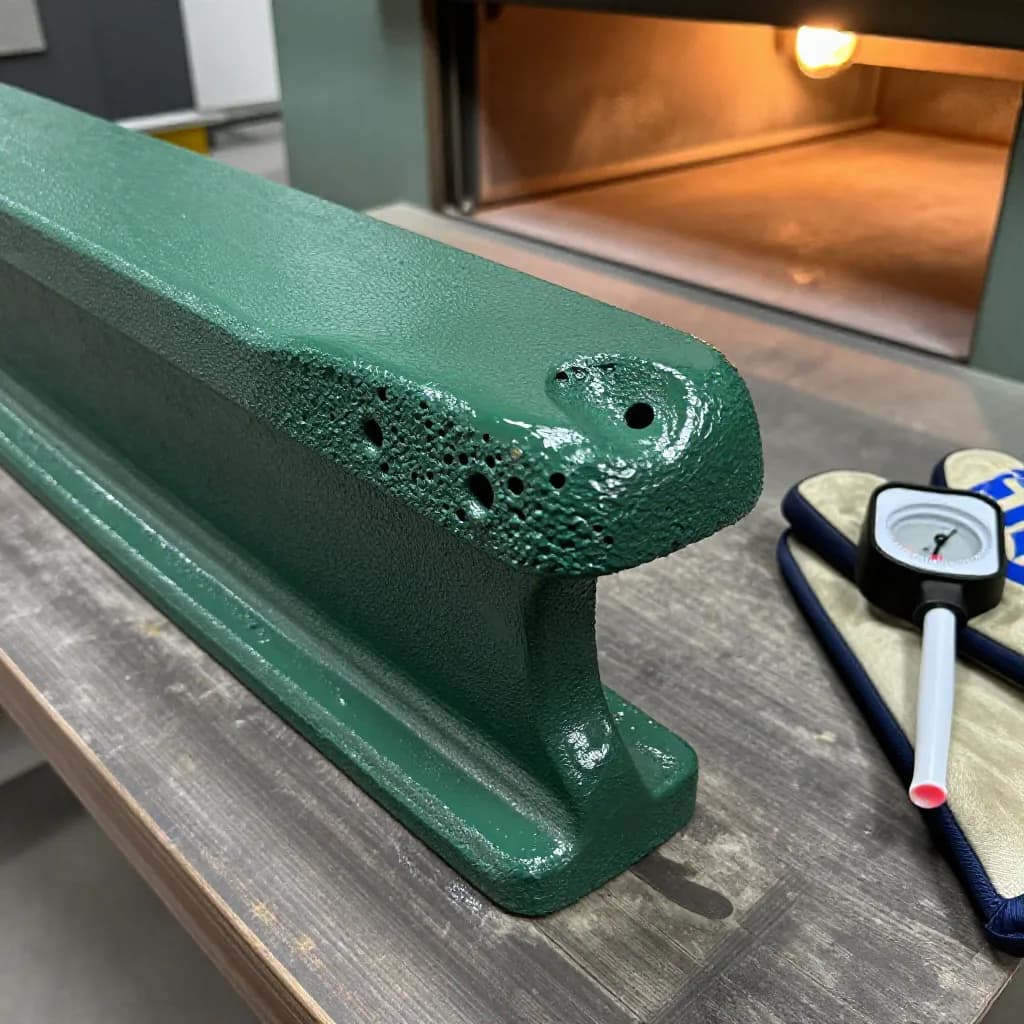
The good news is that experienced powder coaters work with cast iron regularly. Items like engine blocks, manifolds, decorative railings, wood stoves, cookware, vintage machinery, and ornamental garden furniture are all commonly powder coated with excellent results. The key difference between coating cast iron and coating sheet steel or aluminum is the additional preparation time and the need to address outgassing — a phenomenon where trapped gases escape from the porous substrate during the curing process and create pinholes or bubbles in the finished coating.
Ready to Start Your Project?
From one-off customs to 15,000-part production runs — get precise pricing in 24 hours.
On This Page
Yes, You Can Powder Coat Cast Iron — With Extra Preparation
When properly prepared and coated, powder-coated cast iron delivers exceptional durability. The thick, uniform film provided by powder coating protects the iron from moisture and oxygen, preventing the rust that is cast iron's greatest enemy. For restoration projects, decorative pieces, and functional components that need long-lasting protection, powder coating is one of the best finishing options available for cast iron.
The Outgassing Challenge Explained
Outgassing is the single biggest challenge when powder coating cast iron, and understanding it is essential for achieving a quality finish. Cast iron is produced by pouring molten iron into molds, and the resulting material has a microscopically porous structure. During its service life, these pores absorb oils, moisture, and other contaminants. When the coated part enters the curing oven at temperatures of 180 to 200 degrees Celsius, these trapped substances vaporize and attempt to escape through the powder coating film.
If the powder has already begun to gel and cross-link when the gases try to escape, the result is pinholes, craters, or bubbles in the finished surface. These defects are not just cosmetic — they compromise the protective barrier of the coating and can allow moisture to reach the iron substrate, leading to rust formation beneath the coating. In severe cases, the coating may need to be stripped and the entire process repeated.
The severity of outgassing depends on several factors: the age and history of the casting, the porosity of the specific iron alloy, what contaminants the part has been exposed to during its life, and how thoroughly the part has been cleaned and pre-baked before coating. Older castings that have spent decades absorbing oil, grease, and moisture will typically outgas more aggressively than newer, cleaner castings. Understanding these variables helps the coater determine the appropriate preparation strategy for each specific part.
Surface Preparation for Cast Iron
Proper surface preparation is critical for successful powder coating of cast iron and typically involves more steps than preparing mild steel or aluminum. The process begins with thorough cleaning to remove surface contaminants such as grease, oil, rust, old paint, and scale. Abrasive blasting — usually with aluminum oxide, steel grit, or garnet media — is the preferred method for cast iron because it simultaneously removes contaminants and creates the surface profile needed for mechanical adhesion of the powder coating.
For cast iron parts with heavy rust or old coatings, aggressive blasting with angular steel grit provides the best combination of cleaning power and surface profile. The blast profile should be sufficient to create anchor points for the powder without being so aggressive that it opens up additional porosity in the casting surface. A profile of 50 to 75 microns is generally appropriate for most cast iron applications.
Chemical cleaning may be used as a supplement to blasting, particularly for parts with heavy oil contamination. Hot alkaline wash solutions can help draw oils out of the porous structure before blasting. Some coaters use a combination approach: an initial chemical soak to remove bulk contamination, followed by abrasive blasting to clean the surface and create the proper profile. After blasting, parts should be coated as quickly as possible to prevent flash rusting, which can begin within hours in humid conditions.
Pre-Bake Process: The Key to Success
The pre-bake is the most important step in the cast iron powder coating process and the one that separates a professional result from a failed one. Pre-baking involves placing the cleaned, blasted cast iron part in the curing oven at or above the powder curing temperature — typically 200 to 230 degrees Celsius — for an extended period before any powder is applied. This drives out trapped moisture, oils, and gases from the porous structure while the surface is still bare.
The duration of the pre-bake depends on the mass and porosity of the casting. Light castings may only need 30 to 45 minutes, while heavy, thick-walled castings or parts with extensive contamination history may require two hours or more. Some coaters perform multiple pre-bake cycles, allowing the part to cool between cycles and then reheating it, to ensure thorough degassing. The part is considered ready when it can go through a full oven cycle without visible smoke or vapor being released.
After the pre-bake, the part should be allowed to cool to a temperature suitable for electrostatic powder application — typically around 20 to 40 degrees Celsius. Some experienced coaters apply the powder while the part is still slightly warm, which can help the powder adhere to the surface and begin to flow before the part enters the curing oven. This technique requires careful temperature control but can produce excellent results on challenging castings.
Best Powder Types for Cast Iron
The choice of powder coating chemistry matters when coating cast iron, and some formulations perform better than others on porous substrates. Epoxy powder coatings are an excellent choice for cast iron parts that will be used indoors or in environments where UV exposure is minimal. Epoxy provides outstanding adhesion, chemical resistance, and corrosion protection, and its slower gel time during curing gives outgassing a wider window to escape before the film seals.
For parts that will be exposed to sunlight or outdoor conditions, polyester or hybrid epoxy-polyester powders are the better choice. Polyester coatings offer superior UV resistance and color retention compared to epoxy, making them suitable for outdoor furniture, railings, and decorative ironwork. Hybrid powders combine some of the adhesion benefits of epoxy with the weathering resistance of polyester, offering a balanced performance profile for cast iron applications.
Textured and wrinkle-finish powders deserve special mention for cast iron work. These finishes are more forgiving of minor surface imperfections and can help mask small outgassing defects that might be visible in a smooth, glossy finish. Textured black, bronze, and hammertone finishes are particularly popular for cast iron restoration projects because they complement the traditional aesthetic of ironwork while providing excellent protection. The texture also helps hide the natural surface irregularities that are characteristic of sand-cast iron.
Common Cast Iron Items That Are Powder Coated
Cast iron powder coating spans a wide range of applications, from industrial components to decorative restoration projects. Automotive parts are among the most frequently coated cast iron items — engine blocks, cylinder heads, intake manifolds, differential housings, and brake drums are all regularly powder coated for both protection and appearance. In the automotive restoration community, powder coating has become the preferred finish for engine bay components because it withstands heat, oil, and cleaning chemicals far better than conventional spray paint.
Decorative and architectural cast iron is another major category. Victorian-era railings, balustrades, garden benches, lamp posts, fireplace surrounds, and ornamental gates are frequently restored with powder coating. These items often have intricate detail work that benefits from the uniform coverage that electrostatic powder application provides — the charged powder particles wrap around complex shapes and reach into recesses that would be difficult to coat evenly with a brush or spray gun.
Functional household items made from cast iron are also commonly powder coated. Wood-burning stoves, fire grates, radiators, manhole covers, drain grates, and outdoor fire pits all benefit from the durable, heat-resistant protection that powder coating provides. Even cast iron cookware — skillets, Dutch ovens, and griddles — can be powder coated on their exterior surfaces, though the cooking surfaces are typically left bare for seasoning.
Alternatives to Powder Coating Cast Iron
While powder coating is an excellent choice for most cast iron applications, there are situations where alternative finishes may be more appropriate. Traditional oil-based paint remains a viable option for cast iron, particularly for large structural elements like bridges, building frames, or industrial equipment where the parts are too large to fit in a powder coating oven. Brush or spray application of liquid paint can be done on-site without the need for oven curing.
For cast iron parts that will be exposed to extremely high temperatures — such as exhaust manifolds, wood stove interiors, or fireplace grates that sit directly in the fire — ceramic-based high-temperature coatings may be a better choice. Standard powder coatings are rated for continuous exposure up to about 200 degrees Celsius, while specialty high-temperature coatings can withstand 500 degrees Celsius or more. These are typically applied as liquid coatings and air-cured or cured at lower temperatures.
Hot-dip galvanizing is another alternative for cast iron parts that need maximum corrosion protection in harsh outdoor environments. The zinc coating provides sacrificial protection, meaning it corrodes preferentially to protect the underlying iron even if the coating is damaged. For the ultimate protection, some specifiers choose a duplex system — hot-dip galvanizing followed by powder coating — which combines the sacrificial protection of zinc with the aesthetic and barrier protection of powder coating.
Tips for Getting the Best Results
If you are planning to have cast iron parts powder coated, there are several steps you can take to improve the outcome. First, communicate the history of the part to your coater. Let them know if the casting has been exposed to oil, grease, or other contaminants over its life, as this information helps them determine the appropriate pre-bake duration and preparation strategy. A part that spent decades in an engine bay will need more preparation than a new casting fresh from the foundry.
Choose a coater with specific experience in cast iron work. Not all powder coating shops are equally equipped or experienced in handling porous substrates. Ask potential coaters about their pre-bake process, whether they have dealt with outgassing issues before, and what their approach is for ensuring quality on cast iron. A shop that specializes in automotive or restoration work will typically have more cast iron experience than one focused primarily on architectural aluminum.
Consider your finish choice carefully. As mentioned earlier, textured and wrinkle finishes are more forgiving on cast iron than smooth, high-gloss finishes. If a smooth finish is essential, discuss this with your coater upfront so they can plan for additional preparation steps. Finally, be prepared for the possibility that cast iron may require a second coat or a strip-and-recoat if outgassing issues arise during the first attempt. This is not a reflection of poor workmanship — it is simply the nature of working with a porous substrate.
Frequently Asked Questions
Why does cast iron bubble when powder coated?
Bubbling occurs due to outgassing — trapped moisture, oils, and gases within the porous cast iron structure vaporize during oven curing and push through the powder film. The solution is thorough pre-baking of the bare part at or above curing temperature before applying powder, which drives out contaminants while the surface is still uncoated.
How long should you pre-bake cast iron before powder coating?
Pre-bake duration depends on the size, thickness, and contamination level of the casting. Light parts may need 30 to 45 minutes at 200 to 230 degrees Celsius, while heavy or heavily contaminated castings may require two hours or more. The part is ready when it completes a full oven cycle without releasing visible smoke or vapor.
Can you powder coat a cast iron skillet?
You can powder coat the exterior of a cast iron skillet for a decorative and protective finish. However, the interior cooking surface should not be powder coated — it should be left bare and seasoned with oil in the traditional manner. Powder coating is not food-safe for direct cooking contact and would not withstand the high temperatures and abrasion of regular cooking use.
Is powder coating better than painting cast iron?
For most applications, powder coating provides superior durability, corrosion resistance, and finish quality compared to liquid paint on cast iron. The thicker, more uniform film and chemical cross-linking of powder coating create a harder, more resilient barrier. However, liquid paint may be more practical for very large parts that cannot fit in a curing oven or for on-site touch-up work.
Can you powder coat rusty cast iron?
Yes, but all rust must be completely removed before coating. Abrasive blasting is the most effective method for removing rust from cast iron, as it also creates the surface profile needed for powder adhesion. Any rust left beneath the coating will continue to spread and eventually cause the coating to fail, so thorough preparation is essential.
Ready to Start Your Project?
From one-off customs to 15,000-part production runs — get precise pricing in 24 hours.