Brake calipers are one of the most popular automotive components for powder coating, and the process is both safe and effective when done correctly. Powder-coated calipers provide a durable, professional-looking finish that resists brake dust, road salt, moisture, and the moderate heat generated during normal braking. The result is a clean, vibrant appearance that lasts significantly longer than brush-on caliper paint.
Consumer
Can You Powder Coat Brake Calipers? Safety and Performance Guide
Sundial Powder Coating·April 22, 2026·9 min
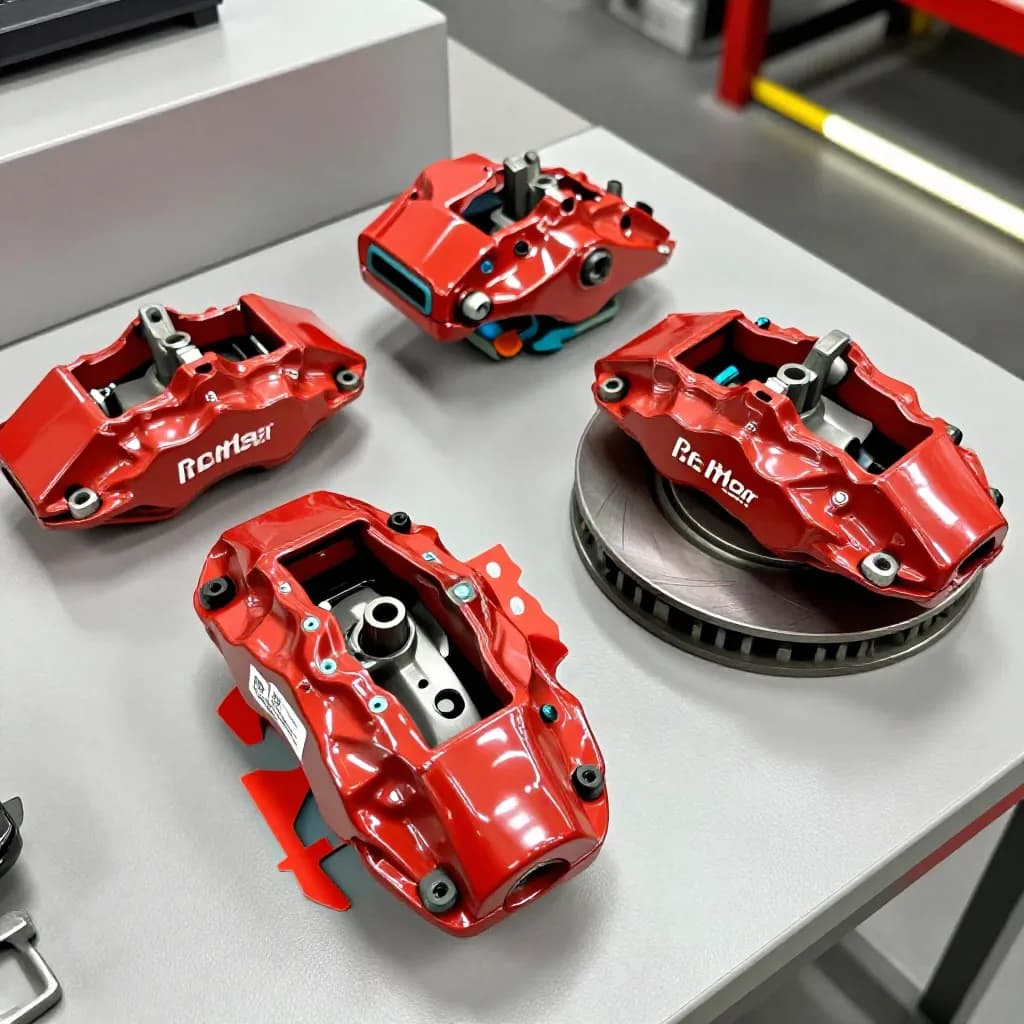
Powder coating brake calipers has become mainstream in both the automotive aftermarket and OEM manufacturing. Many performance and luxury vehicles leave the factory with powder-coated calipers in brand-specific colors — red, yellow, blue, or orange — as a visual indicator of their braking hardware. In the aftermarket, powder coating allows vehicle owners to customize their calipers to match their vehicle's color scheme or personal style.
Ready to Start Your Project?
From one-off customs to 15,000-part production runs — get precise pricing in 24 hours.
On This Page
Yes, Brake Calipers Can Be Powder Coated
However, brake calipers are safety-critical components, and the coating process must be handled with care to avoid compromising brake function. Proper masking of critical surfaces, appropriate powder selection for the operating temperature range, and careful reassembly after coating are all essential. This is not a component where shortcuts should be taken — the consequences of a coating-related brake failure could be severe.
Temperature Considerations for Brake Calipers
Understanding the temperature environment that brake calipers operate in is essential for choosing the right coating. During normal street driving, brake calipers typically reach temperatures of 100 to 200 degrees Celsius. Under more aggressive driving — spirited mountain road driving, towing, or occasional track use — caliper temperatures can reach 250 to 350 degrees Celsius. Dedicated track cars and racing vehicles can push caliper temperatures to 400 degrees Celsius or higher during sustained hard braking.
Standard polyester powder coatings are rated for continuous service at approximately 150 to 200 degrees Celsius, which is adequate for calipers on daily-driven vehicles that are not subjected to aggressive braking. For vehicles that see occasional spirited driving or light track use, high-temperature powder coatings rated for 250 to 350 degrees Celsius provide a better safety margin. For dedicated track or racing vehicles, ceramic-based coatings or specialized ultra-high-temperature formulations may be necessary.
It is worth noting that the caliper body itself does not reach the same temperature as the brake rotor or pad. The caliper is separated from the rotor by the brake pads, which act as thermal insulators. The caliper body absorbs heat primarily through conduction from the brake fluid and the caliper piston, and through radiation from the rotor. This thermal separation means that caliper temperatures are typically 100 to 200 degrees lower than rotor temperatures, making powder coating a viable option for most street applications.
Critical Masking Requirements
Proper masking is the most important safety consideration when powder coating brake calipers. Several surfaces and features on the caliper must be kept completely free of coating to ensure proper brake function. Failure to mask these areas correctly can result in brake malfunction, which is a serious safety hazard.
The piston bore is the most critical area to mask. Any coating inside the piston bore will interfere with the piston seal and can cause the piston to stick, bind, or fail to retract properly. This can result in brake drag, uneven braking, or complete brake failure. The bore must be plugged or masked with high-temperature silicone plugs or tape that can withstand the curing oven temperature without leaving residue.
Bleeder valve threads, brake line fitting threads, and mounting bolt holes must also be masked to ensure proper assembly after coating. Coating on threaded surfaces can prevent proper torque values from being achieved and can interfere with the seal between the brake line fitting and the caliper. The pad contact surfaces — where the brake pads slide within the caliper bracket — should also be kept free of coating to ensure smooth pad movement. Any surface that interfaces with another component during assembly should be evaluated for masking requirements.
The Powder Coating Process for Calipers
The powder coating process for brake calipers follows the same general steps as other metal parts but with additional attention to cleaning, masking, and quality control. The process begins with complete disassembly of the caliper — removing pistons, seals, bleeder valves, brake lines, and any hardware. The caliper body and bracket are then cleaned to remove brake fluid, grease, brake dust, rust, and old paint or coating.
Abrasive blasting with aluminum oxide or glass bead media removes surface contaminants and creates the profile needed for powder adhesion. The blast pressure should be moderate to avoid damaging machined surfaces. After blasting, all critical surfaces are masked as described above, and the caliper is ready for powder application.
The powder is applied electrostatically and cured in the oven according to the powder manufacturer's specifications — typically 15 to 20 minutes at 190 to 200 degrees Celsius for standard powders, or according to the specific schedule for high-temperature formulations. After curing and cooling, all masking is removed and the caliper is inspected to verify that no coating has migrated onto masked surfaces. The caliper is then reassembled with new seals, O-rings, and bleeder valve washers — these rubber and copper components should always be replaced during the process, as the oven heat will have degraded any seals left in place.
Powder Coating vs. Caliper Paint
Powder coating and brush-on or spray caliper paint are the two main options for finishing brake calipers, and they differ significantly in durability, appearance, and application process. Caliper paint — available in aerosol cans and brush-on kits — is the simpler and less expensive option. It can be applied without removing the calipers from the vehicle, requires no oven curing, and is available in a range of colors. However, caliper paint is significantly less durable than powder coating.
Brush-on caliper paint typically lasts one to three years before showing signs of chipping, fading, or peeling, particularly in areas exposed to brake dust and road debris. The thin film — typically 25 to 50 microns — provides limited protection against mechanical damage and chemical exposure. Spray-applied caliper paint can achieve a smoother finish than brush application but still lacks the film thickness and cross-linked durability of powder coating.
Powder coating provides a substantially thicker film — typically 60 to 100 microns — that is fully cross-linked during the oven curing process. This creates a harder, more chemically resistant, and more mechanically durable finish that typically lasts five to ten years or more on a daily-driven vehicle. The finish quality is also superior, with a more uniform appearance and a wider range of available colors, textures, and gloss levels. The trade-off is that powder coating requires caliper removal, disassembly, and professional application, making it a more involved and costly process.
Choosing Colors and Finishes for Calipers
One of the main attractions of powder coating brake calipers is the virtually unlimited range of colors and finishes available. While red remains the most popular caliper color — associated with performance braking brands and sports cars — powder coating opens up the full spectrum of possibilities. Yellow, orange, blue, green, purple, gold, and custom-matched colors are all achievable, allowing vehicle owners to coordinate their calipers with their vehicle's paint, wheel finish, or personal style.
Gloss finishes are the most common choice for calipers, as they provide a clean, vibrant appearance that is easy to clean and shows off the color well. However, matte and satin finishes are gaining popularity for a more understated, modern look. Metallic and pearl-effect powders add depth and visual interest, particularly in silver, gunmetal, and bronze tones that complement many wheel finishes.
When choosing a caliper color, consider the practical aspects as well as the aesthetics. Lighter colors — white, yellow, and light silver — show brake dust more readily than darker colors, requiring more frequent cleaning to maintain their appearance. Darker colors like black, dark gray, and dark blue are more forgiving of brake dust accumulation between cleanings. Textured finishes can also help mask brake dust and minor surface imperfections, though they are less common on calipers than smooth finishes.
Safety Considerations and Professional Recommendations
Because brake calipers are safety-critical components, the powder coating process should be approached with appropriate care and attention. The most important safety recommendation is to have the work done by a professional powder coater who has experience with brake components and understands the masking requirements. A coater who regularly handles calipers will know which surfaces must be protected and will have the proper masking materials and techniques.
After coating and reassembly, the brake system must be properly bled to remove any air that entered during disassembly. The calipers should be inspected for proper piston movement, seal integrity, and brake line connection tightness before the vehicle is driven. A careful bedding-in procedure — gradually increasing braking force over several stops — allows the new pads to seat properly against the rotors and verifies that the braking system is functioning correctly.
It is also advisable to replace all rubber seals, O-rings, and dust boots during the reassembly process, even if the originals appear to be in good condition. The heat of the curing oven can degrade rubber components, and the cost of new seals is minimal compared to the risk of a seal failure. Using OEM or quality aftermarket seal kits ensures proper fit and material compatibility with the brake fluid used in the system.
Can You Powder Coat Calipers at Home?
Powder coating brake calipers at home is technically possible if you have a powder coating setup — including a powder gun, compressor, and a curing oven large enough to accommodate the calipers. Home powder coating has become increasingly popular among automotive enthusiasts, and calipers are one of the most common DIY powder coating projects.
However, the safety-critical nature of brake calipers means that DIY coating requires extra diligence. You must be confident in your ability to properly mask all critical surfaces, achieve adequate film thickness and cure, and correctly reassemble and bleed the brake system afterward. If you have any doubt about any of these steps, professional coating is the safer choice.
If you do choose to coat calipers at home, invest in proper masking materials — high-temperature silicone plugs for piston bores and threaded holes, and high-temperature masking tape for flat surfaces. Use a powder formulated for high-temperature applications rather than a standard polyester, even if your vehicle is a daily driver. The additional heat resistance provides a safety margin that is worth having on a brake component. After reassembly, test the brakes thoroughly at low speed before driving normally, and re-check all connections after the first few drives.
Frequently Asked Questions
Is it safe to powder coat brake calipers?
Yes, powder coating brake calipers is safe when done correctly. The key safety requirements are proper masking of the piston bore, bleeder threads, and brake line fittings, using heat-appropriate powder, and replacing all rubber seals during reassembly. Professional coating by an experienced shop is recommended for safety-critical brake components.
How long does powder coating last on brake calipers?
Powder coating on brake calipers typically lasts five to ten years on a daily-driven vehicle, significantly longer than brush-on caliper paint which usually lasts one to three years. The durability depends on driving conditions, braking intensity, and exposure to road salt and chemicals. Track-driven vehicles may see shorter coating life due to higher temperatures.
Do you need to remove calipers to powder coat them?
Yes, calipers must be removed from the vehicle and fully disassembled before powder coating. The pistons, seals, bleeder valves, and brake lines must all be removed so the caliper body can be blasted, masked, coated, and oven-cured. This is one reason powder coating is more involved than brush-on caliper paint, which can be applied on the vehicle.
Can powder coating cause brake calipers to stick?
Only if the piston bore is not properly masked during coating. Any coating inside the bore can interfere with piston movement and seal function, potentially causing the caliper to stick or drag. Proper masking of the bore with high-temperature silicone plugs prevents this issue entirely.
What color is best for powder-coated brake calipers?
Color choice is primarily aesthetic, but darker colors like black, dark gray, and dark blue are more practical because they show brake dust less than lighter colors. Red remains the most popular choice for its association with performance braking. Consider your vehicle's color scheme and wheel finish when choosing, and remember that any RAL or custom color is achievable with powder coating.
Ready to Start Your Project?
From one-off customs to 15,000-part production runs — get precise pricing in 24 hours.