Trailers can be powder coated, and the durable, corrosion-resistant finish that powder coating provides is ideally suited to the harsh conditions that trailers endure. Road salt, gravel impact, rain, UV exposure, and the mechanical stresses of loading and hauling all take a heavy toll on trailer finishes, and powder coating handles these conditions far better than conventional paint. The challenge is not whether powder coating works on trailers — it is whether the trailer fits in the oven.
Consumer
Can You Powder Coat a Trailer? Size, Process, and Durability
Sundial Powder Coating·April 22, 2026·9 min
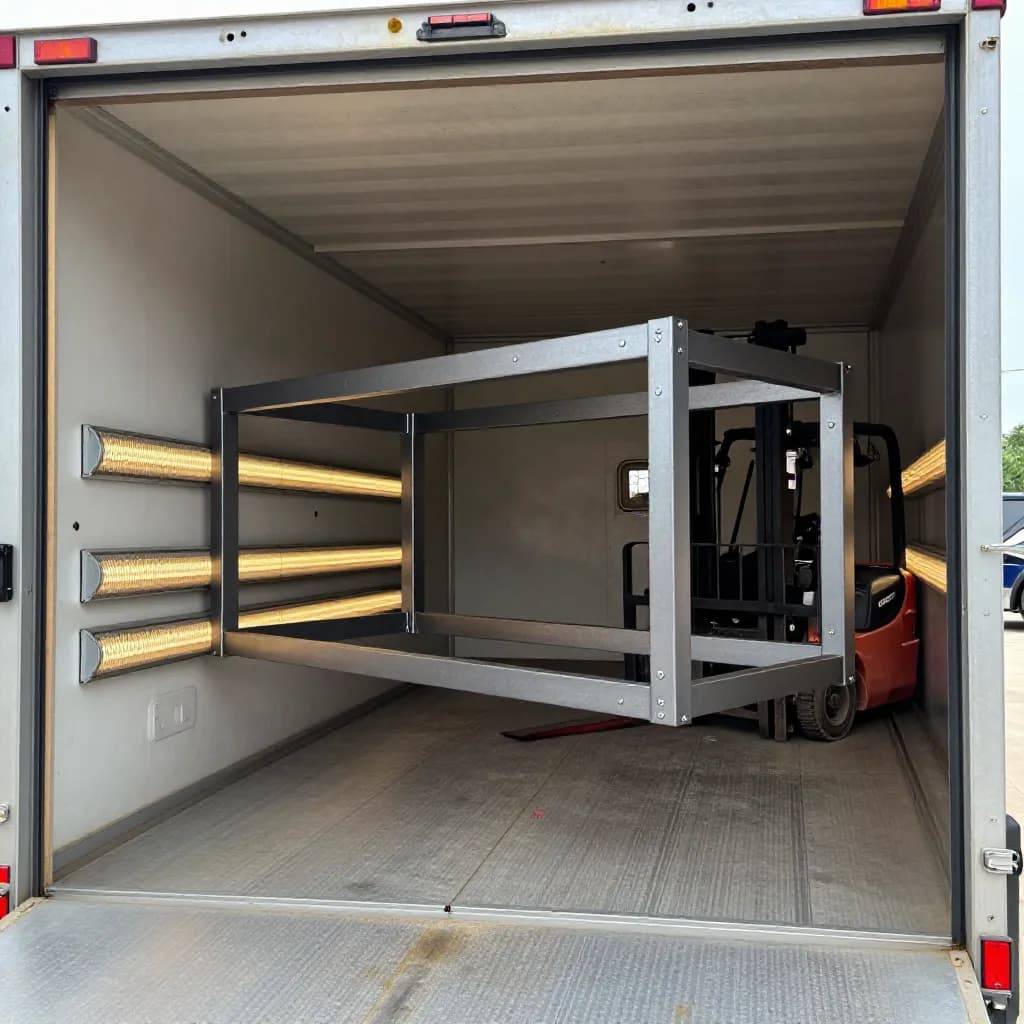
Small trailers — such as motorcycle trailers, jet ski trailers, small utility trailers, and boat trailers under 4 meters in length — can often be accommodated by larger powder coating shops that have industrial-sized ovens. These shops typically serve the agricultural, industrial, and infrastructure sectors and have ovens designed for large structural components like guardrails, light poles, and equipment frames.
Ready to Start Your Project?
From one-off customs to 15,000-part production runs — get precise pricing in 24 hours.
On This Page
Yes, But Size Is the Main Challenge
Larger trailers — full-size utility trailers, car haulers, flatbed trailers, and enclosed trailers — are generally too large to fit in any available powder coating oven as a complete unit. For these trailers, the practical approach is to disassemble the trailer into individual components and coat each piece separately, or to coat the frame and structural members before the trailer is assembled. Some trailer manufacturers incorporate powder coating into their production process, coating the frame before the deck, sides, and other components are attached.
Which Trailer Components Benefit Most
The trailer frame is the component that benefits most from powder coating. The frame is the structural backbone of the trailer and is exposed to the worst combination of road debris impact, water spray, salt exposure, and mechanical stress. A rusted trailer frame is not just cosmetically unpleasant — it is a safety hazard, as corrosion weakens the structural members that support the load and connect to the towing vehicle. Powder coating the frame provides a thick, durable barrier that dramatically extends its service life.
Tongue assemblies, coupler housings, and jack stands are other high-value components for powder coating. These parts are located at the front of the trailer where they are directly exposed to road spray from the towing vehicle's rear wheels, making them particularly vulnerable to corrosion. The mechanical connections in these components — the coupler ball socket, jack mechanism, and safety chain attachment points — must remain structurally sound for safe towing.
Axle assemblies, spring hangers, equalizers, and suspension components are also excellent candidates. These parts operate in the most corrosive zone of the trailer — directly behind the wheels where road salt, water, and debris are concentrated. Fenders, ramps, side rails, stake pockets, and tie-down rings round out the list of components that benefit significantly from powder coating's superior corrosion and impact resistance.
Preparation for Trailer Components
Trailer components require thorough preparation before powder coating, and the condition of the parts determines the extent of work needed. New trailer frames and components fresh from fabrication need degreasing to remove cutting oils and welding residue, followed by abrasive blasting to remove mill scale and create surface profile. Mill scale — the dark oxide layer that forms on hot-rolled steel during manufacturing — must be completely removed, as it is loosely adherent and will cause coating failure if left in place.
Used trailer components that have been in service present additional challenges. Road salt, grease, mud, and corrosion products must all be removed before blasting. A pressure wash or chemical cleaning step before blasting removes the bulk of surface contamination. Abrasive blasting then removes rust, old paint, and any remaining contaminants while creating the surface profile needed for powder adhesion.
For heavily rusted trailer frames, assess the structural integrity before investing in coating. Probe any areas of heavy rust with a screwdriver or awl to check for thin spots or perforations. Structural members that have lost significant wall thickness to corrosion may need to be repaired or replaced before coating. A qualified welder can reinforce weakened areas, and the repairs should be completed before the final blasting and coating steps.
Coating Specifications for Trailers
Given the harsh environment that trailers operate in, the coating specification should prioritize corrosion protection and mechanical durability. A two-coat system with an epoxy primer and a polyester topcoat is the recommended specification for trailer frames and structural components. The epoxy primer provides excellent adhesion and corrosion resistance at the metal interface, while the polyester topcoat provides UV resistance, color, and additional mechanical protection.
For trailers used in coastal environments or regions with heavy road salt use, a zinc-rich epoxy primer provides additional protection through cathodic (sacrificial) protection. If the coating is scratched or chipped, the zinc in the primer corrodes preferentially to protect the underlying steel, similar to the protection provided by galvanizing. This added protection is particularly valuable for trailer frames that are difficult to inspect and maintain in the areas most vulnerable to corrosion.
The total film build for a two-coat trailer system should be 100 to 150 microns — thicker than the typical single-coat application used for decorative items. This additional thickness provides a more robust barrier against the stone chips, abrasion, and chemical exposure that trailers endure. For single-coat applications where a primer is not used, a minimum film thickness of 80 microns is recommended, with thicker application on high-impact areas such as the tongue, fender mounting areas, and the rear crossmember.
Powder Coating vs. Paint for Trailers
The comparison between powder coating and conventional paint for trailers strongly favors powder coating in terms of durability and long-term performance. Spray-painted trailer frames — whether from the factory or from a body shop — typically begin showing rust and paint failure within two to four years of road use, particularly in regions with winter road salt. The thin paint film is quickly compromised by stone chips, abrasion from cargo, and the constant moisture exposure that trailers experience.
Powder coating provides a substantially thicker, harder, and more chemically resistant film that typically lasts five to ten years or more on a trailer frame, even in harsh conditions. The fully cross-linked resin matrix resists chipping from stone impacts, does not soften when exposed to fuel, hydraulic fluid, or cleaning chemicals, and maintains its adhesion through the thermal cycling and mechanical stress of trailer operation.
The initial cost of powder coating a trailer frame is higher than spray painting, but the lifecycle cost is typically lower because the powder coating lasts significantly longer before recoating is needed. A trailer frame that needs repainting every three years will cost more in total paint and labor over a 15-year period than a single powder coating application that lasts the entire period. For commercial trailers that generate revenue, the reduced downtime for maintenance is an additional economic benefit.
Galvanizing Plus Powder Coating: The Ultimate Protection
For trailer owners who want the maximum possible corrosion protection, the combination of hot-dip galvanizing and powder coating — the duplex system — provides unmatched durability. This approach is particularly valuable for boat trailers that are regularly submerged in water, trailers used in coastal environments, and commercial trailers that must maintain structural integrity over decades of heavy use.
The duplex system works by combining two complementary protection mechanisms. The zinc galvanizing layer provides sacrificial cathodic protection — if the coating is damaged, the zinc corrodes preferentially to protect the underlying steel. The powder coating provides a barrier that prevents moisture and corrosive agents from reaching the zinc, preserving the zinc layer for its sacrificial role. Research has shown that the service life of a duplex system is 1.5 to 2.5 times longer than the sum of the individual galvanizing and powder coating service lives.
The duplex approach does add cost and complexity to the trailer finishing process. The frame must be galvanized first, then prepared for powder coating with appropriate cleaning, pre-baking, and conversion coating steps as described in our galvanized metal powder coating guide. Despite the additional cost, the duplex system is increasingly specified for premium boat trailers, commercial equipment trailers, and infrastructure trailers where maximum service life justifies the investment.
DIY Trailer Coating Considerations
For trailer owners with home powder coating setups, coating trailer components is a practical project — provided you have an oven large enough to accommodate the parts. Individual components such as fenders, ramps, tongue assemblies, jack stands, and small frame sections can often fit in a medium-sized home powder coating oven. The challenge is the main frame rails and crossmembers, which may be too long for a home oven.
If your oven cannot accommodate the full frame, consider a hybrid approach: powder coat the individual components that fit in your oven, and use a quality two-component epoxy or urethane paint on the main frame rails. While not as durable as powder coating, a properly applied two-component paint provides significantly better protection than single-component spray paint and can be applied without an oven.
For those building a trailer from scratch, powder coating the frame components before assembly is the most practical approach. Individual frame members — C-channel, angle iron, and tube steel — can be cut to length, have their holes drilled, and then be powder coated before welding. The welded joints will need touch-up after assembly, but the majority of the frame surface will have a factory-quality powder coating. This build-then-coat approach is used by many custom trailer builders and produces excellent results.
Maintaining a Powder-Coated Trailer
Maintaining a powder-coated trailer involves regular inspection, cleaning, and prompt repair of any coating damage. After each use — particularly after towing in wet or salty conditions — rinse the trailer with fresh water to remove road salt, mud, and debris. Pay particular attention to the underside of the frame, the areas around the axles and wheels, and the tongue assembly, as these areas accumulate the most corrosive deposits.
Inspect the coating regularly for chips, scratches, and areas of wear. The most common damage points on trailers are the tongue (from coupler contact), the fender edges (from tire debris), the rear crossmember (from ramp contact), and the deck surface (from cargo loading and unloading). Touch up any coating damage promptly with a matching touch-up paint or a zinc-rich cold galvanizing compound to prevent rust from starting at the exposed metal.
For trailers stored outdoors, periodic application of a corrosion-inhibiting spray to the underside and hard-to-reach areas provides additional protection between coating touch-ups. Keeping the trailer clean, dry, and promptly repaired ensures the longest possible life from the powder coating and maintains the structural integrity of the trailer frame. A well-maintained powder-coated trailer can provide decades of reliable service.
Frequently Asked Questions
Can a full-size trailer fit in a powder coating oven?
Small trailers under 4 meters may fit in industrial-sized ovens at larger coating shops. Full-size trailers are generally too large for any available oven. The practical approach for larger trailers is to disassemble the trailer and coat individual components, or to coat the frame before assembly. Some shops specialize in large-format coating and may be able to accommodate longer frames.
Is powder coating a boat trailer worth it?
Powder coating is highly valuable for boat trailers because they are regularly exposed to water — including saltwater for coastal boaters. The corrosion protection provided by powder coating, especially in a duplex system with galvanizing, significantly extends the trailer's service life. For saltwater boat trailers, the investment in quality coating pays for itself in extended frame life.
How long does powder coating last on a trailer?
Powder coating on a trailer frame typically lasts five to ten years in normal road conditions, significantly longer than conventional paint. In harsh conditions with heavy salt exposure, the coating may show wear sooner. A duplex system combining galvanizing and powder coating can provide protection for 20 years or more.
Should I powder coat or galvanize my trailer?
Both provide excellent corrosion protection through different mechanisms. Galvanizing provides sacrificial zinc protection, while powder coating provides a barrier and adds color. For maximum protection, combine both in a duplex system. If choosing only one, galvanizing is better for trailers regularly submerged in water, while powder coating is better for road-use trailers where appearance matters.
Can you powder coat a trailer frame after welding?
Yes, and this is the standard approach for existing trailers. The welded frame is cleaned, blasted, and powder coated as a complete assembly. For new builds, an alternative approach is to coat individual members before welding and then touch up the weld joints afterward. Both methods produce good results.
Ready to Start Your Project?
From one-off customs to 15,000-part production runs — get precise pricing in 24 hours.