Whether you can powder coat a fire pit depends on the specific design and which components you want to coat. Like BBQ grills, fire pits have distinct temperature zones — the fire bowl or firebox reaches extreme temperatures that exceed the limits of standard powder coatings, while the outer shell, base, legs, and decorative elements operate at much lower temperatures that are well within the range of appropriate coatings.
Consumer
Can You Powder Coat a Fire Pit? Heat Zones and Coating Options
Sundial Powder Coating·April 22, 2026·8 min
For fire pits with a double-wall or enclosed design — where an outer decorative shell surrounds an inner fire bowl — the outer shell is an excellent candidate for powder coating. The air gap between the inner and outer walls provides thermal insulation, keeping the outer surface at moderate temperatures even when a fire is burning inside. Many commercial fire pit manufacturers use powder coating on the outer shell for exactly this reason.
Ready to Start Your Project?
From one-off customs to 15,000-part production runs — get precise pricing in 24 hours.
On This Page
It Depends on the Fire Pit Design and Which Parts You Coat
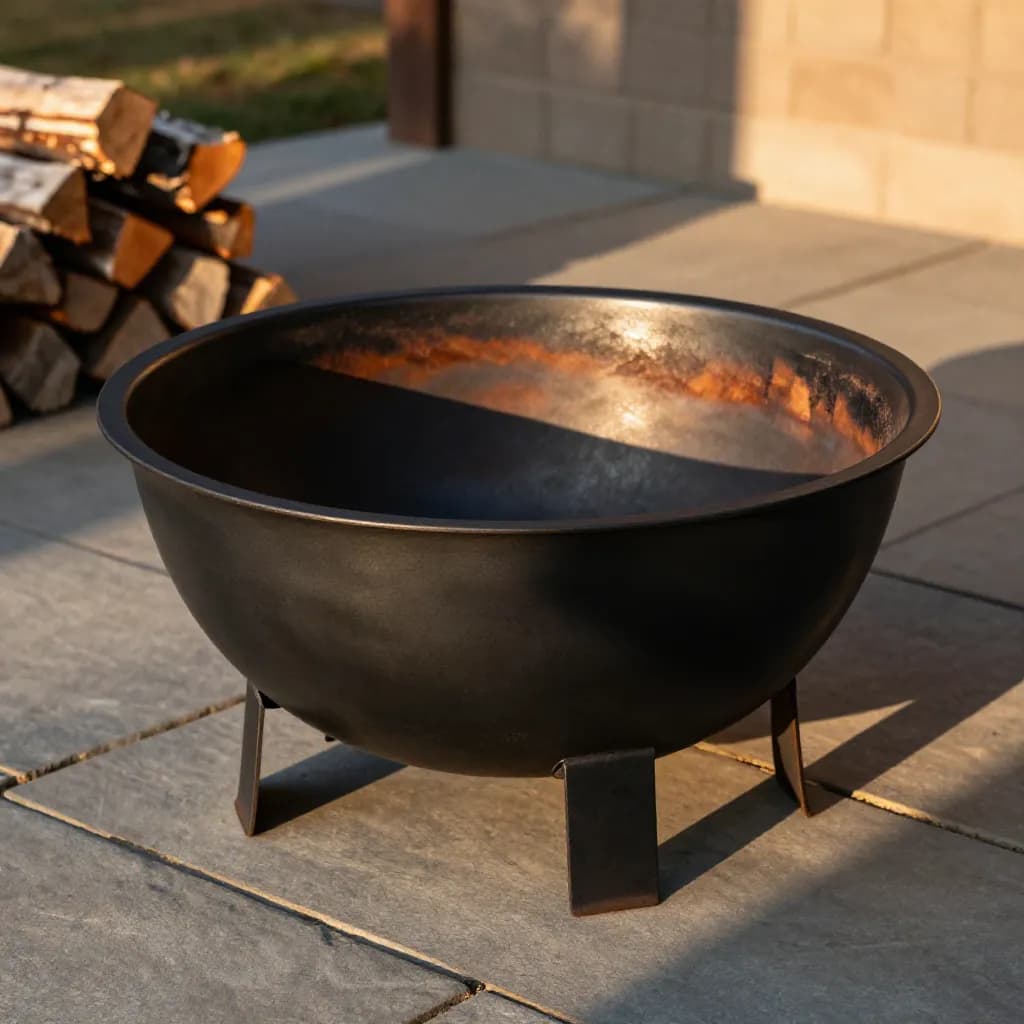
Single-wall fire pits — such as simple steel bowls or ring-style fire pits — present more of a challenge because the entire structure is exposed to high heat. The rim and upper portions of a single-wall fire pit can reach 300 to 500 degrees Celsius during use, while the lower portions and base may stay below 200 degrees Celsius. For these designs, a combination of high-temperature coatings on the upper portions and standard powder coating on the cooler lower sections may be the best approach.
Understanding Fire Pit Temperature Zones
A fire pit's temperature profile varies significantly depending on the design, fuel type, and distance from the flame. Understanding these temperature zones is essential for choosing the right coating for each section. Wood-burning fire pits generate the highest temperatures, with the fire bowl interior reaching 500 to 800 degrees Celsius and the exterior surfaces of a single-wall bowl reaching 300 to 500 degrees Celsius near the rim.
Gas fire pits typically operate at lower temperatures than wood-burning models because the flame is more controlled and the heat output is more consistent. The burner area reaches high temperatures, but the surrounding structure — particularly on decorative gas fire pit tables — often stays below 150 degrees Celsius during normal operation. These lower-temperature gas fire pit structures are excellent candidates for standard powder coating.
The base, legs, and any structural framework below the fire bowl operate at the lowest temperatures and are the best candidates for powder coating on any fire pit design. These components are separated from the direct heat source by distance and often by thermal barriers, keeping their surface temperatures well within the range of standard or high-temperature powder coatings. Decorative screens, spark guards, and covers that are not in direct contact with the fire are also suitable for powder coating.
Coating Options by Temperature Zone
For fire pit components that stay below 200 degrees Celsius — such as the base, legs, outer shell of double-wall designs, and gas fire pit table structures — standard polyester or superdurable polyester powder coatings are appropriate. These coatings provide excellent UV resistance, color retention, and corrosion protection for outdoor use. The full range of colors and finishes is available, allowing the fire pit to complement any outdoor living space design.
For components that reach 200 to 400 degrees Celsius — such as the outer surface of single-wall fire bowls and the upper rim area — high-temperature powder coatings based on silicone-modified polyester or silicone resins are the appropriate choice. These coatings are available in a more limited color range, typically black, silver, gray, and bronze, but provide the heat resistance needed for these intermediate-temperature zones.
For the fire bowl interior and any surface exposed to direct flame — where temperatures exceed 400 degrees Celsius — standard and high-temperature powder coatings are not suitable. These surfaces should be finished with high-temperature liquid paint rated for 600 to 1,000 degrees Celsius, or left uncoated to develop a natural heat patina. Many fire pit owners prefer the natural darkened appearance that develops on the interior of a well-used fire pit, viewing it as part of the fire pit's character.
Preparation for Fire Pit Components
Preparing fire pit components for powder coating requires thorough removal of soot, ash residue, rust, and any existing coating. Fire pits accumulate heavy carbon and ash deposits, particularly on interior surfaces, and these must be completely removed before any coating work. A combination of scraping, wire brushing, and chemical cleaning removes the bulk of the deposits, followed by abrasive blasting to clean the surface to bare metal and create the profile needed for powder adhesion.
For steel fire pits that have developed rust — a common condition for fire pits left outdoors without covers — all rust must be removed by blasting before coating. Pitting from corrosion is common on fire pits, particularly on the bottom where water collects, and the coater should assess whether the pitting has compromised the structural integrity of the metal before investing in coating.
Cast iron fire pits and fire pit components require the standard cast iron preparation protocol: thorough degreasing, abrasive blasting, and an extended pre-bake at 200 to 230 degrees Celsius to drive out trapped moisture and contaminants. Cast iron fire pits that have been used for years will have absorbed significant amounts of moisture and combustion byproducts into their porous structure, making the pre-bake step particularly important for preventing outgassing defects in the finished coating.
Popular Fire Pit Styles and Coating Approaches
Steel bowl fire pits are the simplest design and the most common type for residential use. For these single-wall bowls, the exterior can be coated with high-temperature powder coating in black or dark colors, while the interior is left uncoated or finished with high-temperature liquid paint. The base ring or stand is coated with standard powder coating. This combination approach provides protection where it is most effective while accepting that the fire bowl interior will develop a natural patina.
Gas fire pit tables — the rectangular or round table-style units with a gas burner in the center — are ideal for powder coating because the table structure operates at moderate temperatures. The metal frame, base, and decorative panels can all be powder coated in any color and finish, creating a polished, furniture-quality appearance. The burner pan and immediate burner surround may need high-temperature coating, but the majority of the structure is well within standard powder coating range.
Decorative fire pit enclosures — such as stone or tile-clad fire pits with metal structural frames — benefit from powder coating on the internal metal framework. While the framework is hidden by the decorative cladding, powder coating protects it from corrosion caused by moisture that penetrates between the cladding elements. This structural protection extends the life of the entire fire pit assembly.
Restoring a Rusty Fire Pit
Fire pit restoration is one of the most rewarding powder coating applications because the transformation from a rusty, neglected fire pit to a like-new finished product is dramatic. Steel fire pits are particularly prone to rust because they are exposed to rain, dew, and ground moisture, and the heat cycling from fires accelerates the oxidation process. A fire pit that has been left outdoors without a cover for a few seasons can develop significant surface rust.
The restoration process begins with assessing the structural condition of the fire pit. Check for areas where rust has eaten through the metal, particularly on the bottom of the bowl where water collects. Thin spots and holes may need to be welded before coating. If the metal is too thin or too extensively perforated, the fire pit may not be worth restoring — a coater can help assess whether the structure is sound enough to justify the investment.
Once structural integrity is confirmed, the fire pit is disassembled, cleaned, blasted to bare metal, and coated using the appropriate coating for each temperature zone. The result is a fire pit that looks brand new and is protected against future corrosion. To maximize the life of the restored finish, use a fire pit cover when the pit is not in use, and avoid leaving standing water in the bowl after rain. These simple maintenance steps can extend the coating life by several years.
Maintenance and Longevity
The longevity of powder coating on fire pit components depends on the temperature exposure, environmental conditions, and maintenance practices. Components that stay below 200 degrees Celsius — bases, legs, and outer shells — can expect the same five to ten year coating life as other outdoor powder-coated items. Components exposed to higher temperatures will experience faster coating degradation, with high-temperature coatings on fire bowl exteriors typically lasting two to five years depending on frequency of use.
Using a fire pit cover when the pit is not in use is the single most effective maintenance step. A cover protects the coating from rain, UV exposure, and debris accumulation between uses. For fire pits without covers, emptying ash and water from the bowl after each use prevents the acidic ash-water mixture from attacking the coating and the underlying metal.
Periodic inspection of the coating — particularly on the fire bowl exterior where heat stress is greatest — helps identify areas where the coating is beginning to deteriorate. Early touch-up of these areas with high-temperature spray paint can extend the overall coating life and prevent rust from gaining a foothold. For the base and structural components, the same maintenance practices that apply to any outdoor powder-coated item — regular cleaning, prompt touch-up of damage, and protection from prolonged moisture exposure — ensure long-lasting performance.
Frequently Asked Questions
Can you powder coat the inside of a fire pit?
The inside of a fire pit is exposed to direct flame and temperatures exceeding 500 degrees Celsius, which is beyond the capability of any powder coating. The interior should be finished with high-temperature liquid paint rated for 600 degrees Celsius or higher, or left uncoated to develop a natural heat patina. Powder coating is suitable for exterior and structural components only.
What color options are available for fire pit powder coating?
For components that stay below 200 degrees Celsius — bases, legs, and outer shells — the full range of powder coating colors and finishes is available. For components exposed to higher temperatures, high-temperature coatings are limited to black, silver, gray, bronze, and a few other heat-stable colors. Black remains the most popular choice for fire pits.
How long does powder coating last on a fire pit?
On lower-temperature components like bases and legs, powder coating typically lasts five to ten years with proper care. On fire bowl exteriors exposed to higher heat, coating life is typically two to five years depending on use frequency. Using a cover when the fire pit is not in use significantly extends coating life on all components.
Can you powder coat a gas fire pit table?
Yes, gas fire pit tables are excellent candidates for powder coating because the table structure operates at moderate temperatures. The metal frame, base, and decorative panels can all be coated in any color and finish. Only the burner pan and immediate burner surround may need high-temperature coating.
Is it worth restoring a rusty fire pit with powder coating?
If the fire pit is structurally sound — meaning the metal has not rusted through or become dangerously thin — restoration with powder coating is worthwhile. The cost of blasting and coating is typically much less than replacing a quality fire pit. Check the bottom of the bowl and any areas where water collects for structural integrity before investing in restoration.
Ready to Start Your Project?
From one-off customs to 15,000-part production runs — get precise pricing in 24 hours.