Powder coating a bathtub is technically feasible for cast iron and steel tubs — these metal substrates can accept electrostatic powder application and withstand the curing temperature. However, in practice, powder coating a bathtub presents significant challenges that make it an uncommon choice compared to traditional porcelain enamel or modern refinishing methods. The primary obstacles are the size and weight of the tub, the need for a very large curing oven, and questions about the suitability of powder coating for a wet, water-immersion environment.
Consumer
Can You Powder Coat a Bathtub? Feasibility and Alternatives
Sundial Powder Coating·April 22, 2026·8 min
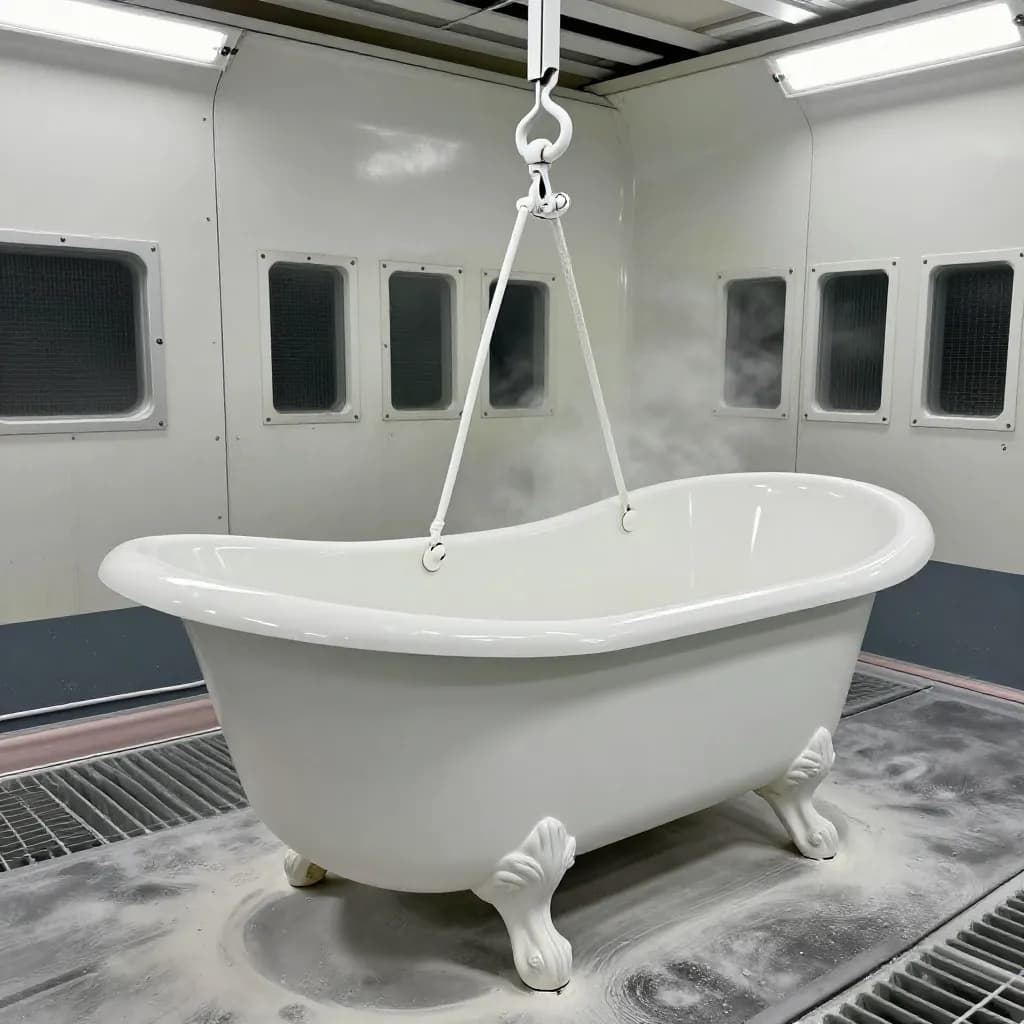
Cast iron bathtubs — the classic clawfoot and alcove styles — are the most viable candidates for powder coating because they are made entirely of metal and can withstand the curing temperature without concern. A standard cast iron bathtub weighs 130 to 180 kilograms, which is within the handling capacity of industrial coating operations but requires heavy-duty racking and oven capacity. The tub must also fit inside the curing oven, which requires an oven with internal dimensions of at least 1.6 meters long, 0.8 meters wide, and 0.6 meters tall.
Ready to Start Your Project?
From one-off customs to 15,000-part production runs — get precise pricing in 24 hours.
On This Page
Technically Possible, But Rarely Practical
Steel bathtubs are lighter and smaller than cast iron but present the same basic challenges. Acrylic and fiberglass tubs cannot be powder coated at all — the curing temperature of 180 to 200 degrees Celsius would melt or severely damage these plastic materials. For non-metal tubs, alternative refinishing methods are the only option.
The Exterior vs. Interior Challenge
Even if the size and oven challenges can be overcome, the question of coating the interior water-contact surface of a bathtub raises important considerations. The interior of a bathtub is subjected to conditions that are unusually demanding for any coating: prolonged water immersion, exposure to hot water, contact with soaps, shampoos, bath oils, and cleaning chemicals, and mechanical abrasion from bathing and cleaning.
Standard powder coatings are designed for atmospheric exposure — rain, humidity, and occasional water contact — not for continuous or prolonged water immersion. While powder coatings provide excellent moisture barrier properties in normal outdoor and indoor environments, the sustained water contact inside a bathtub can eventually lead to moisture permeation through the coating film, potentially causing adhesion loss, blistering, or corrosion of the underlying metal.
The exterior of a cast iron bathtub, however, is an excellent candidate for powder coating. The outside surface is not exposed to water immersion and benefits from the durable, attractive finish that powder coating provides. Many bathtub restoration projects powder coat the exterior — including the decorative feet on clawfoot tubs — while using a different finishing method for the interior water-contact surface. This hybrid approach leverages the strengths of each coating type where they are most appropriate.
Why Porcelain Enamel Is the Standard for Bathtubs
Porcelain enamel — also called vitreous enamel — has been the standard interior finish for cast iron and steel bathtubs for over a century, and for good reason. Porcelain enamel is a glass-based coating that is fused to the metal surface at temperatures exceeding 800 degrees Celsius, creating an extremely hard, smooth, non-porous surface that is impervious to water, resistant to chemicals, and easy to clean. No organic coating — including powder coating — can match the water resistance and hardness of porcelain enamel.
The glass-like surface of porcelain enamel does not absorb water, stains, or bacteria, making it inherently hygienic for bathing applications. Its hardness resists scratching from normal use and cleaning, and its smooth surface prevents dirt and soap scum from adhering. These properties are why porcelain enamel remains the gold standard for bathtub interiors despite the availability of many alternative coating technologies.
The limitation of porcelain enamel is that it requires specialized equipment and extremely high firing temperatures that are not available in standard powder coating shops. Re-enameling a bathtub is a factory process that involves stripping the old enamel, preparing the metal surface, applying the enamel frit, and firing the tub in a kiln at 800 degrees Celsius or higher. This service is available from specialty bathtub re-enameling companies but is not a standard offering from powder coating shops.
Bathtub Refinishing Alternatives
For bathtub owners who want to restore a worn or damaged interior surface, several refinishing methods are more practical than powder coating. Professional bathtub refinishing — also called reglazing or resurfacing — is the most common approach. This process involves cleaning and etching the existing surface, applying a bonding agent, and spraying multiple coats of a specialized two-component coating (typically an aliphatic polyurethane or modified acrylic) that cures at room temperature.
Professional refinishing can be done in place without removing the tub from the bathroom, which is a major practical advantage over any method that requires the tub to be transported to a coating facility. The finished surface provides a smooth, glossy appearance similar to the original porcelain enamel and is rated for water immersion and chemical exposure. A quality professional refinishing job typically lasts 10 to 15 years with proper care.
Bathtub liner inserts are another alternative — a custom-molded acrylic liner is fitted over the existing tub surface, creating a new interior surface without removing or refinishing the original tub. This approach is quick to install and provides a durable, water-resistant surface, though it does slightly reduce the interior dimensions of the tub. For tubs with severe damage or where the original enamel is extensively deteriorated, a liner may be a better option than refinishing.
Powder Coating the Exterior of a Clawfoot Tub
While powder coating the interior of a bathtub is problematic, powder coating the exterior is an excellent application that is commonly done in bathtub restoration projects. The exterior of a clawfoot tub — including the decorative outer shell and the ornamental feet — is not exposed to water immersion and benefits greatly from the durable, attractive finish that powder coating provides.
Clawfoot tub exteriors are traditionally finished in a variety of styles: solid colors, metallic finishes, or decorative effects that complement the bathroom decor. Powder coating offers all of these options and more, with superior durability compared to brush-on or spray paint. Popular exterior colors include classic white, black, navy, deep red, and metallic bronze or copper tones. The feet can be coated in a contrasting color or metallic finish for a distinctive accent.
The process for coating a clawfoot tub exterior involves removing the feet (which are typically bolted on), masking the interior surface and the rim where the interior meets the exterior, blasting the exterior to remove old paint and create surface profile, and applying the powder coating. The feet are coated separately. Cast iron tub exteriors and feet should be pre-baked to prevent outgassing, as the porous cast iron will have absorbed moisture and contaminants over decades of use.
Practical Considerations for Bathtub Coating Projects
If you are considering any type of coating project for a bathtub, several practical factors should guide your decision. First, determine whether the tub needs to be removed from the bathroom. Powder coating and re-enameling both require the tub to be transported to a facility, which involves disconnecting plumbing, removing the tub from the bathroom (a significant undertaking for a 150-kilogram cast iron tub), transporting it, and reinstalling it after coating. In-place refinishing avoids all of this disruption.
Second, assess the condition of the existing surface. If the porcelain enamel is intact but stained or dull, professional cleaning and polishing may restore it without any coating work. If the enamel has minor chips or scratches, spot repair with epoxy filler followed by refinishing can address the damage. If the enamel is extensively cracked, peeling, or missing, more comprehensive restoration — refinishing, re-enameling, or a liner — is needed.
Third, consider the long-term plan for the tub. If you are restoring a valuable antique clawfoot tub that you plan to keep for decades, investing in professional re-enameling of the interior and powder coating of the exterior provides the most durable and authentic result. If you need a cost-effective refresh that can be done quickly without removing the tub, in-place refinishing is the practical choice. Match the restoration method to the value of the tub and your long-term intentions.
Summary: The Best Approach for Bathtub Finishing
The best finishing approach for a bathtub depends on which surface you are addressing and what level of restoration you need. For the interior water-contact surface, porcelain re-enameling provides the most durable and authentic result but requires factory processing. Professional in-place refinishing is the most practical option for most homeowners, providing a quality result without removing the tub. Standard powder coating is not recommended for the interior due to water immersion concerns.
For the exterior of cast iron and steel tubs — particularly decorative clawfoot tubs — powder coating is an excellent choice that provides superior durability and a wide range of color and finish options. The exterior is not exposed to water immersion, so the standard concerns about powder coating in wet environments do not apply. Powder coating the exterior while refinishing the interior with an appropriate water-resistant system gives you the best of both worlds.
For the decorative feet of clawfoot tubs, powder coating is the ideal finish. The feet are easy to remove, fit in any standard powder coating oven, and benefit from the chip-resistant, durable finish that powder coating provides. Metallic and textured powder finishes on clawfoot tub feet can transform the appearance of the entire tub and are one of the most popular decorative powder coating applications in bathroom restoration.
Frequently Asked Questions
Can you powder coat the inside of a bathtub?
While technically possible on cast iron or steel tubs, powder coating is not recommended for the interior water-contact surface of a bathtub. Standard powder coatings are not designed for prolonged water immersion and may eventually blister or lose adhesion. Porcelain re-enameling or professional refinishing are better options for the interior surface.
Can you powder coat a fiberglass or acrylic bathtub?
No. Fiberglass and acrylic tubs cannot withstand the 180 to 200 degree Celsius curing temperature required for powder coating. The heat would melt or severely damage these plastic materials. Fiberglass and acrylic tubs should be refinished with room-temperature or low-bake coating systems designed for plastic substrates.
What is the best way to refinish a cast iron bathtub?
The best approach depends on your budget and goals. For the most durable result, professional porcelain re-enameling of the interior combined with powder coating of the exterior is ideal. For a practical, cost-effective refresh without removing the tub, professional in-place refinishing provides a quality result that lasts 10 to 15 years.
Can you powder coat clawfoot tub feet?
Yes, clawfoot tub feet are an excellent and popular powder coating application. The cast iron feet are removed from the tub, blasted, pre-baked to prevent outgassing, and powder coated in the desired color and finish. Metallic bronze, gold, silver, and chrome-effect finishes are popular choices that add a decorative accent to the tub.
How heavy is a cast iron bathtub for powder coating?
A standard cast iron bathtub weighs 130 to 180 kilograms, requiring heavy-duty handling equipment for transport and racking in the coating facility. The tub must also fit inside the curing oven, which requires an oven with internal dimensions of at least 1.6 meters long. Not all powder coating shops can accommodate parts of this size and weight.
Ready to Start Your Project?
From one-off customs to 15,000-part production runs — get precise pricing in 24 hours.