Published in 2021, the SYNERGY pooled case-control study represents the most comprehensive investigation of lung cancer in painters ever conducted. By harmonizing data from 16 independent studies across multiple countries, SYNERGY achieved statistical power that no individual study could match — analyzing 19,369 lung cancer cases and 23,674 controls, including 684 ever-painters among cases and 532 among controls.
paint-and-liquid-coatings-risks
SYNERGY Study: 19,369 Lung Cancer Cases Confirm Painting as Independent Risk Factor
Sundial Research Team·February 8, 2025·5 min
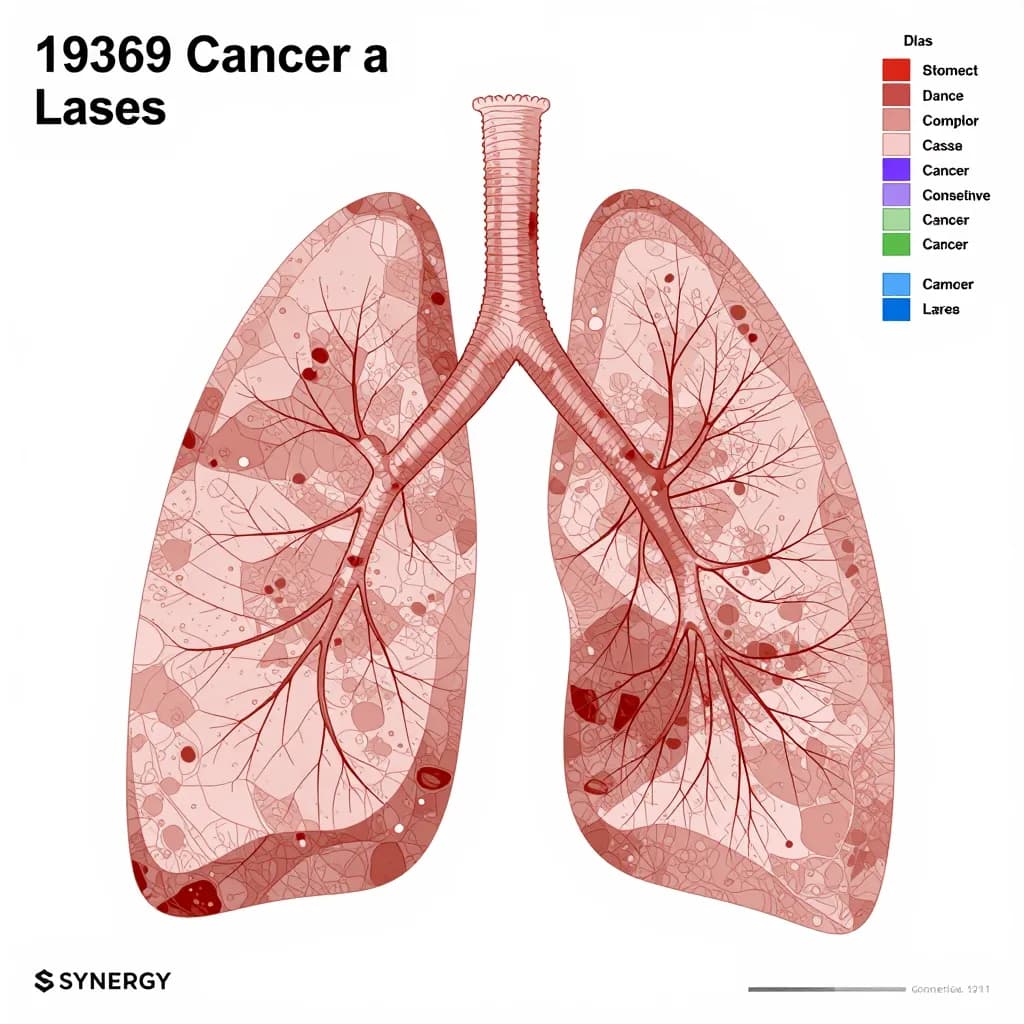
Ever having worked as a painter was associated with an increased risk of lung cancer in men:
Ready to Start Your Project?
From one-off customs to 15,000-part production runs — get precise pricing in 24 hours.
On This Page
SYNERGY Study: 19,369 Lung Cancer Cases Confirm Painting as Independent Risk Factor
The Primary Finding
Odds ratio: 1.30 (95% CI: 1.13–1.50)
This 30% increased risk was observed after detailed adjustment for smoking and other occupational exposures. The association was:
- Strongest for construction and repair painters
- Elevated for all histological subtypes
- More evident for small cell and squamous cell carcinoma than for adenocarcinoma and large cell carcinoma
Never-Smoker Analysis
Among never-smokers who had ever worked as a painter, SYNERGY found:
Twofold increased risk of lung cancer (OR 2.04; 95% CI: 1.18–3.53)
The risk was highest for the adenocarcinoma subtype (OR 2.63; 95% CI: 1.33–5.18) — the most common lung cancer in non-smokers.
This never-smoker finding is methodologically crucial. It definitively excludes smoking as the explanation for the increased risk and establishes painting as an independent carcinogenic exposure.
Smoking-Painter Interaction
SYNERGY found evidence of positive additive interaction between smoking and employment as a painter:
- Relative Excess Risk from Interaction (RERI): 3.93 (95% CI: 1.55–6.30)
- Attributable Proportion (AP): 23.85% (95% CI: 12.07–35.62)
This means that approximately 24% of lung cancers among smoker-painters are attributable to the interaction itself — the combined effect of smoking and painting exceeds the sum of their individual effects. The two exposures synergize to produce cancer risk greater than either produces alone.
Duration-Response
A significant trend with duration of employment was observed for construction painters (p ≤ 0.001). Duration was categorized as:
- 1–5 years
- 6–17 years
-
17 years
The monotonic increase in risk with longer employment duration supports a causal interpretation and is consistent with the Guha (2010) meta-analysis findings.
Methodological Strengths
SYNERGY represents a significant methodological advance over prior meta-analyses:
- Harmonized exposure assessment: Consistent definitions of painting exposure across all studies
- Individual-level data: Unlike meta-analyses that use published summary statistics, SYNERGY had access to raw data from each participant
- Detailed smoking adjustment: Comprehensive smoking history including intensity, duration, and time since cessation
- Multiple occupational exposures: Adjusted for asbestos, silica, diesel exhaust, and other occupational carcinogens
- Histological subtypes: Analysis by cancer type provided biological insight
Consistency with Prior Evidence
SYNERGY's findings are consistent with the earlier Guha meta-analysis (2010), which found:
- Meta-RR 1.35 (1.29–1.41) across 47 studies
- Never-smoker RR 2.00 (1.09–3.67)
- Smoking-adjusted RR 1.35 (1.21–1.51)
The convergence of results across different study designs (meta-analysis of published data vs. pooled analysis of individual data), different time periods, and different populations strengthens causal inference.
Implications for Government Specification
SYNERGY's scale and methodological rigor make it difficult to dismiss the painting-lung cancer association as a statistical artifact or confounding effect. For government agencies responsible for worker health protection, the implications are direct:
- Painting is an established occupational carcinogen — not a theoretical risk, but a documented cause of cancer in thousands of workers
- The risk is independent of smoking — ventilation and smoking bans do not eliminate it
- The risk increases with duration — longer careers mean higher cumulative risk
- The risk is preventable — substitution to non-solvent coating systems eliminates the exposure pathways
The SYNERGY study does not tell us anything fundamentally new about painter health risks. What it provides is certainty at scale — the statistical power to confirm what smaller studies had suggested, with precision that policy-makers can rely on.
For specification writers, the message is unambiguous: every year that solvent-based painting continues in government facilities is a year that adds to the future cancer burden that studies like SYNERGY document. The only question is whether we will act on the evidence before the next 19,369 cases accumulate.
Ready to Start Your Project?
From one-off customs to 15,000-part production runs — get precise pricing in 24 hours.