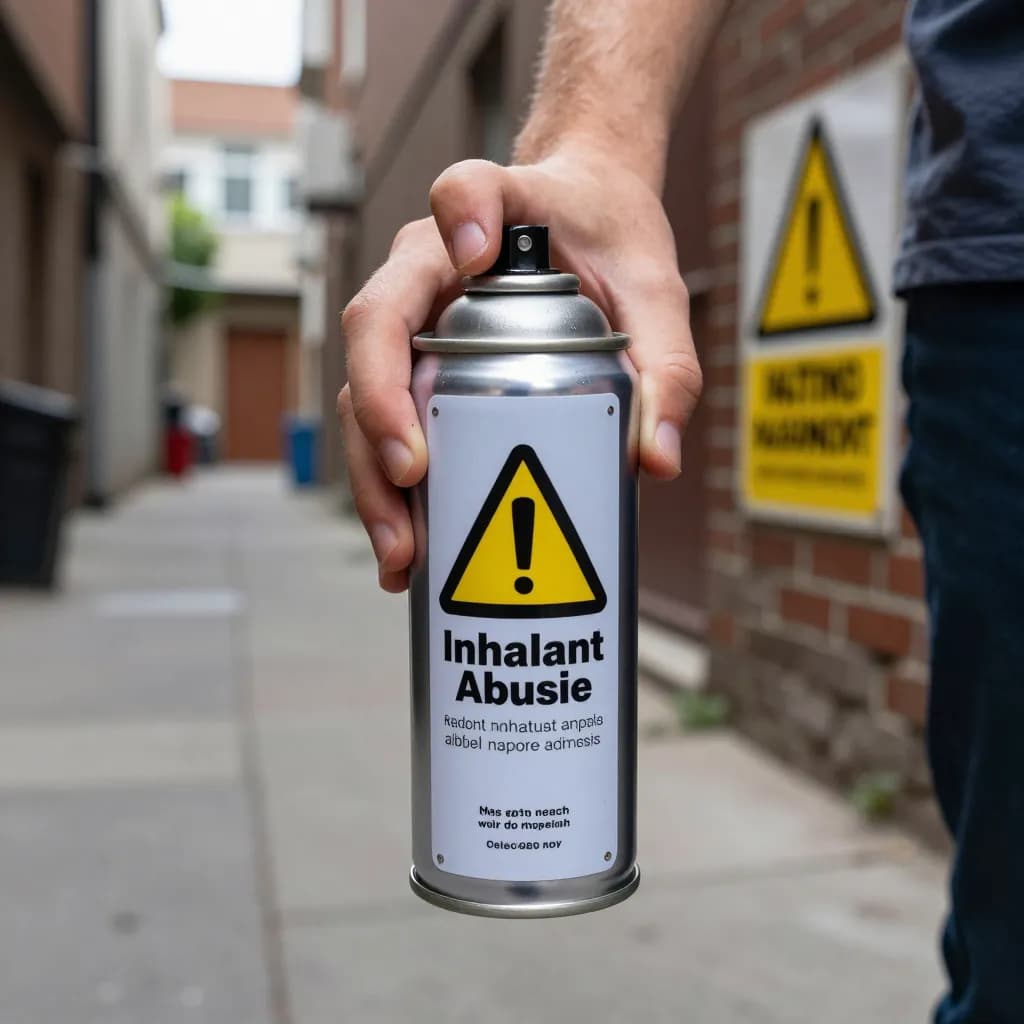
Aerosol spray paint - the same product used for graffiti, touch-up work, and art projects - is also the most commonly abused inhalant among adolescents and young adults in the United States. The practice of "huffing" spray paint - inhaling the concentrated solvent vapors to achieve a brief intoxicating effect - causes permanent brain damage, cardiac arrhythmia, and sudden death. The active ingredient responsible is toluene, the same neurotoxic solvent that causes chronic solvent encephalopathy in occupational painters. For government agencies managing public spaces, schools, and youth facilities, the inhalant abuse crisis adds an unexpected dimension to the hazards of spray paint solvents - one that affects not workers but children.
paint-and-liquid-coatings-risks
Aerosol Spray Paint Inhalant Abuse: The Youth Public Health Crisis in a Can
Sundial Research Team·February 19, 2025·5 min
| Population | Lifetime Inhalant Use |
|---|---|
| 8th graders | ~10% |
| 10th graders | ~8% |
| 12th graders | ~6% |
| Adults (18-25) | ~4% |
Ready to Start Your Project?
From one-off customs to 15,000-part production runs — get precise pricing in 24 hours.
On This Page
Aerosol Spray Paint Inhalant Abuse: The Youth Public Health Crisis in a Can
The Scope of Inhalant Abuse
Prevalence
Spray paint is consistently among the top three products abused, along with computer duster and gasoline.
Demographics
| Characteristic | Pattern |
|---|---|
| Age of onset | Typically 12-15 years |
| Gender | Slightly higher in males |
| Socioeconomic status | Higher in disadvantaged communities |
| Geography | Rural and urban areas both affected |
| Availability | Legal, inexpensive, ubiquitous |
The Toluene Connection
Why Spray Paint?
Spray paint is particularly dangerous for inhalant abuse because:
- High toluene concentration: 25-60% by weight
- Aerosol delivery: Concentrated vapor inhaled directly
- Rapid absorption: Lung absorption is immediate
- Intense effect: Brief but powerful intoxication
- Low cost: $3-10 per can
- Legal availability: No age restriction in many jurisdictions
- Ubiquitous: Available at any hardware or craft store
The Huffing Mechanism
Abusers typically:
- Spray paint into a bag, sock, or rag
- Inhale the concentrated vapor deeply
- Experience brief euphoria, dizziness, hallucinations
- Repeat for sustained effect
- Risk brain damage, cardiac arrest, or death with each use
Health Consequences
Acute Effects
| Effect | Mechanism | Frequency |
|---|---|---|
| Sudden sniffing death | Cardiac arrhythmia from toluene sensitization | Unpredictable; can occur first use |
| Asphyxiation | Oxygen displacement by concentrated vapor | Common in bag-suffocation method |
| Chemical pneumonitis | Direct lung damage from aerosol propellant | Moderate |
| Seizures | CNS irritation from high concentration | Moderate |
| Coma | Severe CNS depression | Less common |
Sudden Sniffing Death
The most feared outcome:
- Can occur on the first use or after years of abuse
- Toluene sensitizes the heart to catecholamines (adrenaline)
- Physical exertion or startle during intoxication triggers fatal arrhythmia
- No antidote; death is rapid
- Estimated 100-200 deaths per year in the US from inhalant abuse
Chronic Effects
| System | Damage | Mechanism |
|---|---|---|
| Brain | Cerebellar degeneration, white matter loss | Direct neurotoxicity; identical to CSE |
| Heart | Cardiomyopathy, arrhythmia | Chronic catecholamine sensitivity |
| Liver | Hepatotoxicity | Metabolite toxicity |
| Kidneys | Renal tubular acidosis | Toluene metabolite damage |
| Bone marrow | Aplastic anemia (benzene contaminant) | Benzene toxicity |
| Peripheral nerves | Neuropathy | Axonal degeneration |
The Brain Damage
MRI studies of chronic inhalant abusers show:
- Cerebellar atrophy: Gait disturbance, coordination problems
- White matter damage: Cognitive impairment, personality change
- Cerebral atrophy: Identical to occupational CSE
- Brainstem changes: Cranial nerve dysfunction
This brain damage is often permanent, even after cessation of abuse.
The Occupational-Abuse Parallel
Same Chemical, Different Exposure
| Factor | Occupational Painter | Inhalant Abuser |
|---|---|---|
| Toluene exposure | Chronic, lower concentration | Acute, very high concentration |
| Other solvents | Mixed (xylene, benzene, etc.) | Spray paint mixture |
| Brain damage | CSE (chronic) | Identical pathology |
| Cardiac risk | Lower | Sudden death risk |
| Reversibility | Partial at best | Usually permanent |
| Population | Working adults | Children and adolescents |
The occupational and abuse pathways converge on the same neurotoxic mechanism: toluene-induced brain damage.
Regulatory and Policy Responses
Current Regulations
| Approach | Effectiveness | Limitations |
|---|---|---|
| Age restrictions | Variable by jurisdiction | Easy to circumvent |
| Purchase restrictions | Limited implementation | Difficult to enforce |
| Product reformulation | Rare | Industry resistance |
| Warning labels | Minimal deterrent | Ignored by abusers |
| Education programs | Some impact | Reach limited |
The Product Stewardship Question
The inhalant abuse crisis raises questions about product design:
- Should spray paint contain less toluene?
- Should alternative propellants be required?
- Should bitterants be added to deter inhalation?
- Should package size be limited?
These questions parallel the occupational health debate: should hazardous chemicals be eliminated from products when safer alternatives exist?
The Powder Coating Connection
Eliminating the Source
Powder coating eliminates toluene from the coating formulation entirely:
- No toluene in powder coating
- No aerosol propellants
- No volatile solvents
- No inhalant abuse potential
For applications where powder coating replaces spray paint, the inhalant abuse risk is eliminated along with the occupational exposure risk.
Public Facility Applications
Government facilities can reduce inhalant abuse opportunities:
| Application | Spray Paint Risk | Powder Alternative |
|---|---|---|
| Graffiti removal touch-up | Available on-site | Not applicable (removal only) |
| Metal furniture refinishing | Spray cans used | Powder coating (shop application) |
| Equipment marking | Spray paint common | Powder-coated labels or plates |
| Signage fabrication | Spray paint used | Powder coating standard |
| Playground equipment | Graffiti touch-up | Powder coating (durable, less touch-up) |
Public Health Implications
The Hidden Cost
Inhalant abuse imposes costs on:
| Sector | Impact |
|---|---|
| Healthcare | Emergency department visits, neurological rehabilitation |
| Education | Cognitive impairment affecting school performance |
| Criminal justice | Vandalism, theft, related offenses |
| Social services | Family disruption, child welfare involvement |
| Mortality | Premature death, lost future productivity |
Prevention Strategies
Effective prevention requires multiple approaches:
- Reduce availability: Restrict sales to minors, limit quantities
- Reformulate products: Reduce toluene content, add deterrents
- Substitute technologies: Powder coating where feasible
- Education: School-based prevention programs
- Treatment: Accessible addiction services for youth
- Environmental design: Secure storage in retail and facilities
Conclusion
The inhalant abuse crisis is not merely a behavioral problem of troubled youth. It is a public health consequence of making potent neurotoxicants available in inexpensive, easily accessible consumer products. The same toluene that causes chronic solvent encephalopathy in painters causes permanent brain damage and sudden death in adolescents who inhale it from spray paint cans.
For government agencies, the parallel between occupational and recreational exposure suggests a unified prevention strategy: eliminate the hazardous chemicals from products where safer alternatives exist. Powder coating, which contains no toluene and no inhalable solvents, removes both the occupational hazard for workers and the abuse potential for youth.
The child who dies from sudden sniffing death after huffing spray paint and the painter who develops dementia after decades of occupational exposure are victims of the same chemical. Both deaths are preventable. Both require the same solution: eliminating toluene from coating systems through specification choices that favor safer alternatives.
Ready to Start Your Project?
From one-off customs to 15,000-part production runs — get precise pricing in 24 hours.