When occupational hearing loss is discussed, noise exposure receives the vast majority of attention. But a significant and underrecognized cause of hearing impairment in painters is solvent ototoxicity - the direct damage that organic solvents cause to the inner ear. Toluene, styrene, and mixed solvent exposures have all been documented to cause hearing loss in exposed workers, and critically, these solvents interact synergistically with occupational noise to produce greater hearing damage than either exposure alone. For painters who work in noisy industrial environments while exposed to paint solvents, this synergistic interaction represents a double jeopardy for their hearing.
paint-and-liquid-coatings-risks
Solvent-Induced Hearing Loss: An Overlooked Occupational Hazard for Painters
Sundial Research Team·February 19, 2025·5 min
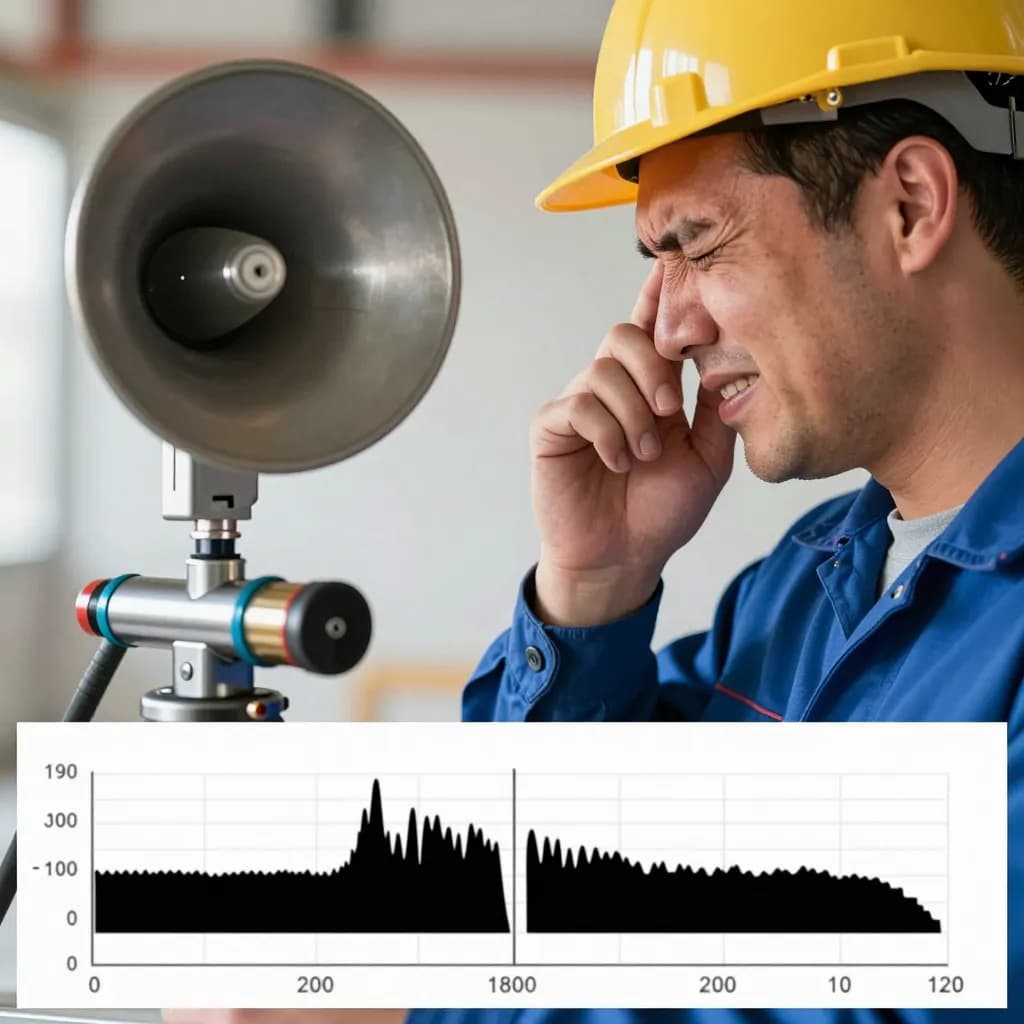
Organic solvents affect the auditory system through multiple pathways:
Ready to Start Your Project?
From one-off customs to 15,000-part production runs — get precise pricing in 24 hours.
On This Page
Solvent-Induced Hearing Loss: An Overlooked Occupational Hazard for Painters
The Ototoxic Mechanism
How Solvents Damage Hearing
- Cochlear hair cell toxicity: Direct damage to the sensory cells that convert sound vibrations to neural signals
- Oxidative stress: Solvent metabolites generate free radicals that damage hair cells and auditory nerve fibers
- Auditory nerve toxicity: Direct damage to the nerve fibers carrying signals from cochlea to brain
- Central auditory pathway effects: Solvents affect auditory processing in the brainstem and cortex
The Noise-Solvent Synergy
The interaction between noise and solvents is more than additive - it is synergistic:
| Exposure | Hearing Loss Risk | Mechanism |
|---|---|---|
| Noise alone | Moderate | Mechanical damage to hair cells |
| Solvents alone | Moderate | Chemical toxicity to hair cells, nerve |
| Noise + solvents | Much greater than sum | Combined mechanical and chemical damage; oxidative stress amplification |
This synergy means that a painter exposed to both noise and solvents at levels that individually might be considered safe can nevertheless develop significant hearing loss.
Evidence for Solvent Ototoxicity
Toluene
| Study | Finding | Population |
|---|---|---|
| Morata (1993) | Dose-related hearing loss | Printing workers, solvent-exposed |
| Vyskocil (1990) | Auditory dysfunction | Toluene-exposed workers |
| Animal studies | Cochlear hair cell loss | Rats exposed to toluene vapor |
Toluene is particularly ototoxic and is present in most paint thinners and solvents.
Styrene
| Study | Finding | Population |
|---|---|---|
| Muijser (1988) | Hearing loss in styrene-exposed workers | Reinforced plastics workers |
| Johnson (2006) | Animal model confirms ototoxicity | Rats exposed to styrene |
| Sliwinska-Kowalska (2003) | Synergy with noise documented | Multiple occupational cohorts |
Mixed Solvents
| Study | Finding | Population |
|---|---|---|
| Jacobsen (1993) | Hearing loss in paint manufacturing workers | Mixed solvent exposure |
| Fuente (2009) | Central auditory dysfunction | Solvent-exposed workers |
| Multiple European studies | Consistent association | Various solvent-exposed trades |
The Painter's Exposure Profile
Painters are particularly vulnerable to solvent-noise synergy because their work combines both exposures:
Noise Sources in Painting
| Source | Noise Level | Duration |
|---|---|---|
| Spray equipment | 85-95 dB | Continuous during application |
| Compressors | 80-90 dB | Continuous during operation |
| Abrasive blasting | 100-115 dB | During surface preparation |
| Power tools | 85-105 dB | During prep and cleanup |
| Industrial environment | 75-85 dB | Background facility noise |
Solvent Sources
| Source | Typical Exposure |
|---|---|
| Spray application | 50-200 ppm (TWA varies) |
| Brush/roller | 20-50 ppm |
| Mixing, gun cleaning | Peaks to 500+ ppm |
| Indoor work | Higher than outdoor |
The Combined Burden
A painter working in an industrial facility may experience:
- Noise at 85-90 dB (requiring hearing conservation program)
- Solvent exposure at 50-100 ppm (below OSHA PEL but in ototoxic range)
- The combination producing hearing loss risk greater than either alone
Clinical Presentation
Audiometric Pattern
Solvent-induced hearing loss typically affects:
| Frequency Range | Pattern |
|---|---|
| High frequencies (4-8 kHz) | Most commonly affected first |
| Both ears | Usually symmetric |
| Progressive | Worsens with continued exposure |
| Not reversible | Hair cell loss is permanent |
Distinguishing Solvent from Noise Hearing Loss
| Feature | Noise-Induced | Solvent-Induced | Combined |
|---|---|---|---|
| Frequency | 3-6 kHz notch | 4-8 kHz | Broad high-frequency |
| Progression | Gradual | May be more rapid | Accelerated |
| Asymmetry | May be asymmetric | Usually symmetric | Variable |
| Central effects | Rare | Common (speech-in-noise difficulty) | Present |
| Recovery | None | None | None |
Central Auditory Effects
Solvents uniquely affect central auditory processing:
- Difficulty understanding speech in noise: Even with normal pure-tone thresholds
- Temporal processing deficits: Difficulty with rapid speech, timing cues
- Dichotic listening impairment: Difficulty processing competing signals
These central effects are not detected by standard audiometry but significantly impair communication in noisy environments.
Prevention
Current Approaches and Limitations
| Approach | Effectiveness for Solvent Ototoxicity | Limitation |
|---|---|---|
| Hearing protection | Protects from noise only | Does not reduce solvent exposure |
| Respiratory protection | Reduces solvent inhalation | Does not protect from noise |
| Ventilation | Reduces solvent concentration | May increase noise exposure |
| Audiometric monitoring | Detects loss early | Cannot reverse damage |
| Exposure limits | Inadequate | Current PELs do not prevent ototoxicity |
The Elimination Strategy
Powder coating eliminates solvent exposure - and therefore solvent ototoxicity:
| Hazard | Liquid Coating | Powder Coating |
|---|---|---|
| Solvent ototoxicity | Present | Eliminated |
| Noise exposure | Present (spray equipment) | Present (but no synergy) |
| Combined risk | Synergistic, severe | Noise only, manageable |
While powder coating does not eliminate noise exposure, removing the solvent component eliminates the synergistic interaction that produces disproportionate hearing damage.
Regulatory Context
Current Standards Gap
| Standard | Addresses Noise? | Addresses Solvents? | Addresses Synergy? |
|---|---|---|---|
| OSHA Noise Standard (1910.95) | Yes | No | No |
| OSHA Solvent Standards | No | Yes (general toxicity) | No |
| ACGIH TLVs | Yes (noise) | Yes (individual solvents) | No |
| NIOSH RELs | Yes | Yes | No |
No current standard explicitly addresses the noise-solvent interaction for hearing loss.
European Approach
Some European countries have begun addressing solvent ototoxicity:
- France: Includes solvent exposure in occupational hearing loss assessment
- Germany: Recognizes solvent-noise interaction in compensation
- Nordic countries: Research and monitoring programs
Conclusion
Solvent-induced hearing loss is an underrecognized occupational hazard that disproportionately affects painters and other solvent-exposed workers in noisy environments. The synergistic interaction between noise and solvents means that painters experience hearing loss risk far exceeding what either exposure would predict individually.
Standard hearing conservation programs that focus exclusively on noise are insufficient for solvent-exposed workers. Respiratory protection that reduces solvent inhalation may not fully protect against ototoxicity, as some solvents may reach the inner ear through the bloodstream or local absorption.
The most reliable prevention is elimination. Powder coating removes the solvent exposure that drives ototoxicity, leaving only the noise component - which can be managed through conventional hearing conservation programs. For painters who depend on their hearing for safety communication, quality control, and daily function, preserving this sense is not merely a comfort issue. It is an occupational necessity.
The combination of noise and solvents in painting work creates a hearing loss risk that is greater than the sum of its parts. Powder coating eliminates one of those parts - and with it, the synergistic threat to the painter's hearing.
Ready to Start Your Project?
From one-off customs to 15,000-part production runs — get precise pricing in 24 hours.