Sick Building Syndrome (SBS) describes a constellation of symptoms - headaches, fatigue, difficulty concentrating, eye and throat irritation, and respiratory discomfort - that affect building occupants without a specific diagnosable disease. While multiple factors contribute to SBS, volatile organic compounds from coatings and building materials are among the most significant and preventable causes. For government facilities where worker productivity and health are operational priorities, understanding the link between coating emissions and SBS provides a compelling rationale for zero-emission alternatives.
paint-and-liquid-coatings-risks
Sick Building Syndrome: How Coating VOCs Contribute to Building-Related Illness
Sundial Research Team·February 17, 2025·5 min
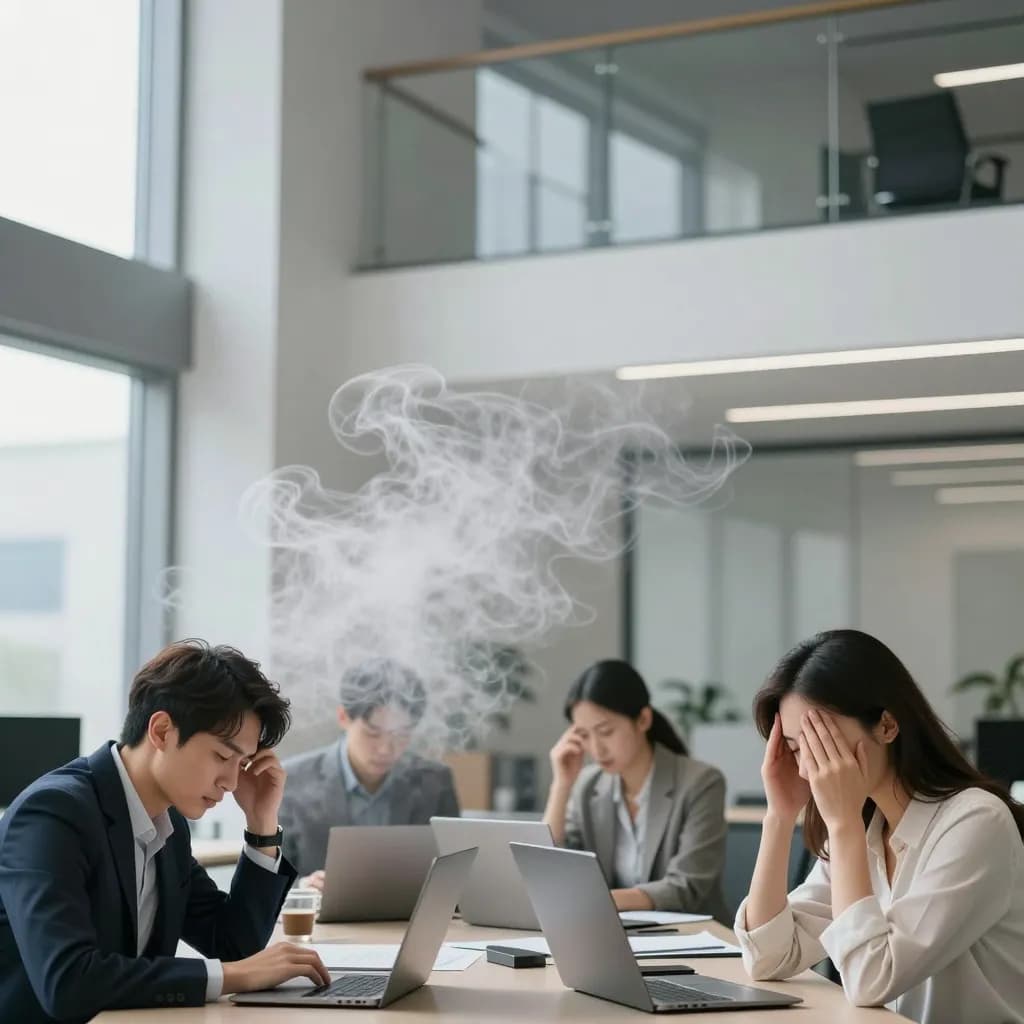
Multiple studies have linked indoor VOC levels to SBS symptoms:
Ready to Start Your Project?
From one-off customs to 15,000-part production runs — get precise pricing in 24 hours.
On This Page
Sick Building Syndrome: How Coating VOCs Contribute to Building-Related Illness
Defining Sick Building Syndrome
Diagnostic Criteria
SBS is diagnosed when occupants experience:
- Symptoms that improve when leaving the building
- No specific clinical diagnosis accounting for symptoms
- Multiple occupants affected (not isolated individual complaints)
- Symptoms associated with time spent in the building
Common Symptoms
| System | Symptoms |
|---|---|
| General | Headache, fatigue, lethargy, difficulty concentrating |
| Respiratory | Cough, chest tightness, shortness of breath, nasal congestion |
| Ocular | Eye irritation, dryness, itching, blurred vision |
| Dermal | Dry or itchy skin, rashes |
| Neurological | Dizziness, nausea, memory problems |
The VOC-SBS Connection
Epidemiological Evidence
Mendell (2007) Meta-Analysis
- Reviewed 33 studies of indoor environmental factors and SBS
- VOCs consistently associated with SBS symptoms
- Effect sizes were moderate but significant
European IAQ Studies
- Buildings with higher total VOC levels showed higher SBS prevalence
- Individual compounds (formaldehyde, terpenes, glycol ethers) implicated
- Dose-response relationships observed for some symptoms
Wargocki et al. Ventilation Studies
- Improved ventilation reducing VOCs decreased SBS symptoms
- Productivity improvements of 6-9% with better IAQ
- Economic value of improved productivity exceeded ventilation costs
Specific Coating Contributions
Coatings contribute to SBS through multiple pathways:
| Emission Phase | VOC Sources | Symptom Contribution |
|---|---|---|
| Application | Solvents, thinners, additives | Acute symptoms; peaks |
| Curing (0-7 days) | Residual solvents, reaction byproducts | Subacute symptoms |
| Long-term off-gassing | Plasticizers, residual monomers, degradation products | Chronic low-level symptoms |
| Renovation/re-coating | All of the above | Recurrent symptom episodes |
Mechanisms of VOC-Induced Symptoms
Direct Irritation
- VOCs activate sensory nerve endings in eyes, nose, throat
- Formaldehyde, acrolein, and other aldehydes are potent irritants
- Irritation triggers inflammatory responses
Olfactory/Psensory Effects
- Odor perception activates limbic system (emotion, memory)
- Unpleasant odors produce stress responses
- Individual odor sensitivity varies widely
Neurological Effects
- Some VOCs (solvents) affect CNS directly
- Low-level exposure may produce subtle cognitive effects
- Fatigue and difficulty concentrating may reflect neurotoxicity
Inflammatory Responses
- VOCs may trigger low-grade inflammation
- Cytokine release produces flu-like symptoms
- Individual inflammatory sensitivity varies
The Economic Impact of SBS
Productivity Loss
| Impact | Estimated Cost | Source |
|---|---|---|
| Reduced productivity | 2-4% decrease | Fisk & Rosenfeld (1997) |
| Absenteeism | 3-5 additional sick days/year | Multiple studies |
| Presenteeism | Working while symptomatic = reduced output | Estimated 2x absenteeism cost |
| Healthcare utilization | Increased doctor visits, medications | Difficult to quantify |
Fisk and Rosenfeld Estimates
The landmark study by Fisk and Rosenfeld estimated annual costs of poor IAQ in the US:
- Productivity losses: $14-26 billion/year
- Respiratory disease: $1-4 billion/year
- Allergies and asthma: $1-3 billion/year
- SBS symptoms: $10-30 billion/year
These estimates, while dated, demonstrate the scale of economic impact from indoor air quality problems.
The Leicester Study Connection
The Leicester University office study documented VOC persistence for 15 months after redecoration, with total VOCs at 76 ug/m3 remaining above background. This residual exposure:
- Continues to contribute to SBS symptoms
- Affects new employees who were not present during renovation
- Creates a chronic low-level exposure environment
- May interact with other indoor pollutants
The Clausen Model Implication
Clausen's power-law emission model predicts that coating emissions continue for 12+ months. This means:
- SBS symptoms may persist long after renovation completion
- Buildings re-occupied quickly after painting continue to expose occupants
- Workers may not connect symptoms to renovation that occurred months earlier
Preventing SBS Through Specification
Current Approaches
| Approach | Effectiveness | Limitations |
|---|---|---|
| Increased ventilation | Moderate | Energy cost; may not reduce all pollutants |
| Air cleaning | Moderate | Filters have limited VOC capacity |
| Extended vacancy | Moderate | Impractical for occupied buildings |
| Low-VOC coatings | Moderate | Still emit some VOCs; other toxics present |
| Zero-emission coatings | High | Eliminates coating contribution entirely |
The Zero-Emission Solution
Powder coatings contribute negligibly to SBS because they:
- Contain no solvents to evaporate
- Produce no VOC emissions during or after application
- Generate no formaldehyde or other reactive byproducts
- Do not off-gas plasticizers or residual monomers
Government Facility Implications
For government agencies, SBS has specific operational consequences:
Productivity
- Federal employees experiencing SBS symptoms work less effectively
- Cognitive symptoms (difficulty concentrating) directly impair performance
- Fatigue reduces initiative and problem-solving capacity
Healthcare Costs
- Federal Employee Health Benefits program covers SBS-related care
- Workers' compensation for severe cases
- Long-term disability in extreme cases
Building Performance
- High SBS complaint buildings require investigation and remediation
- Tenant satisfaction affects lease renewals and space utilization
- Building reputation affects recruitment and retention
The Comprehensive Cost
The true cost of coating-related SBS includes:
- Direct productivity loss: Reduced output per worker
- Absenteeism: Sick days and medical appointments
- Presenteeism: Reduced effectiveness while at work
- Healthcare costs: Insurance and program expenditures
- Remediation costs: Investigation, testing, mitigation
- Re-coating costs: If initial coating must be removed and replaced
- Liability exposure: Claims from affected occupants
Conclusion
Sick Building Syndrome is not a collection of vague complaints or psychosomatic symptoms. It is a well-documented, economically significant consequence of indoor air contamination in which coating VOCs play a substantial role. The 15-month VOC persistence documented by Leicester, the power-law emission decline modeled by Clausen, and the decades of epidemiological evidence converge on a clear conclusion: conventional coatings make buildings sick.
For government agencies that manage buildings where federal employees work, where citizens receive services, and where health and productivity are operational imperatives, the choice of coating technology is a public health decision. Powder coating, with its zero-VOC, zero-solvent formulation, eliminates the coating contribution to SBS. In buildings where the air should be as clean as the services provided, zero-emission coatings are not an environmental luxury. They are a health necessity.
Ready to Start Your Project?
From one-off customs to 15,000-part production runs — get precise pricing in 24 hours.