While MRI shows structural brain damage and fMRI reveals functional impairment, Single Photon Emission Computed Tomography (SPECT) offers a third window into solvent neurotoxicity: the chemical systems that enable brain communication. Research using SPECT imaging has documented decreased dopaminergic activity in the frontostriatal circuits of chronic solvent encephalopathy patients - findings that help explain the characteristic pattern of cognitive, psychiatric, and motor symptoms seen in this occupational disease.
paint-and-liquid-coatings-risks
SPECT Scans Reveal Dopaminergic Damage in Chronic Solvent Encephalopathy
Sundial Research Team·February 14, 2025·5 min
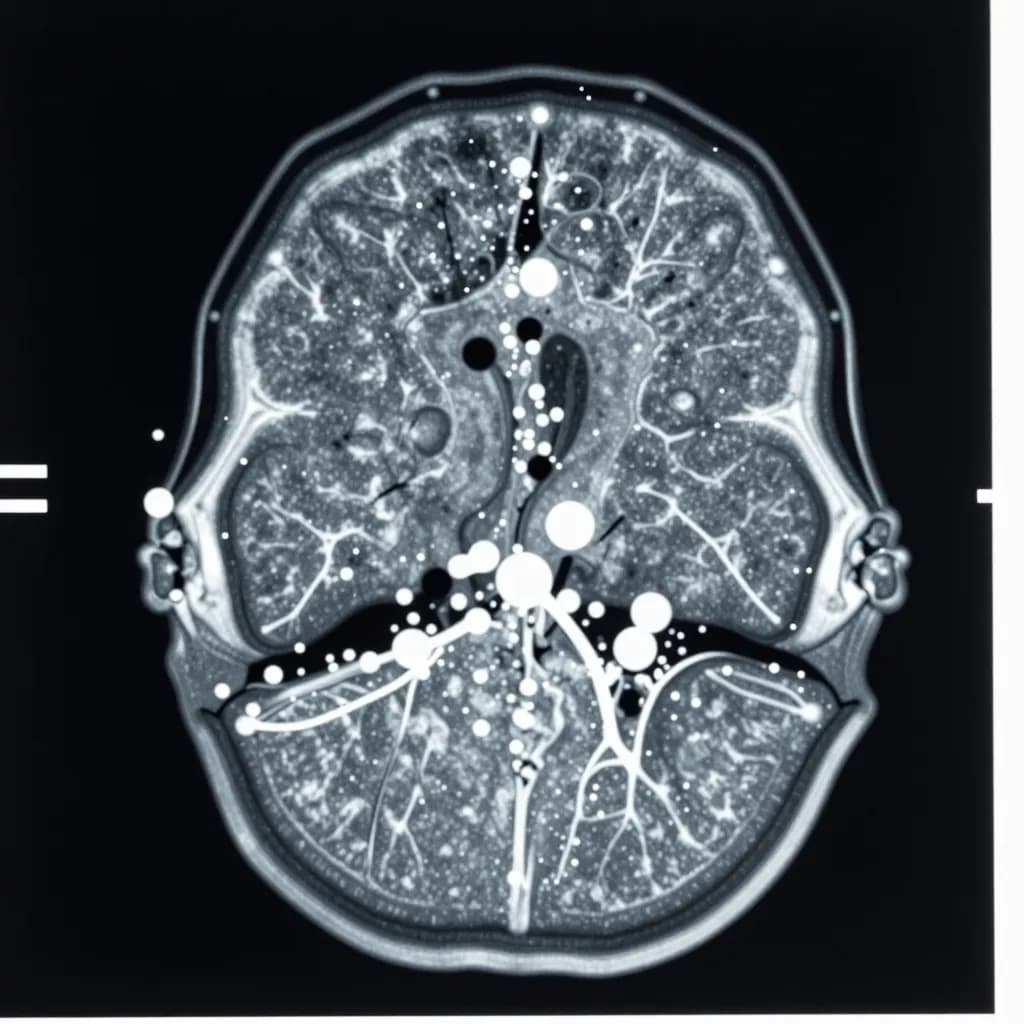
The frontostriatal circuit connects the prefrontal cortex (the brain's executive center) with the striatum (a subcortical structure involved in movement, motivation, and reward). This circuit relies heavily on dopamine - a neurotransmitter critical for:
Ready to Start Your Project?
From one-off customs to 15,000-part production runs — get precise pricing in 24 hours.
On This Page
SPECT Scans Reveal Dopaminergic Damage in Chronic Solvent Encephalopathy
The Frontostriatal Circuit
- Working memory: Holding and manipulating information
- Executive function: Planning, decision-making, impulse control
- Motivation: Drive and reward processing
- Motor control: Smooth, coordinated movement
When dopaminergic function declines, the frontostriatal circuit produces the exact symptom profile seen in CSE: cognitive slowing, apathy, personality change, and subtle motor impairment.
The Visser et al. SPECT Finding
Visser et al. (2008) used SPECT imaging with dopamine transporter ligands to examine the dopaminergic system in CSE patients. The study found:
Decreased dopaminergic activity in the frontostriatal circuitries
This finding was subsequently replicated and extended by other research groups. The pattern of dopaminergic loss in CSE resembles that seen in early Parkinson's disease - though CSE is non-progressive after exposure cessation, unlike Parkinson's.
The Symptom Connection
Decreased frontostriatal dopaminergic activity provides a neurochemical explanation for the full CSE symptom profile:
Cognitive Symptoms
- Slowed processing speed: Dopamine modulates neural signal transmission
- Working memory deficits: Prefrontal dopamine is essential for temporary information storage
- Executive dysfunction: Dopamine enables flexible, goal-directed behavior
Psychiatric Symptoms
- Apathy and amotivation: Dopamine drives reward anticipation and goal pursuit
- Depression: Frontostriatal dopamine modulates mood regulation
- Personality change: Dopamine affects social behavior and emotional expression
Motor Symptoms
- Subtle tremor or rigidity: Striatal dopamine controls movement initiation and smoothness
- Postural instability: Dopaminergic pathways contribute to balance
- Slowed reaction time: Dopamine affects motor preparation and execution
Relationship to Other Neuroimaging Findings
The SPECT dopaminergic findings complement other neuroimaging evidence:
| Modality | Finding | Interpretation |
|---|---|---|
| MRI | White matter lesions, cerebral atrophy | Structural damage to neural connections |
| fMRI | Decreased activation in prefrontal/parietal cortex | Functional impairment of cognitive networks |
| SPECT | Decreased dopaminergic activity | Neurochemical dysfunction of frontostriatal circuits |
| EEG | Decreased event-related potentials | Impaired information processing |
Together, these findings converge on a consistent picture: solvent neurotoxicity damages the brain at structural, functional, and neurochemical levels simultaneously.
The Parkinson's Parallel
The frontostriatal dopaminergic damage in CSE raises an important question: does solvent exposure increase Parkinson's disease risk?
While CSE is explicitly non-progressive after exposure cessation (unlike Parkinson's), some studies have found associations between solvent exposure and Parkinson's disease risk. The shared vulnerability of dopaminergic neurons to both solvent toxicity and the pathological processes underlying Parkinson's suggests a possible mechanistic overlap.
However, the evidence for solvent-induced Parkinson's disease remains less robust than for CSE, and the two conditions are clinically distinct.
Implications for Diagnosis
The SPECT findings have potential diagnostic utility:
- Objective biomarker: Dopaminergic dysfunction provides measurable evidence of CSE pathology
- Differential diagnosis: Distinguishes CSE from primary psychiatric disorders
- Severity assessment: Degree of dopaminergic loss may correlate with clinical severity
- Treatment guidance: Dopaminergic agents might theoretically benefit CSE symptoms (though evidence is limited)
However, SPECT is expensive and not widely available. Current CSE diagnosis remains primarily clinical, with neuropsychological testing as the primary objective assessment tool.
Reversibility Considerations
A critical question: is dopaminergic damage reversible?
The evidence suggests partial reversibility at best. The Dutch follow-up study found that while some neuropsychological domains improved after exposure cessation, permanent work disability increased from 14% to 37% - suggesting that whatever structural and neurochemical recovery occurs, it is insufficient to restore occupational function in many patients.
This partial reversibility underscores the importance of early intervention. Workers removed from exposure when they have only Type I symptoms (organic affective syndrome) may recover fully. Workers with established dopaminergic damage (Type 2B or 3) face permanent deficits.
Prevention: The Only Complete Solution
SPECT imaging demonstrates that solvent neurotoxicity is not merely a subjective complaint or a functional disorder. It produces measurable, visible changes in brain chemistry that correlate with clinical impairment. The dopaminergic system - essential for cognition, motivation, and movement - is a specific target of solvent toxicity.
Powder coating eliminates the solvent exposure that damages dopaminergic neurons. For facilities where worker motivation, cognitive function, and motor skills are critical to performance, preventing solvent-induced dopaminergic damage is both a health imperative and an operational necessity.
Ready to Start Your Project?
From one-off customs to 15,000-part production runs — get precise pricing in 24 hours.