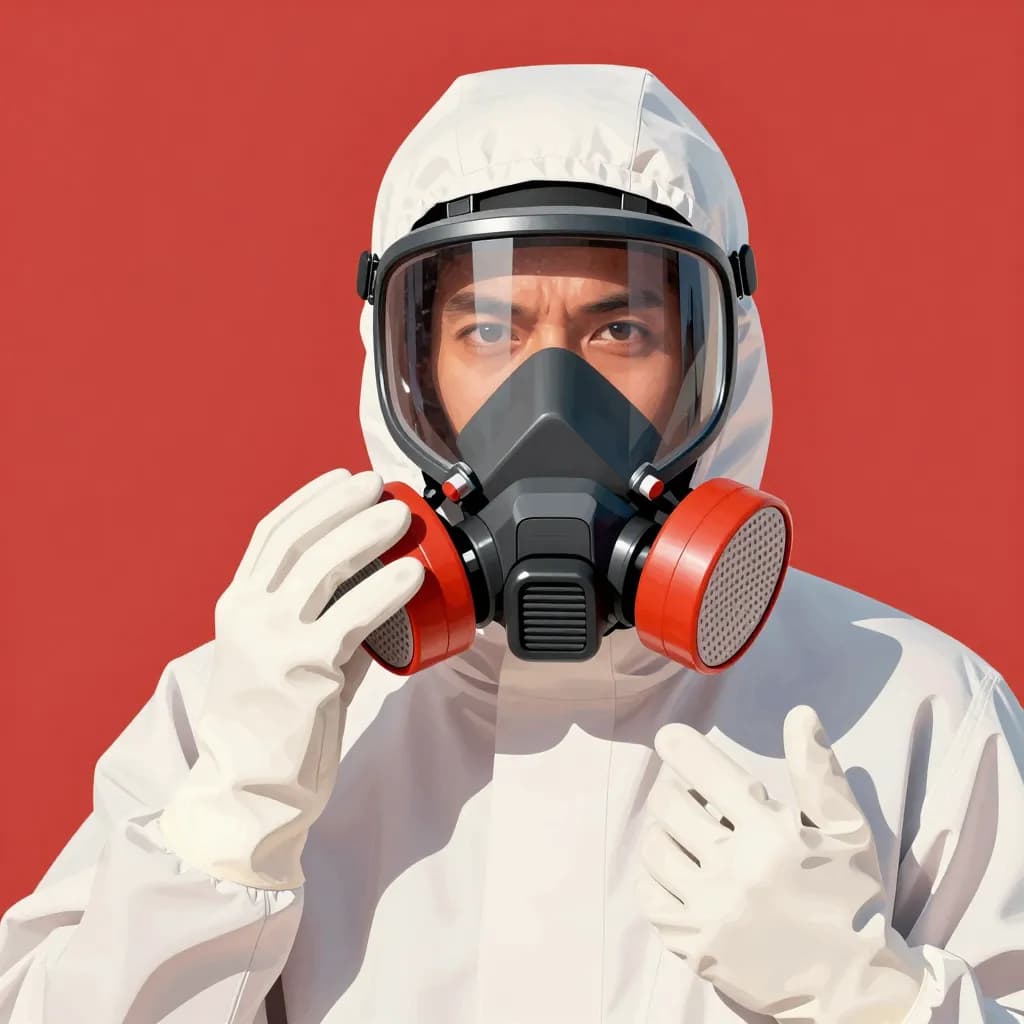
Personal protective equipment (PPE) - respirators, gloves, coveralls, goggles - is often treated as the frontline defense against coating chemical hazards. OSHA regulations require PPE when engineering controls cannot reduce exposures below permissible limits. But the evidence from occupational health research is unambiguous: PPE fails to adequately protect painters from the carcinogens, neurotoxicants, and respiratory sensitizers in coating systems. Respirators leak, gloves tear and permeate, coveralls leave skin exposed, and workers consistently remove PPE when it interferes with their work. The hierarchy of controls places PPE at the bottom - not because it is unimportant, but because it is the least effective protection strategy. For government specifications that rely on PPE to manage coating hazards, understanding these limitations is essential.
regulatory
Why PPE Fails to Protect Painters: The Limits of Respirators, Gloves, and Coveralls
The hierarchy of controls, established by NIOSH and adopted by OSHA, prioritizes control strategies by effectiveness:
Ready to Start Your Project?
From one-off customs to 15,000-part production runs — get precise pricing in 24 hours.
On This Page
Why PPE Fails to Protect Painters: The Limits of Respirators, Gloves, and Coveralls
The Hierarchy of Controls
PPE Is the Last Resort
| Level | Control | Effectiveness | Reliability |
|---|---|---|---|
| 1 | Elimination | 100% | Absolute |
| 2 | Substitution | 90-99% | High |
| 3 | Engineering controls | 70-90% | Moderate-High |
| 4 | Administrative controls | 50-70% | Moderate |
| 5 | PPE | 10-50% | Low-Moderate |
PPE is at the bottom because it is the least effective and least reliable control strategy.
Respirator Limitations
Types of Respirators for Painting
| Type | Protection | Application | Limitation |
|---|---|---|---|
| N95 disposable | Particulates only | Dust, overspray | No vapor protection |
| Elastomeric half-mask with OV cartridges | Organic vapors | Solvent painting | Fit-dependent; dermal exposure |
| Elastomeric full-face with OV cartridges | Organic vapors + eye | Solvent painting | Fit-dependent; heavy; hot |
| Powered air-purifying (PAPR) | Particulates + vapors | Spray painting | Expensive; battery-dependent |
| Supplied-air respirator (SAR) | All contaminants | Isocyanates, confined spaces | Tethered; cumbersome |
| Self-contained breathing apparatus (SCBA) | All contaminants | Emergency, high exposure | Heavy; limited duration |
Fit Is Everything
Respirator protection depends on proper fit:
| Fit Factor | Meaning | Protection Level |
|---|---|---|
| Fit factor 10 | 10% leakage | 90% protection (theoretical) |
| Fit factor 100 | 1% leakage | 99% protection (theoretical) |
| Fit factor 1,000+ | <0.1% leakage | Quantitative fit required |
Why Fit Fails
Studies show that even properly fitted respirators have significant leakage in real-world use:
| Factor | Impact on Fit |
|---|---|
| Facial hair | Breaks seal; OSHA prohibits tight-fitting respirators with facial hair |
| Weight changes | Alters facial dimensions |
| Facial scars | Prevents proper seal |
| Dentures | Changes jaw position |
| Talking, chewing | Breaks seal momentarily |
| Head movement | Shifts respirator position |
| Sweat | Lubricates seal, promoting leakage |
| Pressure points | Workers loosen straps for comfort |
Workplace Protection Factor Studies
Workplace protection factor (WPF) studies measure actual protection in real use:
| Respirator Type | Assigned Protection Factor (APF) | Typical Workplace Protection Factor |
|---|---|---|
| Half-mask elastomeric | 10 | 5-15 |
| Full-face elastomeric | 50 | 10-50 |
| PAPR (loose-fitting) | 25 | 10-30 |
| PAPR (tight-fitting) | 1,000 | 100-500 |
| Supplied-air (tight-fitting) | 1,000 | 100-1,000 |
The gap between assigned and actual protection factors demonstrates that real-world respirator performance is far below theoretical protection.
Isocyanate-Specific Failures
Isocyanates require supplied-air respirators because:
- No warning properties: No odor at sensitizing concentrations
- Cartridge breakthrough: Undetectable; no end-of-service indicator
- Sensitization threshold: Below all detection and warning capabilities
- Skin sensitization: Respirators do not protect dermal exposure
NIOSH states that cartridge respirators are inadequate for isocyanate protection.
Glove Limitations
Permeation vs. Penetration
| Mechanism | Definition | Example |
|---|---|---|
| Penetration | Chemical flows through holes, seams, tears | Torn glove, needle puncture |
| Permeation | Chemical passes through intact glove material | Toluene through nitrile in minutes |
Permeation Times by Chemical and Glove Type
| Chemical | Latex | Nitrile | Neoprene | Butyl | Viton |
|---|---|---|---|---|---|
| Toluene | <1 min | 2-10 min | 5-15 min | 30-60 min | >240 min |
| Xylene | <1 min | 2-10 min | 5-15 min | 30-60 min | >240 min |
| Methylene chloride | <1 min | <1 min | 2-5 min | 10-30 min | >120 min |
| MEK | <1 min | 5-15 min | 10-30 min | 60-120 min | >240 min |
| Isocyanates | Variable | Variable | Better | Good | Excellent |
Real-World Glove Failures
| Failure Mode | Cause | Frequency |
|---|---|---|
| Tearing on sharp edges | Metal parts, tool edges | Common |
| Degradation | Chemical attack on glove material | Common |
| Improper selection | Wrong glove for chemical | Common |
| Reusing contaminated gloves | Internal contamination | Common |
| Not wearing gloves | Dexterity, comfort, haste | Common |
| Glove too short | Wrist exposure | Common |
| Glove too thin | Rapid permeation | Common |
The Dermal Exposure Problem
Studies document that dermal exposure is substantial even with glove use:
- Skin absorption: Solvents absorb through skin and enter bloodstream
- Hand-to-face contact: Contaminated hands transfer chemicals to eyes, nose, mouth
- Whole-body exposure: Arms, neck, chest exposed when coveralls are inadequate
- Clothing penetration: Solvent vapors permeate clothing
Coverall and Clothing Limitations
Protection Gaps
| Body Area | Typical Coverage | Exposure Risk |
|---|---|---|
| Hands | Gloves (if worn) | High if gloves inadequate |
| Wrists/forearms | Often exposed | High (splash, contact) |
| Neck/chest | Open collar | Vapor, splash exposure |
| Ankles | Pants over boots or not | Splash, runoff |
| Back (sweat) | Soaked coveralls | Increased dermal absorption |
| Head/hair | Often uncovered | Vapor adsorption |
Heat Stress
Protective clothing creates heat stress:
- Reduced evaporative cooling: Impermeable barriers trap heat
- Increased sweat: Promotes dermal absorption of chemicals
- Worker response: Roll sleeves, open zippers, remove hoods
- Result: Increased exposure despite PPE intention
Behavioral and Organizational Factors
Why Workers Don't Use PPE
| Barrier | Explanation | Prevalence |
|---|---|---|
| Discomfort | Hot, heavy, restrictive | Universal |
| Impaired vision | Fogging, restricted field | Common |
| Impaired communication | Muffled speech | Common |
| Reduced dexterity | Glove thickness | Common |
| Time pressure | PPE slows work | Common |
| Peer norms | Others not using PPE | Common |
| Lack of training | Don't know how to use properly | Common |
| Lack of availability | Not provided or stocked | Common |
| Complacency | "I've always done it this way" | Common |
| Optimism bias | "It won't happen to me" | Common |
Management Failures
| Failure | Impact |
|---|---|
| No fit testing program | Respirators don't fit; no protection |
| No PPE maintenance | Damaged equipment not repaired/replaced |
| No enforcement | Workers not required to use PPE |
| Inadequate training | Workers don't know how to use PPE |
| Insufficient inventory | Workers share or go without |
| Wrong PPE specified | Gloves that permeate in minutes |
The Evidence: PPE Does Not Prevent Disease
CSE Occurs Despite PPE
Chronic solvent encephalopathy develops in painters who:
- Had respirators available
- Had gloves provided
- Worked in spray booths
- Were trained in HazCom
The Dutch CSE study found that permanent disability increased from 14% to 37% despite medical monitoring and presumably some PPE use.
Isocyanate Asthma Despite PPE
Isocyanate asthma occurs in workers who:
- Used supplied-air respirators (but had dermal exposure)
- Worked in ventilated booths (but had peak exposures)
- Were medically monitored (but developed sensitization anyway)
The irreversibility of isocyanate sensitization means that PPE failure has permanent consequences.
Cancer Despite PPE
Painters who developed lung and bladder cancer:
- May have used respirators intermittently
- May have worn gloves
- May have worked in booths
- Still developed cancer at elevated rates
PPE reduces exposure but does not eliminate the carcinogenic risk.
The Alternative: Elimination
Powder Coating Removes the Need for Chemical PPE
| Hazard | PPE Required (Liquid) | PPE Required (Powder) |
|---|---|---|
| Organic vapor respirator | Yes | No |
| Chemical-resistant gloves | Yes | Standard work gloves |
| Chemical coveralls | Yes | Standard work clothes |
| Face shield/goggles | Yes | Safety glasses |
| Supplied-air (isocyanates) | Often required | Not required |
What PPE Is Still Needed for Powder Coating
| Hazard | PPE | Reason |
|---|---|---|
| Dust inhalation | N95 or dust mask | Nuisance dust |
| Dust explosion | Cotton clothing (no synthetics) | Static control |
| Hot surfaces | Heat-resistant gloves | Oven, cured parts |
| Eye protection | Safety glasses | Standard industrial |
The PPE required for powder coating is standard industrial equipment - not specialized chemical protection.
Conclusion
Personal protective equipment is necessary but fundamentally inadequate as a primary protection strategy for coating chemical hazards. Respirators leak, gloves permeate, coveralls leave gaps, and workers consistently compromise protection for comfort, speed, and practicality. The diseases that PPE is supposed to prevent - cancer, brain damage, reproductive harm, asthma - continue to occur in painters who had access to PPE.
This is not a failure of PPE technology or worker compliance. It is the predictable outcome of relying on the least effective control strategy in the hierarchy. PPE was never designed to eliminate exposure - only to reduce it. For chemicals that cause disease at low doses, for sensitizers with no threshold, and for carcinogens with cumulative effects, reduction is not enough.
For government specifications, the lesson is clear: do not specify hazardous coatings and then rely on PPE to protect workers. Specify powder coating instead, and eliminate the hazards that PPE cannot reliably control. The painter who goes home with his brain, lungs, and reproductive system intact is not the one who wore the best respirator. He is the one who never needed it in the first place.
The hierarchy of controls is not a suggestion. It is a ranking of effectiveness based on decades of occupational health evidence. PPE belongs at the bottom. Elimination belongs at the top. For coating specification, that means powder coating.
Ready to Start Your Project?
From one-off customs to 15,000-part production runs — get precise pricing in 24 hours.