While much attention has focused on painters who apply coatings, the workers who manufacture paint face exposures that are in many cases more severe and prolonged. Paint manufacturing involves handling concentrated solvents, raw pigments, and reactive additives in open mixing vessels, high-speed dispersers, and milling equipment - operations that generate aerosols, vapors, and dust. Studies of paint manufacturing workers have documented elevated cancer rates, neurological effects, and respiratory disease that in some cases exceed those seen in painters. For government specifications, understanding manufacturing exposures is important because the choice of coating type affects not only applicator safety but the safety of the workers who produce the coating in the first place.
paint-and-liquid-coatings-risks
Paint Manufacturing Workers: Exposure During Chemical Mixing and Production
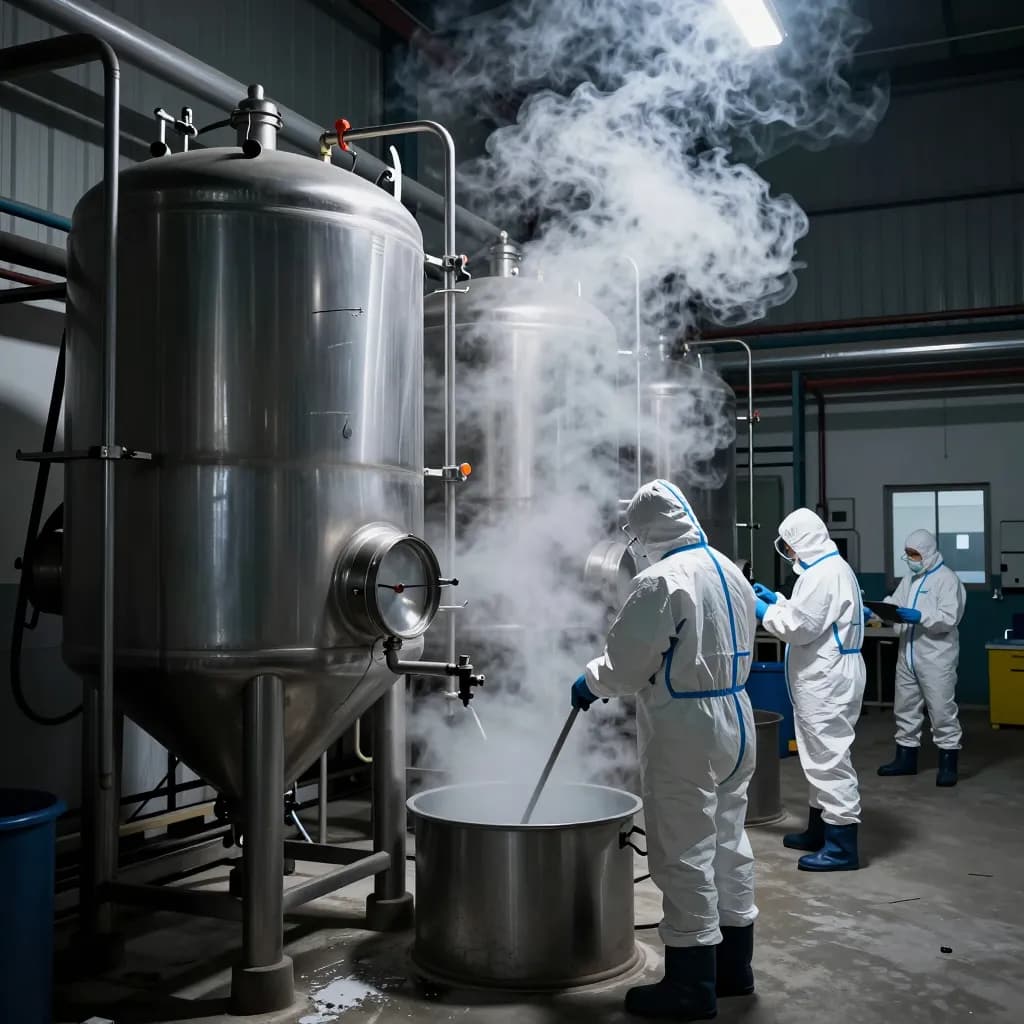
| Stage | Activity | Exposure Sources |
|---|---|---|
| Raw material handling | Weighing, pouring solvents, pigments | Vapor, dust, dermal |
| Dispersion | High-speed mixing of pigments into resin | Aerosol, vapor, splash |
| Milling | Grinding to fine particle size | Dust, aerosol, heat-generated vapor |
| Let-down | Adding solvents, additives | Vapor, splash |
| Color matching | Adding colorants, testing | Multiple small-batch exposures |
| Filling and packaging | Transferring to cans, drums | Splash, vapor, residual dust |
| Clean-up | Equipment cleaning between batches | Concentrated solvent exposure |
Ready to Start Your Project?
From one-off customs to 15,000-part production runs — get precise pricing in 24 hours.
On This Page
Paint Manufacturing Workers: Exposure During Chemical Mixing and Production
The Paint Manufacturing Process
Key Operations
Exposure Characteristics
Manufacturing exposures differ from application exposures:
| Factor | Paint Application | Paint Manufacturing |
|---|---|---|
| Chemical concentration | Diluted (paint) | Concentrated (raw materials) |
| Exposure duration | Intermittent (application cycles) | Continuous (shift-long) |
| Exposure routes | Primarily inhalation | Inhalation + heavy dermal |
| Temperature | Ambient | Elevated (milling, exothermic reactions) |
| Ventilation | Variable (often poor) | Better but still challenged |
| PPE use | Often inadequate | Variable |
Documented Health Effects
Cancer
Studies of paint manufacturing workers show elevated cancer risks:
| Cancer Type | Finding | Study |
|---|---|---|
| Lung cancer | Elevated SMR | Multiple cohorts |
| Bladder cancer | Elevated risk | Case-control studies |
| Lymphohematopoietic | Elevated risk | Meta-analyses |
| Pancreatic cancer | Some elevation | Cohort studies |
| Stomach cancer | Some elevation | International studies |
The risks are generally similar to or greater than those seen in painters, reflecting the concentrated nature of manufacturing exposures.
Neurotoxicity
Manufacturing workers show neurological effects:
| Effect | Evidence |
|---|---|
| Cognitive impairment | Documented in long-term workers |
| Peripheral neuropathy | Solvent-exposed manufacturing workers |
| Color vision loss | Styrene-exposed workers |
| Psychiatric symptoms | Depression, anxiety, personality change |
Respiratory Disease
| Disease | Cause |
|---|---|
| Occupational asthma | Isocyanate exposure in polyurethane production |
| COPD | Chronic solvent and dust exposure |
| Pneumoconiosis | Pigment dust (rare with modern controls) |
| Irritant rhinitis | Solvent vapor irritation |
Specific Exposures in Manufacturing
Pigment Dust
Raw pigment handling generates respirable dust:
| Pigment | Hazard |
|---|---|
| Titanium dioxide | Possible carcinogen (inhalation) |
| Carbon black | Possible carcinogen |
| Chromium pigments | Known carcinogen (hexavalent) |
| Cadmium pigments | Known carcinogen |
| Lead pigments | Neurotoxic, reproductive toxicant |
| Crystalline silica | Known carcinogen (extenders) |
Solvent Vapors
Manufacturing uses concentrated solvents:
| Solvent | Manufacturing Use | Exposure Level |
|---|---|---|
| Toluene | Thinning, cleanup | Often near or above PEL |
| Xylene | Thinning, cleanup | Often near or above PEL |
| Mineral spirits | Alkyd production | High vapor concentrations |
| Methyl ethyl ketone | Cleanup, thinning | Significant exposure |
| n-Butanol | Coalescing aid | Moderate exposure |
| Ethylene glycol | Coalescing aids | Lower volatility |
Reactive Chemicals
| Chemical | Use | Hazard |
|---|---|---|
| Isocyanates | Polyurethane production | Asthma, sensitization |
| Epoxy resins | Epoxy production | Sensitization, BPA exposure |
| Formaldehyde | Amino resin production | Carcinogen, sensitizer |
| Acrylic monomers | Acrylic production | Sensitization |
| Amine catalysts | Epoxy curing | Corrosive, sensitizing |
Exposure Control in Manufacturing
Engineering Controls
| Control | Application | Effectiveness |
|---|---|---|
| Enclosed mixing vessels | Dispersion, let-down | High |
| Local exhaust ventilation | Filling, weighing, cleanup | Moderate-High |
| Dust collection | Pigment handling | Moderate-High |
| Automated filling | Packaging | High |
| Process isolation | Reactive chemical handling | High |
Limitations
Despite controls, exposures persist due to:
- Open operations: Sampling, quality testing, adjustments
- Equipment opening: Vessel access for cleaning, maintenance
- Spills and leaks: Routine minor releases
- Legacy equipment: Older plants with inadequate controls
- Production pressure: Bypassing controls to maintain output
The Powder Coating Manufacturing Advantage
Reduced Exposure in Production
Powder coating manufacturing has different exposure profiles:
| Operation | Liquid Coating Manufacturing | Powder Coating Manufacturing |
|---|---|---|
| Solvent handling | High exposure | No solvents |
| Pigment dust | Present | Present (controlled) |
| Reactive chemicals | Isocyanates, epoxies, formaldehyde | Limited (crosslinkers) |
| Cleanup | Solvent-intensive | Dry cleanup |
| VOC emissions | Significant | Minimal |
| Fire hazard | High | Moderate (dust) |
Worker Health Benefits
Powder coating manufacturing eliminates:
- Solvent inhalation and skin contact
- Isocyanate exposure
- Formaldehyde exposure
- Most hazardous waste generation
While pigment dust and crosslinker exposures remain, the overall hazard profile is substantially reduced.
Regulatory Context
OSHA Standards
Paint manufacturing is subject to multiple standards:
| Standard | Application |
|---|---|
| 1910.1000 (Air contaminants) | General PELs for solvents, dusts |
| 1910.1025 (Lead) | Lead pigment handling |
| 1910.1027 (Cadmium) | Cadmium pigment handling |
| 1910.1028 (Benzene) | Benzene in solvents |
| 1910.1044 (1,2-Dichlorobenzene) | Some solvents |
| 1910.1050 (Methylene chloride) | Paint strippers, some thinners |
| 1910.1052 (Methylene chloride) | Manufacturing processes |
| 1910.1200 (HazCom) | Chemical labeling, training |
EPA Regulations
- NESHAP: HAP emissions from manufacturing
- MACT standards: Maximum achievable control technology
- NSPS: New source performance standards
- RCRA: Hazardous waste from manufacturing
The Specification Connection
Government coating specifications indirectly affect manufacturing workers:
Market Demand
When government specifies powder coating:
- Manufacturers shift production capacity to powder
- Workers transition from liquid to powder production
- Overall hazardous exposure in manufacturing decreases
Procurement Leverage
Government agencies can require:
- Supplier environmental and safety audits
- Documentation of worker protection programs
- Preference for manufacturers with strong safety records
- EPDs that include manufacturing phase impacts
Conclusion
Paint manufacturing workers are the forgotten population in coating safety discussions. While painters receive the majority of attention, the workers who produce the paint - handling concentrated solvents, reactive chemicals, and toxic pigments - face exposures that are in many cases more severe and prolonged.
The elevated cancer rates, neurological effects, and respiratory disease documented in paint manufacturing cohorts are the predictable consequences of working with carcinogenic, neurotoxic, and sensitizing chemicals in their most concentrated forms.
For government specifications, the choice of coating technology affects not only the painter who applies the coating but the manufacturing worker who produced it. Powder coating, by eliminating solvents and reducing hazardous chemical content, creates a safer workplace upstream in the supply chain as well as downstream at the point of application. The specification writer who chooses powder coating is not merely protecting the government employee or contractor who applies the coating. They are protecting the factory worker who mixed it, the operator who milled it, and the packager who filled the container - workers whose health is affected by demand signals from the procurement decisions made in government offices.
Ready to Start Your Project?
From one-off customs to 15,000-part production runs — get precise pricing in 24 hours.