AkzoNobel's Interpon brand is one of the most widely specified powder coating ranges in the world, with manufacturing facilities across Europe, Asia, and the Americas. The Interpon portfolio is organized into distinct product families, each engineered for specific end-use applications and performance requirements. Understanding how these families relate to one another is essential for specifiers, applicators, and end users who need to match the right product to the right project.
Products
Interpon Powder Coatings Product Guide: Architectural, Industrial, and Wood-Effect Finishes
Sundial Powder Coating·April 22, 2026·14 min
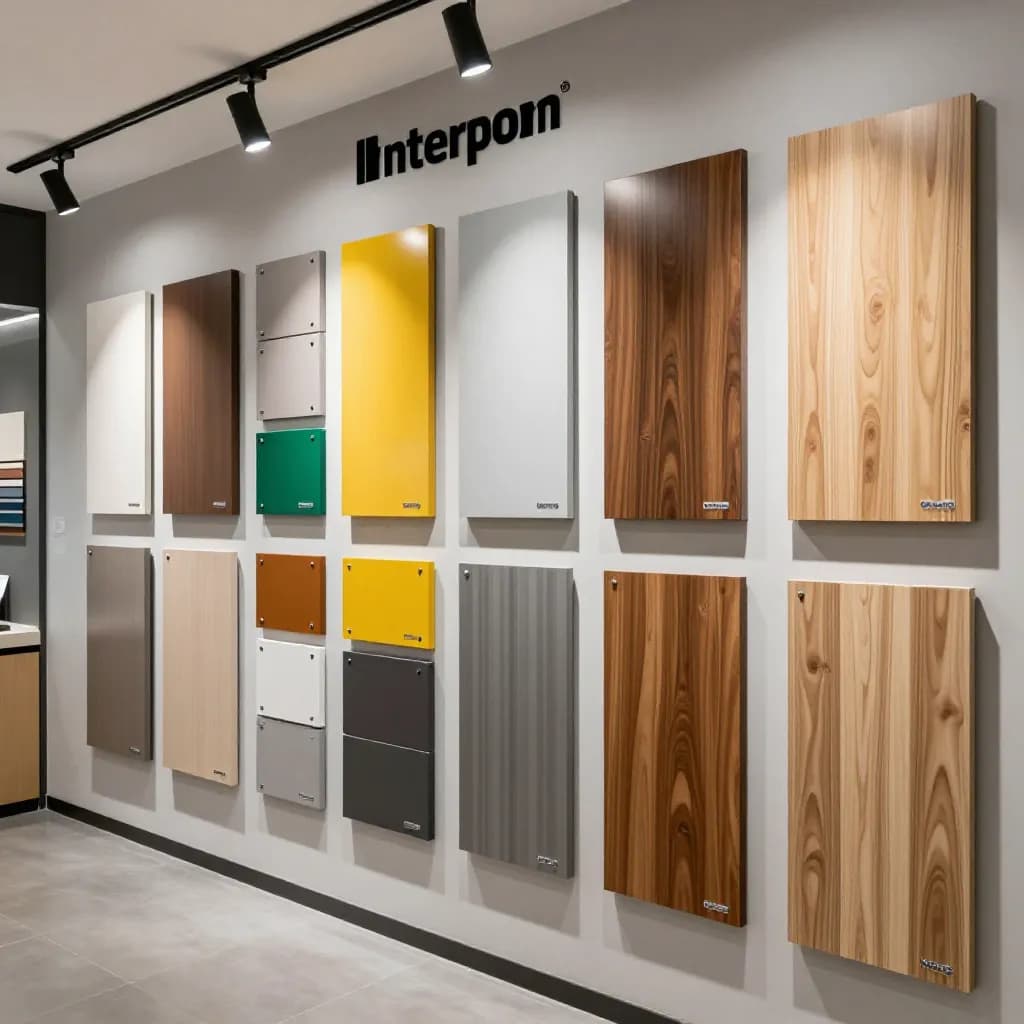
The core of the Interpon range is built around resin chemistry. Polyester-based products dominate the architectural and general industrial lines, offering excellent UV resistance and outdoor durability. Epoxy-polyester hybrids serve interior and functional applications where chemical resistance matters more than weathering performance. Pure epoxy formulations address specialized industrial needs such as pipeline coating and electrical insulation.
Ready to Start Your Project?
From one-off customs to 15,000-part production runs — get precise pricing in 24 hours.
On This Page
Understanding the Interpon Product Range
AkzoNobel segments the Interpon range by market rather than chemistry alone. The Interpon D series targets architectural applications with Qualicoat and GSB certifications. The Interpon A series covers automotive components. The Interpon C and Interpon HT lines address industrial and high-temperature applications respectively. This market-based organization helps specifiers navigate directly to the product family relevant to their project without needing deep knowledge of resin chemistry.
The breadth of the Interpon range means that a single manufacturer can supply coatings for virtually every powder coating application, from a residential window frame to a heavy industrial pipeline. This consolidation under one brand simplifies supply chain management and quality assurance for large organizations that operate across multiple sectors.
Interpon D Series: Architectural Excellence
The Interpon D series is AkzoNobel's flagship architectural powder coating range, designed to meet the most demanding specifications for building facades, curtain walls, window frames, doors, and cladding systems. Within the D series, several tiers address different performance levels and certification requirements.
Interpon D1036 is a standard polyester powder coating suitable for general architectural use. It meets Qualicoat Class 1 requirements and provides reliable performance for projects where standard durability is acceptable. Interpon D2015 and D2525 step up to super-durable polyester formulations that meet Qualicoat Class 2 and AAMA 2604 specifications, offering enhanced UV resistance and color retention for projects in high-UV environments or where extended maintenance intervals are required.
At the top of the architectural range, Interpon D3000 is a fluoropolymer-modified powder coating that meets AAMA 2605 specifications, the most demanding North American architectural standard requiring 10 years of South Florida exposure testing. This product competes directly with PVDF liquid coatings while offering the environmental and application advantages of powder technology.
All Interpon D series products are available in an extensive color range including RAL Classic, RAL Design, NCS, and custom color matching. Metallic, textured, matte, and high-gloss finishes are available across the range, giving architects significant design flexibility. The D series also includes Futura Collection colors, which are trend-driven architectural colors developed by AkzoNobel's color design team specifically for building applications.
Specifiers should note that not all D series products are available in all colors and finishes. Super-durable and fluoropolymer grades may have more limited color availability compared to standard polyester, particularly for metallic and special-effect finishes. Early engagement with AkzoNobel's technical team is recommended for projects requiring unusual color or finish combinations.
Interpon Wood-Effect and Sublimation Finishes
One of the most distinctive capabilities within the Interpon range is the Interpon D2525 Textura and Interpon D Wood sublimation transfer system. These products enable realistic wood-grain finishes on aluminum profiles, combining the warm aesthetic of natural timber with the durability, fire safety, and low maintenance of powder-coated aluminum.
The sublimation process involves applying a base coat of powder in a color matched to the desired wood species, curing it, then wrapping the profile in a transfer film printed with a high-resolution wood-grain pattern. The wrapped profile passes through a vacuum oven where heat and pressure transfer the ink pattern into the powder coating surface, creating a finish that is embedded within the coating rather than sitting on top of it.
Interpon D Wood finishes are available in a wide range of wood species replications including oak, walnut, cherry, teak, and cedar, in both natural and stained variations. The finishes are remarkably realistic, with visible grain texture and color variation that closely mimics natural timber. From a distance of more than a meter, most observers cannot distinguish sublimation-finished aluminum from real wood.
The durability of sublimation finishes matches the underlying powder coating. When applied over a super-durable polyester base coat, wood-effect finishes meet Qualicoat Class 2 requirements and maintain their appearance for 15-20 years in typical architectural exposure conditions. This makes them a practical alternative to timber in applications where wood would require frequent maintenance, treatment, or replacement.
Architects increasingly specify wood-effect powder coatings for residential fenestration, commercial facades, pergolas, and screening elements. The technology allows timber aesthetics in fire-rated applications where real wood would not comply with building regulations, opening design possibilities that were previously unavailable.
Interpon Industrial and Functional Product Lines
Beyond architecture, the Interpon range includes extensive industrial and functional product lines designed for demanding manufacturing environments. These products prioritize mechanical performance, chemical resistance, and process efficiency over the aesthetic considerations that drive architectural specification.
Interpon C series coatings are general industrial products available in epoxy, polyester, and hybrid chemistries. They serve applications ranging from office furniture and shelving to agricultural equipment and electrical enclosures. The C series emphasizes consistent application properties, good edge coverage, and reliable mechanical performance at competitive material costs. For high-volume industrial applicators, the C series offers the process stability needed for automated coating lines running at production speeds.
Interpon HT is a specialized high-temperature range designed for components that operate at sustained temperatures above the limits of standard powder coatings. Applications include exhaust systems, engine components, barbecue grills, and industrial heating equipment. These silicone-modified formulations maintain their integrity at temperatures up to 600 degrees Celsius, far beyond the 120-150 degree Celsius limit of conventional polyester powders.
Interpon AM is an antimicrobial powder coating range that incorporates silver-ion technology to inhibit bacterial growth on coated surfaces. This product line targets healthcare, food processing, public transport, and other environments where surface hygiene is a priority. The antimicrobial properties are built into the coating formulation and remain active for the life of the coating, unlike surface-applied antimicrobial treatments that can wear off over time.
For automotive applications, the Interpon A series provides coatings for wheels, under-hood components, chassis parts, and decorative trim. These products are formulated to meet the specific performance requirements of automotive OEMs, including stone-chip resistance, fuel and brake fluid resistance, and compatibility with automotive assembly processes.
Specifying Interpon: Certifications and Standards
Specifying Interpon products correctly requires understanding the certification landscape and matching product capabilities to project requirements. AkzoNobel maintains an extensive portfolio of third-party certifications across the Interpon range, providing independent verification of performance claims.
For architectural projects in Europe, Qualicoat certification is the primary quality benchmark. Interpon D series products hold Qualicoat Class 1 and Class 2 approvals, with specific product codes listed on the Qualicoat approved products register. Specifiers should reference the specific Qualicoat approval number rather than simply specifying a brand name, as this ensures the correct product grade is supplied and applied.
GSB International certification provides an alternative European quality mark, with GSB Master representing the highest performance tier. Several Interpon D series products hold GSB Master approval, which requires more stringent weathering performance than standard GSB certification. For projects in Germany, Austria, and Switzerland, GSB certification is often preferred over Qualicoat.
In North America, AAMA specifications define performance tiers. Interpon products are available meeting AAMA 2603 (general performance), AAMA 2604 (high performance), and AAMA 2605 (superior performance) requirements. The AAMA 2605 specification is particularly demanding, requiring 10 years of actual South Florida exposure testing with strict limits on color change, chalk, gloss retention, and film erosion.
Beyond architectural certifications, Interpon industrial products carry approvals relevant to their target markets. These include food contact approvals for coatings used on kitchen equipment, drinking water approvals for pipeline coatings, and various national and international fire classification certifications. Specifiers should request current certification documentation from AkzoNobel for any project where third-party approval is required.
Application and Processing Considerations
Interpon powder coatings are formulated for application using standard electrostatic spray equipment, including both corona and tribo-charging systems. AkzoNobel provides detailed technical data sheets for each product, specifying recommended application parameters including gun settings, film thickness targets, and curing schedules.
Film thickness is a critical quality parameter for Interpon products. Architectural D series coatings typically require 60-120 microns depending on the specific product and certification requirements. Under-application risks premature weathering failure, while over-application can cause orange peel texture, poor mechanical properties, and increased material consumption. Applicators should calibrate their equipment and verify film thickness using calibrated gauges at the frequency specified by their quality management system.
Curing conditions must be precisely controlled to achieve the specified coating properties. Most Interpon products require object temperatures of 180-200 degrees Celsius maintained for 10-20 minutes, depending on the specific formulation. Under-curing results in poor adhesion, reduced chemical resistance, and compromised weathering performance. Over-curing can cause yellowing, gloss reduction, and embrittlement. Oven surveys using temperature profiling equipment should be conducted regularly to verify that actual cure conditions match the product specification.
Pretreatment quality is equally important and is often the factor that determines long-term coating performance. AkzoNobel recommends chrome-free pretreatment systems for architectural applications, aligned with Qualicoat and GSB requirements. The specific pretreatment process — whether mechanical, chemical, or a combination — must be matched to the substrate alloy and the intended service environment. Coastal and marine environments require enhanced pretreatment systems such as those meeting Qualicoat Seaside requirements.
Reclaim and recycling of overspray powder is standard practice with Interpon products. AkzoNobel formulates its powders to maintain consistent properties when reclaimed powder is blended back into virgin material at ratios up to 30 percent, depending on the product and application requirements.
Sustainability and Environmental Credentials
AkzoNobel has positioned sustainability as a core element of the Interpon brand strategy. All Interpon powder coatings are solvent-free, producing zero VOC emissions during application and curing. This fundamental environmental advantage over liquid coatings is complemented by high material utilization rates, typically 95-98 percent when overspray reclaim systems are operating correctly.
The company has invested in reducing the environmental footprint of powder coating manufacturing itself. Several Interpon production facilities operate on renewable energy, and AkzoNobel has committed to carbon neutrality targets across its operations. The company publishes Environmental Product Declarations for key Interpon products, providing transparent lifecycle assessment data that architects and specifiers can use for green building certification submissions.
Interpon Eco range products take sustainability further by incorporating bio-based raw materials derived from renewable sources. These products maintain the same performance characteristics as conventional Interpon formulations while reducing dependence on petrochemical feedstocks. The bio-based content is verified through independent certification, providing credible sustainability claims for projects targeting the highest levels of green building certification.
End-of-life considerations also favor powder-coated aluminum. The aluminum substrate is fully recyclable, and the thin powder coating film does not prevent or complicate aluminum recycling. This contrasts with some liquid paint systems that can contaminate aluminum recycling streams. For projects where circular economy principles are important, the combination of powder coating and aluminum provides a genuinely recyclable building envelope solution.
AkzoNobel also offers color consultation and specification support services through its architectural team, helping project teams select colors and finishes that meet both aesthetic and performance requirements. This technical support extends through the project lifecycle, from initial specification through application quality assurance to maintenance guidance.
Frequently Asked Questions
What is the difference between Interpon D1036 and D2525?
Interpon D1036 is a standard polyester powder coating meeting Qualicoat Class 1 requirements, suitable for general architectural use. Interpon D2525 is a super-durable polyester formulation meeting Qualicoat Class 2 and AAMA 2604 specifications, offering significantly better UV resistance and color retention for demanding environments or projects requiring extended maintenance intervals.
Can Interpon powder coatings replicate wood finishes?
Yes. The Interpon D Wood sublimation transfer system creates highly realistic wood-grain finishes on aluminum profiles. The process embeds a printed wood pattern into the powder coating surface, producing finishes that closely replicate oak, walnut, cherry, teak, and other species. These finishes meet Qualicoat Class 2 durability requirements when applied over super-durable base coats.
Which Interpon product meets AAMA 2605 specifications?
Interpon D3000 is AkzoNobel's fluoropolymer-modified powder coating designed to meet AAMA 2605 superior performance specifications. This product has undergone 10 years of South Florida exposure testing and competes with PVDF liquid coatings while offering the environmental advantages of powder technology.
Are Interpon powder coatings available with antimicrobial properties?
Yes. The Interpon AM range incorporates silver-ion antimicrobial technology that inhibits bacterial growth on coated surfaces. These coatings are designed for healthcare, food processing, public transport, and other hygiene-sensitive environments, with antimicrobial properties that remain active for the life of the coating.
What certifications do Interpon architectural coatings hold?
Interpon D series architectural coatings hold Qualicoat Class 1 and Class 2 approvals, GSB and GSB Master certifications, and meet AAMA 2603, 2604, and 2605 specifications depending on the specific product grade. Certification details for each product are available on the Qualicoat and GSB approved products registers.
How does Interpon address sustainability in powder coatings?
Interpon powder coatings are solvent-free with zero VOC emissions and achieve 95-98 percent material utilization. AkzoNobel publishes Environmental Product Declarations for key products and offers the Interpon Eco range incorporating bio-based raw materials. Several production facilities operate on renewable energy as part of AkzoNobel's carbon neutrality commitments.
Ready to Start Your Project?
From one-off customs to 15,000-part production runs — get precise pricing in 24 hours.