One of the most disturbing long-term consequences of occupational solvent exposure may be its effect on the aging brain. Emerging evidence suggests that solvent exposure does not merely cause acute or subacute neurological symptoms - it may permanently reduce the brain's resilience, causing exposed workers to experience accelerated cognitive decline as they age. Even decades after leaving solvent-exposed occupations, formerly exposed workers show greater age-related cognitive impairment than their unexposed peers.
paint-and-liquid-coatings-risks
Solvent Exposure Depletes Cognitive Reserve and Accelerates Brain Aging
Sundial Research Team·February 14, 2025·5 min
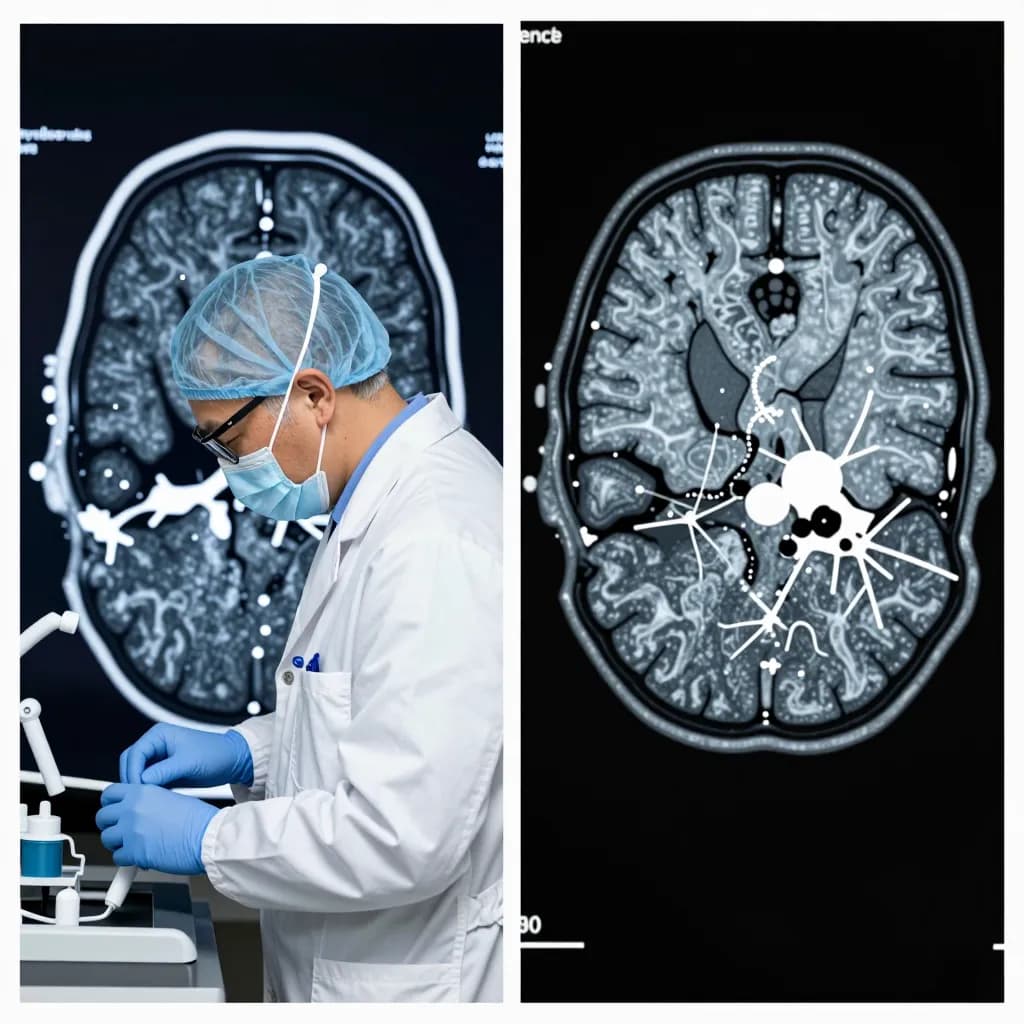
Cognitive reserve refers to the brain's ability to withstand neurological damage through compensatory mechanisms. Individuals with higher cognitive reserve - built through education, intellectual activity, and enriched environments - can sustain more brain damage before showing clinical symptoms of dementia.
Ready to Start Your Project?
From one-off customs to 15,000-part production runs — get precise pricing in 24 hours.
On This Page
Solvent Exposure Depletes Cognitive Reserve and Accelerates Brain Aging
The Cognitive Reserve Hypothesis
The cognitive reserve hypothesis, proposed by Yaakov Stern (2002), explains why people with identical amounts of brain pathology (e.g., Alzheimer's disease plaques) may show vastly different clinical symptoms. Those with higher reserve tolerate more pathology before becoming symptomatic.
Solvent Exposure and Reserve Depletion
Van Valen et al. (2018) hypothesized that solvent exposure decreases cognitive reserve capacity, making the brain less able to compensate for age-related changes:
"The results are in agreement with the hypothesis that exposure to organic solvents in working life decreases the cognitive reserve capacity and thereby causes an acceleration of the normal aging process, even many years after exposure has ceased."
This hypothesis explains several observed phenomena:
- Exacerbated age-related impairment: Formerly exposed workers show greater cognitive decline with age
- Earlier dementia onset: Lower reserve means less capacity to tolerate age-related pathology
- Persistent deficits: Cognitive problems that continue long after exposure cessation
- Non-progressive course: Unlike Alzheimer's, CSE does not worsen after exposure stops - but the reserve loss persists
The Mikkelsen Finding: 3.5x Dementia Risk
The Danish cohort study by Mikkelsen (1980) provided the foundational evidence for accelerated aging in painters. Following 2,601 painters and 1,790 bricklayers from 1971-1975:
Painters had a relative risk of approximately 3.5 of being awarded a disability pension due to cryptogenic presenile dementia compared to bricklayers.
When alcohol abuse and other etiologic factors were excluded, the relative risk remained approximately 2×.
This dramatic excess of presenile dementia in painters - occurring years or decades after solvent exposure - supports the accelerated aging hypothesis. The painters' brains aged faster than their chronological age would predict.
The Bruhn Follow-Up: No Recovery, No Progression
The 2-year follow-up of 26 house painters with CSE (Bruhn, 1981) found:
- No significant change in neurological status, neuropsychological impairment, or cerebral atrophy
- Three patients showed further deterioration
- The condition was stable but not reversible
This pattern - non-progressive but irreversible - is consistent with reserve depletion. The brain has lost capacity that cannot be regained, and this lost reserve manifests as persistent impairment that becomes more apparent as the brain faces additional age-related challenges.
The Dutch Follow-Up Paradox
The Dutch CSE cohort (van Valen, 2018) presents an apparent paradox:
- Neuropsychological improvement: Significant improvement on 6 of 9 subdomains (Cohen's d 0.27-0.54)
- Disability increase: Permanent work disability pension increased from 14% to 37%
How can test scores improve while work disability increases? The cognitive reserve hypothesis offers an explanation: practice effects and partial recovery may improve test performance, but the underlying reserve loss means that real-world cognitive demands - multitasking, problem-solving under pressure, learning new procedures - exceed the depleted capacity.
Longitudinal Population Studies
Nordling Nilson et al. (2002-2010) examined formerly exposed workers in the general population and found:
- Exacerbation of age-related cognitive impairment in formerly exposed workers
- Greater decline in processing speed, memory, and executive function with age
- Effects persisting 20+ years after last exposure
These population-based findings confirm that the reserve depletion effect is not limited to clinically diagnosed CSE patients but extends to the broader population of workers with historical solvent exposure.
Mechanism: Why Solvents Deplete Reserve
Several mechanisms may contribute to cognitive reserve depletion:
- White matter damage: Solvents preferentially affect myelinated tracts, reducing neural connectivity
- Synaptic loss: Chronic solvent exposure may reduce synaptic density
- Neurotransmitter dysfunction: Dopaminergic and other systems are impaired
- Hippocampal vulnerability: Memory-forming structures may be particularly susceptible
- Inflammation: Chronic neuroinflammation accelerates aging processes
Implications for Prevention
The accelerated aging hypothesis has profound implications for occupational health policy:
- Youthful exposure has lifelong consequences: A 25-year-old painter's solvent exposure affects his cognitive function at 65
- No safe duration: Even relatively short exposures may reduce reserve
- Cumulative effects matter: Total lifetime exposure drives reserve depletion
- Recovery is limited: Once reserve is lost, it cannot be fully restored
- Prevention is the only solution: Eliminating exposure preserves reserve
The Powder Coating Advantage
For workers in their 20s and 30s - the ages when most begin painting careers - the choice of coating technology affects cognitive health decades later. Powder coating eliminates the solvent exposure that depletes cognitive reserve, preserving the brain's resilience for aging.
The 3.5× increased dementia risk documented in Danish painters is not an inevitable occupational hazard. It is a preventable consequence of solvent exposure that specification choices can eliminate. When a government agency specifies powder coating, it is not merely reducing current health risks - it is protecting the future cognitive health of workers who will age in the decades to come.
Ready to Start Your Project?
From one-off customs to 15,000-part production runs — get precise pricing in 24 hours.